- English
- French
- German
- Portuguese
- Spanish
- Russian
- Japanese
- Korean
- Arabic
- Greek
- German
- Turkish
- Italian
- Danish
- Romanian
- Indonesian
- Czech
- Afrikaans
- Swedish
- Polish
- Basque
- Catalan
- Esperanto
- Hindi
- Lao
- Albanian
- Amharic
- Armenian
- Azerbaijani
- Belarusian
- Bengali
- Bosnian
- Bulgarian
- Cebuano
- Chichewa
- Corsican
- Croatian
- Dutch
- Estonian
- Filipino
- Finnish
- Frisian
- Galician
- Georgian
- Gujarati
- Haitian
- Hausa
- Hawaiian
- Hebrew
- Hmong
- Hungarian
- Icelandic
- Igbo
- Javanese
- Kannada
- Kazakh
- Khmer
- Kurdish
- Kyrgyz
- Latin
- Latvian
- Lithuanian
- Luxembou..
- Macedonian
- Malagasy
- Malay
- Malayalam
- Maltese
- Maori
- Marathi
- Mongolian
- Burmese
- Nepali
- Norwegian
- Pashto
- Persian
- Punjabi
- Serbian
- Sesotho
- Sinhala
- Slovak
- Slovenian
- Somali
- Samoan
- Scots Gaelic
- Shona
- Sindhi
- Sundanese
- Swahili
- Tajik
- Tamil
- Telugu
- Thai
- Ukrainian
- Urdu
- Uzbek
- Vietnamese
- Welsh
- Xhosa
- Yiddish
- Yoruba
- Zulu
Durability of Blow Moulding Plastic Pallet Explained
When your facility does thousands of load cycles every week, picking the right material handling solution is more of a business choice than a simple buy. Blow Moulding Plastic Pallets stand out in the logistics industry for their strength, durability, and versatility. The manufacturing process involves heating plastic and inflating it inside precision molds, creating hollow structures that are smooth, impact-resistant, and capable of supporting heavy loads. By understanding how these pallets achieve such long service lives, procurement teams can make decisions that lower total cost of ownership and improve operational efficiency.
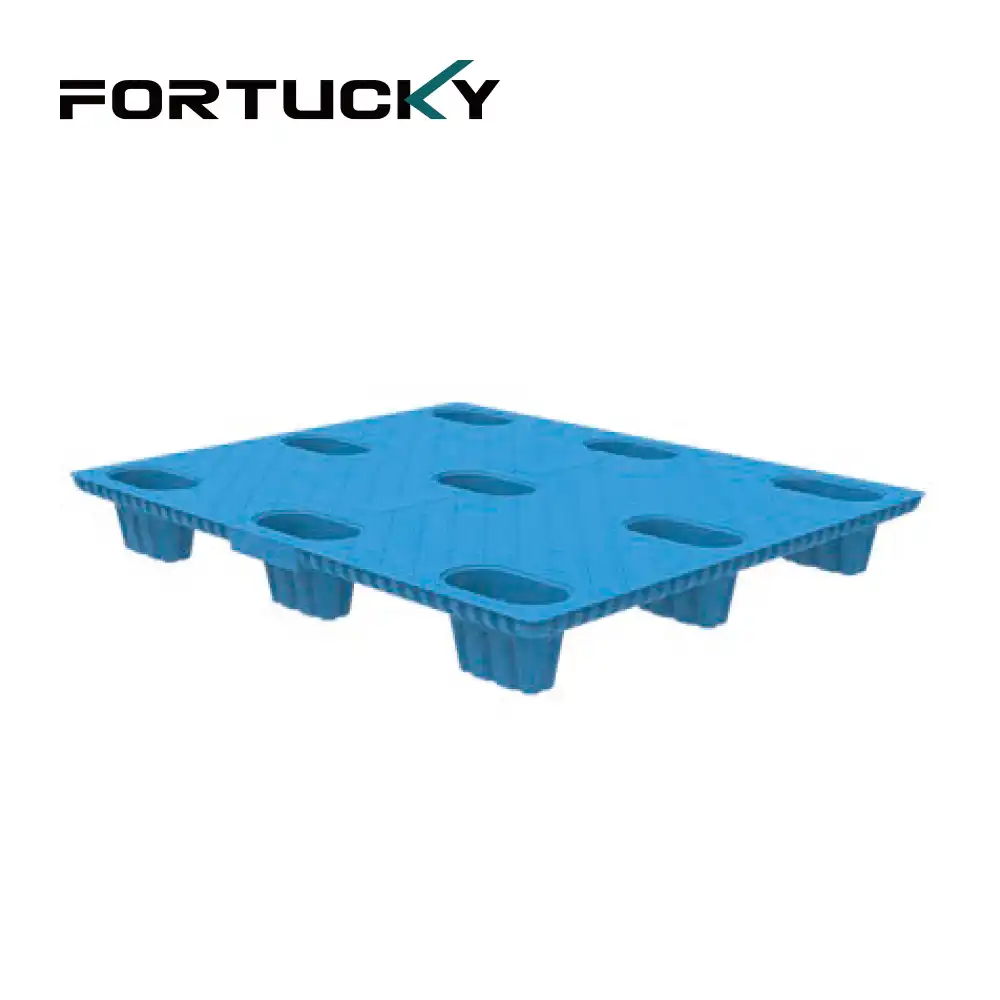
 Understanding Blow Moulding Plastic Pallets and Their Durability
The performance of these pallets is fundamentally determined by their manufacturing method. Unlike injection moulding, which forces material into closed cavities, or thermoforming, which shapes heated sheets, blow moulding produces one-piece structures without weld lines or stress concentration points.
How Blow Moulding Creates Stronger Structures
First, high-density polyethylene (HDPE) or polypropylene (PP) resins are melted to form a parison—a tube of molten plastic. Compressed air then presses this parison against the cool walls of the mold, forming the pallet shape. This process creates a continuous, voided structure that distributes stress evenly across the entire part, which is why these pallets tend to bend rather than crack under impact.
Design Variations That Affect Service Life
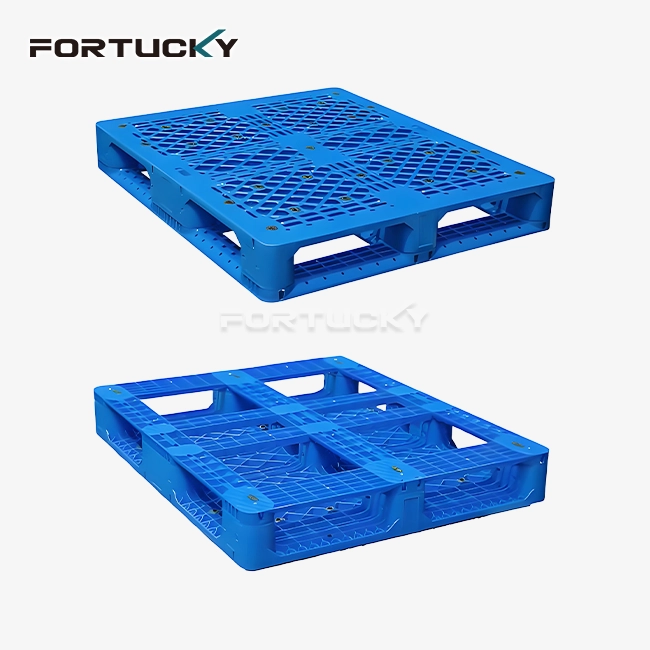
Different applications require different structural designs. Rackable pallets, used in storage racks, incorporate stronger support beams and thicker wall sections to handle heavy loads—they can support up to one tonne in static rack configurations. Reversible pallets with identical top and bottom decks extend service life by allowing the pallet to be turned over when one side wears out. Heavy-duty versions feature multiple internal chambers that provide rigidity comparable to solid construction while retaining weight savings.
Material Selection Drives Long-Term Performance
The choice of virgin HDPE, PP copolymers, or recycled-content blends significantly affects longevity. Virgin HDPE performs better in impact resistance across temperatures from -40°C to 70°C, maintaining structural integrity in cold storage where other materials become brittle. PP grades offer superior chemical resistance, making them suitable for environments regularly exposed to aggressive substances, such as chemical and pharmaceutical processing plants.
Key Factors Affecting the Durability of Blow Moulding Plastic Pallets
Several interrelated factors determine how long these pallets remain serviceable in real-world conditions. Understanding these factors enables procurement professionals to define appropriate specifications for their applications.
Material Quality and Composition
Wear resistance and impact tolerance are directly related to the grade of resin. Food-grade HDPE formulations meet strict purity standards and last a long time, making them perfect for FMCG delivery networks that handle millions of shipment rounds every year. Fortucky's Blow Moulding Plastic Pallets are made with high-quality plastic compounds that were designed to work well in industrial shipping settings. This means that they will always perform well, even when conditions are tough.
Wall thickness uniformity is critical. Advanced blow moulding technology controls material distribution during production, preventing thin spots that could become failure points. Pallets designed to carry dynamic loads up to 1.5 tonnes require precise wall thickness specifications to balance weight efficiency with structural strength.
Structural Design Elements
Intelligent engineering transforms basic materials into highly effective logistics tools. Bottom configurations—such as three‑leg or nine‑foot designs—determine load distribution and forklift compatibility. Two‑way and four‑way entry options affect handling ease and stress distribution during lifting operations.
The top deck surface type (grid, solid flat, or custom patterns) influences contact area and weight distribution. Solid decks fully support products and prevent small items from falling through gaps, making them ideal for automated warehouse systems handling varied SKU sizes. Grid surfaces reduce weight and allow water drainage in cold‑chain applications where condensation can interfere with handling.
Environmental Exposure Considerations
The operating environment greatly affects service life. In outdoor storage yards, UV radiation degrades polymer chains, but UV‑stabilised grades significantly slow this process. Contact with cleaning agents, fuels, or process chemicals can soften or crack inferior materials. Properly specified HDPE and PP resist most industrial chemicals commonly encountered in factories and warehouses.
Repeated transitions between hot production areas and cold storage zones subject materials to thermal expansion and contraction cycles. The hollow construction of blow moulded pallets provides natural thermal insulation, reducing thermally induced stress compared to solid alternatives.
Comparing Durability: Blow Moulding Plastic Pallets vs Alternatives
Understanding how different manufacturing methods and materials compare in longevity is essential for pallet selection. Real‑world operational data provide more useful insights than theoretical specifications alone.
Blow Moulding Versus Injection Moulding
Injection‑moulded pallets are solid or mostly solid, offering greater rigidity—ideal for applications requiring minimal deflection under load. However, this higher rigidity becomes a weakness under impact; they do not deform easily but may crack under sudden shock loads that blow‑moulded pallets can absorb through elastic deformation.
Blow‑moulded units are single‑piece constructions with no mechanical joints, unlike some injection‑moulded designs. This eliminates the risk of separation at connection points—a common failure mode when pallets are dropped or handled roughly in shared pallet pool operations.
Plastic Versus Wood: The Durability Equation
Wooden pallets remain popular due to low upfront cost, but their durability is problematic. Moisture absorption causes dimensional changes and rot, particularly in cold‑chain environments where condensation is frequent. Fumigation is required for international shipping due to pest risks, adding cost and delay.
Blow moulded plastic pallets completely eliminate these biological vulnerabilities. They maintain dimensional stability regardless of humidity, ensuring reliable automated handling in robotic warehouse systems. A five‑year study in automotive parts distribution found that plastic pallets averaged 80–100 trips before disposal, while wooden pallets managed only 8–12 trips under the same conditions.
Cost Per Cycle Analysis
Plastic pallets cost more up front, but they last longer, which changes the total cost balance. Over three years, car company CATL saw a 60% drop in the number of times they had to replace pallets after using Blow Moulding Plastic Pallets in their battery cell production processes. The impact resistance was especially useful in their automatic guided vehicle (AGV) systems, where mistakes in navigation sometimes led to accidents that destroyed wooden pallets but only lightly scratched plastic ones.
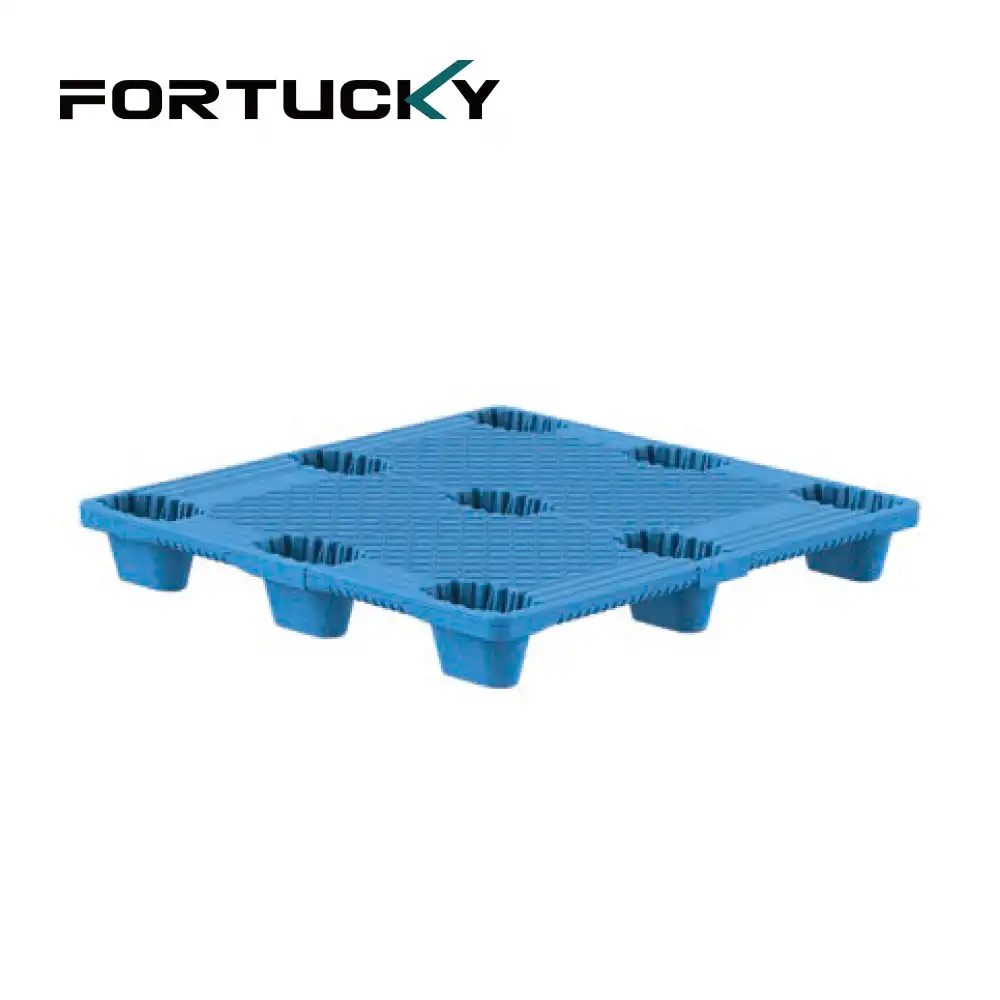 Maintenance, Recycling, and Environmental Impact Related to Durability
Proper maintenance extends service life, increasing value and supporting environmental goals—both increasingly important to Fortune 500 procurement strategies.
Practical Maintenance for Extended Lifespan
Regular inspection protocols identify damage before minor issues escalate into failures. Routine handling checks should look for cracks, distortion, or surface wear. When damage appears limited, reassigning pallets to less demanding applications can extend their useful life rather than prematurely scrapping them.
Cleaning methods significantly affect longevity. The smooth, non‑porous surfaces of blow moulded plastic pallets resist bacterial growth and can be thoroughly cleaned with standard pressure‑washing equipment. While wooden pallets absorb cleaning agents and degrade over time, plastic pallets dry quickly and retain their shape after thousands of wash cycles—critical for food‑processing facilities with strict hygiene requirements.
Circular Economy Integration
At end of life, blow moulded plastic pallets are reclaimable and recyclable into other products. HDPE and PP retain their properties through multiple recycling cycles, enabling closed‑loop systems where used pallets become raw material for new goods. This recyclability benefits the environment and leaves residual value that offsets disposal costs.
Fortucky's environmentally conscious pallet design philosophy incorporates lifecycle thinking from material selection through end‑of‑life processing. The company's manufacturing processes minimise waste while producing pallets that meet or exceed industry durability standards, demonstrating that environmental responsibility and operational performance are not conflicting objectives.
Quantifying Environmental Advantages
Lifecycle assessment studies comparing blow moulded plastic pallets with wooden alternatives show significant environmental benefits over a 10‑year usage period. When considering production, shipping weight savings, extended service life, and recycling rather than landfilling, a manufacturing centre processing 50,000 orders annually achieved 40% lower total carbon emissions.
Procurement Considerations for Durable Blow Moulding Plastic Pallets
Optimal purchasing decisions require evaluating more than unit price quotes. Long‑term durability depends on product engineering, customisation capabilities, and future support.
Supplier Evaluation Criteria
Manufacturers with extensive industry experience demonstrate their capabilities through customer references and application‑specific case studies. Fortucky serves over 1,000 companies across FMCG, automotive, electronics, pharmaceutical, and cold‑chain sectors—industries where pallet failures directly affect production consistency and product quality.
The skills of a manufacturing site show how consistent the quality is. Modern production tools with automatic quality control systems make pallets that are more uniform in terms of size and shape than those made by hand or with only some automation. Fortucky's smart 5G production plant has real-time tracking systems that make sure each pallet meets the requirements for corner drop, flexure strength, compression strength, and slippage before it is shipped. Heavy-duty blow-molding hollow plastic pallets benefit significantly from such automated quality controls, as their structural integrity depends on precise wall thickness distribution and uniform material flow during the molding process.
Customization for Application-Specific Durability
Standard pallet dimensions may not optimally suit your unique needs. Sizes ranging from 1100x900mm to 1500x1400mm can be adapted to various rack configurations and handling equipment. With static load limits up to 6 tonnes, dynamic capacities up to 1.5 tonnes, and rack loads up to 1 tonne, specifications can be tailored to your handling requirements.
Custom colours beyond blue enable visual recognition in inventory management systems, and bespoke deck surfaces and bottom structures can accommodate specific products or equipment. Deep customisation distinguishes capable suppliers from commodity vendors, turning basic products into optimised tools that enhance operational efficiency.
Total Cost of Ownership Optimization
Balancing initial investment against lifetime costs requires understanding utilisation intensity and operating conditions. High‑throughput distribution centres that cycle pallets several times daily realise the benefits of enhanced durability features faster than low‑volume operations. Harsh environments—with extreme temperatures, chemical exposure, or rough handling—demand specifications that go beyond basic requirements to prevent premature failure and operational disruptions.
Bulk ordering reduces unit costs and ensures adequate inventory for facility expansion or fleet maintenance. Fortucky's competitive pricing structure for large purchases, combined with rapid delivery through regional service networks in Asia, Europe, and the Americas, simplifies fleet deployment and restocking.
Conclusion
Blow moulding plastic pallets achieve exceptional durability through high‑quality materials, seamless construction, and intelligent structural design. Procurement professionals who understand the interplay of manufacturing methods, material properties, and environmental factors can select options that deliver the lowest total cost of ownership while maintaining high reliability. As automation, environmental concerns, and operational volumes continue to grow in logistics and industrial sectors, the long‑term benefits of properly specified blow‑moulded pallets become increasingly valuable. Strategic partnerships with suppliers that offer customisation, proven quality systems, and extensive support networks ensure lasting returns on material handling infrastructure investments.
Frequently Asked Questions
1. What makes blow-moulded pallets more durable than other plastic pallets?
The one‑piece, seamless design eliminates the weak points inherent in multi‑component systems. Hollow structures absorb impact energy through controlled bending rather than fracturing—especially beneficial in cold environments where rigid materials become brittle. This combination of process and design produces pallets that withstand rough handling over extended periods.
2. How long do blow-moulded plastic pallets typically last in industrial applications?
Service life depends on usage intensity and operating conditions. Standard applications with two to three handling cycles per week typically last five to ten years. High‑intensity operations cycling pallets daily may require replacement after three to five years, yet still achieve 80–100 or more trip cycles—far longer than wooden pallets under similar conditions.
3. Can blow moulding pallets handle extreme temperature environments?
HDPE and PP formulations maintain structural integrity from -40°C to 70°C, making them suitable for cold‑storage sites and outdoor uses with seasonal temperature variations. The hollow design provides thermal insulation that reduces temperature‑induced stress compared to solid alternatives, extending service life in environments with frequent temperature fluctuations.
Elevate Your Material Handling with Fortucky's Blow Moulding Plastic Pallet Solutions
Modern transportation problems with durability need answers backed by engineering know-how and top-notch manufacturing. Fortucky offers Blow Moulding Plastic Pallet systems that lower running costs and improve handling efficiency in tough industrial settings by combining advanced materials technology with customer-centered customizing.
We've worked with big names in the industry, like Huawei, Mercedes-Benz, BMW, BYD, and COFCO Group, and our track record shows that we can meet high standards of performance. Before pallets are sent to your business, we make sure they will last by checking their compression strength, corner drop, flexure strength, and slippage. Our expert team is available to help you at any time during the specification, implementation, and lifecycle management phases. This is true whether you need standard solutions that can be used right away or fully customized designs that work best for specific uses.
Find out how the Blow Moulding Plastic Pallet maker skills at Fortucky can change the way you move your materials. Get in touch with our team at sales@fortuckyrobot.com to talk about your unique needs and get full technical specs that are tailored to your operational setting, load characteristics, and throughput goals.
References
1. Modern Materials Handling Journal. "Comparative Lifecycle Analysis of Industrial Pallet Materials." Industrial Logistics Quarterly, 2022.
2. International Safe Transit Association. "Performance Testing Standards for Transport Packaging Materials." ISTA Technical Guidelines, 2021.
3. Plastics Technology Magazine. "Advances in Blow Molding Technology for Industrial Applications." Manufacturing Process Review, 2023.
4. Supply Chain Management Review. "Total Cost of Ownership Models for Material Handling Equipment." Logistics Economics Research, 2022.
5. American Society for Testing and Materials. "Standard Specification for Plastics Used in Material Handling Pallets." ASTM International Standards, 2023.
6. European Pallet Association. "Sustainability and Durability Metrics for Logistics Load Carriers." Industry Benchmarking Report, 2022.

Learn about our latest products and discounts through SMS or email