- English
- French
- German
- Portuguese
- Spanish
- Russian
- Japanese
- Korean
- Arabic
- Greek
- German
- Turkish
- Italian
- Danish
- Romanian
- Indonesian
- Czech
- Afrikaans
- Swedish
- Polish
- Basque
- Catalan
- Esperanto
- Hindi
- Lao
- Albanian
- Amharic
- Armenian
- Azerbaijani
- Belarusian
- Bengali
- Bosnian
- Bulgarian
- Cebuano
- Chichewa
- Corsican
- Croatian
- Dutch
- Estonian
- Filipino
- Finnish
- Frisian
- Galician
- Georgian
- Gujarati
- Haitian
- Hausa
- Hawaiian
- Hebrew
- Hmong
- Hungarian
- Icelandic
- Igbo
- Javanese
- Kannada
- Kazakh
- Khmer
- Kurdish
- Kyrgyz
- Latin
- Latvian
- Lithuanian
- Luxembou..
- Macedonian
- Malagasy
- Malay
- Malayalam
- Maltese
- Maori
- Marathi
- Mongolian
- Burmese
- Nepali
- Norwegian
- Pashto
- Persian
- Punjabi
- Serbian
- Sesotho
- Sinhala
- Slovak
- Slovenian
- Somali
- Samoan
- Scots Gaelic
- Shona
- Sindhi
- Sundanese
- Swahili
- Tajik
- Tamil
- Telugu
- Thai
- Ukrainian
- Urdu
- Uzbek
- Vietnamese
- Welsh
- Xhosa
- Yiddish
- Yoruba
- Zulu
Heavy Pallet Racking: Buyer’s Guide for Warehouses
Choosing the right heavy pallet racking system can make a warehouse more efficient and increase its ability to handle more goods. This buyer's guide discusses important factors that transportation leaders, supply chain managers, and warehouse planners should consider when evaluating high-capacity pallet storage systems. Understanding these key factors—such as load limits and integration options—will help your investment deliver a clear return on investment (ROI) and support long-term automation goals and digital transformation efforts in manufacturing and distribution operations.
 Understanding Heavy-Duty Warehouse Racking Fundamentals
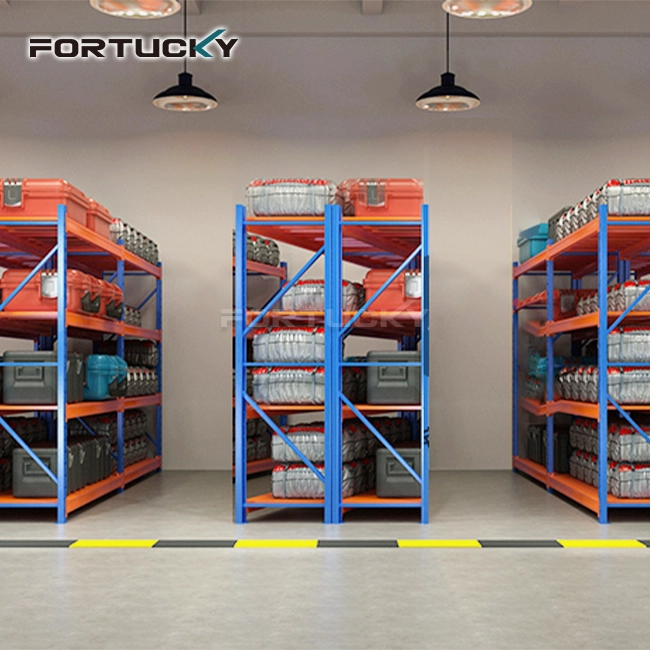
Heavy-duty warehouse shelving is an essential part of today's logistics infrastructure. These steel pallet racks can hold loads of up to 12,600 pounds per level, making them indispensable for businesses that handle large volumes of material. Their structural strength comes from welded upright frames connected by horizontal beams—a design that strikes an excellent balance between robustness and ease of assembly.
Simple shelving is no longer sufficient for modern storage needs. Automakers store engine parts weighing thousands of pounds. Battery manufacturers work with dense cell units that require strong support. Steel mills handle very heavy raw products. In each case, industrial storage solutions must be specifically designed to handle heavy loads.
Adding height flexibility to these systems provides another layer of capability. The shortest versions reach up to 12 meters, while the tallest go up to 30 meters. This vertical freedom is crucial when the cost of warehouse space rises. By converting unused roof space into useful storage areas, manufacturing plants maximize cubic footage rather than just floor space.
The open design of beam racking improves inventory visibility. Warehouse managers can inspect items without removing them. This visibility reduces cycle counting time and increases inventory accuracy—metrics that directly affect operational efficiency targets tracked by shipping leaders at Fortune 500 companies.
Load Capacity Considerations for Manufacturing Environments
Accurately determining load requirements prevents costly mistakes. FMCG companies handling palletized beverage cases face different demands than automotive suppliers storing transmission parts. Rack specifications are affected by the weight, dimensions, and stacking pattern of each item.
When engineers calculate load distribution across beam levels, they consider both static and dynamic forces. Forklift impacts during loading cause momentary stress spikes. Seasonal inventory fluctuations can change weight patterns. Temperature variations in cold chain systems can alter material properties. A comprehensive load analysis takes all these factors into account.
Steel frame racks have adjustable beam positions to accommodate changing product lines. A pharmaceutical company might first store lightweight packaging materials and later switch to heavier drums of raw ingredients. Adjustability prevents premature obsolescence, protecting capital investments as business needs evolve.
Compatibility with material handling equipment is equally important. Reach trucks require wider aisles than counterbalance forklifts. Automated guided vehicles demand precise rack positioning. Three-way trucks enable narrower aisles but require more clearance between vehicles. Matching the shape of the heavy pallet racking to the powers of the equipment makes the best use of the room while still meeting safety standards.
Space Optimization Through Strategic Layout Design
Warehouse organization goes beyond simply installing racks and placing items on them. Strategic layout planning increases storage capacity without expanding the building footprint. Logistics planners consider product velocity, turnover rates, and retrieval frequency when designing rack layouts.
High-velocity items are placed on lower levels near dispatch areas. Slower-moving inventory is stored higher up or in deeper warehouse zones. This sorting reduces the distance order pickers must travel, speeding up fulfillment. Electronics companies using this approach report throughput increases of over 25% without adding labor.
Aisle width optimization involves a trade-off that requires careful thought. Narrow aisles increase rack density but limit equipment options. Wider configurations improve maneuverability but consume valuable floor space. Advanced planning software models different scenarios, comparing storage density against operational speed to find the optimal balance.
Exploiting vertical space yields significant potential gains. If ceiling height reaches 15 meters, a warehouse that stores only up to 8 meters is wasting space. Adding more beam levels or switching to taller rack systems can reclaim this lost capacity. Construction equipment companies have doubled their storage capacity within existing buildings through vertical optimization initiatives.
Integration With Warehouse Management Systems
Digital transformation initiatives demand seamless connectivity between physical storage and information systems. Modern pallet storage systems interface with warehouse management systems (WMS) through various integration protocols. Location tracking, inventory accuracy, and automated replenishment depend on this digital coordination.
WMS integration enables real-time inventory visibility across multi-level racking. When inbound pallets arrive, the system assigns optimal storage locations based on product characteristics and current occupancy. Retrieval orders automatically route warehouse equipment to precise coordinates, eliminating search time and reducing errors.
Advanced installations incorporate RFID readers and barcode scanners at strategic rack positions. These sensors capture movement data as forklifts transport pallets between locations. The continuous data stream feeds analytics engines that identify bottlenecks, predict maintenance needs, and optimize slotting strategies over time.
Interoperability of heavy-load warehouse racking with ERP and MES platforms creates unified operational intelligence. Production schedulers view raw material availability in real-time. Procurement teams receive automated reorder triggers when stock reaches predetermined thresholds. Finance departments access accurate inventory valuations for reporting purposes. This system integration delivers the transparency required by CTOs driving Industry 4.0 adoption.
Durability and Maintenance Requirements
Heavy-load shelving units endure demanding operational conditions. Forklift collisions, load impacts, and environmental factors test structural integrity daily. Selecting racking engineered for your specific duty cycle prevents premature failure and safety incidents.
Steel quality determines longevity. High-grade structural steel resists deformation under sustained heavy loads. Surface treatments like powder coating or galvanization protect against corrosion—particularly critical in cold chain facilities where temperature cycling accelerates metal degradation. Chemical plants require specialized coatings that resist exposure to corrosive substances.
Regular inspection protocols identify damage before it compromises safety. Bent beams, cracked welds, or displaced bracing require immediate attention. Automated warehouses deploy sensors that monitor structural stress, generating maintenance alerts when readings exceed acceptable parameters. This predictive approach prevents catastrophic failures that would halt operations and endanger personnel.
Replacement part availability influences total cost of ownership. Systems from established manufacturers offer standardized components with reliable supply chains. Custom configurations might deliver initial advantages but create dependency on a single supplier for replacement parts. Procurement teams should balance customization benefits against long-term serviceability when evaluating proposals.
 Industry-Specific Applications and Case Studies
Different sectors impose unique demands on bulk storage solutions. Understanding these nuances helps buyers specify systems aligned with operational realities rather than generic recommendations.
FMCG distributors prioritize rapid throughput and SKU variety. Beverage companies handle pallets with extreme weight density—liquid products generate massive floor loads. Adjustable racking accommodates seasonal products with varying dimensions, from holiday gift sets to summer promotional packaging. Major dairy producers have implemented systems supporting 50,000+ pallet positions with retrieval cycles under three minutes.
Automotive manufacturers demand precision and cleanliness. Component storage requires contamination-free environments and traceability to production batches. Heavy-duty shelving in these facilities integrates with just-in-time delivery schedules, maintaining tight buffer inventory without production interruptions. A leading European automaker reduced component handling costs by 18% after installing optimized racking integrated with its manufacturing execution system.
New energy battery producers face exceptional weight challenges. Lithium-ion cell modules concentrate tremendous mass in compact footprints. Standard racks fail under these concentrated loads. Specialized heavy-load warehouse racking with reinforced beams and closer upright spacing handles these extreme conditions. One major battery manufacturer serving electric vehicle markets stores over 8,000 tons of cells in a facility smaller than traditional warehouses holding equivalent production capacity.
Cold chain operations introduce temperature-related complications. Materials contract in refrigerated environments, altering structural characteristics. Condensation promotes corrosion without proper protective treatments. Insulated facilities limit available ceiling height, requiring compact yet robust racking designs. Pharmaceutical companies maintaining temperature-controlled environments for biologics rely on warehouse racking systems engineered specifically for sub-zero operations.
Cost Analysis and Return on Investment
Capital expenditure for warehouse equipment represents a significant investment requiring careful financial justification. CFOs scrutinize proposals based on payback periods, operational savings, and strategic alignment with business growth trajectories.
Initial acquisition costs vary based on specifications, customization levels, and installation complexity. Basic selective racking systems cost substantially less than automated high-bay installations with integrated controls. Buyers must evaluate the total project scope—foundation work, seismic bracing, protective barriers, and installation labor add to baseline equipment pricing.
Operational cost reductions provide ROI justification. Labor efficiency gains emerge from reduced travel distances and faster retrieval cycles. Space optimization defers or eliminates building expansion costs. Inventory accuracy improvements minimize stock-outs and excess holdings. A logistics service provider calculated annual savings of $847,000 after installing optimized racking, achieving payback in 2.3 years.
Lifecycle cost considerations extend beyond initial purchase. Maintenance requirements, energy consumption for automated systems, and eventual reconfiguration needs factor into total ownership economics. Durable systems with lower maintenance demands often justify premium pricing through reduced operating expenses over twenty-year service lives.
Scalability influences financial modeling. Modular designs accommodate phased expansion as business grows. A construction equipment manufacturer initially installed racking for current needs with structural provisions for doubling capacity. This staged approach aligned capital deployment with revenue growth while avoiding over-investment in unused capacity.
Safety Standards and Regulatory Compliance
Warehouse safety regulations protect workers and establish liability standards. Racking installations must comply with applicable codes governing structural design, seismic resistance, fire safety, and operational protocols.
Load capacity ratings require clear marking at each rack level. Workers and automation engineers reference these specifications when placing pallets, preventing dangerous overloading. Color-coded labeling systems provide instant visual confirmation of weight limits across different rack sections.
Seismic considerations become critical in earthquake-prone regions. Base plates, anchor bolts, and diagonal bracing resist lateral forces during seismic events. Engineering calculations specific to local seismic zones determine required reinforcement levels. Facilities in high-risk areas implement additional safety measures, including automated shutdown protocols when sensors detect ground motion.
Collision protection safeguards structural integrity. Column guards absorb forklift impacts that would otherwise damage load-bearing uprights. End-of-aisle barriers prevent equipment from striking rack systems during turning maneuvers. These protective elements reduce accident frequency while extending rack service life.
Training programs ensure operators understand proper loading procedures and safety protocols. Even the most robust steel pallet racks fail if misused. Companies with exemplary safety records invest heavily in operator certification, regular refresher training, and clear operational guidelines reinforced through daily pre-shift meetings.
Conclusion
Selecting appropriate heavy-duty warehouse racking requires balancing load requirements, space constraints, integration capabilities, and long-term operational goals. The right system enhances throughput, reduces costs, and supports digital transformation initiatives essential for competitive manufacturing and logistics operations. By carefully evaluating capacity needs, ensuring WMS compatibility, and partnering with experienced providers offering comprehensive support, organizations position themselves for sustained efficiency gains and scalable growth in increasingly demanding global markets.
Ready to Transform Your Warehouse Storage Capacity?
Fortucky delivers engineered heavy pallet racking solutions backed by over 1,000 successful implementations across automotive, electronics, FMCG, and heavy industry sectors. Our experienced team provides deep customization capabilities, from initial design through installation and lifecycle support. Contact our specialists at sales@fortuckyrobot.com to discuss your specific requirements and discover why leading manufacturers choose Fortucky as their warehouse racking system supplier for mission-critical logistics infrastructure.
References
1. Material Handling Industry Association. (2022). Warehouse Storage Systems: Design and Implementation Guidelines. Charlotte: MHIA Publications.
2. Richards, Gwynne. (2021). Warehouse Management: A Complete Guide to Improving Efficiency and Minimizing Costs in the Modern Warehouse (3rd ed.). London: Kogan Page Publishers.
3. Bartholdi, John J. and Hackman, Steven T. (2019). Warehouse & Distribution Science: Release 0.98. Atlanta: Supply Chain and Logistics Institute.
4. Frazelle, Edward. (2020). World-Class Warehousing and Material Handling (2nd ed.). New York: McGraw-Hill Education.
5. International Organization for Standardization. (2021). ISO 8092: Steel Static Storage Systems - Adjustable Pallet Racking Systems. Geneva: ISO Standards.
6. Tompkins, James A., White, John A., Bozer, Yavuz A., and Tanchoco, J.M.A. (2018). Facilities Planning (5th ed.). Hoboken: John Wiley & Sons.
Learn about our latest products and discounts through SMS or email