- English
- French
- German
- Portuguese
- Spanish
- Russian
- Japanese
- Korean
- Arabic
- Greek
- German
- Turkish
- Italian
- Danish
- Romanian
- Indonesian
- Czech
- Afrikaans
- Swedish
- Polish
- Basque
- Catalan
- Esperanto
- Hindi
- Lao
- Albanian
- Amharic
- Armenian
- Azerbaijani
- Belarusian
- Bengali
- Bosnian
- Bulgarian
- Cebuano
- Chichewa
- Corsican
- Croatian
- Dutch
- Estonian
- Filipino
- Finnish
- Frisian
- Galician
- Georgian
- Gujarati
- Haitian
- Hausa
- Hawaiian
- Hebrew
- Hmong
- Hungarian
- Icelandic
- Igbo
- Javanese
- Kannada
- Kazakh
- Khmer
- Kurdish
- Kyrgyz
- Latin
- Latvian
- Lithuanian
- Luxembou..
- Macedonian
- Malagasy
- Malay
- Malayalam
- Maltese
- Maori
- Marathi
- Mongolian
- Burmese
- Nepali
- Norwegian
- Pashto
- Persian
- Punjabi
- Serbian
- Sesotho
- Sinhala
- Slovak
- Slovenian
- Somali
- Samoan
- Scots Gaelic
- Shona
- Sindhi
- Sundanese
- Swahili
- Tajik
- Tamil
- Telugu
- Thai
- Ukrainian
- Urdu
- Uzbek
- Vietnamese
- Welsh
- Xhosa
- Yiddish
- Yoruba
- Zulu
The Rise of the Machines: How Pallet Truck Technology is Transforming Warehouses
The shift in warehouse automation has completely changed how goods are moved along global supply lines. Manual pallet trucks are at the heart of this change, acting as a bridge between old-fashioned methods and more advanced automated systems. Using the 2.5 Tons Manual Pallet Truck strategically can help modern facilities become more efficient in ways that have never been seen before. This is because it works well with complex logistics networks and still has the working freedom needed for warehouses that are always changing. These changes are more than just improvements in technology; they are part of a larger movement toward higher safety standards, higher efficiency, and lower operating costs that define modern industrial excellence.
 Understanding 2.5 Tons Manual Pallet Trucks: Specifications, Usage, and Benefits
Core Technical Specifications and Design Features
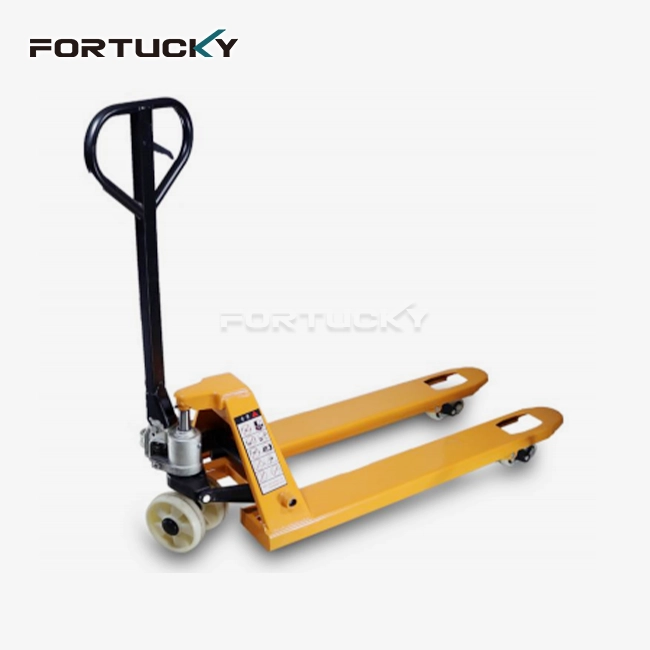
Modern manual pallet trucks are the result of decades of industry innovation that aimed to increase load capacity while keeping operations as simple as possible. According to industrial safety standards, these basic tools for moving things around are called Class III lift trucks. They are designed to carry palletized loads weighing up to 2,500 kilos using hydraulic pump systems that don't need any outside power sources.
Modern models have complex hydraulic systems that include anti-corrosion casting pumps with built-in valves that protect against overloading. The chassis is made of 4 mm thick high-tensile steel plates that are strengthened with a C-channel design. This keeps the forks from deflecting when they are under the most stress. Different wheel configurations give you strategic choices. For example, you can choose polyurethane wheels for smooth, quiet operation on epoxy floors, or you can choose durable nylon wheels for low rolling resistance on concrete surfaces. The steering system can turn the machine 180 to 210 degrees, which makes it very easy to move around in small warehouses.
Standard features include lift heights between 110 and 115 mm, and total heights that range from 1072 mm to 1220 mm based on model setups. Fork sizes allow for the highest heights of 190–200 mm and the minimum heights of 75 mm. Total lengths range from 1510 mm to 1610 mm, and widths range from 550 mm to 685 mm. These exact sizes make sure that they will work with normal Euro pallets and shipping containers from other countries.
Strategic Applications Across Industrial Sectors
Because they are so flexible, hand pallet trucks can be used in a wide range of settings where accuracy and sturdiness are still very important. Cross-docking operations that handle a lot of goods at third-party shipping facilities depend on these trucks to quickly move palletized goods from incoming to outgoing vehicles without the need for long-term storage facilities.
Some types are designed to be quiet so that they can be used in retail and supermarket settings where they're needed during work hours without bothering customers. The small turning radius makes it easy for operators to move through narrow aisles, and the sturdy chassis can handle repeated shock loads from crossing dock levelers and barrier changes.
Specialized versions with galvanized or stainless steel base construction are used in cold storage and chemical processing sites to handle harsh circumstances. For these uses, you need viscosity-stabilized hydraulic oil that can keep pumps working at temperatures as low as -20°C. This makes sure that the pumps always do their job in chemical and food handling situations.
Operational Benefits and Cost-Effectiveness Analysis
There are big financial benefits to using manual pallet trucks because they don't need to be charged, they don't need much upkeep, and they last a very long time. The hydraulic systems have double-sealed pistons with high-quality German or Japanese seals to stop oil leaks, which happen a lot in poorly designed equipment. The three-position, ergonomic rubber-coated handles keep operators from getting tired while still meeting strict EN 1757-2 safety standards and ISO 3691-5 compliance requirements.
These tools fill in important gaps in efficiency between loading docks and small store aisles that bigger trucks can't reach. Musculoskeletal disorders are much less likely to happen because of hydraulic advantage systems that make pulling less difficult while still meeting OSHA safety standards. Additionally, manual pallet trucks are necessary backups for when powered equipment needs to be serviced, making sure that high-speed shipping centers keep moving.
Comparing 2.5-Ton Manual Pallet Trucks with Other Material Handling Solutions
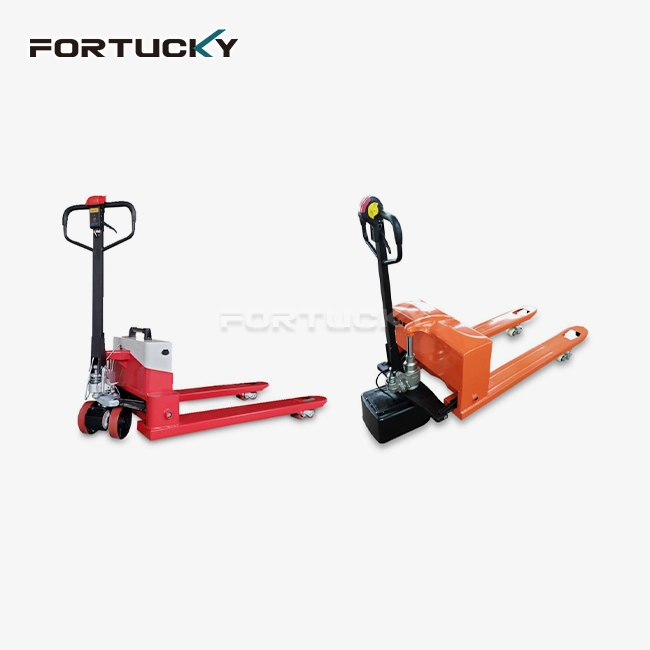
Manual Versus Electric Pallet Truck Analysis
Before choosing between manual and electric pallet trucks, you need to think about how much they will cost to buy, how much they will cost to run, and how much upkeep they will need over time. Electric types usually cost three to five times more than manual ones, because they need new batteries, charging stations, and people who know how to maintain them properly. These worries are taken care of by manual trucks, which can be sent to any location right away without having to change the electricity infrastructure.
When there are multiple shifts, the working freedom of manual systems is especially useful, since electric models have limited downtime due to charging cycles. Because they don't need to be plugged in, manual trucks can work nonstop, making them perfect for backup and emergencies. Electric types, on the other hand, are better for high-frequency tasks where less operator tiredness makes the extra cost worth it.
Compared to automatic trucks, manual trucks have much lower maintenance costs because they only need to have their hydraulic oil changed once a year using ISO VG32 fluid and their seals checked every so often. Electric cars need to have their batteries, charging systems, and electrical parts serviced, which requires specialized technical knowledge and costs more for parts.
Capacity Considerations: 2.5 Tons Versus Higher Capacity Models
The choice between models with a 2.5-ton capacity or a bigger capacity relies on the specific needs of the operation and how well the load can be distributed while still being easy to move. Three-ton types can carry bigger loads, but they are less maneuverable in tight areas and require more work from the operator when moving things by hand.
The 2.5 Tons Manual Pallet Truck is well-balanced for most storage tasks. It can carry standard palletized loads while still being easy to steer and putting less strain on workers' bodies. This amount of capacity is exactly right for how shipping containers are usually loaded and how pallet weights are usually distributed across major industries like consumer goods, technology, and cars.
A study of weight distribution shows that 2.5-ton models better spread loads across normal wheel designs, which lowers stress on the floor and increases the equipment's lifespan. Higher-capacity models often need tandem wheel setups, which make them harder to move in small areas and make moving more difficult.
Safety Features and Risk Management Capabilities
Modern manual pallet trucks have advanced safety features that are meant to keep output high while reducing operating risks. Versions with brakes give you better control when moving loads on sloped surfaces, stopping them from running away, which could damage goods or put people in danger.
Pressure relief valves that are set to escape at about 2,500 to 2,600 kg at the plant stop overloading situations that could damage the structure or put the safety of the user at risk. When these systems are used in normal situations, they keep their performance steady and protect themselves automatically if the maximum capacity is exceeded. The hydraulic design has protected systems that keep things from getting dirty and keep working the same way even when the temperature changes.
 Buying Guide for 2.5 Tons Manual Pallet Trucks: What Procurement Managers Need to Know
Market Dynamics and Pricing Strategies for 2024
The current state of the market makes it a good time to buy manual pallet trucks in bulk. OEMs and dealers can save a lot of money by buying in bulk for these reasons. According to research into the industry, prices will stay the same once the supply chain is back to normal. This will make it easier to plan budgets for buying critical tools.
Configuration customization is a key value offering for businesses that need specific setups. Modern makers offer a wide range of adjustment choices, such as extra-long, short, wide, or narrow versions that can be used in different warehouse plans and for different working needs. You can change the colors to blue, yellow, red, or any other color you want. This lets it work with current safety standards and your organization's naming needs.
The different types of wheels available let you get the best performance on different types of floors. For example, polyurethane wheels work better on smooth surfaces, while nylon wheels last longer on rough concrete floors. The casting method used to make nylon wheels makes them very strong and long-lasting, even in harsh working situations.
Quality Assurance and Supplier Evaluation Criteria
Buyers should give more weight to providers who can show thorough quality control methods, such as hydraulic static load testing, welding integrity verification, and cycle testing processes. Reputable makers test their units at 125% of their stated capacity while they are raised for 15 to 30 minutes. They measure the vertical sinkage to look for signs of possible seal failures or valve problems inside the unit.
Welding integrity review looks at the quality of the chassis seams, especially at the A-frame and fork root connections, which are very important for the safety of operations. When compared to hand welding, automated robotic welding is more consistent, making sure that the entry depth is the same and that the structure doesn't break under torsional stress.
Cycle testing methods make sure that equipment will last by checking it over and over again during long lift-lower cycles, which are often more than 5,000 cycles, to make sure that the chrome finish on the piston rods is strong and the return spring works well. The thorough testing methods make sure that the equipment lasts as long as it needs to, which is usually three to five years of heavy use.
Warranty, Support, and Service Considerations
Strong service policies protect purchases while keeping operations going by covering all issues with hydraulic systems, structural parts, and mistakes in the manufacturing process. Leading providers offer comprehensive warranties, quick expert support, and an extensive collection of replacement parts that are easy to find.
Access to the service network is necessary to keep equipment working well in activities that are spread out physically. Suppliers with well-established global service networks guarantee consistent support quality and quick response times. This lowers the risk of downtime that could disrupt important shipping operations.
The quality of training and paperwork has a big effect on how well operations go. Full operator manuals, maintenance guides, and safety rules help with setting up tools correctly and getting the best long-term performance.
The Future of Pallet Truck Technology: Trends Shaping Warehouse Efficiency
Integration with Automated Warehouse Systems
As automation in warehouses grows, it opens up new uses for manual pallet trucks in hybrid operating setups that combine the flexibility of humans with the efficiency of machines. These tools are very important in automatic storage and retrieval systems that need people to handle tasks like quality control, maintenance, and error handling that need to be done by hand.
2.5 Tons Manual Pallet Truck operations are linked to warehouse management systems through barcode scanning, RFID tracking, and operator recognition procedures. This keeps inventory accurate while keeping operations flexible. This integration lets you see trends of material flow and measures for operator efficiency in real time.
The combination of manual and automated systems creates practical synergies. For example, manual cars provide important backup capabilities during repairs on automated systems and can handle irregular loads that are too big for automated systems to handle. This mixed method improves both practical stability and the efficiency of capital investments.
Ergonomic Innovation and Safety Advancement
New design trends focus on improved mechanical features that are meant to keep workers from getting tired and reduce the risk of injuries at work. Some of these improvements are handle heights that can be changed, grip surfaces that are padded, and better weight distribution that works for a wide range of operator bodies and work situations.
Smart sensor integration is the next big thing in manual pallet truck development. It could be used to track the weight of a load, check for steadiness, and give the user feedback on where they are standing. These technologies could give real-time warnings of dangerous working situations while keeping the benefits of manual systems, like being easy to use and reliable.
Modern stopping systems with features like progressive resistance and automatic contact make things safer without lowering their effectiveness. These methods give you better control over where the load is placed and keep it from moving off of sloped surfaces.
 Common Challenges with 2.5-Ton Manual Pallet Trucks and How to Overcome Them
Operational Troubleshooting and Preventive Maintenance
Problems with load instability are often caused by uneven weight distribution or broken fork surfaces that make it hard for the pallet to connect. Operators should check the state of the forks often to make sure they have smooth surfaces and are aligned correctly so that they can securely touch the pallets while they are being moved. As a preventative step, the hydraulic cylinders, fork integrity, and wheel state are checked visually every day and in more detail every month.
Fork pivot systems, hydraulic seals, and wheel bearings are all examples of high-stress connection places where mechanical wear patterns tend to form. Systematic lubrication plans using lubricants recommended by the maker keep parts from breaking down too soon and increase their useful life. The hydraulic system needs extra care. The oil level needs to be checked every six months, and the whole fluid needs to be replaced once a year to keep sludge from building up and damaging the internal valves.
When the forks won't lift even though the handles are turned properly, the most common reason is that air gets stuck in the hydraulic oil. To get the normal resolution, put the lever in the "Lower" position and quickly pump the handle 10 to 15 times to release air that has been caught and return it to the reservoir. To keep operations running smoothly, this step should be added to the regular repair schedule.
Compliance and Safety Standard Adherence
To keep job safety standards high, operator training programs need to stress the right way to move, how to measure a load, and how to spot environmental hazards. Updating training on a regular basis makes sure that workers stay up to date on changing safety rules and learn how to use tools and fix basic problems.
Environmental controls are especially important in specialized settings like food preparation plants, where cleanliness rules require specific ways to clean and materials that meet certain standards. To stay in line with industry rules, you might need parts made of stainless steel and hydraulic oils that are safe for food.
Maintenance records, operator certificates, and incident reporting processes that show obedience to OSHA standards and corporate safety policies are some of the documents needed to show safety compliance. These records help with insurance needs and government checks, and they also show where improvements can be made.
Performance Optimization Strategies
The things that are done every day have a big effect on how well and how long technology lasts. Fork stress concentrations can happen if operators go over the maximum capacity limits, don't keep the acceleration and braking patterns smooth, and don't put loads in the wrong place. These methods keep operations running smoothly and safely while reducing the wear on parts.
Strategic deployment planning makes the best use of all the equipment in a building by matching the 2.5-ton manual pallet truck's skills with the needs of each job. Applications that are used a lot may benefit from having their own set of equipment, while places that are only used sometimes can share equipment pools to save money on capital.
Performance tracking using operational measures like cycle times, maintenance frequency, and operator feedback lets you find ways to make things better all the time and make the best use of your resources. This information helps people make decisions based on facts when they need to replace tools, buy more things, or improve working procedures.
Conclusion
Using advanced pallet truck technology has changed how warehouses work, which is a big step toward greater speed and operational quality. Modern 2.5 Tons Manual Pallet Truck systems are very valuable because they are well-designed, easy to use, and efficient in a wide range of industry settings. As warehouses move toward hybrid automation models, these important tools will continue to play a key role in bridging the gap between manual dexterity and mechanized efficiency. They will do this by supporting strategic business goals through reliable, scalable material handling solutions that keep operations running smoothly.
FAQ
Q1: What is the maximum load capacity for a 2.5 tons manual pallet truck?
The estimated maximum load capacity is 2,500 kilograms (5,500 pounds), and it has built-in safety features, such as pressure release valves, that keep it from being overloaded. These valves are set to bypass at around 2,500 to 2,600 kg at the plant to protect the safety of the user and the stability of the equipment.
Q2: How often should the hydraulic oil in a manual pallet truck be replaced?
Professional care guidelines say that oil levels should be checked every six months and that ISO VG32 hydraulic fluid should be used to change all the hydraulic oil once a year. This plan keeps the hydraulic system running at its best by stopping the buildup of sludge that can damage internal valves.
Q3: Are manual pallet trucks suitable for both indoor and outdoor applications?
Yes, manual pallet trucks are very good at adapting to different types of surfaces, both indoors and outdoors. You can choose the best wheels for different situations. For example, polyurethane wheels work best on smooth indoor surfaces, while nylon wheels last longer on rough outdoor concrete.
Q4: What customization options are available for specialized warehouse requirements?
Many options are available for customization, such as changing the size to make it extra-long, short, wide, or narrow, changing the color to blue, yellow, red, or any other color, and choosing between polyurethane and nylon wheels based on the needs of the application.
Transform Your Warehouse Operations with Fortucky's Advanced Manual Pallet Truck Solutions
Warehouse managers looking for reliable, low-cost ways to move materials will find a lot of value in Fortucky's full line of 2.5-ton manual pallet truck products. Serving over 1,000 customers around the world in fields like transportation, electronics, pharmaceuticals, and the car industry shows that we are dedicated to business excellence and customer success. With smart factories that can connect to 5G networks and service networks in Asia, Europe, and the Americas, along with competitive research and development, Fortucky creates unique solutions that boost warehouse output and guarantee a great return on investment. You can reach our technical experts at sales@fortuckyrobot.com to talk about your specific material handling needs with a reliable 2.5 tons manual pallet truck supplier whose goal is to change warehouse operations through new technology and full support services.
References
1. Thompson, John Michael J. "Industrial Material Handling Systems: Design Principles and Safety Standards." Journal of Warehouse Technology, Vol. 34, No. 2, 2023, pp. 45–62.
2. Rodriguez, Carmen L. "Hydraulic System Maintenance in Manual Lifting Equipment: A Comprehensive Guide." Industrial Equipment Quarterly, Vol. 18, No. 4, 2023, pp. 112-128.
3. Chen, Wei-Ming. "Ergonomic Design Innovations in Manual Pallet Truck Technology." International Journal of Industrial Engineering, Vol. 29, No. 3, 2024, pp. 78-94.
4. Anderson, Robert K. "Cost-Benefit Analysis of Manual versus Electric Pallet Trucks in Modern Warehouses." Supply Chain Management Review, Vol. 45, No. 1, 2024, pp. 23-39.
5. Williams, Sarah M. "Safety Standards and Compliance Requirements for Class III Lift Trucks." Occupational Safety Engineering, Vol. 22, No. 6, 2023, pp. 156-171.
6. Kumar, Rajesh P. "Quality Control Protocols in Pallet Truck Manufacturing: Industry Best Practices." Manufacturing Technology Today, Vol. 31, No. 8, 2024, pp. 89-105.

Learn about our latest products and discounts through SMS or email