- English
- French
- German
- Portuguese
- Spanish
- Russian
- Japanese
- Korean
- Arabic
- Greek
- German
- Turkish
- Italian
- Danish
- Romanian
- Indonesian
- Czech
- Afrikaans
- Swedish
- Polish
- Basque
- Catalan
- Esperanto
- Hindi
- Lao
- Albanian
- Amharic
- Armenian
- Azerbaijani
- Belarusian
- Bengali
- Bosnian
- Bulgarian
- Cebuano
- Chichewa
- Corsican
- Croatian
- Dutch
- Estonian
- Filipino
- Finnish
- Frisian
- Galician
- Georgian
- Gujarati
- Haitian
- Hausa
- Hawaiian
- Hebrew
- Hmong
- Hungarian
- Icelandic
- Igbo
- Javanese
- Kannada
- Kazakh
- Khmer
- Kurdish
- Kyrgyz
- Latin
- Latvian
- Lithuanian
- Luxembou..
- Macedonian
- Malagasy
- Malay
- Malayalam
- Maltese
- Maori
- Marathi
- Mongolian
- Burmese
- Nepali
- Norwegian
- Pashto
- Persian
- Punjabi
- Serbian
- Sesotho
- Sinhala
- Slovak
- Slovenian
- Somali
- Samoan
- Scots Gaelic
- Shona
- Sindhi
- Sundanese
- Swahili
- Tajik
- Tamil
- Telugu
- Thai
- Ukrainian
- Urdu
- Uzbek
- Vietnamese
- Welsh
- Xhosa
- Yiddish
- Yoruba
- Zulu
Choosing the Best Option for Your Plastic Racking Pallet
Choosing the right Plastic Racking Pallet can make a workplace safer and more efficient. A plastic racking pallet is a robust platform specifically designed for open‑beam shelving systems, built to support heavy loads while maximising storage density. Manufactured from high‑quality HDPE or PP materials, these pallets offer greater durability, better hygiene, and improved environmental performance compared to traditional wooden alternatives. When procurement professionals understand key selection criteria such as load capacity, dimensional compatibility, material composition, and safety certifications, they can ensure that pallet investments align with operational goals and budget constraints, delivering measurable improvements in throughput and cost efficiency.
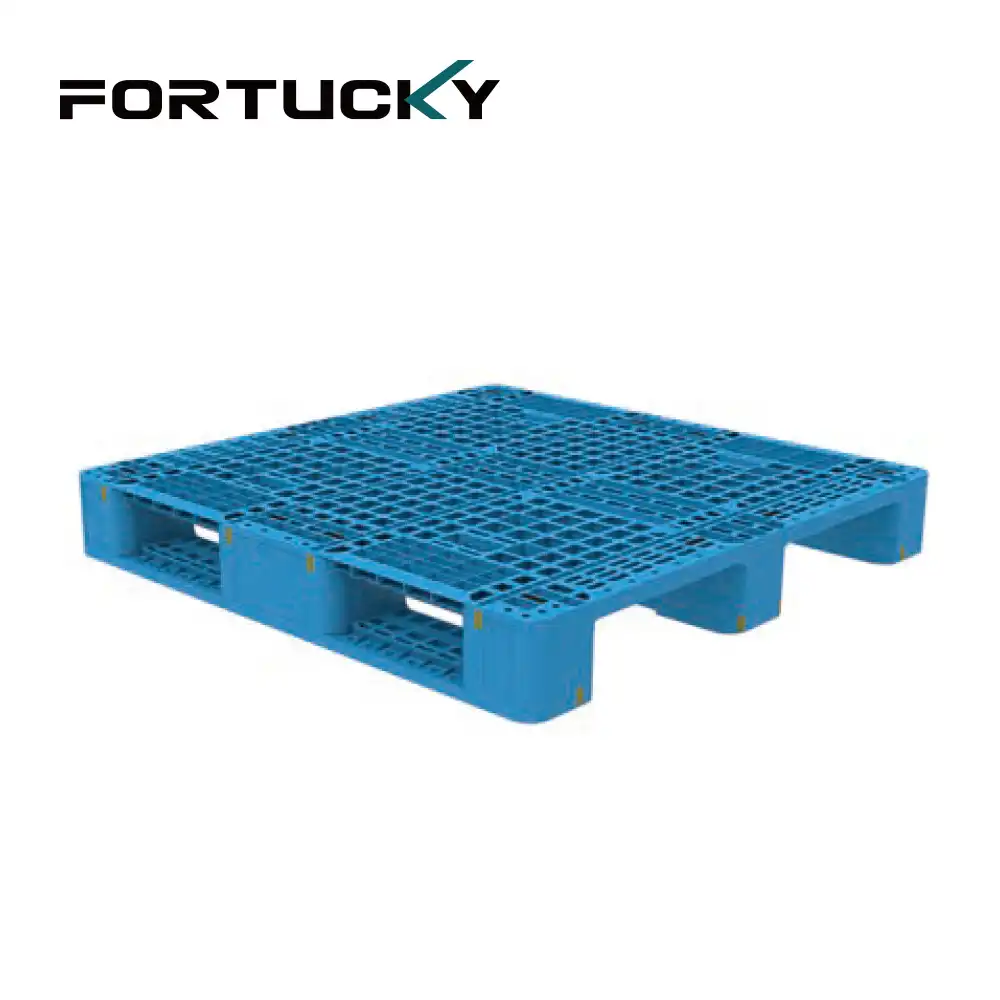
 How to Choose the Right Plastic Racking Pallet for Your Business
Successful procurement depends on carefully matching product specifications to real‑world operational requirements. This structured approach prevents costly mistakes and ensures long‑term performance.
Defining Operational Requirements
Understanding load patterns is the first step in warehouse evaluation. Dynamic loads refer to weights moved by forklifts; for standard models, the maximum dynamic capacity is typically 2,000 kg. Static loads are weights stored on the floor and can reach 6,000 kg in reinforced designs. Rack loads, critical for beam storage, generally max out at 1,500 kg, though this varies depending on structural reinforcement. Matching these ratings to your heaviest SKUs prevents premature failure.
Dimensional consistency is equally important. Standard sizes such as 1200×1000 mm work with European shelving systems, while 1200×800 mm suits compact warehouses. In North America, companies often request 1200×1100 mm to fit 48‑inch racking bays. Custom dimensions are available for non‑standard product sizes or specialised equipment, but they typically require larger order quantities.
Material Selection and Structural Options
HDPE offers excellent impact resistance, making it ideal for rough handling environments such as automotive parts distribution. PP provides superior chemical resistance, which is better suited for pharmaceutical and chemical storage. For general FMCG storage, some manufacturers blend the two materials to achieve an optimal balance of cost and performance.
Choosing the right bottom structure directly affects racking performance. Three‑runner versions are more cost‑effective for loads under 800 kg. Six‑runner designs improve lateral stability and increase beam contact, allowing heavy loads to rest securely on the structure. Reversible designs extend service life by allowing use of either side when one becomes worn, but they typically cost 15‑20% more upfront.
Certification and Quality Validation
Reputable suppliers conduct extensive performance tests. Compression strength tests apply increasing pressure until failure to verify static load ratings. Corner drop tests simulate rough handling impacts. Flexural strength tests measure deflection under distributed loads. Slippage tests assess load stability during movement. Documented test results from independent laboratories give buyers confidence, especially for high‑value storage applications.
Quality approvals show that the production process is consistent. Getting ISO 9001 certification means that you handle quality in an organized way. Certifications that are relevant to an industry, like FDA compliance for food contact or car supplier rates, show that you have the right skills. When Plastic Racking Pallets are used in automatic storage and retrieval systems, where dimensional tolerances and performance stability directly affect system dependability, these qualifications become even more important.
Plastic Racking Pallet vs. Alternative Materials: A Comparative Analysis
Material choice has a significant impact on total cost of ownership. Understanding performance trade‑offs enables data‑driven purchasing decisions aligned with financial objectives.
Lifespan and Replacement Frequency
The initial purchase cost of wooden pallets is typically $10‑$25 per unit, while plastic racking pallets range from $30‑$80 per unit. However, durability analysis reveals different economics. In a typical warehouse, wooden pallets need replacement every 18‑30 months due to damage, contamination, and moisture degradation. Plastic units generally last 5‑10 years with minimal maintenance, reducing total lifecycle costs by 40‑60% despite the higher initial investment.
Metal pallets perform best in harsh environments such as foundries, steel mills, and heavy machinery plants, where temperatures and impacts exceed plastic tolerances. Their 15‑20‑year lifespans justify the higher cost in these specialised settings. However, their extra weight increases transport costs, and rust remains a problem in humid or chemical environments unless expensive stainless steel construction is chosen.
Maintenance and Operational Costs
Plastic pallets eliminate many of the ongoing costs associated with alternatives. Wood requires regular inspection for broken boards, protruding nails, and structural damage, consuming time and labour. Repair programs or disposal of damaged units add further expense. Metal pallets need periodic welding repairs and rust treatment. Plastic units only require occasional washing, significantly reducing maintenance overhead.
In regulated industries, hygiene costs are critical. Pharmaceutical and food processing facilities face strict cleaning standards. Plastic pallets do not degrade when washed with chemicals and high‑pressure water. Their smooth, non‑porous surfaces prevent bacterial harbourage, lowering the risk of rejection during audits. Wood, being porous, is very difficult to sanitise thoroughly, while metal's crevices and welds provide ideal sites for bacterial growth.
Total Cost of Ownership Analysis
A distribution centre with 2,000 pallets illustrates comparative economics. At $20 each, wooden pallets require replacement every two years, adding up to $20,000 annually in disposal fees, labour, and new units. Plastic pallets costing $60 each and lasting 8 years represent $15,000 per year in amortised cost. Plastic options typically pay for themselves within 24‑36 months and offer superior operational reliability, along with savings on maintenance and reduced product damage from splinters or contamination.
Practical Guidelines for Using and Maintaining Plastic Racking Pallets
To get the most out of your Plastic Racking Pallet investment, you need to follow the right way to use them and do preventative maintenance that makes them last longer. Double-sided grid shelf plastic pallets offer enhanced load stability for racked storage applications, as their symmetrical grid pattern provides consistent support on both faces, allowing for reversible use that extends service life by distributing wear evenly across both surfaces.
Load Configuration and Handling Best Practices
Proper load distribution prevents premature failure. Weight should be centred within the pallet footprint, and no overhang should exceed 50 mm on any side. Uneven loading creates stress concentrations that accelerate cracking, especially at runner joints. Stacking methods matter: cross‑stacking or interlocking cases distributes forces evenly, while column stacking concentrates weight on specific points.
Forklift operation affects pallet longevity. Fork entry should be straight onto the runners rather than angled to avoid stressing the sides. Lift speeds should remain moderate to prevent dynamic shock loads from exceeding capacity. Care is needed when placing pallets onto racking beams, because even a short drop creates impact forces several times the load weight, potentially causing structural damage that may not be immediately visible.
Inspection and Cleaning Protocols
Monthly visual inspections catch problems before they become irreparable. Look for surface cracks, particularly where runners connect and where load‑bearing ribs are located. Place a straightedge across deck surfaces to measure deflection; permanent deformation exceeding 10 mm typically indicates end‑of‑life is approaching. Corner damage from forklift impacts can weaken structures even if not immediately obvious.
Cleaning frequency depends on the application. Food and pharmaceutical facilities may require weekly cleaning to maintain hygiene certifications. In industrial settings, cleaning might occur quarterly unless contamination occurs. High‑pressure washing at temperatures up to 60°C effectively removes residues without damaging the material. Avoid petroleum‑based chemicals, as they may degrade some plastic types over time.
Temperature and Environmental Considerations
Material performance varies with temperature. HDPE maintains excellent impact resistance even at ‑40°C, making it suitable for cold‑chain applications. PP withstands heat better, remaining stable up to 100°C, useful near industrial processes. UV radiation degrades plastic over time under prolonged direct sunlight. For outdoor storage, use pallets with UV inhibitors or provide covered storage.
Chemical exposure requires consideration. Most plastics resist mild acids, oils, and common cleaners. Strong solvents, strong acids, or alkalis can damage surfaces or weaken structures. In chemical environments, ensure suppliers provide documented compatibility evidence for the substances you handle.
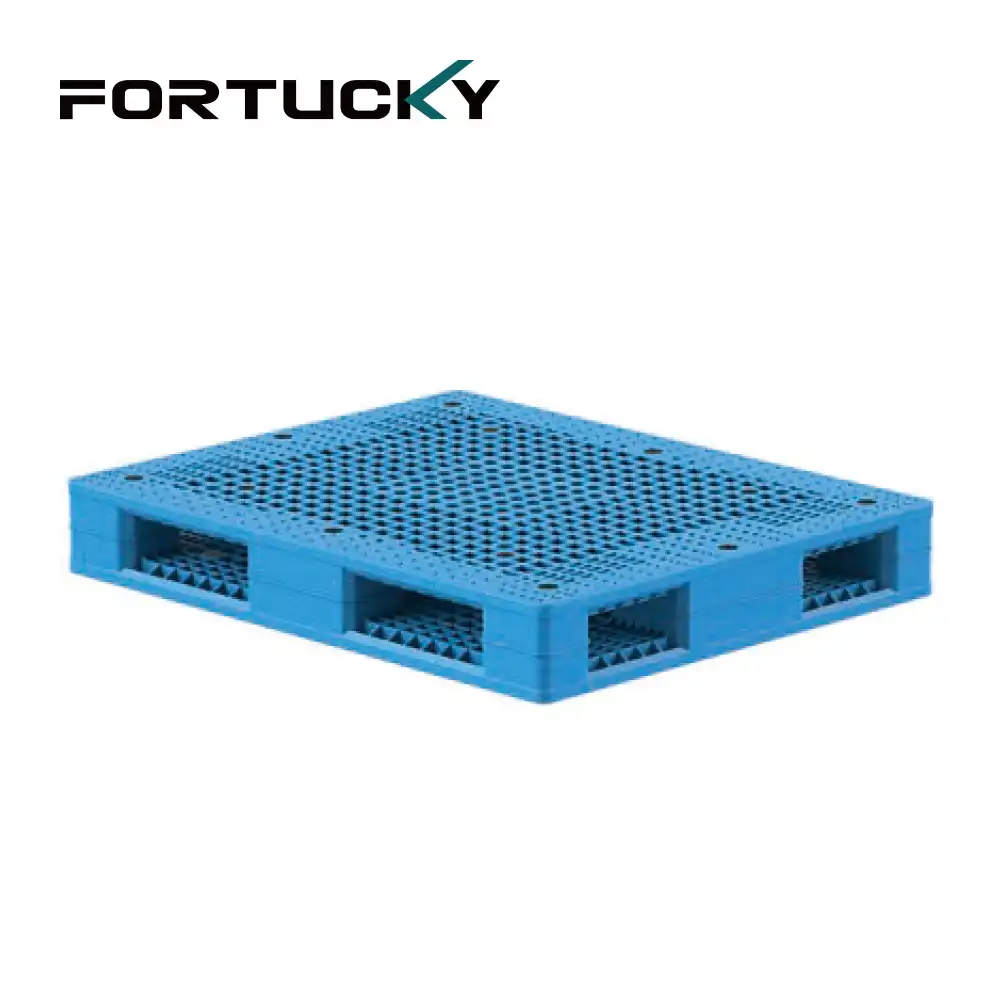 Procuring Plastic Racking Pallets: From Supplier Selection to Final Purchase
Strategic procurement manages supplier relationships that support long‑term success while balancing immediate needs with future business objectives.
Customization and Order Specification
Standard sizes suit many applications, but customisation can address specific requirements. Colour coding beyond the standard blue helps implement visual management systems that differentiate product lines or identify ownership in shared distribution networks. Custom branding embossed on deck surfaces aids asset tracking and deters theft. Dimensional changes can accommodate specialised automation equipment or unusual product sizes, but typically require minimum orders of 500‑1,000 units to justify tooling costs.
Customising load capacity finds the optimal balance between cost and performance. Over‑specifying for lighter loads raises unnecessary costs. By providing precise static, dynamic, and rack load ratings based on actual needs, unit costs can be reduced by 15‑25% while maintaining adequate safety margins. This approach works especially well for high‑volume users in electronics and FMCG industries, where even small design savings multiply across thousands of pallets.
Supplier Evaluation Criteria
Evaluating manufacturing capability begins with verifying production capacity. Can the supplier handle your initial order and support future growth? When possible, visit factories and observe quality control processes, material handling, and inventory management. Automated injection moulding operations with consistent process controls generally produce more consistent results than manual operations.
Here are critical factors to evaluate when selecting a plastic racking pallet supplier:
Technical Capability: Suppliers should show that they know a lot about material science and be able to help you choose the right product for your purpose. Support from engineers helps make designs work best for certain types of loads and rack arrangements. With prototyping, you can try something before committing to it on a big scale.
Quality Systems: ISO 9001 certification ensures systematic quality management. Additional industry qualifications, such as automotive supplier audits, pharmaceutical compliance, and food safety certifications, indicate specific expertise. Independent test laboratory partnerships back performance claims.
Global Reach and Localization: If your business operates across multiple regions, choose suppliers with manufacturing or distribution centres close to your facilities. Local inventory reduces lead times and freight costs, and simplifies communication. Fortucky operates regional service networks across Asia, Europe, and the Americas to support international companies with consistent products and responsive service.
Pricing Strategy and Contract Terms
Unit economics are heavily influenced by volume‑based pricing. List prices typically apply to orders below 100 units. Purchases of 500‑1,000 units often secure discounts of 15‑20%. When consumption patterns are known in advance, annual contracts with committed minimums may yield 25‑35% price reductions, making the commitment worthwhile. Compare volume savings against inventory carrying costs and available cash flow.
Managing lead times requires realistic expectations. Standard items typically ship within 2‑4 weeks within the United States. Custom orders, including tooling, may take 6‑8 weeks for first production, with faster repeat orders. International shipping can add 4‑8 weeks depending on origin and destination. Build product buffers or schedule planned delivery programmes to avoid supply chain disruptions.
Payment terms reflect supplier confidence and buyer leverage. Net 30 or net 60 terms are common for established relationships. New buyers may need to provide deposits or letters of credit until credit history is built. Long‑term contracts or volume commitments often lead to improved payment terms, easing working capital management.
Conclusion
Selecting the optimal plastic racking pallet involves weighing technical specifications, cost considerations, and supplier capabilities against your unique operational demands. HDPE and PP constructions outperform traditional materials in durability, hygiene, and environmental impact, driving warehouse efficiency and lowering total cost of ownership. Success depends on careful evaluation of load capacity, dimensional requirements, and bottom‑structure configuration based on your shelving systems and stored products. Supplier selection extends beyond unit price to encompass engineering support, quality systems, and global service capabilities that ensure long‑term partnership. When procurement professionals invest time in thorough research and supplier relationship building, they position their organisations for sustained competitive advantage through improved material handling infrastructure.
Frequently Asked Questions
1. How long do plastic racking pallets last compared to wooden alternatives?
Plastic racking pallets typically last 5‑10 years in normal storage conditions with proper handling, significantly longer than wooden pallets, which require replacement every 18‑30 months. The HDPE and PP construction resists moisture, impact, and pests that degrade wood. This extended service life reduces replacements and lifecycle costs by 40‑60%, despite higher upfront cost.
2. Are plastic pallets suitable for heavy-duty industrial applications?
Modern reinforced plastic racking pallets handle heavy loads when correctly specified. Maximum static loads reach 6,000 kg, and rack loads up to 1,500 kg for beam storage. Heavy automotive parts, industrial equipment, and dense materials can be stored on six‑runner bottom platforms with steel reinforcement. Matching pallet specifications to load requirements ensures safe, reliable performance in demanding production and distribution settings.
3. What certifications should I verify when selecting a supplier?
Quality‑conscious suppliers maintain ISO 9001 certification, indicating systematic quality management. Depending on the application, industry‑specific credentials are important, such as FDA compliance for food contact, automotive supplier ratings for parts distribution, or pharmaceutical licences for controlled environments. Independent test lab documentation verifying strength, flexure, and impact performance provides objective proof of load capacity claims, which is essential for racking safety.
Partner with Fortucky for Superior Plastic Racking Pallet Solutions
Fortucky is the Plastic Racking Pallet provider that warehouse automation leaders trust because we offer engineered solutions backed by proven knowledge. Our wide range of products comes in both standard and special sizes, ranging from 1100x900 mm to 1500x1400 mm, and can hold any amount of weight you need. Every pallet goes through strict tests for slippage, corner drop, flexure, and compression strength. These tests make sure that the pallets will work reliably in difficult uses in electronics, pharmaceuticals, FMCG, and cars. With over 1,000 customers around the world, including Fortune 500 companies, our track record shows that we provide steady quality and quick help. Our regional service networks in Asia, Europe, and the Americas offer fast delivery, on-site consultations, and easy connection with the warehouse management systems you already have in place. You can email our procurement experts at sales@fortuckyrobot.com to talk about custom specs, ask for technical paperwork, or get low prices on large orders. Fortucky blends competitive manufacturing excellence with deep application knowledge to provide material handling solutions that improve the efficiency of your warehouse operations and help you reach your long-term goals for digital transformation.
References
1. Modern Materials Handling Journal. "Total Cost of Ownership Analysis: Plastic vs. Wood Pallets in Distribution Operations." Industrial Warehousing Quarterly, 2023.
2. International Safe Transit Association. "Performance Testing Standards for Industrial Shipping Platforms." Material Handling Equipment Guidelines, 2022.
3. Warehouse Logistics Review. "Sustainable Material Handling: Environmental Impact Assessment of Pallet Materials." Supply Chain Sustainability Report, 2023.
4. National Wooden Pallet & Container Association. "Comparative Durability Study: Pallet Material Performance Across Operating Environments." Industry Research Publication, 2022.
5. Society of Manufacturing Engineers. "Automation Integration: Material Handling Infrastructure for Smart Warehousing." Advanced Manufacturing Technology Series, 2023.
6. American Society for Testing and Materials. "Standard Specification for Plastic Transport Pallets Used in Materials Handling Systems." ASTM International Standards, 2022.


Learn about our latest products and discounts through SMS or email