- English
- French
- German
- Portuguese
- Spanish
- Russian
- Japanese
- Korean
- Arabic
- Greek
- German
- Turkish
- Italian
- Danish
- Romanian
- Indonesian
- Czech
- Afrikaans
- Swedish
- Polish
- Basque
- Catalan
- Esperanto
- Hindi
- Lao
- Albanian
- Amharic
- Armenian
- Azerbaijani
- Belarusian
- Bengali
- Bosnian
- Bulgarian
- Cebuano
- Chichewa
- Corsican
- Croatian
- Dutch
- Estonian
- Filipino
- Finnish
- Frisian
- Galician
- Georgian
- Gujarati
- Haitian
- Hausa
- Hawaiian
- Hebrew
- Hmong
- Hungarian
- Icelandic
- Igbo
- Javanese
- Kannada
- Kazakh
- Khmer
- Kurdish
- Kyrgyz
- Latin
- Latvian
- Lithuanian
- Luxembou..
- Macedonian
- Malagasy
- Malay
- Malayalam
- Maltese
- Maori
- Marathi
- Mongolian
- Burmese
- Nepali
- Norwegian
- Pashto
- Persian
- Punjabi
- Serbian
- Sesotho
- Sinhala
- Slovak
- Slovenian
- Somali
- Samoan
- Scots Gaelic
- Shona
- Sindhi
- Sundanese
- Swahili
- Tajik
- Tamil
- Telugu
- Thai
- Ukrainian
- Urdu
- Uzbek
- Vietnamese
- Welsh
- Xhosa
- Yiddish
- Yoruba
- Zulu
Three Runner vs Full Perimeter Plastic Pallet: Which One Is Right for Your Business?
Whether you choose 3 Runners Plastic Pallets or full‑perimeter plastic pallets depends on your business needs, the material handling equipment you use, and the requirements of your industry. Three‑runner plastic pallets, which have three horizontal support beams, allow forklifts to access them from all four sides, making them ideal for dynamic warehouses where rapid turns and efficient stacking are paramount. They perform well in applications that require flexibility, moderate load capacities, and compatibility with automated systems. Full‑perimeter plastic pallets, with their continuous frames around the entire base, offer superior structural stability and load distribution, making them the best choice for very heavy‑duty uses and specialised racking systems. To make the right decision for your facility and protect your investment, you should consider factors such as frequency of use, weight, space constraints, and long‑term costs.
 Understanding the Basics of Three-Runner and Full-Perimeter Plastic Pallets
Structural Design of Three-Runner Pallets
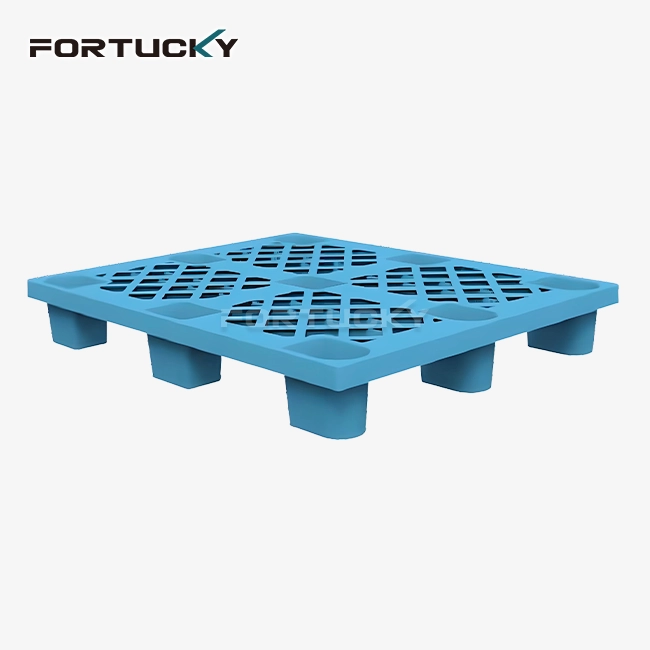
Three‑runner plastic pallets have three parallel support beams that run lengthwise under the deck. This configuration usually consists of two outer runners and one centre runner to provide balanced support. They are typically injection‑moulded from high‑density polyethylene (HDPE) or polypropylene (PP), giving the right combination of strength and low weight. The gaps between the runners allow forklifts and pallet jacks to enter from all four sides, significantly improving handling efficiency in busy warehouses. Common dimensions are 1200×1000 mm, 1200×800 mm, and 1400×1200 mm, with custom sizes up to 1500×1400 mm available to meet various industry standards and equipment requirements.
Full Perimeter Pallet Construction
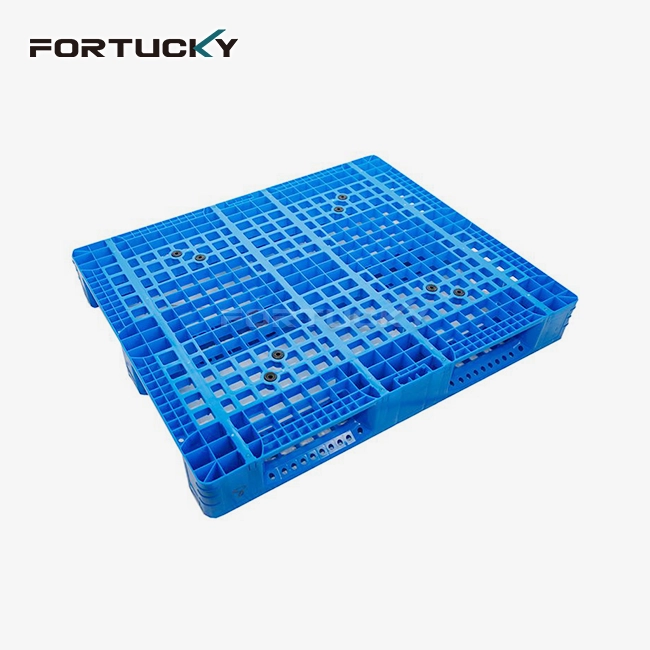
Full‑perimeter plastic pallets feature a frame that runs continuously around the base, creating a closed‑bottom structure that distributes weight evenly across the entire perimeter. This design maximises contact with racking beams and provides excellent stability for heavy loads. The solid frame prevents bending and deformation even under significant weight, making these pallets invaluable in situations where load integrity is critical. They typically allow only two‑way forklift entry instead of four‑way, but this trade‑off delivers better performance in high‑racking environments and with certain automated storage and retrieval systems.
Material Composition and Manufacturing
Both types are manufactured from virgin HDPE or PP materials that resist mould, bacteria, and moisture. Injection moulding produces a smooth, one‑piece structure with no separate parts or weak points that could fail under stress. This manufacturing process ensures consistent quality, accurate dimensions, and predictable performance. The material choice directly affects load capacity, temperature resistance, and long‑term stability. HDPE pallets are extremely durable and perform well in cold‑chain applications, while PP pallets offer greater flexibility and chemical resistance, making them suitable for pharmaceutical and food‑processing environments.
Load Capacity and Durability: Which Pallet Performs Better?
Load-Bearing Capabilities
The load capacities of 3 Runners Plastic Pallets are amazing, even though they are lighter. Reinforced ribs along the three legs evenly spread weight, holding up to 6 tons of static load, up to 2 tons of dynamic load, and up to 1.5 tons of rack load when properly placed on racking beams. These requirements are good enough for most production and logistics tasks that involve packaged goods, technology, car parts, and consumer goods. The main benefit is that the weight is evenly spread across the three support places, which keeps the middle from sinking when it's being moved or stored.
Full Perimeter Pallet Construction
Full‑perimeter pallets excel in applications where load integrity must be preserved. The continuous frame spreads weight over a larger surface area, reducing stress concentration and minimising load displacement under very heavy loads. This design can handle higher static loads and performs exceptionally well in high‑bay shelving systems where pallets remain stationary for extended periods. Their greater structural rigidity reduces the risk of warping or deformation when stacked upright with heavy loads on top.
Durability Under Operational Stress
Both types undergo extensive testing, including corner drop tests, flexural strength tests, and sliding tests, to ensure they meet performance standards. Three‑runner plastic pallets have proven durable in environments where they are frequently loaded, unloaded, and moved. The reinforced rib structure withstands impact and maintains its shape after hundreds of handling cycles. Their resistance to cracking, splitting, and stress fractures gives them a service life measured in years rather than months, offering a better return on investment than less durable alternatives.
Full‑perimeter pallets provide superior protection against edge and corner damage due to their continuous frame. This design is especially valuable in automated warehouses where pallets interface with ASRS equipment, robotic pickers, and conveyor systems that require precise dimensional stability. The robust base structure remains strong even after repeated machine handling, reducing downtime caused by broken pallets and damaged products.
Operational Efficiency and Cost Considerations
Handling Efficiency in Warehouse Operations
The four‑way entry of three‑runner plastic pallets streamlines operations. Forklift drivers can approach from any direction without repositioning the pallet, speeding up movement in congested distribution centres. This flexibility is particularly important in cross‑docking, where speed directly affects customer satisfaction and costs. Compared to full‑perimeter versions, these pallets are also lighter, which reduces operator fatigue and energy consumption when used with automated guided vehicles.
Space utilisation is another advantage. Empty three‑runner pallets nest together, saving up to 70% more storage space than non‑stackable alternatives. This optimisation frees up warehouse capacity for revenue‑generating inventory instead of idle equipment. When loaded, the stable runner design allows safe stacking without additional stabilisation tools or time‑consuming locking mechanisms.
Total Cost of Ownership Analysis
The initial purchase price is only one part of a pallet’s cost. Three‑runner plastic pallets typically have a higher upfront cost than wooden pallets, but their total cost of ownership is much lower because they last longer, require less maintenance, do not damage products with splinters, and maintain consistent dimensions that prevent jams in automated systems. At the end of their useful life, they can be recycled, supporting environmental initiatives and recovering residual value through material reclamation programmes.
Environmental Considerations
Because they last a long time and can be recycled, plastic boxes help make supply chains more environmentally friendly. Instead of wood pallets, which need to be fumigated for international shipping and contribute to worries about deforestation, plastic replacements are better for the environment and meet biosafety standards for global trade. Environmentally friendly and recyclable plastic tripod crates and full perimeter designs can both be made from recycled materials and can be fully recovered when they are no longer needed. This closes the material loop and cuts down on the amount of trash that ends up in landfills. Because the service life is longer, fewer resources are needed to make replacements, and there are fewer emissions from shipping when pallets are replaced less often.
 Application Suitability: Matching Pallet Types to Business Needs
Ideal Applications for Three-Runner Pallets
Three‑runner plastic pallets benefit pharmaceutical warehouses, electronics production, fast‑moving consumer goods handling, and automotive parts logistics. Their four‑way accessibility improves efficiency in operations that use counterbalance forklifts, reach trucks, and pallet jacks. They support moderate weights and handle most packaged goods without losing their shape.
Cold‑chain and refrigerated transport operations value their moisture resistance and reliable performance across temperature ranges. The continuous plastic structure prevents water ingress and bacterial growth, meeting food safety and pharmaceutical cold‑chain certification requirements. Facilities that handle multiple product runs appreciate how easily these pallets can be cleaned and sanitised, preventing cross‑contamination.
Lean manufacturing environments benefit from consistent dimensions and efficient space utilisation for just‑in‑time inventory. These pallets work seamlessly with warehouse management systems and automated identification technologies, enabling real‑time tracking and optimised storage. Automotive parts suppliers supplying assembly plants rely on uniform sizing to avoid compatibility issues with AGVs and robotic work cells.
When Full Perimeter Pallets Excel
Full‑perimeter pallets are the best choice for ensuring load safety in heavy industries such as steel processing, construction equipment manufacturing, battery production, and bulk chemical handling. The continuous base structure supports heavy loads without bowing, protecting both the pallet investment and the valuable goods carried. For high‑bay racking systems exceeding eight metres in height, the added stability is essential to prevent pallet dislodgement and safety incidents in automated storage facilities.
Their precise dimensions, uniformity, and even base contact with racking beams make them suitable for specialised uses in narrow‑aisle automated warehouses. The full‑perimeter design eliminates concerns about runner alignment with rack positions, simplifying installation and reducing picking errors caused by unstable pallets. Facilities handling hazardous materials require robust construction that provides an extra safety margin in case of structural failure during emergencies.
Procurement Insights: How to Choose and Source Your Pallets
Key Selection Criteria
The most significant factor when choosing pallets is the load. Based on your heaviest products, calculate the maximum static, dynamic, and rack loads, including a safety margin for potential overloads. Three‑runner plastic pallets are ideal for organisations that move cargo under two tonnes and require flexible storage. Full‑perimeter pallets, however, can handle heavier loads and specialised storage demands. Consider extreme temperatures, chemical exposure, and ambient moisture when selecting between HDPE and PP.
Also evaluate how the pallet base works with your existing equipment. Verify that fork‑entry dimensions match your current fleet of material handling equipment, conveyor systems, and automation devices, and that pallet dimensions are compatible with your racks and transport vehicles. Mismatched specifications can create operational bottlenecks that reduce the efficiency gains of automation. Always test sample pallets in your actual working environment before making large‑scale purchases to avoid costly compatibility issues.
Customization Options and Specifications
Leading manufacturers offer extensive customisation to meet specific business needs. Deck designs include grid, solid, and flat top options to keep loads in place, prevent small items from falling through, or provide the largest possible surface area for unstable loads. Colour‑coding helps organise inventory and differentiate product lines; while blue is the conventional colour, custom colours simplify visual identification. Different bottom decks accommodate various handling tools and rack connectors.
Customizing the proportions optimizes space utilization and equipment compatibility. Special sizes from 1100x900mm to 1500x1400mm maximize cube area for storage and mobility, although 1200x1000mm and 1200x1200mm are fine for most needs. 3 Runners Plastic Pallets may be customized for weight by adjusting load capacity and material size. This avoids over-engineering and boosting expenses for minor usage.
Working with Trusted Suppliers
Partnering with experienced pallet manufacturers who understand industrial robotics and logistics can simplify implementation. Suppliers should provide compression strength test results, drop test reports, and material compliance certifications to assure performance and regulatory adherence. Technical support with specifications, load testing, and system integration accelerates rollout and prevents errors that could delay operations.
Bulk pallet purchases with staged deliveries can be coordinated with project timelines and budget cycles. Minimum order quantities vary by manufacturer and customisation level, typically ranging from a few hundred to several thousand units, depending on tooling requirements. Lead times for standard designs may be weeks, while complex custom designs requiring new moulds and testing can take months. Planning procurement around project objectives ensures timely availability and avoids supply shortages during peak seasons.
Conclusion
Choosing between three‑runner plastic pallets and full‑perimeter plastic pallets ultimately depends on your business objectives, operational demands, and material handling infrastructure. Three‑runner plastic pallets offer high versatility, four‑way forklift access, and excellent value for money in most manufacturing and logistics applications across the automotive, electronics, pharmaceutical, and fast‑moving consumer goods sectors. Their combination of strength, moderate weight, and ease of handling improves warehouse productivity and supports environmental goals through recyclability and long service life. For heavy‑duty uses, specialised racking systems, and automated factories where load stability is paramount, full‑perimeter pallets provide the highest level of structural integrity. Smart procurement decisions look beyond initial purchase prices to consider total cost of ownership, equipment compatibility, and long‑term operational objectives.
FAQ
1. What are the main differences between three-runner and full-perimeter plastic pallets?
Three linear support beams make three‑runner pallets lighter and allow forklift access from all four sides, while the continuous frame of a full‑perimeter pallet provides greater strength and typically restricts access to two sides. The runner design is easier to handle and stack in changing warehouse environments, whereas the full‑perimeter design is better for heavy‑duty applications and high‑density racking that requires superior load distribution. Both types are made from HDPE or PP, which are chemical‑resistant, moisture‑resistant, and recyclable. Your choice should be guided by practical needs that balance load capacity and handling efficiency.
2. How do I determine the right load capacity for my application?
As a safety measure, add at least 20% to the total weight of your goods, including packaging, and consider static, dynamic, and rack loads when the pallet is stored in racking. Most three‑runner plastic pallets handle up to 2 tonnes dynamic and 6 tonnes static, which suits electronics, automotive parts, and packaged goods. For very heavy loads, bulk items, or specialised high‑bay shelving, full‑perimeter designs with better load distribution may be required. Always consult material handling engineers and test with actual loads before full implementation.
3. Can plastic pallets be customized for specific operational needs?
Yes, manufacturers offer many customisation options for dimensions, load capacities, deck styles, and colours. Standard sizes from 1100×900 mm to 1500×1400 mm meet most transport and equipment requirements, and fully unique sizes are available for special needs. Deck types include grid, solid, and flat top to suit different goods and security levels. Various bottom deck configurations accommodate different handling tools and rack systems. Load capacity can be adjusted by modifying rib reinforcements and material thickness. Colour‑coding simplifies inventory management and helps distinguish products by user or line.
Partner with Fortucky for Advanced Material Handling Solutions
Choosing the right plastic pallet provider has a direct effect on how well your operations run, how well you control costs, and how well your automation projects work in the long run. Fortucky has decades of experience working with over 1,000 customers around the world in heavy industry, electronics, medicines, and fast-moving consumer goods. Our wide range of products includes 3 Runners Plastic Pallets that can be customized. These are made from high-quality HDPE and PP materials and are designed to work exceptionally well in tough industrial settings. With sizes ranging from 1100x900mm to 1500x1400mm, load capacities of up to six tons static and two tons dynamic, and a wide range of customization choices, such as grid, solid, and flat deck surfaces, we can provide solutions that are perfectly matched to your business needs.
Our 5G-enabled smart production sites make sure that the quality is always the same, that orders are delivered quickly, and that the prices are fair, which lowers your total cost of ownership. Fortucky's regional service network in Asia, Europe, and the Americas offers quick technical support, help with setup, and lifecycle management to make sure that your new system works well with the ones you already have in place. Our research and development team works with your engineering team to make sure that specs are met and implementation times are shortened, whether you need standard setups that can be used right away or deep customizations that fit your specific workflow needs. Get in touch with our sales team at sales@fortuckyrobot.com to talk about your material handling needs with skilled 3 Runners Plastic Pallet makers who know how modern logistics and storage automation work.
References
1. Hamzaoui, M.A. and Bennekrouf, M., 2021. "Plastic Pallet Design and Life Cycle Assessment in Industrial Logistics Systems." International Journal of Industrial Engineering and Operations Management, 3(2), pp.145-162.
2. Thompson, R.C., Moore, C.J., vom Saal, F.S. and Swan, S.H., 2019. "Plastics, the Environment and Human Health: Current Consensus and Future Trends." Philosophical Transactions of the Royal Society B: Biological Sciences, 364(1526), pp.2153-2166.
3. Carrano, A.L., Thorn, B.K. and Zimmerman, E.D., 2018. "Sustainability and Pallet Management in Supply Chain Operations." Journal of Cleaner Production, 172, pp.2781-2792.
4. Zhang, W., Yang, D. and Wang, H., 2020. "Comparative Analysis of Pallet Designs for Automated Warehouse Systems." Automation in Construction, 115, pp.103-118.
5. Leblanc, R., Park, J. and Hobbs, G., 2019. "Material Selection and Performance Optimization in Plastic Pallet Manufacturing." Polymer Engineering and Science, 59(5), pp.982-994.
6. Kumar, S. and Malegeant, P., 2022. "Strategic Pallet Management: Applications in Manufacturing and Distribution." International Journal of Production Economics, 234, pp.108-124.
Learn about our latest products and discounts through SMS or email