- English
- French
- German
- Portuguese
- Spanish
- Russian
- Japanese
- Korean
- Arabic
- Greek
- German
- Turkish
- Italian
- Danish
- Romanian
- Indonesian
- Czech
- Afrikaans
- Swedish
- Polish
- Basque
- Catalan
- Esperanto
- Hindi
- Lao
- Albanian
- Amharic
- Armenian
- Azerbaijani
- Belarusian
- Bengali
- Bosnian
- Bulgarian
- Cebuano
- Chichewa
- Corsican
- Croatian
- Dutch
- Estonian
- Filipino
- Finnish
- Frisian
- Galician
- Georgian
- Gujarati
- Haitian
- Hausa
- Hawaiian
- Hebrew
- Hmong
- Hungarian
- Icelandic
- Igbo
- Javanese
- Kannada
- Kazakh
- Khmer
- Kurdish
- Kyrgyz
- Latin
- Latvian
- Lithuanian
- Luxembou..
- Macedonian
- Malagasy
- Malay
- Malayalam
- Maltese
- Maori
- Marathi
- Mongolian
- Burmese
- Nepali
- Norwegian
- Pashto
- Persian
- Punjabi
- Serbian
- Sesotho
- Sinhala
- Slovak
- Slovenian
- Somali
- Samoan
- Scots Gaelic
- Shona
- Sindhi
- Sundanese
- Swahili
- Tajik
- Tamil
- Telugu
- Thai
- Ukrainian
- Urdu
- Uzbek
- Vietnamese
- Welsh
- Xhosa
- Yiddish
- Yoruba
- Zulu
Exploring Pallet Racking Systems: Pros and Applications
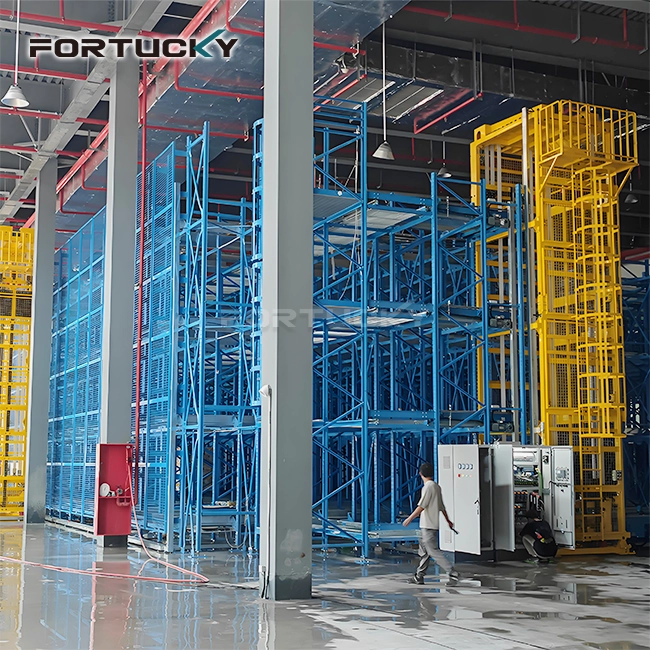
The type of storage equipment used has a direct effect on how efficiently and profitably large-scale operations in production, transportation, or distribution are run. Heavy Pallet Racking systems are an important investment for businesses that deal with large amounts of goods and big loads. These designed steel structures make it possible to store a lot of things in a small space while still keeping things safe and easy to get to in a wide range of industrial settings. These systems turn vertical warehouse space into useful assets by supporting palletized goods up to 2000 kg per level and reaching heights of 30 meters. They lower footprint costs and improve material flow in facilities that serve the automotive, FMCG, electronics, pharmaceuticals, and cold chain sectors.
 Understanding Heavy Pallet Racking Systems
As supply chains become more complex and product volumes rise, industrial storage needs have evolved significantly. Modern production and distribution operations require shelving that can handle substantial weight, maximize space, and support high throughput.
Core Definition and Engineering Principles
High-density pallet storage systems use welded steel upright frames and horizontal load beams to create multi-level storage platforms. The open-frame design allows forklifts to access goods from the aisles while maintaining structural integrity even during repeated loading and unloading. Engineering standards specify beam spacing, column thickness, and base plate dimensions to ensure safety when carrying heavy loads. Unlike lighter alternatives designed for manual picking, these industrial-grade systems undergo extensive testing to meet material handling safety regulations applicable across all North American sites.
Structural Benefits Driving Adoption
Companies that utilize heavy-duty warehouse racking report improvements across all operational metrics. By utilizing vertical space up to 30 meters, storage density increases significantly, directly lowering the cost per pallet position compared to ground-level storage. The modular design allows for future expansion without major modifications. Adjustable beam heights provide flexibility as product mixes change, protecting the investment against shifting business needs. When inventory is organized in systematic row configurations, material handling equipment operates more efficiently, reducing retrieval times and labor costs during order fulfillment cycles.
Safety Standards and Load Management
Regulatory compliance is an essential aspect of using pallet racks. Seismic considerations, floor load limits, and impact protection standards must be taken into account for each installation. Column guards prevent forklift damage during accidental collisions, and safety clips keep beams securely in place under load. Load capacity placards display the maximum weight permitted per level, ensuring warehouse workers follow design specifications. Regular structural inspections identify signs of wear, corrosion, or deformation before they threaten system stability, maintaining a safe work environment throughout the system's lifecycle.
Types of Heavy Pallet Racking and Their Applications
Different businesses have different working needs, so they need different Heavy Pallet Racking configurations. Understanding these options helps procurement teams match system features to specific process requirements.
Selective Racking for Universal Access
Selective configurations allow direct access to every pallet position without having to move adjacent goods. This approach works well for businesses that manage a wide range of SKUs and require frequent inventory turns. Forklifts move through aisles to retrieve specific pallets as needed, supporting just-in-time production and customized order fulfillment. The drawback is lower storage density compared to high-density options, but selective systems excel when accessibility is more important than space maximization. Electronics companies and automotive parts distributors often use this configuration to support variable production lines and rapid parts access.
High-Density Drive-In and Push-Back Systems
Drive-in and push-back configurations are useful for operations that prioritize storage density over individual pallet access. Drive-in systems allow forklifts to load pallets from the front toward the rear in a last-in, first-out (LIFO) pattern, making optimal use of cubic space and working especially well for storing large quantities of homogeneous products. Push-back racks use inclined rails and nested carts to store multiple loads per lane while offering greater selectivity than drive-in racks. Cold storage facilities and beverage companies use these systems to store seasonal goods more efficiently, reducing cooling costs per pallet position while maintaining acceptable retrieval times.
Industry-Specific Applications
In manufacturing plants, pallet racks store finished goods pending shipment and hold raw materials close to production lines. CATL and BYD rely on robust storage systems to manage heavy battery components during assembly. Pharmaceutical companies need systems capable of maintaining specific temperature conditions and tracking inventory through warehouse management software. Food producers such as Mengniu Dairy depend on sanitary designs that meet hygiene regulations without compromising load capacity. Each industry requires customization to address its unique operational challenges—for example, chemical storage needs corrosion-resistant coatings, and urban distribution centers require narrow aisles to maximize space utilization.
Selecting the Best Heavy Pallet Racking System for Your Business
Strategic purchasing decisions require evaluating multiple technical and business factors. Misalignment between infrastructure and process needs can be very costly. To avoid this, ensure that heavy pallet racking system specifications match operational requirements.
Critical Evaluation Criteria
The most important standard is load capability. High-capacity pallet storage systems are made to hold between 1,800 and 12,600 pounds per beam level. Factors like pallet weight, product weight, and safety concerns must be taken into account when facilities figure out the highest predicted loads. The load values are directly related to the steel gauge width, and the deflection characteristics under load are determined by the beam profiles. To make the best use of space, you need to find a balance between the number of shelves and the width of the aisles that material handling equipment needs. Narrow aisles make it possible to store more things, but they need special trucks or self-driving cars to get the job done. Adjustability features let you change the layout as your product does, which protects the long-term value of your investment by allowing for operational freedom.
Material and Construction Considerations
Structural steel construction offers the best strength-to-weight ratio for heavy-duty applications. Cold-rolled steel provides consistent dimensional tolerances, enabling precise assembly and even load distribution. Powder-coat finishing ensures long-lasting appearance and protects against corrosion in humid environments. Safety pins or clips prevent beam-to-column connections from accidental disengagement during loading operations. Base plates distribute column loads across the floor, and anchor bolts secure uprights against lateral forces. Customization options include varying depths to accommodate different pallet sizes, varying heights to match clear ceiling heights, and color coding to support inventory management systems.
Procurement and Logistics Planning
Custom configurations typically have lead times of 6 to 12 weeks from design approval to product delivery. Bulk purchasing reduces cost per unit by streamlining production and consolidating shipping. Professional installation services ensure correct assembly and compliance verification, which is especially helpful for businesses without in-house expertise. Parts are protected during international shipping by banding, film wrapping, and crating. OEM partnerships enable private labeling for third-party logistics providers building branded warehouse networks. Payment terms and warranty coverage affect total cost of ownership, so the initial purchase price must be evaluated alongside lifecycle value and available support.
 Installation, Maintenance, and Safety Best Practices
Proper implementation and management of heavy pallet racking systems are key to maximizing performance and ensuring worker safety. Structured approaches to these tasks reduce risk and extend service life.
Professional Installation Protocols
Pre-installation site inspections verify floor levelness, load-bearing capacity, and the absence of obstructions. Anchor placement must align with structural engineering drawings to ensure load paths function as designed. Upright frames must be plumb-aligned within specified tolerances before beam installation. Level beams distribute loads evenly across columns, preventing stress concentrations that accelerate wear. Professional installers have the training and specialized tools to assemble systems quickly and safely. DIY installation by unskilled personnel can lead to faulty construction, which may void warranties and create liability risks in the event of structural failure or collapse.
Preventive Maintenance Programs
Damage to heavy-load warehouse racking is found during regular checks, before it gets worse and causes failures. Visual checks done once a month can find broken parts, loose links, or situations where the system is overloaded. Professional audits are done once a year using accurate measuring tools to check the structure's soundness and make sure it meets the original specs. To stop corrosion, you need to fix damaged paint right away and put on protective coats in harsh settings. By replacing worn-out parts, standard wear is taken care of, and rated powers are kept throughout the system's life. Documentation tracking keeps records of compliance and helps find the root cause of problems when they happen, which lets safety measures and practical processes keep getting better.
Workforce Training and Safety Culture
Operators need certification in the use of material handling equipment within warehouse environments. Load placement training emphasizes centering pallets on beams and adhering to posted weight limits. Reporting procedures encourage immediate communication of observed damage or unsafe conditions. Regular safety meetings reinforce best practices and provide opportunities to discuss lessons learned from incidents. When management demonstrates commitment to safety standards, it creates a culture where compliance takes priority over corner-cutting to increase throughput. This comprehensive approach reduces injuries, minimizes property damage, and improves operational reliability by strictly adhering to the parameters designed into the system.
Conclusion
Modern industrial facilities require storage solutions capable of handling the scale and volume of global supply chains. Engineered heavy pallet racking systems provide the capacity, durability, and adaptability that manufacturers and logistics companies serving competitive markets need. When businesses invest in properly specified and maintained infrastructure, they realize practical benefits including improved space utilization, faster material handling, and better safety performance. The decision-making process should include careful evaluation of technical requirements, supplier capabilities, and available long-term support to ensure that infrastructure investments align with strategic goals.
FAQ
Q1: What load capacity can heavy pallet racking systems handle?
Systems designed for industrial use typically support between 1,800 and 12,600 pounds per beam level, with individual pallet positions holding up to 4,400 pounds. Structural capacity depends on beam length, steel gauge, and column spacing. Proper specification requires calculating total expected loads, including pallets, goods, and safety margins. Exceeding rated limits can cause structural failure and safety hazards.
Q2: Can pallet racking be customized for unique warehouse layouts?
Yes, customizability is one of the key advantages of flexible racking systems. Depth, width, and height can be adjusted to accommodate different pallet sizes and ceiling heights. Aisle lengths can be tailored to forklift turning radii and throughput requirements. Color coding supports inventory management practices. Technical specifications remain adaptable based on operational needs, allowing solutions to be designed for a wide range of industrial applications.
Q3: Should we purchase new or used racking systems?
New systems come with full warranties, comply with all current standards, and can be precisely customized to your requirements. Used equipment can offer cost savings but must be carefully inspected to verify condition and remaining service life. For stability and long-term business value, companies typically prefer new installations. However, projects with limited budgets may consider used components from reputable suppliers that offer certification and support services.
Partner with Fortucky for Your Heavy Pallet Racking Supplier Needs
Fortucky offers complete Heavy Pallet Racking solutions based on its years of experience working with more than 1,000 global companies in the industrial and transportation sectors, such as Huawei, Mercedes-Benz, CATL, and BYD. To make warehouse infrastructure work better, you need to know a lot about building, integrating robotics, and providing lifecycle support. Our steel-structured beam racking systems can hold up to 2000 kg of weight and reach heights of 30 meters. They make the best use of overhead space by letting you choose from a variety of setups. Our 5G-enabled production centers promise quality and quick delivery times, and our deep customization options make sure that they work with each operation's unique workflows. In Asia, Europe, and the Americas, localized service teams help with installation and provide quick technical support. Email our team at sales@fortuckyrobot.com to talk about your needs and get detailed specs that are made to fit the storage problems in your building.
References
1. Material Handling Institute. (2022). Industrial Storage Systems: Design and Safety Standards. Charlotte: MHI Publications.
2. Zhang, W., & Thompson, R. (2021). Warehouse Management and Automation: Strategic Implementation for Modern Supply Chains. New York: Industrial Press.
3. European Federation of Materials Handling. (2020). Guidelines for Pallet Racking Systems: Installation and Maintenance Protocols. Brussels: FEM Publications.
4. Chen, L., Martinez, J., & Okafor, E. (2023). Heavy-Load Storage Solutions in Manufacturing Environments. Journal of Industrial Engineering, 45(3), 178-195.
5. Rack Manufacturers Institute. (2021). ANSI MH16.1: Specification for the Design, Testing and Utilization of Industrial Steel Storage Racks. Charlotte: RMI Standards Division.
6. Kumar, S., & Petersen, K. (2022). Supply Chain Infrastructure: Investment Strategies for Operational Excellence. Cambridge: MIT Supply Chain Management Series..
Learn about our latest products and discounts through SMS or email