- English
- French
- German
- Portuguese
- Spanish
- Russian
- Japanese
- Korean
- Arabic
- Greek
- German
- Turkish
- Italian
- Danish
- Romanian
- Indonesian
- Czech
- Afrikaans
- Swedish
- Polish
- Basque
- Catalan
- Esperanto
- Hindi
- Lao
- Albanian
- Amharic
- Armenian
- Azerbaijani
- Belarusian
- Bengali
- Bosnian
- Bulgarian
- Cebuano
- Chichewa
- Corsican
- Croatian
- Dutch
- Estonian
- Filipino
- Finnish
- Frisian
- Galician
- Georgian
- Gujarati
- Haitian
- Hausa
- Hawaiian
- Hebrew
- Hmong
- Hungarian
- Icelandic
- Igbo
- Javanese
- Kannada
- Kazakh
- Khmer
- Kurdish
- Kyrgyz
- Latin
- Latvian
- Lithuanian
- Luxembou..
- Macedonian
- Malagasy
- Malay
- Malayalam
- Maltese
- Maori
- Marathi
- Mongolian
- Burmese
- Nepali
- Norwegian
- Pashto
- Persian
- Punjabi
- Serbian
- Sesotho
- Sinhala
- Slovak
- Slovenian
- Somali
- Samoan
- Scots Gaelic
- Shona
- Sindhi
- Sundanese
- Swahili
- Tajik
- Tamil
- Telugu
- Thai
- Ukrainian
- Urdu
- Uzbek
- Vietnamese
- Welsh
- Xhosa
- Yiddish
- Yoruba
- Zulu
What are the benefits of using long spans?
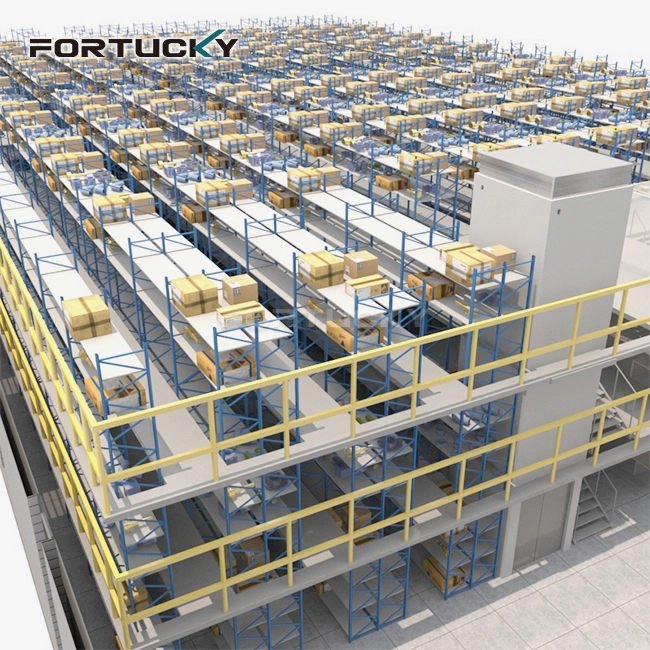
Some long-span systems, like long-span metal shelving, are very helpful for businesses that need to manage big, bulky inventory in both production and transportation. By eliminating center columns, these shelving units create completely flat storage areas that can hold oversized items like automotive parts, industrial molds, and full-dimension sheets that regular shelving cannot accommodate. Made of high-strength steel, they can support between 500 kg and over 2,000 kg per level and make optimal use of overhead space. The column-free design significantly improves accessibility, speeding up forklift operations and reducing handling times. Long-span shelving is a cost-effective way to enhance productivity, reduce warehouse space requirements, and achieve a clear return on investment (ROI) for businesses committed to operational excellence. Its robust design, adjustable height, and modular layout make it an excellent choice.
 Understanding Longspan Metal Shelving: Features and Advantages
Longspan metal shelving is a smart investment for businesses that want to solve difficult storage problems without sacrificing valuable space. Unlike conventional systems limited by multiple upright posts, these shelving units feature longer beams and stronger frames to create wide, open storage bays. This design approach addresses a major limitation of traditional warehouse layouts: inefficient storage of large items.
Core Components and Structural Design
Heavy-duty longspan metal shelving relies on well-engineered elements. Vertical uprights, typically C-profile or butterfly-hole cold-rolled steel, form the structural backbone and feature adjustable beam mounting positions. These uprights are connected by horizontal beams to create load-bearing platforms that do not flex or shift under full load. Surface protection is provided by strong steel panels with structural ribs, mesh decking for breathable items, and hybrid steel-wood combinations.
Advanced materials and manufacturing methods enhance structural integrity. Steel components that are pickled, phosphated, and electrostatically powder-coated resist corrosion, chemical exposure, and wear. High-quality materials are essential in cold storage facilities and pharmaceutical manufacturing areas due to strict temperature and cleanliness standards. This treatment extends operational lifespan.
Adaptability Across Industries and Applications
When automotive parts companies can store complete vehicle subassemblies vertically, they save floor space and improve just-in-time delivery to production lines. Heavy but fragile electronics producers benefit from solid, vibration-proof platforms that protect their inventory. Food processing companies that store different batches of products separately can organize and track inventory using the adjustable tier system.
Adaptability extends beyond product categories to operational processes. When distribution centers consolidate shipments, they can fit shelves to carton dimensions, saving space. Adjustable bay widths and lengths allow construction equipment suppliers to store non-uniform items. Pharmaceutical companies requiring certified storage areas can use long-span architecture with regulatory-compliant finishes and materials.
Economic Value and Space Optimization
Space is a major cost in warehouse operations; how efficiently you use it directly affects profitability. Long-span systems maximize cubic storage capacity by eliminating the aisle space required between closely spaced uprights. Warehousing professionals report that these shelves achieve 25% to 40% greater density than standard shelving for large items. This allows businesses to store more inventory or pay less for expansion.
The range of load capacities, from 500 kg to over 2,000 kg per level, lets procurement teams choose the optimal system size without over-engineering for worst-case scenarios. Picking efficiency improves with adjustable tier heights: fast-moving goods that require frequent access can be placed at lower levels, while slower-moving items are stored higher up. Visual management systems can color-code zones, product families, and quality control statuses, reducing training time and errors.
How Longspan Metal Shelving Solves Common Warehouse and Storage Challenges?
Inefficient warehouse operations are caused by basic differences between the storage facilities and the features of the inventory. Longspan metal shelving systems directly fix a number of problems that keep coming up, and lower output while also raising running costs.
Maximizing Vertical and Horizontal Utilization
Warehouse space costs are rising, especially in industrial areas near key transportation routes. Long-span shelving allows businesses to use existing ceiling heights to create 2 to 5 shelf levels without building expansion. Instead of individual cubicles, the open-span design creates continuous storage space on each level, accommodating items of varying lengths without structural constraints.
Reduced aisle widths improve horizontal efficiency. Clear visibility and access to all shelf levels make picking faster and more accurate. Columns that do not create blind spots or tight clearances make forklift operation safer. Safety managers in high-speed operations value these physical improvements for creating a safer workplace.
Enhancing Durability and Safety Standards
Heavy-duty long-span racks represent the culmination of decades of materials research and load distribution advances. High-strength steel alloys resist permanent deformation under long-term loading, keeping shelves and frames level after years of heavy use. This structural stability prevents product damage and safety hazards caused by sagging or warping.
Safety features are incorporated from the outset. Beam-to-upright connections include locking mechanisms—often tool-free—to prevent disengagement under stress or seismic events. Column guards protect uprights from collisions, shelf dividers keep loads properly positioned, and backstops contain items during storage and retrieval. Building systems with built-in safety features makes it easier to comply with OSHA and corporate regulations.
Reducing Long-Term Maintenance and Replacement Costs
Total cost of ownership extends beyond the purchase price. Long-span systems constructed from high-quality materials require less maintenance than alternatives. Powder-coated finishes resist scratching and chipping, eliminating the need for frequent repainting and preventing corrosion. Modular designs make it easier to replace damaged components, reducing downtime and avoiding full system replacement.
Adaptability provides financial resilience. When product lines change, throughput grows, or building layouts are modified, modular long-span shelving can be easily reconfigured. Tier heights can be adjusted without full disassembly, beams can be moved to different upright positions, and additional bays can be added without affecting existing infrastructure. This flexibility prevents investments from becoming obsolete, delivering ROI over decades.
How to Choose the Right Longspan Metal Shelving System for Your Business?
Selecting the right long-span metal shelving system requires careful evaluation of both current needs and future possibilities. Specification errors can lead to underutilized capacity, operational bottlenecks, or premature system replacement—all of which can be avoided with disciplined procurement processes.
Assessing Storage Requirements and Inventory Characteristics
Start by documenting inventory dimensions, weights, and access patterns. Measure the largest items to be stored, noting not only overall size but also height and any unusual protrusions. Record weight distribution—are loads evenly spread, or do concentrated masses create point-loading issues? Understanding these factors establishes minimum beam lengths, tier heights, and decking specifications.
Consider flow dynamics. High-velocity operations that require frequent restocking benefit from configurations that enhance picker productivity, such as lower tiers for fast-moving SKUs and upper levels for backup stock. In contrast, long-term storage applications might prioritize maximum density over accessibility, accepting slightly longer retrieval times to reduce building costs.
Planning for Scalability and Operational Evolution
Business portfolios rarely remain static. As companies add products, customer demands change, and competitive pressures drive continuous improvement. Shelving infrastructure should accommodate likely changes without requiring complete replacement. Choose systems that allow expansion by adding uprights, beams, and decks that integrate seamlessly with the original installation. Instead of large upfront capital investments, modular designs enable incremental investments timed to match revenue growth.
Verify compatibility with robotic equipment. Even manually operated facilities today may transition to automated guided vehicles, robotic picking, or conveyor integration. Long-span systems with standard dimensions and mounting points for sensors or tracking equipment will remain useful as the digital landscape evolves. Discussing future plans with shelving manufacturers often leads to design choices that work with both current processes and planned automation.
Evaluating Suppliers and Ensuring Quality Standards
Comparing price sheets is only one part of choosing a supplier. Check out the company's long-span industrial shelving production skills. Are parts made in-house or by outside suppliers? When something is made in-house, quality control is usually better, and wait times are faster. Ask for written proof of the steel types, finishing methods, and load testing rules. Manufacturers with a good reputation back up their capacity claims with technical data like finite element analysis and test results.
Service infrastructure is important for businesses with multiple locations across regions. Local support teams accelerate troubleshooting, retrofit projects, and expansion phases. Availability of replacement parts from regional warehouses minimizes downtime when service is needed. Warranty length reflects the manufacturer's confidence in the product; multi-year warranties indicate commitment to long-term durability.
Budget Considerations and Total Cost Analysis
Procurement budgets must balance capital costs against operational benefits. The cost of long-span shelving depends on several factors, including dimensions, finish, load capacity, and level of customization. Unit prices typically decrease with bulk purchases, encouraging consolidated buying across multiple sites. Customization adds engineering and tooling costs but delivers optimal results for specific needs.
Calculate total cost of ownership by including installation labor, ongoing maintenance, and productivity impacts. A system that costs 15% more upfront but delivers 25% greater capacity pays for itself over normal depreciation cycles. Consider downtime risks. Systems that require frequent repairs or adjustments incur hidden costs in the form of safety issues and operational disruptions. Investing in proven designs from established manufacturers reduces these long-term risks.
 Installation and Maintenance Best Practices for Optimal Performance
Even high-end shelving systems underperform when installation is rushed or maintenance is neglected. Strict adherence to best practices preserves capital investment and ensures smooth operations throughout the system's service life.
Pre-Installation Planning and Site Preparation
Thorough site assessments are the first step toward successful installation. Verify floor levelness and load-bearing capacity. Concrete slabs must support not only the shelving but also moving loads from inventory and material handling equipment. Identify any sprinkler heads, electrical lines, or HVAC ducts that might interfere with fully extended uprights. Plan aisle widths that accommodate equipment turning radii while maximizing storage space.
Coordinate delivery timing with installation crews to avoid prolonged storage of components in staging areas where damage could occur. Inspect packages upon receipt for damage and document findings before assembly begins. Organize components logically—grouping uprights, beams, and hardware by bay location speeds installation and reduces error risk.
Assembly Procedures and Quality Verification
Follow manufacturer instructions carefully, paying attention to torque specifications for bolted connections and engagement requirements for locking mechanisms. Use laser levels rather than guesswork to ensure uprights are installed straight and plumb. Small misalignments accumulate across multiple bay runs, resulting in racking systems that appear crooked and may not perform at full capacity.
Perform load tests on sample bays before placing systems into full service. Use test loads approaching the maximum rated capacity to verify that deflections remain within acceptable limits and connections do not slip. This verification identifies assembly errors or damaged components before they become safety hazards during operation.
Routine Inspection Schedules and Preventive Maintenance
Establish regular inspection schedules, such as quarterly for high-intensity operations and semi-annually for moderate-use sites. Look for damaged or bent uprights, loose beam connections, and deformed decking. Address minor issues immediately; neglecting them can lead to major failures. Check floor anchors and shims to ensure uprights remain plumb and level.
Visual checks are only one part of heavy-duty metal longspan racks' preventive upkeep. Check to see if the load signs can still be read and that they properly show how things are now. Teach workers the right way to load things, like how to place them on shelves, spread out the weight properly, and not go over the maximum capacity. Set up rules for reporting damage so that workers can voice concerns before they become unsafe.
Conclusion
Long-span systems deliver measurable economic benefits to businesses facing complex storage challenges. The combination of high load capacity, structural flexibility, and operational efficiency solves problems that slow throughput and increase costs in conventional warehouses. By eliminating center columns and maximizing cubic space, these systems accommodate the large, heavy materials typical of modern logistics and manufacturing. High-quality materials and careful construction ensure decades of service with minimal maintenance, protecting investments from obsolescence. When procurement leaders evaluate storage infrastructure, long-span shelving is not merely a purchase item—it is a strategic tool for improving operations and enabling sustainable growth.
FAQ
Q1: What weight capacities can long-span shelving support?
Heavy-duty longspan metal shelving can support anywhere from 500 kg to over 2,000 kg per level, depending on beam length, decking type, and upright spacing. Custom engineering can increase these limits further for specialized applications requiring additional strength.
Q2: How does column-free design improve warehouse operations?
Eliminating center columns allows large items such as automotive parts or industrial molds to be stored without interference. Forklift operators benefit from improved visibility and turning clearance, reducing collisions and speeding up loading processes. The open design also makes reconfiguration easier as storage needs change.
Q3: Can shelving height be adjusted after installation?
Most systems feature simple pin adjustments that require no tools, allowing tier heights to be changed without full disassembly. This provides the flexibility to adapt to changing inventory patterns and optimize space utilization as business needs evolve, protecting your infrastructure investment.
Transform Your Warehouse Efficiency with Fortucky's Longspan Metal Shelving Solutions
Fortucky joins decades of experience in intralogistics with cutting-edge engineering to create unique heavy-duty storage systems that meet the exact needs of world leaders in manufacturing. Our longspan metal shelving manufacturer capabilities can handle loads of up to 2000 kg per level, and they can set up their shelves in any way they want, from 2 to 5 levels. Over 1,000 clients, including Fortune 500 companies in the automobile, electronics, pharmaceutical, and fast-moving consumer goods (FMCG) industries, have worked with us. We offer localized deployment and quick reaction through service networks in Asia, Europe, and the Americas. Our clever production center that is connected to 5G makes sure that deliveries happen quickly and cheaply. Get in touch with our purchasing experts at sales@fortuckyrobot.com to talk about your unique needs and find out how our deep customization options can help your business run more smoothly.
References
1. Smith, J.R. & Thompson, M.L. (2021). Industrial Storage Systems: Design Principles and Applications. Manufacturing Engineering Press.
2. International Warehouse Logistics Association. (2022). Best Practices in Heavy-Duty Shelving Selection and Implementation. IWLA Technical Report Series.
3. Chen, W. & Rodriguez, A. (2023). "Comparative Analysis of Storage System Efficiency in Automated Warehouses," Journal of Supply Chain Technology, 18(3), 145-167.
4. National Association of Material Handling Engineers. (2020). Load Capacity Standards for Industrial Shelving Systems. NAMHE Publication 402-2020.
5. Davies, R.K. (2022). Total Cost of Ownership in Warehouse Infrastructure: A Procurement Guide. Logistics Management Institute.
6. Peterson, L.M. & Kumar, S. (2023). "Safety and Ergonomic Considerations in Long-Span Storage Design," Industrial Safety Quarterly, 29(2), 78-94.
Learn about our latest products and discounts through SMS or email