- English
- French
- German
- Portuguese
- Spanish
- Russian
- Japanese
- Korean
- Arabic
- Greek
- German
- Turkish
- Italian
- Danish
- Romanian
- Indonesian
- Czech
- Afrikaans
- Swedish
- Polish
- Basque
- Catalan
- Esperanto
- Hindi
- Lao
- Albanian
- Amharic
- Armenian
- Azerbaijani
- Belarusian
- Bengali
- Bosnian
- Bulgarian
- Cebuano
- Chichewa
- Corsican
- Croatian
- Dutch
- Estonian
- Filipino
- Finnish
- Frisian
- Galician
- Georgian
- Gujarati
- Haitian
- Hausa
- Hawaiian
- Hebrew
- Hmong
- Hungarian
- Icelandic
- Igbo
- Javanese
- Kannada
- Kazakh
- Khmer
- Kurdish
- Kyrgyz
- Latin
- Latvian
- Lithuanian
- Luxembou..
- Macedonian
- Malagasy
- Malay
- Malayalam
- Maltese
- Maori
- Marathi
- Mongolian
- Burmese
- Nepali
- Norwegian
- Pashto
- Persian
- Punjabi
- Serbian
- Sesotho
- Sinhala
- Slovak
- Slovenian
- Somali
- Samoan
- Scots Gaelic
- Shona
- Sindhi
- Sundanese
- Swahili
- Tajik
- Tamil
- Telugu
- Thai
- Ukrainian
- Urdu
- Uzbek
- Vietnamese
- Welsh
- Xhosa
- Yiddish
- Yoruba
- Zulu
How does push-back racking improve warehouse efficiency?
By increasing storage density while keeping quick access speeds, push back storage racks significantly increase workplace efficiency. Traditional selective systems need wide aisles between every row. This new design stores pallets several positions deep on inclined rails, which reduces the need for walkways by up to 70%. With each new pallet, the current inventory moves backward on nested carts, greatly increasing storage space without expanding the building. When workers remove the front pallet, gravity brings the next unit to the pick face automatically. This saves time because units do not have to be repositioned within the storage lanes, and retrieval times are cut in half compared to drive-in layouts.
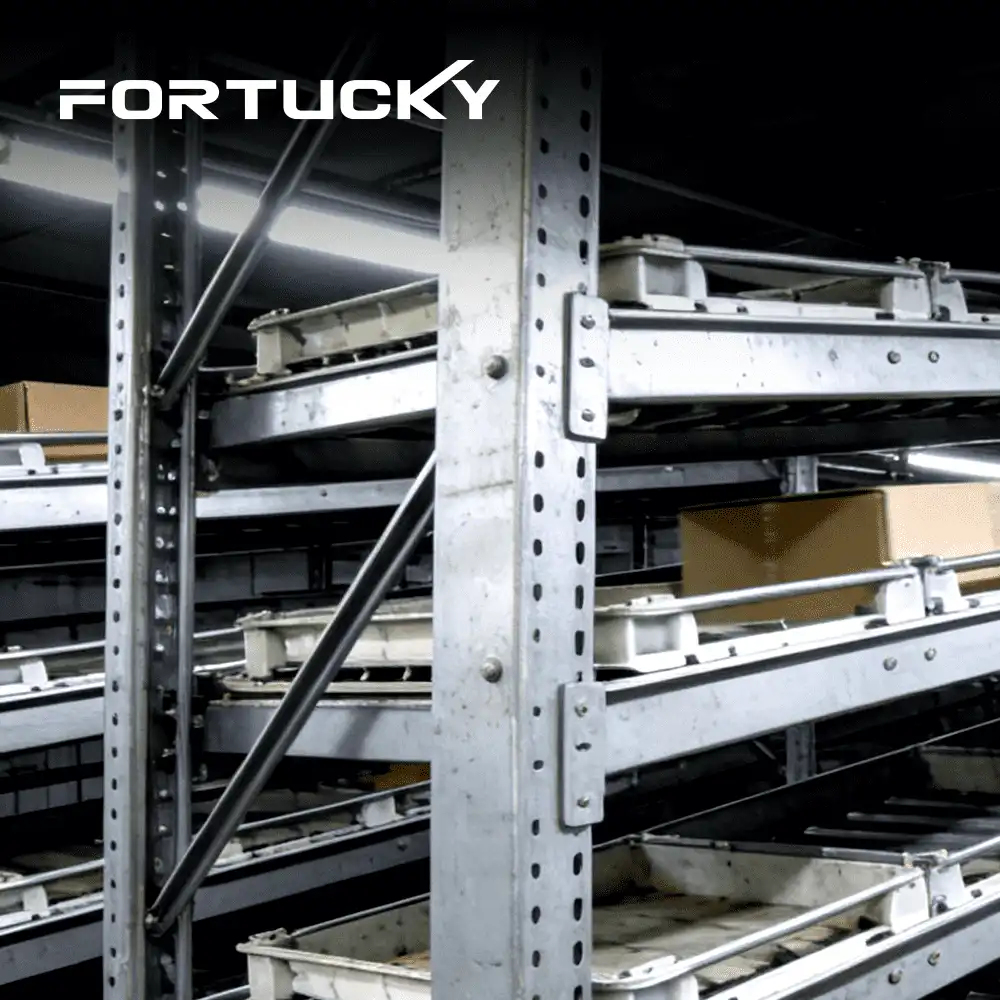
 Understanding Push-Back Racking: Design and Operational Principles
Core Components and Structural Design
The basic idea behind push-back systems is that they are both complex and extremely simple to construct. Heavy-duty steel frames, which can be up to 10 meters tall, support slanted rails set at precise slopes. On these rails, nested pallet carts rest. Each cart has wheels that roll easily and are designed to carry heavy industrial loads. The frame structure can be adjusted to fit different sizes and requirements, making it easy to integrate into existing warehouse layouts.
This dynamic system works differently from rigid selective pallet racks because it uses gravity to its advantage. A full pallet sits on the first cart when a forklift driver places it at the lane opening. When a second pallet is added, it pushes the first load backward along the slanted rails, positioning it deeper into the storage lane. Depending on the needs of the configuration, this process can continue for up to six pallets deep.
How the LIFO System Functions
The Last-In, First-Out (LIFO) inventory cycle is what makes these systems work. Material handlers load and remove pallets from a single face, eliminating the need for separate aisles for loading and unloading, which consume valuable floor space in standard setups. The design of the slanted rails ensures that when the front load is removed, the remaining carts roll forward automatically. Built-in damping devices control the speed of descent, preventing sudden movements that could damage goods or endanger personnel. This self-replenishing pick face provides easy access to the next load without manual repositioning.
Specialized Adaptations for Demanding Environments
Today, push-back systems perform very well in tough operational environments. Cold storage facilities save significantly on cooling costs by reducing aisle space. Warehouses that store automotive parts use flexible standards to accommodate different part sizes. The open construction allows proper airflow for pharmaceutical storage, and the heavy-duty load class works in steel industries where pallet weights often exceed normal limits. Facilities can implement visual management systems aligned with lean manufacturing principles, with frames that can be painted in any color.
How Push-Back Racking Solves Warehouse Efficiency Challenges
Addressing Space Utilization Bottlenecks
Businesses in manufacturing and logistics regularly cite insufficient floor space as one of their biggest operational problems. Forklift aisles take up about 40% of the space in a warehouse with traditional selective shelving. As land prices rise and output demands increase, this ratio becomes financially unsustainable. Push back storage racks reduce the amount of space needed for aisles by allowing multiple loads to fit in a single lane and requiring aisles only at the front entry points.
The math makes a strong case. A 50,000-square-foot warehouse with selective racks that hold 2,500 pallet positions could instead accommodate 4,200 positions by switching to push-back systems, increasing density by nearly 70% without structural expansion. Businesses that operate in high-rent urban delivery areas or temperature-controlled spaces where construction costs exceed $300 per square foot can directly see a return on their investment.
Accelerating Material Flow and Throughput
Beyond increasing static capacity, push-back systems make operations much faster. Forklift drivers do not have to spend time entering and exiting deep storage lanes, a repetitive and time-consuming task in drive-in rack settings. The automatic cart movement places the next pallet directly at the pick face, reducing the average time to retrieve a pallet to about 35 seconds per transaction.
Consider a liquor distribution center that moves 800 pallets every day. Shaving 55 seconds off each transaction saves 12.2 hours per day, equivalent to hiring 1.5 full-time workers. Over a year of operations, this efficiency translates into substantial labor cost savings while also increasing output during peak demand periods.
Reducing Operational Costs Across Multiple Vectors
Push-back designs save money in the long run because of their easy maintenance and simple structure. Unlike automated storage and retrieval systems that require complex electrical infrastructure and specialized maintenance contracts, push-back racks work automatically with little human intervention. The main maintenance tasks are regular checks of rail alignment and cart wheels, which can be performed by normal warehouse maintenance teams.
Damage rates also drop significantly. Forklifts never enter storage lanes, so the risk of rack collision is much lower than in drive-in systems, where operators must maneuver in tight spaces at height. Less damage means less money spent on repairs and less inventory lost due to structural failures that compromise pallet integrity.
Comparing Push-Back Racking with Alternative Storage Solutions
Performance Against Selective Racking
Selective pallet racks allow access to all SKUs, but they sacrifice storage efficiency. This method is ideal for businesses that handle a wide variety of products and need to switch quickly between different SKUs because each pallet position requires its own aisle face. However, facilities that store large volumes of low-variety goods find selective systems wasteful of space. In these situations, push-back storage racks increase storage density by 80–90% while maintaining access speeds fast enough for frequently rotated materials.
Advantages Over Drive-In Systems
Drive-in racks offer similar density to push-back racks but are harder to use. Forklift drivers must navigate tight spaces between uprights, increasing the risk of accidents and requiring more advanced driving skills. Push-back designs, where carts operate only at lane openings, make operation much safer because operators have fewer obstacles to worry about. Product damage is less likely because pallets remain still on carts instead of being placed directly on rails, where they can become unstable if not aligned correctly.
Differentiation from Pallet Flow Racks
First-In, First-Out (FIFO) inventory movement is made possible by gravity rollers in pallet flow systems. This is great for managing strictly date-coded things that go bad quickly. But these setups need precise load balance and cost more to set up because the roller beds are more complicated. Push back pallet racking is 30–40% cheaper than LIFO racks and offers similar density benefits. This makes them better for non-perishable made goods, car parts, and industrial equipment, where LIFO rotation works.
Cost-Benefit Analysis for Procurement Planning
Calculating total cost of ownership requires examining several financial factors. Depending on specifications, the initial cost of a push-back system can range from $150 to $300 per pallet position, which is higher than the upfront cost of selective racks ($80 to $120) but lower than pallet flow alternatives ($200 to $350). With modest upfront investment and savings in operating costs, most facilities see a return on investment (ROI) within 18 to 24 months. Lower labor costs, reduced facility rent due to higher density, and minimal maintenance all deliver stable, predictable results that satisfy financial stakeholders during the capital approval process.
Best Practices for Safely Using and Maintaining Push-Back Storage Racks
Load Management and Weight Distribution
To maintain structural integrity, load capacity ratings must be strictly followed. Each cart in the system can hold a specific maximum weight, typically between 1,500 and 3,000 pounds depending on design. Exceeding these limits could cause cart failure, rail bending, or even structural collapse. Warehouse managers should post clear load limit signs at the entrance of each lane and ensure that each pallet's weight is verified as part of standard operating procedures. Uneven load distribution across pallet bottoms can also cause instability. To prevent movement during the push-back and forward-roll processes, goods must be properly centered and secured with stretch wrap or bands.
Forklift Operation Standards
Using push-back storage racks requires specific handling methods. When approaching lanes, operators must ensure their forks are properly positioned to engage pallet openings without scraping carts or rails. When pushing pallets backward, rapid acceleration can damage damping mechanisms, and when retrieving pallets, sudden stops could dislodge goods. Controlled movements should be emphasized in training programs, and trainees should practice with the actual carts used in the facility. Regular refresher courses for operator certification keep skills current and reinforce safety rules.
Inspection and Maintenance Protocols
Regular inspections keep systems working well and lasting a long time. Cart wheel movement, rail surface conditions, and damping device function should be checked monthly. Any signs of resistance or unusual noises during cart movement indicate problems that need immediate attention. Structural issues, such as frame alignment, beam stability, and anchor bolt tension, can be identified by qualified professionals during quarterly inspections. When damage occurs, using certified suppliers ensures repairs meet engineering standards and preserve warranty validity.
Regulatory Compliance and Certification
OSHA regulations require regular rack inspections and documented results. Damaged components must be unloaded immediately until repairs are completed. Suppliers with ISO certification demonstrate adherence to international quality standards for testing, design, and manufacturing. Procurement teams should ensure vendors maintain current certifications and provide thorough documentation to support load capacity claims. Strong warranty support, typically lasting 5 to 10 years for structural components, protects investments and demonstrates the manufacturer's confidence in product durability.
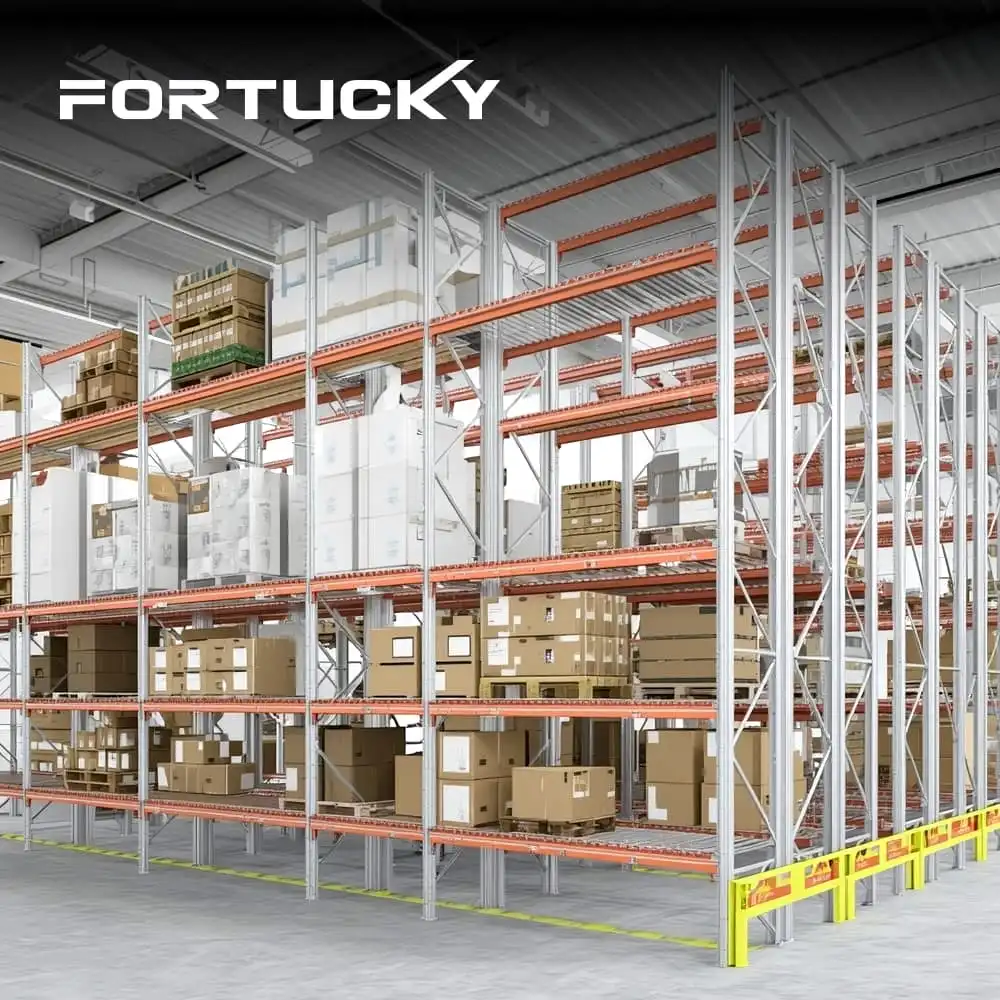 Procurement Strategies: Buying Push-Back Storage Racks That Maximize Efficiency
Supplier Evaluation Criteria
Thorough research is needed to select qualified manufacturers. Beyond price, procurement managers should evaluate production capacity, quality control systems, and project implementation experience. Manufacturers with annual production capacity exceeding 100,000 tons demonstrate the scale and stable resources to support large-scale operations. Factory visits reveal build quality, finish quality, and inventory management practices, all of which indicate operational maturity.
Customization and Engineering Support
Each facility has unique requirements. The optimal system design depends on ceiling heights, column spacing, floor load capacities, and product characteristics. Leading suppliers offer extensive customization of bay sizes, cart quantities, rail angles, and frame configurations to maximize storage space while meeting design requirements. Engineering support should include AutoCAD layout drawings, structural load calculations, and integration plans with existing material handling equipment. This collaborative design approach ensures that installations actually deliver the planned capacity instead of falling short due to overlooked space issues.
Turnkey Implementation Services
Complex projects need to be managed by people with specific skills. Full turnkey services for industrial push-back pallet storage include delivery handling, on-site assembly, anchoring, safety checks, and training for operators, making it easier to complete a project. Clear lead time promises let you work around building downtime windows, which keeps operations running as smoothly as possible. Vendors that offer staged installation methods allow for slow changes when a full stop is not possible, keeping mission-critical distribution operations running.
Shipping and packing practices also deserve attention. Proper strapping, protective film, wooden crate bases, and carton protection prevent transport damage that could delay installations and increase costs. Suppliers who pay attention to packing details typically maintain the same diligence throughout the production process.
Financial Considerations and Contract Terms
Volume discounts are available to customers making larger commitments. For installations exceeding 1,000 pallet positions, the cost per position may drop by 15 to 25 percent. However, procurement teams must weigh upfront savings against inventory carrying costs and the need for phased modifications. Flexible payment terms aligned with project milestones protect buyers while providing suppliers with sufficient cash flow for material purchasing.
Contracts with after-sales support clauses hold both parties accountable for long-term performance. Maintenance training for facility staff, assurances of spare parts availability, and response times for technical assistance should be clearly specified. Warranty terms for structural components, carts, and damping devices provide remedies for premature failure, though quality manufacturers rarely face significant claims when products are used according to instructions.
Conclusion
Push-back racking systems fundamentally improve warehouse economics by enabling high storage density without slowing operations. The combination of increased capacity, faster material flow, reduced labor requirements, and low maintenance needs delivers outstanding value for manufacturing and logistics companies constrained by space and seeking higher throughput. When these systems are properly specified and configured to meet operational needs, they become valuable assets that generate measurable returns over long periods, supported by careful supplier screening and strict maintenance practices. As construction costs rise and supply chains grow more complex, push-back storage racks become essential for maintaining competitive advantage in demanding industrial environments.
FAQ
Q1: What types of products work best with push-back racking?
Push-back storage racks work best for high-volume, low-variety materials that move in batches rather than single units. This solution works excellently for beverage and tobacco distribution, automotive parts manufacturing with long production runs, and industrial components. Perishable goods requiring strict FIFO rotation should use pallet flow alternatives.
Q2: Can push-back racks operate in cold storage environments?
Absolutely. The steel construction and mechanical operation work effectively in both freezers and refrigerators. Reducing the number of required aisles saves significant energy by decreasing the conditioned area needed. This makes push-back especially cost-effective in temperature-controlled facilities where construction and operating costs are high.
Q3: How does safety compare to drive-in racking?
Push-back systems are clearly much safer than drive-in alternatives. Forklifts never enter storage lanes, eliminating concerns about hitting interior uprights and reducing driver stress. Damping devices prevent excessive pallet movement, stopping the uncontrolled rolling that can occur with some drive-in configurations. Together, these features reduce accident likelihood and significantly lower damage costs.
Partner with Fortucky for Advanced Warehouse Storage Solutions
For warehouse managers and procurement leaders looking for a reliable maker of push back storage racks, Fortucky's wide range of services makes it the perfect choice to solve even the most difficult transportation problems. Our 5G-enabled clever production plants make customizable systems that can hold more than 150,000 tons per year. This means that even for large-scale deployments, we can guarantee quick delivery. Our team has a lot of technical knowledge from more than 1,000 applications around the world. This lets them come up with the best setups for your throughput needs, product traits, and facility limitations. Localized service networks in Asia, Europe, and the Americas offer quick expert help at all stages of a system's life. Talk to our sales team at sales@fortuckyrobot.com about how our high-efficiency, low-cost push back storage racks can change the number of items in your warehouse and how well it runs, giving you a measured return on investment (ROI) within the first year.
References
1. Material Handling Industry Association (2022). Storage Systems Design and Implementation Guidelines for High-Density Warehousing. Charlotte: MHIA Press.
2. Richards, G. (2021). Warehouse Management: A Complete Guide to Improving Efficiency and Minimizing Costs in the Modern Warehouse (3rd ed.). London: Kogan Page Publishers.
3. Tompkins, J.A. & Smith, J.D. (2020). The Warehouse Management Handbook: Storage Optimization Strategies for Distribution Centers. Raleigh: Tompkins Press.
4. Occupational Safety and Health Administration (2023). Safety Standards for Powered Industrial Trucks and Warehouse Racking Systems. Washington: U.S. Department of Labor.
5. Frazelle, E. (2021). Supply Chain Strategy: The Logistics of Supply Chain Management (2nd ed.). New York: McGraw-Hill Education.
6. International Organization for Standardization (2022). ISO 5323: Fork-lift Trucks - Verification of Stability in Warehouse Racking Applications. Geneva: ISO Standards Publishing.

Learn about our latest products and discounts through SMS or email