- English
- French
- German
- Portuguese
- Spanish
- Russian
- Japanese
- Korean
- Arabic
- Greek
- German
- Turkish
- Italian
- Danish
- Romanian
- Indonesian
- Czech
- Afrikaans
- Swedish
- Polish
- Basque
- Catalan
- Esperanto
- Hindi
- Lao
- Albanian
- Amharic
- Armenian
- Azerbaijani
- Belarusian
- Bengali
- Bosnian
- Bulgarian
- Cebuano
- Chichewa
- Corsican
- Croatian
- Dutch
- Estonian
- Filipino
- Finnish
- Frisian
- Galician
- Georgian
- Gujarati
- Haitian
- Hausa
- Hawaiian
- Hebrew
- Hmong
- Hungarian
- Icelandic
- Igbo
- Javanese
- Kannada
- Kazakh
- Khmer
- Kurdish
- Kyrgyz
- Latin
- Latvian
- Lithuanian
- Luxembou..
- Macedonian
- Malagasy
- Malay
- Malayalam
- Maltese
- Maori
- Marathi
- Mongolian
- Burmese
- Nepali
- Norwegian
- Pashto
- Persian
- Punjabi
- Serbian
- Sesotho
- Sinhala
- Slovak
- Slovenian
- Somali
- Samoan
- Scots Gaelic
- Shona
- Sindhi
- Sundanese
- Swahili
- Tajik
- Tamil
- Telugu
- Thai
- Ukrainian
- Urdu
- Uzbek
- Vietnamese
- Welsh
- Xhosa
- Yiddish
- Yoruba
- Zulu
Mezzanine storage rack solutions: smart ways to optimize your warehouse space
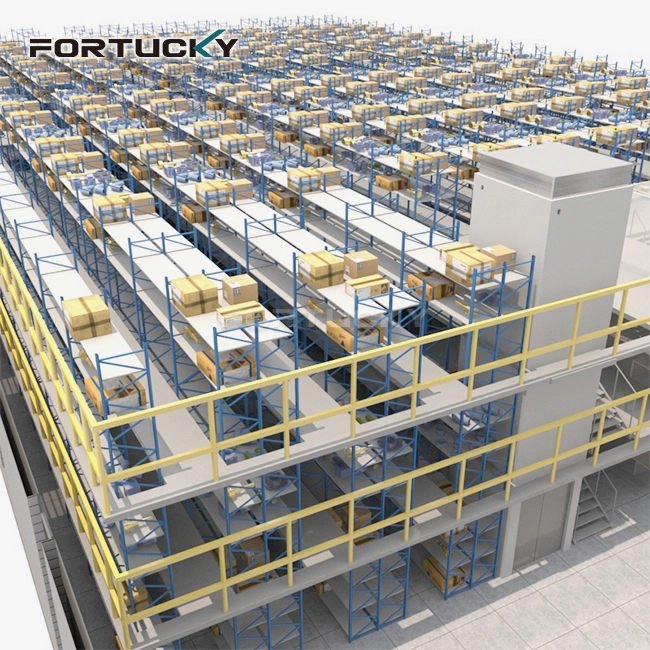
A mezzanine storage rack is an immediate and cost-effective solution for warehouses that are short on floor space but have unused ceiling height. This steel-framed platform converts vertical space into usable storage levels, doubling or tripling your capacity without expanding your building footprint. These multi-level systems are designed for industries such as automotive parts manufacturing, electronics production, and e-commerce fulfillment. They make inventory management easier, speed up picking operations, and increase overall storage density. As real estate prices rise and profit margins shrink, logistics managers and supply chain directors must maximize the vertical space they already have—not just as a practical option, but as a competitive necessity.
 Understanding Mezzanine Storage Racks: Design, Functionality, and Benefits
Mezzanine storage racks are engineered to solve a fundamental warehouse problem: how to add space without expensive construction projects. These systems consist of robust steel frames, support beams, and specialized decking materials that can be assembled to create additional usable levels within existing buildings. Unlike traditional pallet racks that only store items on the ground level, these platforms create functional floor space at higher elevations, accessible via stairs or material lifts.
Core Structural Components
Industrial-grade steel ensures strength and durability. Load-bearing supports hold the structure together, while horizontal beams distribute weight evenly across the floor. The decking—often more effective at weight distribution than checkered plates or grates—consists of specialized shelf panels. This design evenly spreads loads, provides flat surfaces for material handling equipment, and incorporates safety locking devices that prevent structural movement during operation.
Space Multiplication Without Construction
The primary benefit is the activation of vertical space. Warehouses with ceiling heights between 16 and 40 feet contain vast amounts of unused airspace. Adding a two- or three-level platform instantly increases usable floor area without altering the building's footprint. This approach eliminates the need for expensive expansions, additional lease negotiations, or disruptive relocations that interrupt supply chain operations.
Operational Flexibility and Customization
Modern mezzanine systems are remarkably flexible. Depth, width, and height specifications can be adjusted to meet different storage needs. Load capacities range from 300 to 1000 kilograms per square meter, depending on product characteristics. The structure can be tailored for various operational requirements—whether storing lightweight electronic components or heavy automotive parts. Each installation is customized to fit specific workflows through different color options, safety railings, lighting, and access layouts.
Cost Efficiency and ROI Acceleration
The financial benefits go beyond avoiding construction costs. Installation times are measured in weeks, not the months or years required for new buildings. Compared to relocating facilities, this causes far less disruption to ongoing operations. Because the modules are independent, they can be installed in stages, aligning capital expenditures with budget cycles. Improved storage density lowers the cost per stored unit, and easier access to picking areas reduces labor time—creating a cycle of efficiency gains that accelerates return on investment.
Comparing Mezzanine Storage Racks with Other Storage Solutions
Warehouse managers have many equipment options for improving storage, each with different strengths. Understanding these differences ensures that a mezzanine storage rack's capabilities align with facility needs.
Vertical Integration versus Ground-Level Density
Traditional pallet racking maximizes height to store more at ground level while keeping operations on a single floor. This approach works well in high-activity environments where forklift operators need quick access to palletized loads. In contrast, multi-level platforms create distinct work areas at different heights. The upper levels are typically used for manual picking of small items, while ground levels are reserved for bulk storage or automated systems. This vertical separation organizes workflows by separating high-speed picking from backup storage tasks.
Material Selection Considerations
Steel frames are widely used in industry because of their strength, durability, and cost-effectiveness. Steel can support heavier loads, resists deformation, and requires minimal maintenance beyond regular inspections. Aluminum options are lighter and corrosion-resistant, which is beneficial in cold storage or pharmaceutical environments where temperature fluctuations or chemical exposure occur. However, steel offers better load capacity at a lower cost, making it the preferred choice for manufacturing and logistics operations handling moderate to heavy inventories.
Modular Systems versus Custom Engineering
Modular platforms use standard components assembled according to site-specific requirements. This approach reduces lead times, simplifies installation, and makes future reconfiguration easier as business needs change. Custom-engineered solutions are better suited for unique architectural challenges or process constraints, but they take longer to develop and cost more. Modular systems are ideal for procurement teams that prioritize scalability and flexibility over highly customized designs—especially in fast-changing industries where storage requirements evolve with product lines.
Load Capacity and Dimensional Planning
Matching structural capability to practical reality avoids both over-specification (which raises costs) and under-specification (which compromises safety). Automotive parts distribution typically requires 500–700 kg/m² for engine components and transmission systems. Electronics manufacturing, with smaller parts, performs well at 300–500 kg/m². E-commerce distribution centers handling diverse SKUs can manage product density variations with 400–600 kg/m² capacity. Accurate capacity estimation ensures structural integrity without unnecessary expense.
 How to Choose the Best Mezzanine Storage Rack Solutions for Your Warehouse
Selecting the right platform system requires careful analysis of building characteristics, inventory profiles, and operational workflows. This structured approach minimizes implementation risk while maximizing long-term value.
Warehouse Assessment and Constraint Analysis
Start with a comprehensive building study. Determine floor load capacity and ceiling height. Identify local building code requirements for structural modifications and occupancy classifications. Evaluate existing material handling equipment, including forklift turning radius and lift heights. Consider fire suppression systems—sprinklers must reach upper levels. HVAC capacity may need adjustment to maintain consistent environmental conditions across multiple floors. These baseline assessments establish feasibility before design work begins.
Inventory Characteristics and Storage Density Goals
Inventory characteristics directly affect system requirements. Small, frequently accessed items—such as electronic components—are well-suited for upper-level manual picking areas with shelving. Medium-sized automotive parts are better stored on adjustable shelving accessible directly from elevated walkways. Seasonal inventory fluctuations require storage density that can be adjusted without structural changes. Calculate current and projected storage density needs in cubic feet per SKU to ensure adequate space and avoid overbuilding, which reduces cost-effectiveness.
Workflow Integration and Ergonomic Considerations
Optimized placement of stairs, lifts, and platform access points ensures efficiency and safety. Ergonomic design of deck heights, lighting, and fencing further enhances the usability of warehouse mezzanine floor racking.
Supplier Evaluation and Quality Assurance
Choosing the right partner has lasting consequences. Evaluate suppliers based on engineering expertise, product quality, and post-installation support. Request proof of safety standards compliance through certification documentation. Review project samples that demonstrate relevant industry experience. Discuss specific requirements to assess customization capabilities. Reliable suppliers provide transparent pricing, detailed project timelines, and comprehensive maintenance instructions. Companies that serve Fortune 500 clients in manufacturing, technology, and automotive sectors typically maintain rigorous quality standards and extensive application experience.
Scalability Planning for Future Growth
Prepare for change. Modular designs accommodate expansion as storage needs grow. Choose systems that allow additional platforms, extended walkways, or reconfiguration of access points without major structural modifications. Forward-thinking planning preserves the initial investment by ensuring the system can evolve as the business grows or product lines change. Scalable design is especially valuable in rapidly growing industries—such as new energy battery manufacturing or e-commerce fulfillment—where storage requirements can double in a short time.
Installation and Maintenance Guide for Mezzanine Storage Racks
Successful implementation requires not only the right equipment but also careful installation planning and ongoing maintenance procedures that preserve safety and performance.
Pre-Installation Site Preparation
Proper preparation speeds up installation and prevents problems. Conduct structural engineering assessments to verify that floor load capacity can support planned platform weights plus product loads. Obtain necessary building permits and schedule inspections as required by local regulations. Plan installation timing to minimize operational disruption—for example, scheduling work during off-shifts or low-demand periods. Clear existing inventory and equipment from installation areas to ensure unobstructed access. Set up temporary storage for relocated goods to maintain business continuity during renovations.
Installation Timeline and Safety Protocols
Installations typically take two to four weeks, depending on platform size and complexity. The process begins with column and beam placement, followed by deck installation and safety feature integration. Strict adherence to workplace safety standards during installation protects workers and ensures regulatory compliance. Contractors should implement fall protection systems, restrict access to construction zones, and keep warehouse staff informed of hazard areas. After completion, thorough structural integrity checks are performed before the platform is put into service.
Routine Maintenance and Inspection Programs
Regular maintenance extends asset life and preserves safety. Establish quarterly inspection schedules to check for loose structural connections, decking damage, and safety railing stability. Pay special attention to load-bearing components—look for deformation, cracks, or corrosion that could compromise strength. In damp environments, use protective coatings or humidity control to prevent rust. Maintain inspection records and address any issues promptly so that small problems do not escalate into structural failures. Many suppliers offer maintenance service plans that include professional inspections and repairs—a valuable option for businesses without in-house structural engineers.
Compliance and Certification Management
Maintain compliance with load limits, emergency egress, and safety regulations. Update certification documents regularly and post clear signage for modular mezzanine storage systems to ensure ongoing operational safety.
Conclusion
Warehouse optimization through vertical space utilization delivers immediate and measurable improvements in storage capacity and operational efficiency. Multi-level platforms convert unused ceiling height into functional work areas, effectively increasing usable space without costly building additions. These steel-framed systems can be configured to accommodate a wide range of operational needs, with load capacities up to 1000 kg/m². Their modular designs allow easy reconfiguration as business requirements change. Strategic procurement that prioritizes supplier expertise, comprehensive support, and long-term scalability maximizes return on investment while reducing operational risk. Businesses in industrial, electronics, e-commerce, and automotive sectors all recognize these platforms as essential infrastructure for running competitive supply chains in space-constrained facilities.
Frequently Asked Questions
1. What load capacity should I specify for mezzanine platforms?
Load capacity is determined entirely by product characteristics. E-commerce businesses handling boxed consumer goods typically need 300–500 kg/m². Automotive parts distribution requires 500–700 kg/m² to accommodate heavier components. Given average component weights, 400–600 kg/m² is a suitable range for electronics manufacturing. Consult structural engineers and analyze inventory data to determine the appropriate specifications. Be sure to include safety margins above average loads to account for peak storage periods.
2. How long does installation take, and will it disrupt operations?
Standard installations typically take two to four weeks, depending on platform size and complexity. Suppliers experienced in industrial settings can schedule work to minimize operational disruption—for example, performing installations during off-shifts or low-demand periods. During construction, businesses can maintain continuity by temporarily relocating goods. Detailed project planning identifies critical paths and contingency plans, keeping the facility productive while meeting deadlines.
3. Can platforms be relocated or expanded in the future?
Modular system designs offer excellent adaptability for relocation and expansion. Standardized components can be disassembled and reassembled in new locations, or existing platforms can be extended as storage needs grow. This adaptability preserves the initial investment by allowing changes without building entirely new equipment. Choose flexible designs at the time of initial purchase to keep future options open—even if you don't plan immediate expansion.
Partner with Fortucky for Advanced Warehouse Storage Solutions
To get the most out of warehouse infrastructure, you need partners with both technical knowledge and real-world implementation experience. Over 1,000 clients around the world trust Fortucky's storage options, including big names in the business like Huawei, Mercedes-Benz, and CATL. Because they are made of strong steel and can hold anywhere from 300 to 1000 kg/m², our multi-level storage platforms are designed to meet your unique business needs. We are a leading mezzanine storage rack manufacturer, and our 5G-enabled intelligent production center backs up our fast delivery times, deep customization options, and localized rollout support. Get in touch with our sales team at sales@fortuckyrobot.com to talk about how to improve your warehouse and find out how our custom solutions can increase storage density, make processes more efficient, and speed up your return on investment using smart warehousing technology that has been proven to work.
References
1. Richards, Gwynne. Warehouse Management: A Complete Guide to Improving Efficiency and Minimizing Costs in the Modern Warehouse. 3rd ed. Kogan Page, 2017.
2. Tompkins, James A., and Jerry D. Smith. The Warehouse Management Handbook. 2nd ed. Tompkins Press, 2018.
3. Frazelle, Edward. World-Class Warehousing and Material Handling. 2nd ed. McGraw-Hill Education, 2016.
4. Berg, Jeroen P. van den, and Willem H.M. Zijm. "Models for Warehouse Management: Classification and Examples." International Journal of Production Economics 59, no. 1-3 (1999): 519-528.
5. Bartholdi, John J., and Steven T. Hackman. Warehouse & Distribution Science: Release 0.96. Supply Chain and Logistics Institute, Georgia Institute of Technology, 2014.
6. Mulcahy, David E. Warehouse and Distribution Operations Handbook. 4th ed. McGraw-Hill Education, 2015.
Learn about our latest products and discounts through SMS or email