- English
- French
- German
- Portuguese
- Spanish
- Russian
- Japanese
- Korean
- Arabic
- Greek
- German
- Turkish
- Italian
- Danish
- Romanian
- Indonesian
- Czech
- Afrikaans
- Swedish
- Polish
- Basque
- Catalan
- Esperanto
- Hindi
- Lao
- Albanian
- Amharic
- Armenian
- Azerbaijani
- Belarusian
- Bengali
- Bosnian
- Bulgarian
- Cebuano
- Chichewa
- Corsican
- Croatian
- Dutch
- Estonian
- Filipino
- Finnish
- Frisian
- Galician
- Georgian
- Gujarati
- Haitian
- Hausa
- Hawaiian
- Hebrew
- Hmong
- Hungarian
- Icelandic
- Igbo
- Javanese
- Kannada
- Kazakh
- Khmer
- Kurdish
- Kyrgyz
- Latin
- Latvian
- Lithuanian
- Luxembou..
- Macedonian
- Malagasy
- Malay
- Malayalam
- Maltese
- Maori
- Marathi
- Mongolian
- Burmese
- Nepali
- Norwegian
- Pashto
- Persian
- Punjabi
- Serbian
- Sesotho
- Sinhala
- Slovak
- Slovenian
- Somali
- Samoan
- Scots Gaelic
- Shona
- Sindhi
- Sundanese
- Swahili
- Tajik
- Tamil
- Telugu
- Thai
- Ukrainian
- Urdu
- Uzbek
- Vietnamese
- Welsh
- Xhosa
- Yiddish
- Yoruba
- Zulu
Mobile Drum Lifter Buying Guide for Industrial Use
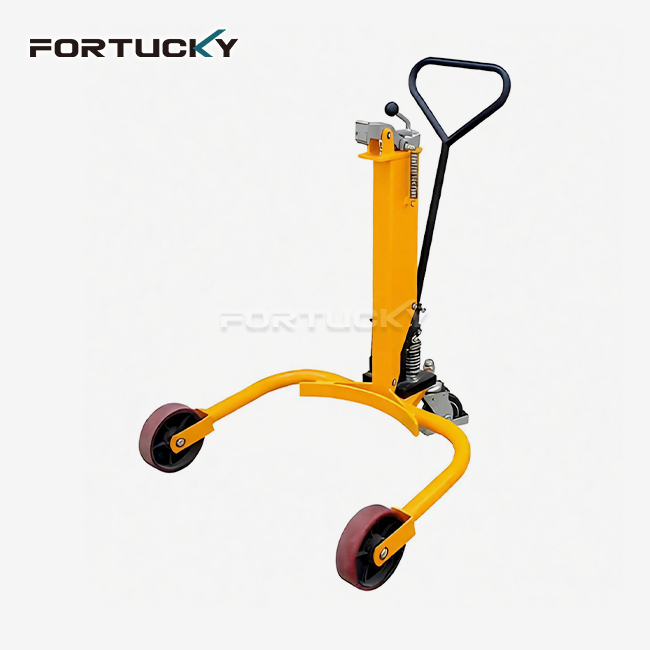
Picking the right Mobile Drum Lifter is very important if you want to move big drums around your building quickly and safely. This special equipment changes the way chemical plants, warehouses, and factories handle cylindrical loads weighing between 200 and 450 kilograms. Instead of putting workers at risk of injury or causing product spills, a well‑chosen drum handling solution speeds up operations while still meeting safety standards. In this guide, I will discuss key factors that influence your purchase decision, such as load capacity and hydraulic performance.
 Why Your Facility Needs Dedicated Drum Handling Equipment
I have seen many companies resort to makeshift drum‑moving methods. Forklifts damage drum sides, manual handling strains backs, and improvised techniques often cause spills. A well‑designed drum cart eliminates these problems through purpose‑built engineering.
Handling hazardous materials adds further complexity. Southeast Asian chemical companies must comply with strict health, safety and environmental regulations, while pharmaceutical companies require contamination‑free transfers. Steel mills need equipment that performs under harsh conditions, and food producers demand sanitary, easy‑to‑clean surfaces that meet health codes.
Every moment your team spends waiting for a forklift or struggling with manual maneuvering translates into lost productivity. A compact drum lifter solves these issues. Operators can position drums precisely without relying on other departments.
Core Applications That Drive ROI
Operations for mixing chemicals
Controlled dispensing prevents costly waste when transferring chemicals into mixing vessels. The drum’s lifting clamp ensures secure positioning, while the hydraulic tilt system enables slow, controlled product release. I have witnessed facilities reduce material loss by 15% after switching from manual methods.
Explosion‑proof models are required where volatile chemicals are present. These units feature non‑sparking wheels and pneumatic systems that are safe for hazardous zones. Your safety manager will appreciate compliance with ATEX or IECEx standards.
Moving Pharmaceutical Raw Materials
GMP environments demand stainless steel construction. A drum handler with smooth, crevice‑free surfaces prevents bacterial growth. The open‑frame design allows validation processes to thoroughly clean the equipment.
Temperature‑sensitive ingredients benefit from rapid transfer. Rather than allowing drums to sit at room temperature during slow manual filling, workers can quickly position and dispense materials. This speed maintains product quality while adhering to batch record deadlines.
Palletising tasks in a warehouse
Standard forklifts struggle to access drums positioned in the middle of pallets. A drum pallet lifter features legs that straddle the pallet’s edges. Your team can remove any drum without disturbing adjacent units.
Height‑adjustable models adapt to various storage configurations. The same machine can place drums on floor‑level racks or raise them to mezzanine heights. This versatility justifies capital expenditure by maximizing utility.
Giving Out Paint and Coating
Automotive and industrial finishing plants handle dozens of different drum types daily. A flexible drum grabber accommodates 30‑ to 55‑gallon steel, plastic or fiber drums. Quick‑release systems enable workers to switch between materials efficiently.
Precise tilt control prevents thick coatings from splattering. Gear‑reduced movement allows incremental positioning, stopping at exact angles. This precision reduces cleanup time and material waste.
Take Away the Waste Drum
Having a lot of used chemicals, dirty oils, or old materials makes them harder to handle. A drum-lift truck easily takes these dangerous wastes to places where they can be consolidated. Leaks don't happen when things are moved from one floor to another, thanks to the sealed building.
Color-coded units are helpful for places that make a lot of different kinds of trash. Different kinds of drum carriers can be set aside for different types of trash. This keeps them from getting contaminated and makes it easier to keep track of compliance.
Taking care of food ingredients
Drums of large ingredients are sent to dairy plants, beverage makers, and food makers. Transferring to hoppers or mixers is kept clean with a hydraulic Mobile Drum Lifter that has food-grade covers. Stainless steel types can handle the harsh cleaning that needs to be done between runs of products.
Integrated weighing systems keep track of the amounts that are given out. Load cells built into the drum jack give real-time weight readings, so you don't have to do extra steps to make sure the recipe is correct. This combination makes work go faster while still meeting quality standards.
Distribution of Lubricant
Organizational handling is needed in maintenance areas that deal with different types of lubricants. A drum elevator raises containers to a comfortable working height, which makes long filling jobs easier on the body. Drip trays catch spills, which keeps floors clean and stops people from slipping.
Lubricants are brought straight to where the equipment is located by mobile units. The drum transport equipment gets supplies to where they need to go without having workers move big cans across large buildings. This method saves time and lowers the risk of getting hurt.
Critical Specifications You Must Evaluate
Matching the load capacity
The required capacity must be based on your heaviest drum. Steel drums filled with viscous liquids often exceed 350 kilograms. Undersized equipment can experience hydraulic failure or frame deformation.
I recommend adding a 20% safety margin. If most of your drums weigh 300 kg, select a unit rated for 360 kg. This buffer accounts for weight variations and extends equipment life by preventing continuous full‑load operation.
Consider future requirements during specification. As facilities expand product lines, they may encounter larger drums. Investing in adequate capacity now avoids premature replacement costs.
Height Requirements for Lifting
Determine your highest discharge point. Pouring into agitated tanks or filling equipment on platforms requires sufficient vertical travel. Standard models offer 1,200–1,500 mm lift height, while specialized units reach 2,500 mm.
Minimum lowered height is equally important. When retrieving drums from the floor or low pallets, the unit must lower sufficiently. Specifications that include “minimum lifting height” prevent clearance issues during pickup.
Vertical travel affects cycle time. Manual hydraulic models with larger lift ranges require more pumping strokes. For high‑volume applications, battery‑powered units maintain consistent speed regardless of lift distance.
Size and Height of the Drums That Fit
Conventional 55‑gallon drums measure approximately 572 mm in diameter and 851 mm in height. However, certain applications use wide drums, tall drums or metric sizes. The gripping mechanism must accommodate your specific dimensions.
Adjustable gripping heads provide versatility. Models with movable clamps can accommodate drum diameters from 400 mm to 600 mm. This flexibility allows facilities to handle multiple drum types without purchasing dedicated equipment.
Verify rim compatibility. Plastic drums have thicker rolled edges than steel drums. Eagle‑beak clamps must grip firmly without crushing plastic or slipping on steel.
Building the material and how long it will last
Carbon steel frames with powder coating perform well in most industrial settings. This cost‑effective construction withstands standard wear and tear and resists atmospheric moisture.
Chemical exposure demands stainless steel. Grade 304 suits most applications, while Grade 316 is ideal for highly corrosive environments. The investment pays off through longer service life and reduced maintenance.
Professional‑grade equipment differs from light‑duty alternatives in component quality. Forged steel chucks outlast cast parts. Reinforced hydraulic valves resist leaks even after extensive rotation. Sealed bearings prevent contamination in dusty environments.
Mobility and freedom to move around
Wheel size affects obstacle navigation. Larger wheels roll smoothly over expansion joints, cables and floor irregularities. Polyurethane wheels protect finished floors, steel wheels excel in harsh workshops, and pneumatic tires provide stability on rough terrain.
Turning radius is critical for tight spaces. Measure your shortest aisles before selecting a drum lifting trolley. Some units require up to a 1.8-meter turning ring, which may be unsuitable for compact areas.
Choice of Operational Mechanism
Manual hydraulic systems suit occasional use. Depressing the foot pedal builds pressure through a pump mechanism. These units require no power source and offer unlimited duty cycles.
Battery‑powered models accelerate high‑frequency processes. Push‑button controls eliminate physical exertion. Lithium‑ion batteries provide full‑shift operation with minimal charging downtime.
Facilities with existing compressed air infrastructure can use pneumatic devices. These designs are intrinsically safe for hazardous locations and offer rapid cycle times.
Safety Features and Following the Rules
Overload protection prevents equipment damage and operator injury. When maximum capacity is reached, hydraulic release valves immediately bypass excess pressure. Visual indicators warn operators before attempting unsafe lifts.
Self‑locking devices secure the drum during transport. Spring engagement increases grip force proportionally with load weight. This automatic feature prevents sliding if operators encounter unexpected obstacles.
Wide‑stance leg design and low centre of gravity enhance stability. The anti‑tip configuration prevents the load from falling forward when lifting heavy drums to full height.
Understanding Your Total Cost of Ownership
The purchase price covers only the initial expense. Maintenance, repairs and downtime all contribute to operating costs. Premium technology with higher upfront cost typically delivers lower long‑term costs.
Maintenance frequency depends on build quality. Units with sealed bearings and high‑quality hydraulic components require minimal maintenance. Budget models with exposed parts need frequent lubrication and adjustment.
Long‑term viability is affected by parts availability. Choosing established manufacturers ensures ongoing spare parts support. Obsolescence risks arise from proprietary designs by unknown sources.
Training requirements impact operational costs. Intuitive designs with minimal controls reduce start‑up time. Operators need extensive training for complex systems with computer interfaces.
Matching Equipment to Your Industry Sector
 FMCG and Food Processing
Washdown capability is essential. Stainless steel construction with an open-frame design allows thorough cleaning. IP65-rated electric components resist water ingress during pressure washing.
Quick material changeovers require tool‑free cleaning access. Models with removable drip trays and accessible hydraulic cylinders simplify sanitation procedures. This design reduces downtime between product runs.
Automotive Manufacturing
Paint shops need explosion‑proof drum elevator models. Spark‑resistant construction prevents ignition sources in coating areas. Pneumatic operation eliminates electrical components entirely.
High‑volume operations benefit from battery‑powered units. Rapid cycle times keep pace with production line demands. Integrated tilt mechanisms enable precise dispensing into automated mixing systems.
Pharmaceutical Production
Documentation requirements favour equipment with validation support. Manufacturers providing IQ/OQ protocols simplify compliance. Material certifications for wetted components demonstrate suitability for pharmaceutical use.
Cleanroom compatibility requires low-particle-generation materials. Stainless steel with electropolished finishes minimizes contamination risks. Sealed hydraulics prevent fluid leakage into controlled environments.
Chemical Manufacturing
Corrosion resistance dictates equipment longevity. Mobile drum stackers with chemical compatibility charts allow proper material selection for aggressive fluids. Teflon seals and stainless hydraulic cylinders resist corrosion.
Integration with secondary containment captures incidental drips. Models with built‑in spill trays or compatibility with containment pallets enhance environmental protection and regulatory compliance.
Cold Chain and Refrigerated Logistics
Low-temperature operation requires specialized hydraulic fluids. Standard oils thicken in freezer environments, causing sluggish performance. Arctic-grade formulations maintain fluidity at -30°C.
Condensation management prevents ice buildup. Sealed mechanisms resist moisture ingress during temperature transitions between refrigerated and ambient areas.
Evaluating Supplier Capabilities Beyond the Product
Customization Capacity
Standard equipment rarely fits every application perfectly. Suppliers with engineering teams can modify leg width, add custom attachments or adjust lifting heights. This flexibility optimises equipment for your specific workflow.
Deep customisation capability indicates manufacturing competence. Companies offering bespoke solutions typically maintain quality control throughout production rather than simply resourcing components.
Global Project Experience
Suppliers serving multinational corporations understand complex requirements. Experience with Fortune 500 clients demonstrates the capability to meet demanding specifications and delivery timelines.
Reference projects in your industry provide confidence. A supplier that has equipped similar facilities understands your operational challenges and regulatory environment.
After-Sales Support Network
Local service availability minimizes downtime. Suppliers with regional offices or authorized service partners provide rapid response when issues arise. Remote support alone proves inadequate for mechanical equipment.
Spare parts inventory location affects lead times. Locally stocked components enable same-day or next-day repairs. International shipping creates extended outages during failures.
Technical Documentation Quality
Comprehensive manuals reflect professional operations. Detailed maintenance schedules, troubleshooting guides, and parts diagrams enable your team to handle routine service internally.
Multilingual documentation serves international operations. English manuals suit most markets, but local language options reduce training barriers in regions with limited English proficiency.
Integration with Existing Systems
Warehouse Management System Connectivity
Advanced drum handling equipment can integrate with digital tracking systems. RFID‑enabled models automatically log drum movements, updating inventory databases in real time. This connectivity eliminates manual record‑keeping.
Barcode scanning attachments enable precise tracking. Operators scan drums during pickup and placement, creating audit trails for regulatory compliance and inventory accuracy.
Production Line Synchronization
Facilities with automated mixing systems benefit from equipment that interfaces with control systems. Signal outputs indicating drum position or tilt angle enable coordinated operation between the drum lifter and receiving equipment.
Interlock capabilities prevent operational errors. Systems that communicate with safety PLCs ensure drums are properly positioned before automated valves open, preventing spills from misaligned equipment.
Weighing and Dosing Accuracy
Built-in load cells transform basic drum transport equipment into precision dispensing systems. Digital displays show remaining drum weight, allowing operators to dispense exact quantities without separate weighing steps.
Data logging features record dispensing events. This information supports batch documentation requirements and helps track material consumption rates for procurement planning.
Making the Final Selection Decision
Your facility's specific requirements should drive equipment selection. Operations moving drums occasionally across short distances need different features than high-frequency, long-distance transport applications.
Budget constraints must balance against long-term value. While premium equipment costs more initially, superior reliability and lower maintenance requirements often justify the investment through reduced total ownership costs.
Operator feedback provides a valuable perspective. Involving your material handling team during evaluation ensures selected equipment meets practical usability requirements. Features that look good on specifications may prove awkward in daily operation.
Trial periods or demonstrations reduce purchasing risk. Reputable suppliers offer on-site evaluations, allowing your team to test equipment with actual drums in real working conditions.
Conclusion
Selecting appropriate drum handling equipment requires balancing capacity, features, and long-term reliability. The right Mobile Drum Lifter transforms hazardous manual tasks into safe, efficient operations while delivering measurable ROI through reduced injuries and increased productivity. By evaluating your specific application requirements against available features, considering total ownership costs beyond the purchase price, and partnering with experienced suppliers offering comprehensive support, you position your facility for operational excellence. Your investment in proper drum transport equipment protects your workforce while optimising material flow throughout your operation.
Frequently Asked Questions
1. Can one unit handle both steel and plastic drums effectively?
Yes, but clamp design matters significantly. Standard rim grippers work well for steel drums with rigid rolled edges. Plastic drums require wider-contact clamping surfaces to distribute pressure without deforming the container. Universal models with adjustable, padded gripping heads accommodate both materials. When you regularly handle both types, investing in this versatility prevents the need for multiple specialized units.
2. How do I prevent hydraulic system performance degradation over time?
Regular maintenance keeps hydraulic systems functioning optimally. Use recommended hydraulic oil grades—typically ISO VG 32 for standard temperature environments. Check fluid levels monthly and watch for contamination, indicating seal wear. Replace hydraulic oil annually in high-use equipment. Keep the release valves clean from dust and debris accumulation. These simple practices prevent the gradual lift-height loss and slow operation that plague neglected equipment.
3. What turning radius should I expect for standard models?
Most drum transport equipment requires 1.5 to 2-meter turning circles. This dimension accounts for the extended leg base and handle length. Measure your facility's narrowest aisles, especially around corners and doorways, before purchasing. Compact models with shorter wheelbases offer tighter turning but may sacrifice stability when lifting maximum loads to full height.
4. Do these systems include overload protection features?
Professional-grade units incorporate hydraulic relief valves as standard safety equipment. When operators attempt to lift beyond rated capacity, the valve bypasses hydraulic fluid back to the reservoir rather than building dangerous pressure. The load simply won't rise, providing clear feedback without equipment damage. This feature protects both the mechanical frame and hydraulic components while preventing tip-over risks from excessive loads.
Partner with Fortucky for Superior Drum Handling Solutions
Fortucky has equipped over 1,000 manufacturing and logistics facilities worldwide with customized material handling systems. As a trusted Mobile Drum Lifter supplier, we combine decades of engineering expertise with responsive support across Southeast Asia, the Middle East, and Russia. Our 5G-enabled smart production facility delivers customized drum handling equipment with competitive lead times, while our localized service teams provide rapid technical support. Contact our specialists at sales@fortuckyrobot.com to discuss your specific drum transport requirements and receive a tailored solution proposal.
References
1. National Institute for Occupational Safety and Health. (2020). Ergonomic Guidelines for Manual Material Handling. DHHS Publication No. 2021-145.
2. Chemical Industries Association. (2019). Safe Handling and Storage of Drums and Intermediate Bulk Containers. CIA Guidance Note GN42.
3. International Society of Automation. (2021). Industrial Equipment Selection for Hazardous Locations: Standards and Best Practices. ISA Technical Report TR84.00.07.
4. Materials Handling Institute. (2022). Specification Guide for Industrial Drum Handling Equipment. MHI Industry Group Publication.
5. European Federation of Materials Handling. (2020). Safety Standards for Mobile Lifting Equipment in Warehouse Environments. FEM Standard 4.201.
6. American Society of Mechanical Engineers. (2018). Design and Construction Standards for Material Handling Equipment. ASME B30.27-2018 Edition.
Learn about our latest products and discounts through SMS or email