- English
- French
- German
- Portuguese
- Spanish
- Russian
- Japanese
- Korean
- Arabic
- Greek
- German
- Turkish
- Italian
- Danish
- Romanian
- Indonesian
- Czech
- Afrikaans
- Swedish
- Polish
- Basque
- Catalan
- Esperanto
- Hindi
- Lao
- Albanian
- Amharic
- Armenian
- Azerbaijani
- Belarusian
- Bengali
- Bosnian
- Bulgarian
- Cebuano
- Chichewa
- Corsican
- Croatian
- Dutch
- Estonian
- Filipino
- Finnish
- Frisian
- Galician
- Georgian
- Gujarati
- Haitian
- Hausa
- Hawaiian
- Hebrew
- Hmong
- Hungarian
- Icelandic
- Igbo
- Javanese
- Kannada
- Kazakh
- Khmer
- Kurdish
- Kyrgyz
- Latin
- Latvian
- Lithuanian
- Luxembou..
- Macedonian
- Malagasy
- Malay
- Malayalam
- Maltese
- Maori
- Marathi
- Mongolian
- Burmese
- Nepali
- Norwegian
- Pashto
- Persian
- Punjabi
- Serbian
- Sesotho
- Sinhala
- Slovak
- Slovenian
- Somali
- Samoan
- Scots Gaelic
- Shona
- Sindhi
- Sundanese
- Swahili
- Tajik
- Tamil
- Telugu
- Thai
- Ukrainian
- Urdu
- Uzbek
- Vietnamese
- Welsh
- Xhosa
- Yiddish
- Yoruba
- Zulu
Two-way shuttle vs one-way shuttle: which is better for your warehouse?
Your warehouse's flow needs, storage density needs, and automation goals will help you decide between a Two Way Shuttle and a One-Way Shuttle. A Two Way Shuttle can move in both directions within racking lanes, making it possible to handle inventory in both FIFO and LIFO modes while maximizing space utilization in high-traffic areas. One-way carts, on the other hand, only move crates in one direction. They are easier to use and have lower upfront costs, but they lack the same level of versatility. The best choice for your facility depends on whether you prioritize speed and scalability or simple, low-cost execution.
 Understanding Shuttle Storage Systems – Two-way vs One-way
By decoupling trucks from deep-lane racking systems, automated shuttle systems have transformed warehouse operations. Instead of driving into tight aisles and risking structural damage, workers place pallets at the opening of each lane, and the shuttle handles the rest. This innovation solves long-standing problems associated with traditional drive-in systems: it reduces equipment wear, lowers collision risks, and speeds up cycle times.
Operational Principles of Two-way Shuttle Systems
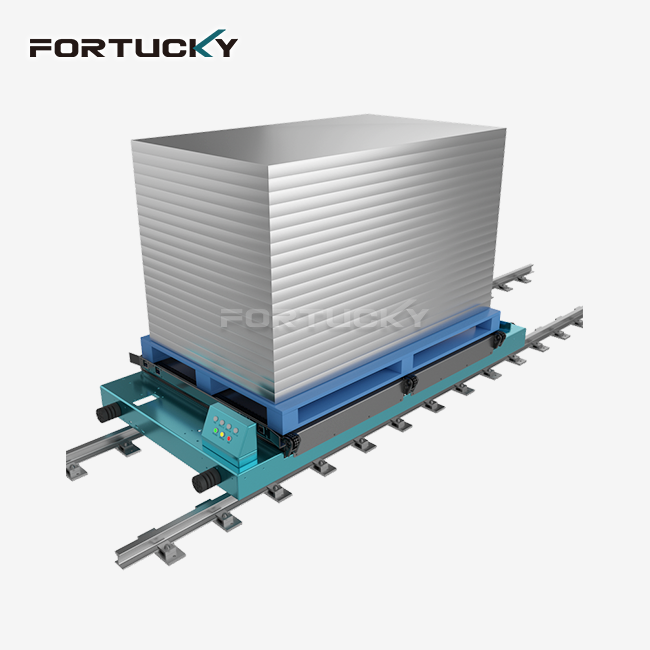
Two Way Shuttles move in both directions along dedicated tracks installed inside rack aisles. These units can enter from one end of a lane, place or retrieve a crate, and then exit from the same end or the opposite end. This capability enables drive-through rack configurations, which allow true FIFO inventory movement—essential for cold chain operations handling perishable goods or time-sensitive electronics manufacturing. Onboard sensors communicate with warehouse control systems (WCS) to ensure precise crate placement. Modern versions feature German-made laser tracking technology, achieving repeatable accuracy of ±3 mm even after thousands of cycles.
Fortucky offers six different Two Way models: standard, high-performance, low-temperature, heavy-duty, stacker-integrated, and networked. Each model suits different working environments, from non-refrigerated FMCG distribution centers to -25°C pharmaceutical cold storage facilities. With a load capacity of up to 2000 kg for heavy-duty tasks such as moving auto parts or steel coils, and empty travel speeds of up to 1.5 m/s, these shuttles keep pace with high-volume operations.
How One-way Shuttles Differ
One-Way Shuttles move in only one direction and typically enter and exit from the same lane. This design simplifies mechanical components and reduces initial capital costs, making it an attractive choice for budget-conscious projects or warehouses with a low number of SKUs. The downside is that one-way systems are limited to LIFO stocking methods unless paired with special rack modifications.
One-Way Shuttles work well for storing large quantities of uniform goods, such as construction materials or beverages. However, they lack the throughput scalability and inventory flexibility that electronics manufacturers or assembly lines need to handle hundreds of diverse part types. The inability to move bidirectionally also limits future adaptability as warehouse automation strategies evolve.
Comparing Two-way and One-way Shuttle Systems – A Decision Support Approach
Choosing the right shuttle technology requires evaluating several interconnected factors that directly impact operational efficiency and profitability.
Storage Density and Throughput Analysis
Two Way Shuttles excel in environments that demand both high storage density and fast turnover times. By enabling drive-through racking, they can handle deeper lane configurations—up to 40+ pallets deep—without slowing retrieval. This capability is critical for automotive parts manufacturers meeting just-in-time production schedules and for FMCG distributors managing seasonal demand spikes. The ability to perform parallel operations (e.g., loading at one end while retrieving from the other) can effectively double throughput compared to one-way alternatives.
In low-flow systems, One-Way Shuttles perform adequately. If a warehouse moves 20 to 30 pallets per aisle per hour, the cost savings may justify accepting LIFO constraints. However, as order complexity increases or demand surges during peak periods, the operational bottlenecks of one-way movement become evident. Forklift operators face longer wait times, and in fast-moving industries, the inability to use FIFO rotation can lead to product obsolescence.
Infrastructure Compatibility and System Integration
For modern warehouse automation to work seamlessly, digital control layers and material handling equipment must integrate without friction. Fortucky's networked and stacker-integrated Two Way Shuttles communicate via wireless modules that support WMS and MES docking, enabling real-time inventory visibility and dynamic task assignment—two capabilities increasingly essential for Industry 4.0 readiness.
Technology design plays a crucial role. Two Way Shuttles with brushless motors and imported drives deliver consistent performance across multiple shifts, while lithium-iron-phosphate battery systems support continuous operation for 8 to 10 hours between charges. In cold storage environments, specialized low-temperature models maintain battery efficiency through insulated compartments with self-heating elements, compensating for the 10-15% capacity loss that occurs at -25°C.
Financial Considerations and ROI Projections
Initial capital outlay is a significant factor in the purchasing decision. Due to their advanced mechanical design and higher component standards, Two Way Shuttle systems typically cost 30–40% more than one-way versions. However, total cost of ownership estimates reveal a more nuanced picture.
Operational savings from reduced forklift requirements, lower energy consumption, and fewer structural repairs accumulate quickly in high-volume settings. A 200,000-square-foot FMCG distribution center operating two shifts daily might achieve payback in 18 to 24 months from labor savings alone. Additional value comes from improved inventory accuracy (fewer write-offs) and the ability to defer expensive facility expansions by maximizing existing space.
Maintenance costs also differ significantly. Two Way Shuttles offer higher reliability and require less frequent servicing, especially those using imported components. Fortucky's design includes fail-safes and anti-collision routines that minimize downtime. When issues do occur, local service networks across the Americas ensure prompt resolution. Although one-way systems are mechanically simpler, their components may need more frequent replacement due to repeated directional stress.
Practical Use Cases and Industry Applications
Real-world examples illustrate how shuttle technology solves diverse operational challenges across logistics and industrial sectors.
High-density Automated Warehousing Scenarios
A major automotive parts manufacturer supplying multiple assembly plants installed Fortucky's stacker-integrated Two Way Shuttle system to manage 15,000 SKUs within a 150,000-square-foot facility. Through 35-pallet-deep lanes configured for FIFO rotation, they achieved 95% cube utilization. Integration with the existing SAP WMS enabled dynamic slotting, allowing fast-moving parts to be placed in more accessible locations while slower inventory settled deeper in the lanes.
As a result, order fulfillment cycle times decreased by 40%, and structural maintenance costs dropped by 60% by eliminating forklift travel within racking zones. The system's flexibility proved most valuable: it allowed the facility to handle a 25% increase in throughput without adding square footage, deferring an $8 million building expansion.
Cold Chain and Pharmaceutical Applications
Controlled-temperature environments highlight the limitations of conventional equipment. A pharmaceutical wholesaler with a -25°C storage facility switched from manual forklifts to Fortucky's low-temperature Two Way Shuttle system. The sealed design and specialized battery technology performed reliably in extreme conditions, and reduced door openings—since forklifts no longer needed frequent access—cut cooling costs by 15%.
Regulatory compliance also improved. The WCS interface provided complete chain-of-custody records for controlled substances by automatically logging each pallet movement with a timestamp and operator name. This level of traceability is invaluable during FDA audits and supports the stringent documentation requirements common in pharmaceutical operations.
Cost-sensitive Bulk Storage Operations
Not every use case needs the highest level of complexity. A regional beverage distributor with few SKUs and regular yearly trends opted for automated two-way shuttle racking to efficiently store and retrieve their inventory, but ultimately chose One-Way Shuttles to store large pallets of canned goods. The lower capital requirement fit with the company's cautious approach to investments, and the longer shelf life of the product made the LIFO stocking pattern work.
This example illustrates an important principle: technology selection should be driven by operational needs, not simply by acquiring the most powerful system available. The distributor achieved a solid ROI while preserving capital for other business priorities.
 Evaluating Alternative Storage Technologies – How Two-way Shuttle Stands Out
By putting shuttle technology in the context of warehouse automation as a whole, its unique value becomes clear.
Comparison with Traditional Pallet Racking
Traditional selective racking provides easy accessibility but sacrifices space due to wide aisles. Drive-in racking increases storage density but raises safety concerns and accelerates equipment wear. Two Way Shuttle systems offer density comparable to drive-in racking while maintaining the operational safety and equipment longevity of selective systems. By keeping forklift operations separate from racking structures, they prevent nearly all structural damage common in drive-in configurations.
Advantages Over AS/RS and Conveyor Systems
Automated Storage and Retrieval Systems (AS/RS) represent the pinnacle of warehouse automation, but they require substantial capital and long design and installation lead times. Two Way Shuttles deliver 60–70% of the throughput benefits of AS/RS at about 40% of the cost, and can be deployed in weeks rather than months. For the first time, shuttle technology is accessible to mid-sized businesses that previously could not afford advanced robotics.
Conveyor systems excel at horizontal movement but are less effective at vertical transport. Shuttle systems integrate well with vertical lift modules and upper structures, maximizing cubic space in facilities with height limitations or high real estate costs. The modular design also supports phased adoption, starting with a few lanes and expanding as operational experience grows and budgets allow.
Maintenance and Operational Complexity
Shuttle systems occupy a useful middle ground between fully automated robotics and manually operated systems. Remote control interfaces are easy for operators to learn, and the equipment does not require the specialized maintenance expertise needed for AS/RS cranes or AGV fleets. Routine upkeep remains manageable for Fortucky's in-house facilities teams, thanks to the use of standard industrial components, comprehensive documentation, and localized service support.
Safety deserves emphasis. Advanced photoelectric sensors prevent pallet collisions, and undervoltage protection avoids battery-related accidents. These features help logistics managers mitigate risk concerns when evaluating technology investments.
Making the Right Procurement Choice for Your Warehouse
A thorough analysis of operational needs and vendor skills is the first step to a successful shuttle system execution.
Defining Core Warehouse Requirements
Start by quantifying key success factors: SKU count and diversity, inventory turnover rate, and peak demand. A facility handling more than 500 pallets daily with a moderate SKU count is likely a strong candidate for a Two Way Shuttle. One-Way systems may suffice for operations with fewer than 200 daily moves, especially if the SKU count remains low and LIFO stocking is acceptable.
Space constraints heavily influence design choices. Deep-lane, high-density layouts enabled by shuttle systems are highly beneficial for facilities with ceilings higher than 30 feet. Conversely, buildings with limited vertical space may achieve better results with alternative methods.
Vendor Selection and Support Infrastructure
Procurement teams should prioritize vendors with proven deployments in similar industries. Fortucky has completed over 1,000 projects across pharmaceutical, electronics, FMCG, and automotive sectors, providing a strong track record for potential clients. The company's localized service networks across the Americas ensure prompt routine maintenance and emergency support.
Details about the technology are very important when considering a system like a warehouse two-way shuttle cart. Check that the suggested systems have good parts like foreign brushless motors, accurate laser positioning sensors, and lithium iron phosphate batteries that you can count on. Ask for detailed information on the control system's features, especially on how to connect to a WMS if you want to use automation in a bigger way.
Financial Structuring and Installation Planning
Leasing arrangements offer an alternative to direct purchase, particularly for businesses seeking balance sheet flexibility. Operating leases preserve capital for core activities and provide predictable monthly costs, simplifying budgeting. Purchase options generally offer better long-term economics but require larger upfront investments.
Installation timelines vary with project scope. A simple 10-lane installation may be completed in 4 to 6 weeks, while a complex multi-zone system integrating with existing technology could take 12 to 16 weeks. Work closely with facility operations to maintain continuity during installation. For many projects, work is scheduled during off-peak periods or in phases so that some functions remain operational.
Conclusion
Ultimately, the choice between Two Way and One-Way shuttle systems depends on the specific operational needs and strategic goals of each warehouse. Two Way Shuttles offer maximum flexibility, throughput, and scalability, making them the best choice for high-volume, multi-SKU environments where product rotation and future growth matter. One-Way systems perform well in low-complexity, cost-conscious situations with uniform goods and LIFO inventory patterns. Successful implementation requires careful consideration of throughput requirements, space constraints, budget limits, and integration needs. With a broad product portfolio and extensive implementation experience, Fortucky can help warehouses make this important decision, ensuring that the chosen technology aligns with long-term operational success.
FAQ
Q1: Which shuttle type improves throughput more significantly?
In terms of volume, Two Way Shuttles are far superior. Bidirectional operation allows simultaneous loading and unloading from different ends of the lane, effectively doubling cycle efficiency compared to One-Way options. This performance edge benefits facilities running multiple shifts or handling peak-season demand the most.
Q2: What installation timeline should we expect?
Standard Two-Way shuttle installations take between 4 and 8 weeks, depending on the number of lanes and site preparation work. Complex solutions involving WMS integration or existing automation systems may take up to 12 weeks. Fortucky's project management teams work closely with your operations to minimize downtime.
Q3: Can these systems integrate with our current warehouse management software?
Yes. Through wireless communication modules, Fortucky's networked and stacker-integrated models support standard WMS integration protocols. During the review phase, our technical team assesses your existing software architecture to ensure compatibility and seamless data exchange between systems.
Partner with Fortucky for Your Warehouse Automation Needs
Warehouses that want to be the best at what they do need more than just tools. They also need a reliable Two Way Shuttle source that has worked with companies in a wide range of industries. Fortucky brings more than 1,000 successful installations from the automobile, pharmaceutical, consumer goods, and electronics industries to every relationship. Our tech teams offer full customization, letting them change shuttle configurations to fit the specific needs of your building while ensuring smooth WMS integration. We offer quick repair help that cuts down on downtime thanks to our localized service networks across the Americas. Our wide range of products meets all of your needs, whether you need standard-temperature systems for general shipping or specialized -25°C cold storage options. Get in touch with us at sales@fortuckyrobot.com to set up a meeting and find out how our Two Way Shuttle technology can improve the way your building works.
References
1. Richards, G. (2022). Warehouse Management: A Complete Guide to Improving Efficiency and Minimizing Costs in the Modern Warehouse. London: Kogan Page Publishers.
2. Frazelle, E. (2021). World-Class Warehousing and Material Handling, Third Edition. New York: McGraw-Hill Education.
3. Bartholdi, J.J. & Hackman, S.T. (2020). Warehouse & Distribution Science: Release 0.98. Atlanta: Supply Chain and Logistics Institute.
4. Mulcahy, D.E. (2023). Materials Handling Handbook: The Definitive Guide to Industrial Automation and Material Handling Equipment. Washington: Material Handling Industry of America.
5. Tompkins, J.A., White, J.A., Bozer, Y.A., & Tanchoco, J.M.A. (2021). Facilities Planning, Fifth Edition. Hoboken: John Wiley & Sons.
6. Rushton, A., Croucher, P., & Baker, P. (2022). The Handbook of Logistics and Distribution Management: Understanding the Supply Chain, Seventh Edition. London: Kogan Page Publishers.
Learn about our latest products and discounts through SMS or email