- English
- French
- German
- Portuguese
- Spanish
- Russian
- Japanese
- Korean
- Arabic
- Greek
- German
- Turkish
- Italian
- Danish
- Romanian
- Indonesian
- Czech
- Afrikaans
- Swedish
- Polish
- Basque
- Catalan
- Esperanto
- Hindi
- Lao
- Albanian
- Amharic
- Armenian
- Azerbaijani
- Belarusian
- Bengali
- Bosnian
- Bulgarian
- Cebuano
- Chichewa
- Corsican
- Croatian
- Dutch
- Estonian
- Filipino
- Finnish
- Frisian
- Galician
- Georgian
- Gujarati
- Haitian
- Hausa
- Hawaiian
- Hebrew
- Hmong
- Hungarian
- Icelandic
- Igbo
- Javanese
- Kannada
- Kazakh
- Khmer
- Kurdish
- Kyrgyz
- Latin
- Latvian
- Lithuanian
- Luxembou..
- Macedonian
- Malagasy
- Malay
- Malayalam
- Maltese
- Maori
- Marathi
- Mongolian
- Burmese
- Nepali
- Norwegian
- Pashto
- Persian
- Punjabi
- Serbian
- Sesotho
- Sinhala
- Slovak
- Slovenian
- Somali
- Samoan
- Scots Gaelic
- Shona
- Sindhi
- Sundanese
- Swahili
- Tajik
- Tamil
- Telugu
- Thai
- Ukrainian
- Urdu
- Uzbek
- Vietnamese
- Welsh
- Xhosa
- Yiddish
- Yoruba
- Zulu
What is an electric pallet truck with weighing scale, and How Does It Work?
A special piece of equipment that really stands out in modern stores is the electric pallet truck with weighing scale, because it saves time and improves accuracy. This two-in-one machine solves a long-standing problem in logistics by combining the portability of a battery-powered pallet truck with the precision of an industrial scale. Now, workers no longer have to stop what they are doing to move loads to a separate floor scale; they can weigh items as they move. This innovation eliminates the static scale bottleneck that has been a problem in distribution centers. Going to a fixed weighing station can add 30–40% more time to each transaction. For large manufacturing companies, such as automotive suppliers or FMCG distributors that handle thousands of pallets every day, these minutes add up to hours of lost productivity and delayed shipments.
 Understanding Electric Pallet Trucks with Weighing Scales
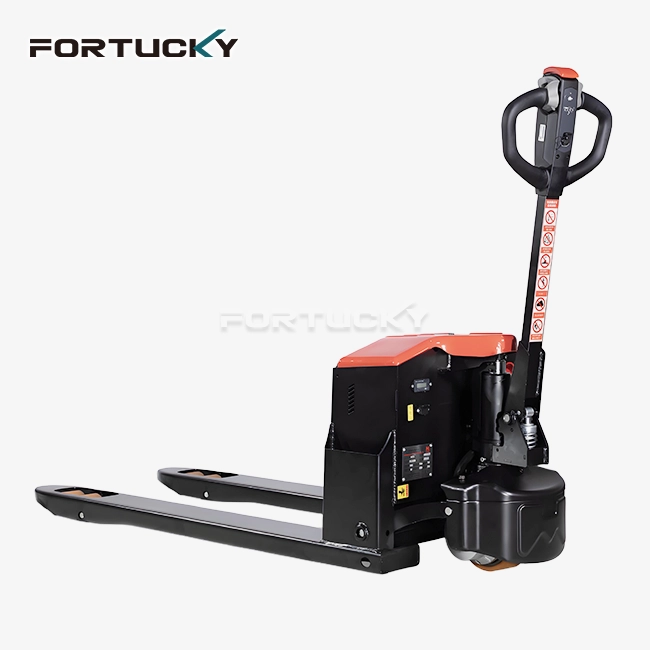
An electric pallet truck with a weighing scale represents the fusion of mechatronic engineering and precision measurement. At its heart, the machine has built-in shear beam load cells inside the fork frames that measure the weight of the load while it is being moved. The truck typically runs on a 24V battery system and uses brushless AC motors for travel and lifting, making it easy to operate on factory floors.
Core Components and Construction
The structural base is made of high-quality Baosteel steel, with thicker and reinforced sections to ensure stability under load. This sturdy construction solves a critical issue: vibrations from electric movement can reduce measurement accuracy. To accommodate different pallet specifications, the forks are reinforced to handle 1500 kg or 2000 kg and are available in two widths: 550 mm (narrow leg) and 685 mm (wide leg).
The weighing system uses pure digital sensors with low angular error and high precision. These sensors connect to an IP67-rated waterproof digital indicator with an anti-collision aluminum alloy housing. The display shows weight data in high-definition red lettering on a black background, allowing workers to read it easily whether they are in well-lit production areas or dark, cold storage rooms. The device automatically adjusts for zero drift and detects faults, reducing downtime and simplifying maintenance.
Operational Mechanics and Battery Performance
Manual pallet jacks are strenuous, but these electrically powered units include electromagnetic braking systems and can travel at 4 km/h when laden and 4.5 km/h when empty. The maximum lift height is 110 mm, which is sufficient for clearing pallets and navigating flat surfaces. Operators can confidently maneuver through aisles and around obstacles with a turning radius of 1530 mm. This is especially beneficial in crowded warehouses such as electronics and pharmaceutical distribution facilities.
Facility managers must consider battery usage when calculating operating expenses. Load cells and weighing displays require less power than drive and lift motors. The scale system is typically powered by a voltage converter connected to the main battery or by a separate power source. This ensures that weighing does not reduce the truck's shift runtime. Lead-gel or lithium-ion batteries provide longer life and require less maintenance.
Weighing Accuracy and Calibration Standards
Precision in measurement distinguishes this equipment. The four IP67 load cells detect applied load within 0.1% accuracy. The display shows increments of 0.5 kg or 1 kg, depending on the model. This precision is critical in chemical manufacturing and food processing, where weight affects transaction value and regulatory compliance. Pure digital sensor technology offers strong anti-interference and seismic performance, keeping readings stable even when the floor vibrates or nearby equipment moves.
Advanced models include tare summation and piece counting functions, allowing workers to calculate net weights and inventory quantities without manual math. The system can store multiple tare values, making it suitable for shifts that handle different types of pallets or crates.
Benefits and Applications for Global B2B Procurement
More and more, procurement managers at Fortune 500 companies are realizing that electric pallet truck with weighing scales change the economics of moving goods. When these two-in-one units are put together, they directly address problems with working efficiency, labor prices, and data accuracy that slow down the supply chain.
Efficiency Gains and Workflow Optimization
Normal workflows require workers to move pallets to a scale, deposit the load, record the weight, and then move the pallet again. This slows down operations and creates queues during peak times. Mobile weighing allows you to handle and measure simultaneously, cutting the number of steps in half. For just-in-time shipping windows in automotive parts supply, where deadlines are measured in hours, this streamlines assembly lines and prevents delays.
The benefits go beyond speed. Real-time weight data enables you to distribute loads evenly, operate vehicles at full capacity, and balance inventory immediately. Without weighing, warehouse managers cannot see stock levels accurately. This supports continuous inventory tracking, which reduces safety stock and frees up working capital.
Financial Returns and Cost Reduction
Labor expenses are high in logistics. By reducing trips to static scales and eliminating repetitive data entry, facilities can reassign staff to more valuable activities or reduce overtime shifts. Higher accuracy prevents costly mistakes such as over-declaring freight (paying for unused space) or under-declaring (incurring fines and shipment delays). For cold chain operators handling temperature-sensitive pharmaceuticals or fresh food, such delays can cause spoilage losses greater than the cost of new equipment.
In cleanroom production, the sealed oil pump with continuous sealing prevents hydraulic fluid leakage and reduces maintenance. Thicker forks made of high-grade steel resist wear, so the equipment lasts longer even with daily use. These durability considerations lower the total cost of ownership over five to seven years.
Industry-Specific Applications
FMCG wholesalers can manage their large brand portfolios using piece counting, which speeds up stocktaking and order verification. In energy battery production, weight tracking supports quality control because cell consistency affects product safety and performance. Steel and heavy industry facilities use 2000 kg versions to transport dense materials accurately. Pharmaceutical companies value the IP67 rating because it allows equipment to be cleaned between production cycles without damaging electronic components.
Logistics service providers that maintain warehouses for multiple clients can adjust wheel and fork sizes. The same machine can handle both narrow European pallets and wide North American ones. This simplifies the fleet and reduces capital expenditure.
Comparing Electric Pallet Trucks with Weighing Scales to Alternatives
To choose the best material handling solution, you need to understand how these electric pallet trucks with weighing scales compare to older equipment and newer alternatives. The choice affects not only upfront capital cost but also ongoing operating expenses and system integration requirements.
Advantages Over Manual Pallet Trucks
Manually lifting pallets can strain the back and slow down work over long shifts. The electric drive reduces operator fatigue, improving workplace safety and reducing injury-related breaks. Manual trucks cannot weigh anything, so they require separate scale stations, which modern operations avoid.
Electric units deliver consistent cycle times regardless of operator fatigue or strength, thanks to steady travel and lifting speeds. Electromagnetic braking allows safe deceleration and load holding on slopes, something manual tools cannot do. For organizations that process hundreds of pallets per shift, the efficiency gain pays for the higher equipment cost in months, not years.
Position Relative to Forklift Solutions
Reach trucks and counterbalance forklifts can move heavier loads and lift higher, but they cost more to purchase and operate. Forklifts require trained drivers, dedicated charging stations, and frequent maintenance for their complex hydraulic and mast systems. Electric pallet trucks are more economical for ground-level goods or for moving between staging areas and loading docks.
Small and portable, the electric pallet truck with built-in scale can navigate passageways that cranes can't. This space-saving method is handy for adding technology to historic buildings when structural adjustments to widen passageways would be prohibitively expensive. The slower pace reduces safety concerns in cross-docking, when humans and machines operate together.
Selecting the Right Capacity and Configuration
The first design choice is load capacity rating. The 1500 kg model is suitable for warehouse use with standard pallet weights, while the 2000 kg model handles heavier items in manufacturing. Fork width depends on local pallet requirements. The compact 550 mm legs make it easier to accommodate European EUR pallets and move through tight spaces. The 685 mm wide legs provide stability for larger North American and Asian pallets.
Enterprise-level systems connect to warehouse management systems beyond basic functions. Data may be transferred automatically to inventory systems via RS232, Bluetooth, or Wi-Fi, preventing entry errors and showing real-time stock levels. Companies moving toward Industry 4.0 need their equipment to integrate with broader automation systems for coordinated operation.
 Procurement Considerations and Supplier Insights
Selecting the right equipment requires comparing specifications to operational needs, evaluating supplier capabilities, and planning for long-term support. Because of the need for customization and integration complexity, the procurement process differs significantly from buying commodity goods.
Critical Specification Criteria
Capacity ratings must account not only for normal loads but also for peak weights that occur during seasonal demand changes or product mix variations. Underspecifying capacity will cause overload alarms to stop work, while overspecifying increases equipment cost unnecessarily. The 1150 mm fork length works with most standard pallets, but businesses handling oversized items may need special fork extensions.
Weighing resolution indicates the smallest weight change the machine can detect. For most industrial uses, the 1 kg graduation standard strikes a good balance between cost and usefulness. However, 0.5 kg or finer resolution may be needed for pharmaceutical or precious metal handling. The maximum weighing error tolerance, typically 1% of full load, should match your process control and product valuation requirements.
Evaluating Manufacturers and Support Networks
A brand's reputation is built on past installations and customer satisfaction. Manufacturers with a long history and global references in your industry provide confidence that the equipment will perform well in similar environments. When equipment breaks down and production schedules are at risk, access to spare parts is critical. Suppliers with regional distribution centers and stock commitments reduce the risk of prolonged downtime.
Warranty terms vary significantly between suppliers. Standard coverage usually lasts one year on mechanical parts and the weighing system. However, businesses that cannot perform their own maintenance may find extended warranties or service contracts more cost-effective. Clarify whether calibration services are included or charged separately, since trade-approved applications require annual recertification.
Integrating weighing data into existing WMS, ERP, or MES systems requires technical compatibility and sometimes custom software development. Suppliers that offer tested integration modules and expert support during implementation lower deployment risk more than those that provide only hardware. IoT connectivity options enable remote monitoring of equipment health and usage patterns, supporting predictive maintenance programs that prevent unexpected breakdowns.
Customization and Delivery Logistics
Standard setups work well for many uses, but for specific processes, flexibility is key. For scenarios such as store operations requiring on-the-go weight checks, a battery-powered pallet truck with weight display is a viable customized option, alongside choices like polyurethane wheels that don't leave marks, longer fork lengths for certain pallet sizes, or electrical rates that don't cause explosions in chemical production areas. The technical skills of the seller to create and deliver custom solutions are what set commodity providers apart from real partners in improving operations.
Lead times depend on the manufacturer and the level of customization. While standard units usually ship within weeks, custom builds can take several months from order placement to delivery. For multi-site rollouts or facility expansions with fixed start dates, clarifying delivery schedules and securing manufacturing capacity during procurement prevents costly project delays. Whether you purchase, lease, or rent, the financing terms should align with your capital budget cycles and expected return on investment.
Conclusion
Material handling has advanced to the point where economic advantage comes from integration rather than from isolated capabilities. The electric pallet truck with a weighing scale exemplifies this approach by combining transport and measurement into a single, seamless process. Eliminating workflow gaps and providing real-time weight data address two major challenges faced by modern manufacturing and distribution operations. Every aspect of the design, from the precision digital sensors and IP67-rated electronics to the Baosteel steel construction and electromagnetic braking, works together to ensure safety for both movement and measurement. When procurement teams evaluate automation investments, these units deliver measurable returns through reduced errors, labor savings, and faster throughput that accumulate over thousands of daily transactions.
FAQ
Q1: Can the weighing system integrate with existing warehouse management software?
Enterprise-level models come with additional connectivity modules that work via Bluetooth, Wi-Fi, and RS232. These enable automatic transmission of weight readings, timestamps, and sequence numbers to WMS systems, eliminating manual data entry. Integration reduces transcription errors and allows real-time inventory visibility, which is essential for automated replenishment systems. During procurement, you can review technical specifications and API documentation to ensure compatibility with your software environment.
Q2: How does vibration during movement affect measurement accuracy?
High-quality systems use digital filtering and motion compensation technology to minimize the impact of vibrations on readings. However, for transaction-grade accuracy that meets OIML or NTEP standards, the truck must be stationary on a level surface during measurement. The pure digital sensors and vibration-resistant housing keep external noise to a minimum, but brief pauses should still be taken during weighing to ensure accurate data recording.
Q3: What maintenance protocols ensure long-term weighing accuracy?
Every three months, inspect the load cell junction box for any signs of moisture or debris that could affect sensor performance. Annually, use certified test weights to verify that the system remains within specified tolerances, typically within 0.1% of applied load. Also check the fork limit stops to ensure that load cells are not subjected to mechanical shock exceeding 150% of their safe overload rating. Following these protocols ensures consistent weighing accuracy throughout the equipment's service life.
Partner with Fortucky for Advanced Weighing and Handling Solutions
Choose the right electric pallet truck with weighing scale provider to see if your investment improves operations over time or turns into an upkeep headache. Fortucky has worked for over ten years with global players in manufacturing and delivery, putting in place automation solutions for Huawei, CATL, Mercedes-Benz, and BMW, among others. Our engineering team created pure digital weighing systems and strengthened chassis designs that can hold up to 2000 kg and measure accurately to 1 kg. These systems can be used in harsh settings like pharmaceutical production and auto assembly.
We offer a lot of customization options, so you can change the size of the fork, the way the batteries are set up, and how the system is integrated to fit your unique working needs. Our regional service network in Asia, Europe, and the Americas makes sure that technical questions and parts needs are answered quickly, so your business doesn't have to deal with long periods of downtime. Get in touch with our sales team at sales@fortuckyrobot.com to talk about your material handling problems and find out how our electric pallet truck with weighing scale can help you run your processes better. Fortucky has the technical know-how and production quality that leaders in the field expect, whether you need stand-alone units or fleet deployments that are linked with a WMS.
References
1. Materials Handling Institute (2023). "Guidelines for Integrated Weighing Systems in Material Handling Equipment," Technical Standards Publication MHI-2023-07.
2. International Organization of Legal Metrology (2022). "OIML R 76-1: Non-automatic Weighing Instruments – Part 1: Metrological and Technical Requirements," OIML International Recommendation.
3. Supply Chain Management Review (2024). "Operational Efficiency Gains from Mobile Weighing Technologies in Distribution Centers," Volume 28, Issue 3, pp. 42-51.
4. Industrial Truck Association (2023). "Safety Standards for Low Lift and High Lift Powered Industrial Trucks," ANSI/ITSDF B56.1 Compliance Guide.
5. Warehouse Automation Quarterly (2024). "Total Cost of Ownership Analysis: Electric Pallet Jacks vs. Traditional Equipment," Q1 Industry Report, pp. 18-29.
6. Journal of Manufacturing Systems (2023). "Integration of IoT-Enabled Material Handling Equipment in Smart Factory Environments," Vol. 67, pp. 134-147.

Learn about our latest products and discounts through SMS or email