- English
- French
- German
- Portuguese
- Spanish
- Russian
- Japanese
- Korean
- Arabic
- Greek
- German
- Turkish
- Italian
- Danish
- Romanian
- Indonesian
- Czech
- Afrikaans
- Swedish
- Polish
- Basque
- Catalan
- Esperanto
- Hindi
- Lao
- Albanian
- Amharic
- Armenian
- Azerbaijani
- Belarusian
- Bengali
- Bosnian
- Bulgarian
- Cebuano
- Chichewa
- Corsican
- Croatian
- Dutch
- Estonian
- Filipino
- Finnish
- Frisian
- Galician
- Georgian
- Gujarati
- Haitian
- Hausa
- Hawaiian
- Hebrew
- Hmong
- Hungarian
- Icelandic
- Igbo
- Javanese
- Kannada
- Kazakh
- Khmer
- Kurdish
- Kyrgyz
- Latin
- Latvian
- Lithuanian
- Luxembou..
- Macedonian
- Malagasy
- Malay
- Malayalam
- Maltese
- Maori
- Marathi
- Mongolian
- Burmese
- Nepali
- Norwegian
- Pashto
- Persian
- Punjabi
- Serbian
- Sesotho
- Sinhala
- Slovak
- Slovenian
- Somali
- Samoan
- Scots Gaelic
- Shona
- Sindhi
- Sundanese
- Swahili
- Tajik
- Tamil
- Telugu
- Thai
- Ukrainian
- Urdu
- Uzbek
- Vietnamese
- Welsh
- Xhosa
- Yiddish
- Yoruba
- Zulu
What is the difference between a flat and a grid surface plastic pallet?
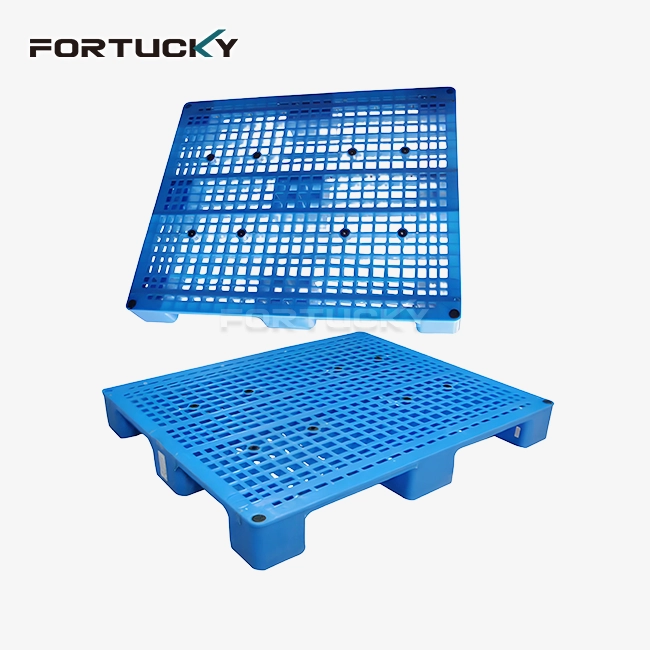
The question of whether to settle on flat or Grid Surface Plastic Pallets often arises when warehouse managers inspect material handling equipment. The answer is not immediately obvious, but it significantly affects operational efficiency, product safety, and the bottom line. A grid surface plastic pallet has an open frame with evenly spaced slats or openings across the deck, allowing airflow and water drainage. A flat‑surface pallet, by contrast, has a solid, continuous platform with no gaps. This fundamental structural difference provides clear benefits for different applications, from cold chain operations to electronics manufacturing. Understanding these differences is critical because the wrong choice can lead to problems such as damaged goods, ineffective cleaning, or excess shipping weight. Let us examine how these two designs perform in real‑world conditions, which is what procurement professionals face every day.
Understanding Flat vs Grid Surface Plastic Pallets
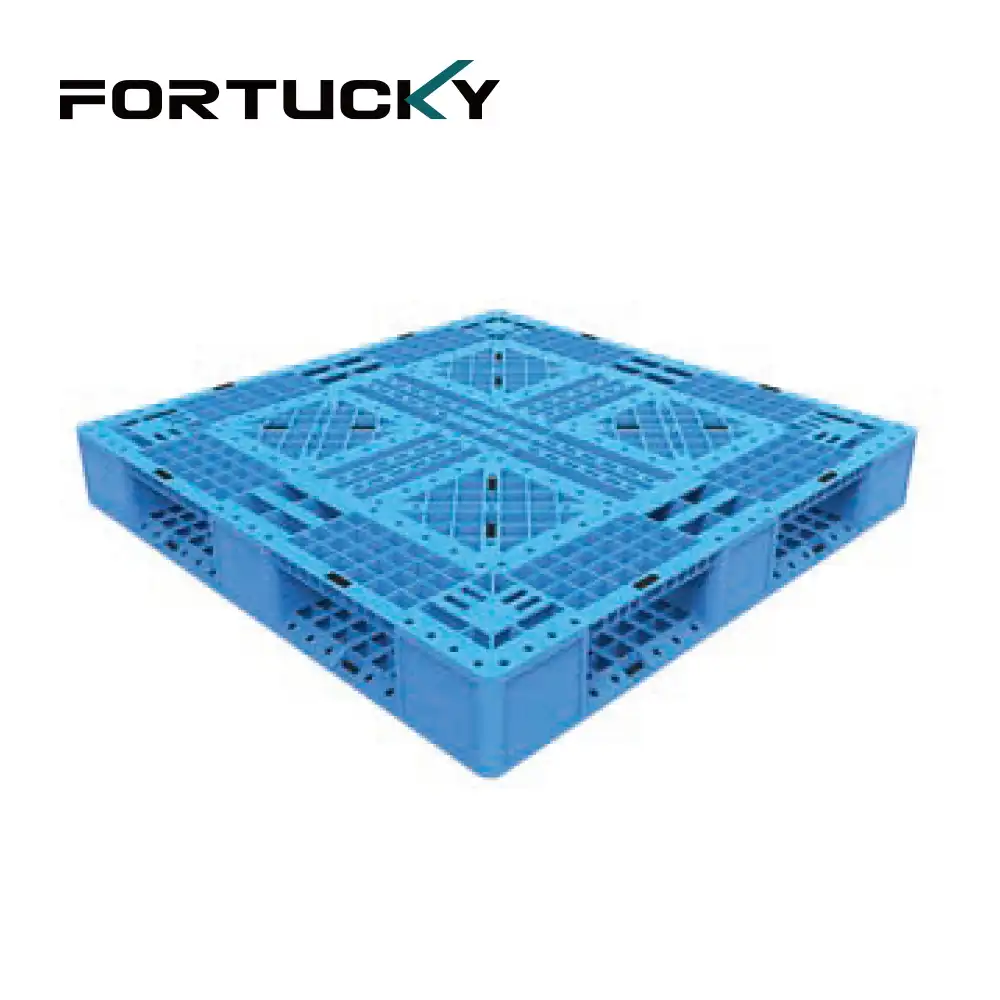
 Structural Design and Material Composition
High‑density polyethylene (HDPE) or polypropylene (PP) is commonly used as the base material for both pallet types because of its strength and chemical resistance. Injection moulding ensures consistent dimensions, which is essential for automated warehouse systems. Flat surface designs have a single, continuous deck across the entire top surface, with no openings where small items could fall through or packaging could become trapped.
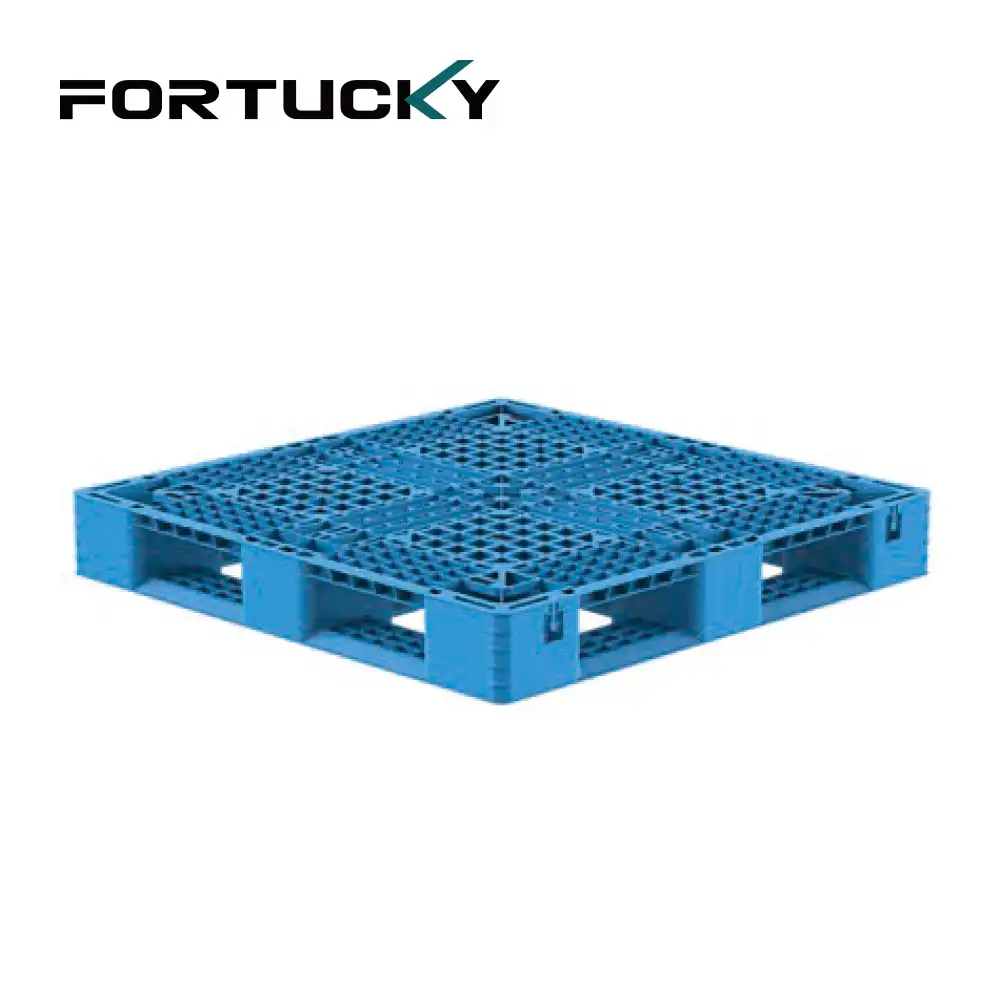
In grid designs, the spacing between deck slats is carefully planned to create an open mesh structure. Grid patterns can range from simple parallel lines to more complex honeycomb configurations, which significantly affects how the pallet interacts with loads, the environment, and handling equipment. The choice between HDPE and PP also affects performance: HDPE offers better impact resistance, while PP provides superior chemical resistance and is slightly more cost‑effective.
Functional Characteristics That Drive Selection
These designs distribute loads very differently. Flat surfaces spread weight evenly across the entire deck area, maximising contact with oddly shaped items or soft packaging. This is particularly important when handling bagged goods or flexible packaging that could slip through openings.
On grid surface plastic pallets, the slats—as structural elements—bear most of the load. This design works well with rigid cases, reinforced‑bottom crates, or standard tote boxes. Depending on grid density, the openings reduce overall material usage, lowering pallet weight by about 15‑25% compared to comparable flat designs. Moisture management also differs: grid openings allow rapid water drainage and airflow, preventing water accumulation.
Compatibility with Material Handling Equipment
Both types are available with two‑way or four‑way entry, depending on the bottom runner configuration. Options include three‑runner, six‑runner, and multi‑foot designs, each offering different access advantages. Reversible designs allow use from either side, effectively doubling service life as wear patterns develop.
For automated storage and retrieval systems (AS/RS), dimensional tolerances are tighter. Grid pallets are lighter, which reduces energy consumption in high‑velocity automated environments. Flat surfaces provide more predictable sensor performance because uninterrupted surfaces create uniform optical or laser scanning profiles. Grid structures can occasionally catch on worn chain or roller systems, whereas flat surfaces move smoothly across most conveyors.
Practical Comparison: Benefits and Limitations of Flat and Grid Surface Pallets
Advantages of Grid Surface Configurations
The design of the open framework has real effects in certain operational settings, particularly for the Compact grid single-sided plastic pallet. Figuring out where these benefits really add value helps to support purchasing choices:
Drainage and Ventilation: Grid holes let water run off right away and air move continuously around stored items. Cold storage facilities benefit a lot because trapped wetness speeds up spoilage and makes a good environment for microbes to grow.
Reduced Material Mass and More Efficient Transport: Less material mass directly leads to lower shipping costs when moving empty boxes or increasing loading capacity. A building that goes through 5,000 pallets a year saves money on fuel costs and improves the amount of space each truck can carry.
Simplified Cleaning and Sanitation: Industries that deal with food and drugs have to follow strict cleanliness rules. Grid shapes let high-pressure water flow through the structure, getting rid of dirt and grime without leaving behind areas of contamination.
Where Flat Surface Pallets Excel
Problems that grid systems can't solve well can be solved by solid deck construction:
Complete Load Stability: Items with odd shapes, small parts, or that come in bags need support that doesn't stop. Flat pallets prevent loads from moving, packages from getting distorted, and goods from getting lost through holes.
Surface Protection: Full barrier protection is good for finishes that are easily damaged or printed packaging. The solid surface protects items from groundwater, stops marks from grid contact points, and evens out the pressure on the stacks.
Wide Range of Uses: Standardizing on flat designs helps facilities that deal with a variety of products keep their inventory from getting too complicated. Different types of loads can be put on the same type of box, reducing the need for training.
Operational Limitations Worth Considering
Grid designs can cause problems with certain load types. Small parts may fall through openings, soft packaging may sag between slats, and liquid containers could tip if support points are not aligned correctly. Procurement teams must check actual product and packaging dimensions against grid spacing requirements.
Flat surfaces can become slippery when wet if standing water is not drained, creating handling hazards. Cleaning the underside, where dirt accumulates against solid surfaces, requires more effort. Material costs are higher due to greater polymer usage, affecting both initial capital expenditure and replacement budgets. Both designs require an honest assessment of their practical performance.
How Grid Surface Plastic Pallets Meet Modern Warehouse and Cold Storage Needs
Optimizing Cold Chain Performance
Grid Surface Plastic Pallets make the cold chain work better in a number of important ways. When there are breaks between box stacks that let cool air flow vertically, air flow patterns get a lot better. Traditional solid boxes make air holes that keep the deck and product from moving, which makes cooling systems work harder.
Grid designs reduce this thermal barrier, so set temperatures are reached faster after loading and maintained within narrower bands during storage. Condensation control also improves; grid openings let moisture drain away from products rather than pooling against packaging. During defrost cycles, these structures help water exit quickly, reducing slip risks and preventing ice formation.
Load Capacity Engineering for Demanding Applications
Modern grid pallets offer excellent strength‑to‑weight ratios through advanced engineering. Properly constructed units can support up to six tonnes of static load, two tonnes of dynamic load during transport, and 1.5 tonnes when stored in selective racking systems. These ratings are sufficient for most manufacturing and distribution tasks.
Material selection directly affects performance under stress. HDPE formulations provide outstanding impact resistance and flexibility across temperatures from ‑25°C to 60°C. PP blends offer better chemical resistance when cleaning agents or oils contact the pallets. Rigorous testing—including compression strength and corner drop tests—validates design performance before production.
Hygiene Standards and Cleaning Protocols
In the food, pharmaceutical, and medical device industries, material handling decisions are governed by strict regulations. Non‑porous plastic surfaces do not support bacterial growth like wood does. Grid patterns enhance this benefit by eliminating hidden spaces where debris can accumulate.
Effective cleaning protocols use the grid's openness for thorough sanitation. High‑pressure spray systems clean all areas simultaneously, reducing time and improving effectiveness. Automated pallet washers clean grid pallets more quickly because water and detergents can penetrate the structure without manual intervention. Rapid drying also prevents microbial growth between cleaning cycles, which is especially important in food processing environments.
 Decision-Making Guide: Selecting Between Flat and Grid Surface Plastic Pallets
Matching Pallet Design to Product Characteristics
Informed selection starts with a thorough evaluation of grid surface plastic pallet options. Begin by listing the actual items handled, including their packaging dimensions, weight distribution, and stability during movement. Small items that are close to or smaller than possible grid openings immediately indicate a need for flat surfaces.
Packaging rigidity also affects compatibility. Corrugated boxes with reinforced bottoms distribute weight well across grid slats, but thin‑walled cases or flexible packaging require continuous support. Supply chain handling conditions also matter; products moved between different facility types need pallets that work with a wide range of equipment.
Cost-Benefit Analysis Beyond Purchase Price
Purchase cost is only one component of total cost of ownership. Grid pallets generally have lower prices because they use less material, though price differences narrow at higher volumes. Customisation needs—such as specific sizes or branding—significantly affect costs. Beyond purchase price, operational costs include maintenance, replacement frequency, and handling efficiency.
Lighter grid pallets are easier to transport, saving shipping costs over time. High‑quality plastic pallets made from virgin HDPE or PP resins last five to ten years longer than wooden pallets. Environmental considerations also matter; recyclable plastic pallets reduce landfill waste. Damaged pallets can often be recycled at the end of their useful life to produce new products.
Supplier Evaluation Criteria for Strategic Sourcing
Long‑term satisfaction depends on the chosen vendor. Consistent quality and customisation capabilities are essential. Factories using advanced injection moulding technology produce pallets with tighter dimensional tolerances, which is necessary for automated warehouse systems. Certifications provide objective evidence of production safety standards.
Suppliers that offer size variations, colour matching, and special features like RFID integration are highly valuable for complex operations. After‑sales support and responsiveness also distinguish providers. Global companies with regional distribution networks can support local customers while maintaining consistent quality across all locations.
Procurement and Supply Chain Considerations for Grid Surface Plastic Pallets
Ordering Processes and Lead Time Management
Accurate demand forecasts based on building flow and Grid Surface Plastic Pallet circulation rates are the first step in planning what to buy. Look at the number of shipments per day, the average cycle time, and the safety stock buffers to figure out the right pool size. If you don't guess how much you need, you'll have problems during busy times.
Minimum order quantities depend on the manufacturer and level of customisation. Standard configurations and popular sizes are typically shipped in truckload quantities of 400 to 600 units. Lead times depend on material availability and production schedules; custom orders may take six to twelve weeks from specification approval to delivery.
Logistics Optimization Through Design Selection
Transportation efficiency improves when pallet characteristics match distribution network requirements. Grid pallets are lighter, allowing higher stacking on delivery vehicles without exceeding axle weight limits. This benefit grows across networks that regularly move pallets between sites.
Closed‑loop pallet pools have hidden costs from returning empty pallets. Backhaul costs decrease with lighter units, but economic analysis must weigh these savings against potential load‑capacity losses. Storage density also affects costs; both flat and grid pallets stack well when empty, but nesting capabilities differ by design.
Leveraging Supplier Expertise for Competitive Advantage
Strategic suppliers offer valuable insights beyond product delivery. Experienced manufacturers have implemented solutions across many industries and understand what works in each context. Involving suppliers early in facility build or process improvement projects can uncover solutions that procurement teams might otherwise miss.
Value‑added services include technical advice on pallet selection, help with material‑handling equipment integration, and training programmes for warehouse staff. These services reduce adoption risks and accelerate returns on automation investments. At Fortucky, we understand that material handling decisions affect the performance of your entire supply chain.
Conclusion
In conclusion, choosing between flat and grid surface plastic pallets requires a thorough analysis of actual operational needs, rather than following generic advice. Grid designs excel in high‑moisture environments, temperature‑controlled processes, and weight‑sensitive applications where drainage and airflow are critical. Flat surfaces are superior for small parts, fragile packaging, and diverse product ranges where stability is paramount. A sound procurement strategy balances short‑term cost considerations against long‑term operational efficiency, product safety, and adaptability to changing business requirements.
FAQ
1. What products work best with grid surface plastic pallets?
Grid pallets perform very well with rigid shipments such as corrugated boxes, plastic totes, and standard cases with sturdy sides. They are suitable for produce, beverages, canned goods, and other items that can tolerate open‑bottom contact. Do not use them with small loose items, bagged goods, or anything smaller than the grid spacing.
2. How are the cleaning needs for flat and grid patterns different?
Grid pallets clean more effectively and quickly because high‑pressure water flows directly through the structure, removing hidden contamination. They dry rapidly, preventing microbial growth. Flat pallets require more effort to reach the underside, but they provide full surface protection from below during storage.
3. Can grid pallets handle the same weight capacity as flat designs?
When properly engineered, grid pallets can support roughly the same weight as flat pallets—six tonnes for static loads, two tonnes for dynamic loads, and 1.5 tonnes for racking. Actual capacity is influenced more by material choice and structural design than by surface type. Always verify that specifications meet your application requirements.
Partner with Fortucky for Custom Grid Surface Plastic Pallet Solutions
Fortucky offers engineered material handling solutions that are made to fit your unique operating needs, whether you're trying to improve the efficiency of your manufacturing floor or improve the flow of goods from the cold chain. As a reliable Grid Surface Plastic Pallet maker, we work with companies in Asia, Europe, and the Americas in fields like pharmaceuticals and automobiles. We offer deep customisation options and quick rollout support. Our expert team looks at the size of your product, the tools you need to handle it, and your throughput needs to find the best configurations from our wide range of specifications. Our eco-friendly pallets are made from brand-new HDPE and PP materials and come in blue or any other colour you want. Get in touch with our sales team at sales@fortuckyrobot.com to talk about how our certified pallet solutions can help your business run more smoothly, save you money, and support your automation plan.
References
1. Chen, M., & Rodriguez, A. (2022). Material Handling Equipment Selection in Automated Warehousing Systems. Journal of Supply Chain Management Technology, 18(3), 112-129.
2. Industrial Packaging Association. (2023). Plastic Pallet Design Standards and Performance Testing Protocols. IPA Technical Bulletin 2023-04.
3. Kumar, S., & Thompson, J. (2021). Cold Chain Logistics: Equipment Optimization for Temperature-Sensitive Products. International Journal of Refrigerated Distribution, 15(2), 67-84.
4. Manufacturing Engineering Society. (2023). Comparative Analysis of Material Handling Platforms in High-Throughput Environments. MES Research Report Series, Volume 12.
5. Peterson, L. (2022). Sustainable Material Handling: Life Cycle Assessment of Plastic versus Wood Pallets. Environmental Logistics Quarterly, 9(4), 201-218.
6. Wilson, D., & Zhang, H. (2023). Hygiene Standards in Food Processing Logistics: Equipment Selection and Sanitation Protocols. Food Safety Engineering Review, 27(1), 45-63.

Learn about our latest products and discounts through SMS or email