- English
- French
- German
- Portuguese
- Spanish
- Russian
- Japanese
- Korean
- Arabic
- Greek
- German
- Turkish
- Italian
- Danish
- Romanian
- Indonesian
- Czech
- Afrikaans
- Swedish
- Polish
- Basque
- Catalan
- Esperanto
- Hindi
- Lao
- Albanian
- Amharic
- Armenian
- Azerbaijani
- Belarusian
- Bengali
- Bosnian
- Bulgarian
- Cebuano
- Chichewa
- Corsican
- Croatian
- Dutch
- Estonian
- Filipino
- Finnish
- Frisian
- Galician
- Georgian
- Gujarati
- Haitian
- Hausa
- Hawaiian
- Hebrew
- Hmong
- Hungarian
- Icelandic
- Igbo
- Javanese
- Kannada
- Kazakh
- Khmer
- Kurdish
- Kyrgyz
- Latin
- Latvian
- Lithuanian
- Luxembou..
- Macedonian
- Malagasy
- Malay
- Malayalam
- Maltese
- Maori
- Marathi
- Mongolian
- Burmese
- Nepali
- Norwegian
- Pashto
- Persian
- Punjabi
- Serbian
- Sesotho
- Sinhala
- Slovak
- Slovenian
- Somali
- Samoan
- Scots Gaelic
- Shona
- Sindhi
- Sundanese
- Swahili
- Tajik
- Tamil
- Telugu
- Thai
- Ukrainian
- Urdu
- Uzbek
- Vietnamese
- Welsh
- Xhosa
- Yiddish
- Yoruba
- Zulu
What is the load capacity of a mid-range manual lift stacker?
Most medium duty manual stackers can safely hold between 1,000 kg and 2,000 kg of weight. Most mid-range types can safely hold between 1,500 kg and 2,000 kg. There is a great mix between how much these hydraulic lift trucks can lift and how flexible they are in how they can be used. This makes them important tools for warehouses, factories, and delivery centers. The stacker's load size is the most important factor in determining its suitability for a given task. This has a direct effect on efficiency, safety rules, and the return on investment for procurement teams looking at material handling options.
 Understanding Load Capacity of Mid-Range Manual Lift Stackers
The highest weight that a manual lift stacker can safely hold while still being stable and working properly is called its load capacity. This important spec covers more than just lifting capacity; it also shows the technical boundaries of the hydraulic system, frame construction, and general structure design that make sure the machine can work safely in a range of situations.
Key Factors Influencing Load Capacity
A manual stacker's load capacity is based on a number of linked engineering parts that work together to set safe working limits. Frame building with high-quality materials like 12# I-steel gives the structure the base strength it needs to hold big loads without deforming or breaking. The real lifting force for vertical movement is based on the hydraulic system, which includes the quality of the oil tank and the pump's diameter.
As the lifting height goes up, the way loads are distributed changes a lot. This is why makers list different capacity rates for different heights. At ground level, a stacker might be able to handle its full rated capacity. However, as the load hits its highest point of lift, this capacity usually declines because of the laws of center of gravity and mechanical leverage.
Standard Capacity Ranges for Mid-Range Models
Mid-range hand stackers are very important because they are in the middle of light-duty pallet jacks and heavy-duty driven equipment. Most of the models in this group can hold between 1,000 kg and 2,000 kg, with the most famous models being able to hold around 1,500 kg. These specs are in line with what pallets usually weigh in manufacturing and shipping, where loads can be anywhere from 800 kg to 1,800 kg, based on the weight of the goods and how they are packed.
The 2,000 kg capacity of a medium-load pallet lifter is the highest level that can be operated by hand. Any higher than that, and it would be too hard to use for long periods of time. This maximum capacity is also based on safety concerns, as bigger loads need more stability features and stricter training guidelines for operators, which manual systems don't always manage well.
Types of Medium Duty Manual Stackers and Their Capacities
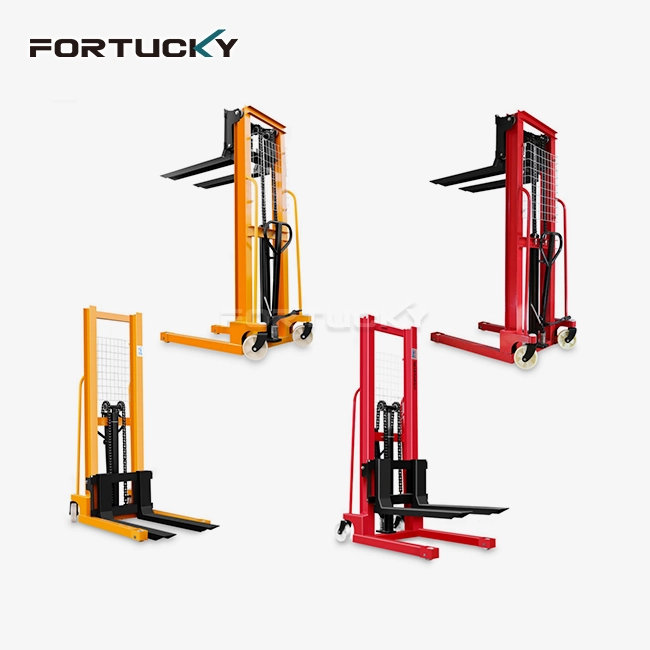
There are a few different ways that manual lift stackers can be designed, and each one works best for a certain set of operating needs and capacity ranges. Knowing about these differences helps procurement workers choose technology that meets their needs and makes the best use of their money.
Hydraulic Manual Stackers
In the medium-duty group, hydraulic manual stackers are the most popular type. They use pressurized hydraulic systems to lift things. These units usually have oil tanks with foreign seals that keep lifting weights the same over the course of their useful lives. Because they use hydraulics, these stackers can lift things smoothly and precisely, making them perfect for sensitive materials or precise stacking tasks.
The highest height that standard hydraulic models can lift is between 1,200 mm and 1,600 mm, and they keep their estimated capacity throughout most of that range. The technical benefit of the hydraulic system lets operators lift heavy loads with little physical effort. This increases productivity and keeps operators from getting tired after long periods of use.
Straddle vs. Fork-Over Designs
Support legs that go all the way around the base of the pallet are placed in a "straddle leg" form. This makes bigger loads and closed-bottom pallets more stable. These setups can usually handle loads between 1,200 kg and 2,000 kg, and the straddle design helps spread the weight out better and lowers the risk of tipping over while being moved.
Fork-over designs put the support structure right under the forks, making a smaller profile that works well in narrow hallways and small areas where people need to move around. Because they are less stable, these models may have slightly lower capacity ratings, but they work great for tasks that need to change directions often and be placed precisely in small spaces.
Adjustable Fork Configurations
Modern medium duty manual stackers have fork systems that can be adjusted to fit different box sizes and load configurations. Adjustable fork widths usually fall between 240 mm and 580 mm, which lets workers get the best load spread on all kinds of pallets. This adjustability has a direct effect on how well the capacity is used, since the right placement of the forks ensures even weight distribution and support during lifting operations.
Fork lengths, which are usually around 800 mm, are long enough to support normal pallet sizes while keeping the total vehicle size small. The changeable width and standard length of the stacker make it more flexible, which increases its ability to be used in a wide range of situations.
Benefits and Safety Features Related to Load Capacity
Choosing the right load capacity for hand stackers has big benefits for operations that go beyond just being able to lift things. These benefits include better safety, higher productivity, and lower costs, all of which have a direct effect on how well and how profitable the warehouse is.
Operational Efficiency Advantages
When you choose the right capacity, you don't have to split loads or do multiple handling rounds. This makes warehouse operations run more smoothly and requires less work. When stackers meet load requirements well, workers finish jobs faster, which cuts down on cycle times and boosts throughput in operations that need to be done quickly. This efficiency saves money right away because it cuts down on work hours and makes better use of resources.
The mix between capacity and maneuverability makes it easier for workers to move around in warehouses than with bigger powered equipment. Medium-duty manual stackers work best in places that need both heavy lifting and quick movement. They offer operating freedom that rigid automation systems can't match.
Critical Safety Features
Load capacity safety features keep both people using the equipment and the equipment itself safe from the dangers of overloading and bad use. These are the most important safety features that makers put into medium-duty hand stackers:
- Overload protection systems stop lifting operations when loads are higher than what is safe. This keeps hydraulic parts and the structure's stability safe.
- Stability enhancement features, such as longer wheelbases and lower centers of gravity, lower the risk of tipping over while transporting heavy loads.
- High-quality brake systems with parts that don't wear out make sure that the vehicle can stop reliably, even when carrying the heaviest loads.
- Visual capacity indicators make load limits and working instructions easy to see, which cuts down on human error and encourages safe handling.
All of these safety features work together to make full defense systems that keep operations safe and tools lasting a long time. When these features are used correctly, they lower insurance costs, cut down on accidents at work, and make sure that regulations are followed in a wide range of industry settings.
Load Distribution Best Practices
The safety and economic benefits of choosing the right size are maximized by good load distribution practices. Operators need to know how the position of a load affects its steadiness and how easy it is to handle, especially when the load is getting close to its maximum capacity. Load centering, safe placement, and gradual lifting methods that improve stacker performance should be emphasized in good training programs.
Regular load testing to check their ability makes sure that stackers keep working at their best for as long as they are supposed to. This process of checking finds possible problems before they become dangerous or slow down work. It helps with preventative maintenance plans that make equipment last longer and keep it working properly.
 Medium Duty Manual Stacker vs. Other Material Handling Equipment
When you look at the pros and cons of manual stackers and other options for moving things, you can make an informed purchasing choice. Companies can choose equipment that meets their needs and stays within their budget by understanding these trade-offs.
Manual Stackers vs. Electric Stackers
While electric stackers can lift more and keep operators from getting tired, they require a lot of money up front and have high ongoing repair costs. Electric models can reach higher lifting heights and cycle times that are faster, but medium duty manual stackers can do the same amount of work for a lot less money.
When you own a manual stacker, you don't have to worry about things like battery maintenance, charging infrastructure, and electrical system fixes that come up when you own an electric stacker. This makes it easier to use and less expensive to own, which is especially helpful for businesses that don't have a lot of support staff or whose users only come in sometimes.
Comparison with Traditional Forklifts
The capacity and lifting height of traditional forklifts are better, but they need a lot of training for the operators, certification programs, and special upkeep assistance. Manual stackers work well in places where forklift license rules make it hard to do the job or where limited room makes it hard for forklifts to move around.
Stackers can be used in mixed-use areas where public safety worries make it hard to get to powered equipment because they are small and need to be operated by hand. Because of this, businesses can keep working even in places where regular trucks can't do their jobs safely or well.
Cost-Benefit Analysis Considerations
When used to handle modest amounts of material within their size range, manual stackers give better returns on investment. When you put together low purchase costs, low upkeep needs, and operating flexibility, you get strong economic benefits for certain uses. When looking at different pieces of tools, businesses need to think about how they will be used, how much space they need, and any working limitations.
Long-term cost analysis should look at how much it costs to train operators, how hard it is to maintain, and how flexible hand stackers are in terms of how they can be used. When looking at the whole span of an item, these factors often matter more than just performance measures.
Maintenance, Troubleshooting, and Procurement Tips Focused on Capacity
To keep the load capacity integrity, you need to pay regular attention to the hydraulic systems, structural parts, and operating procedures that keep performance standards high throughout the lifespan of the equipment. Maintenance plans that work well protect the value of investments and keep things safe and productive.
Essential Maintenance Practices
Maintaining the hydraulic system is the most important thing that can be done to keep hand stackers' capacities high. Checking the quality of the hydraulic fluid, oil tanks, and seals on a regular basis keeps the machine from losing its performance, which can lower its pulling capacity. Imported seal quality has a big effect on how reliable a system is, so checking and replacing seals should be a top concern for upkeep.
The health of the forks and frame of a medium-load pallet lifter directly impacts how much weight they can hold and how well they work. By checking structural parts for damage, deformation, or wear on a regular basis, you can make sure they keep their original strength and load-bearing capacity. High-strength cast cargo forks are better at resisting wear and bending than regular ones, but they still need to be checked regularly to find problems before they get worse.
Common Capacity-Related Issues
Most of the time, hydraulic leaks are to blame when hand stackers lose capacity. These leaks lower the pressure in the system and make pulling less effective. They usually happen slowly and become dangerous if they are not fixed right away. Finding leaks and replacing seals on a regular basis keeps small problems from getting worse and causing big capacity losses.
Damage to the forks from incorrect use or abuse limits their capacity right away and raises safety issues. If the forks are bent or cracked, they can't spread the weight evenly, which lowers the useful capacity and makes the machine unstable while it's running. Training programs that stress the right way to load things keep forks from breaking and tools from breaking down.
Procurement Strategy Optimization
Buying medium duty manual stackers is easier when you do a full review of the seller that goes beyond the initial purchase price. Total ownership costs and operating reliability are greatly affected by warranty terms, the availability of parts, and the quality of expert assistance. Companies should give more weight to providers who have a history of supporting industrial tools and having large service networks.
Buying in bulk can lower the cost of each unit while making sure that all sites have the same tools. But buying teams need to find a balance between saving money and keeping operations flexible. They also need to be careful not to buy too much, which wastes money and time. By offering customization choices, businesses can find the best equipment specs for each job while still keeping costs low.
Conclusion
Material handling systems that are medium-duty and can hold between 1,000 kg and 2,000 kg are the best choice for businesses that want to be efficient and save money. It is important to have these tools in stores, factories, and distribution centers because they can do a lot of different jobs and are easy to use. The 2,000 kg limit is high enough to handle most normal box loads while still being easy to use by hand and having small dimensions. The best choice, based on load needs, operating conditions, and safety concerns, ensures the highest return on investment while meeting efficiency goals and legal requirements in a wide range of industry settings.
FAQ
Q1: What factors determine the maximum load capacity of a manual stacker?
The maximum weight that can be put on it relies on the hydraulic system's pressure limits, the strength of the frame material, and the design of the whole structure. How much an oil cylinder can lift is based on its width (usually 40 mm for medium-duty types), along with its high-quality seals and hydraulic parts. Using materials like 12# I-steel to build the frame gives it the strength to safely support rated loads across the entire lifting range.
Q2: Why is it dangerous to work beyond the stated capacity?
Going over the maximum capacity hurts the integrity of the hydraulic system, puts too much stress on the structure beyond what was intended, and makes it unstable, which can cause loads to drop or equipment to fall over. Overloading also speeds up the wear on parts, especially hydraulic seals and structural joints, which can cause them to break down early and need expensive repairs. It also poses a major safety risk to workers and people nearby.
Q3: How often should load capacity be verified through testing?
Verification of load ability should be done once a year or after major repairs to hydraulic or structural parts. Testing equipment on a regular basis makes sure that it keeps working as well as it should and finds problems before they become dangerous. Organizations that get a lot of use may need to test more often to keep operations running smoothly and stay in line with regulations.
Q4: What is the typical lifting speed for medium duty manual stackers?
Most medium duty manual stackers can lift things at about 20 mm/s, and their lowering speeds can be changed so that users can control how fast things fall, depending on the type of load. This speed range strikes a good mix between the need to be productive and the need to be safe. It allows for enough output while still letting the user keep control during lifting operations.
Q5: How does fork adjustment affect load capacity?
When you set the forks correctly, the load is spread out evenly across the pallet base. This makes the most of the pallet's capacity while keeping it stable. Fork adjustment lengths are usually between 240 and 580 mm, which lets workers find the best setting for each type of pallet. If the space between the forks isn't right, the weight is concentrated on smaller touch areas, which could lower the safe capacity and make the transport unstable.
Partner with Fortucky for Superior Manual Stacker Solutions
Discover how Fortucky's advanced medium duty manual stacker solutions can transform your material handling operations with proven reliability and exceptional performance. Our comprehensive product portfolio includes hydraulic lift trucks engineered to meet demanding industrial requirements while delivering superior cost-effectiveness and operational efficiency. With over 1,000 satisfied customers globally and extensive experience serving Fortune 500 companies across automotive, electronics, and logistics sectors, Fortucky provides the expertise and support necessary for successful implementation. Contact our technical specialists at sales@fortuckyrobot.com to explore customized manual stacker configurations that optimize your specific capacity requirements and operational constraints, backed by our industry-leading warranty and comprehensive service network.
References
1. Industrial Material Handling Equipment Standards and Load Capacity Guidelines, International Material Management Society, 2023.
2. Hydraulic System Design and Safety Considerations for Manual Lift Equipment, Journal of Industrial Engineering Applications, Vol. 45, 2022.
3. Warehouse Safety Protocols and Load Capacity Management Best Practices, Occupational Safety and Health Administration Technical Manual, 2023.
4. Comparative Analysis of Manual vs. Powered Material Handling Equipment in Manufacturing Environments, Industrial Equipment Research Institute, 2022.
5. Cost-Benefit Analysis of Medium Duty Manual Stackers in Logistics Operations, Supply Chain Management Quarterly, Issue 3, 2023.
6. Load Distribution and Structural Integrity in Manual Lift Stacker Design, Mechanical Engineering Design Standards, American Society of Mechanical Engineers, 2022.

Learn about our latest products and discounts through SMS or email