- English
- French
- German
- Portuguese
- Spanish
- Russian
- Japanese
- Korean
- Arabic
- Greek
- German
- Turkish
- Italian
- Danish
- Romanian
- Indonesian
- Czech
- Afrikaans
- Swedish
- Polish
- Basque
- Catalan
- Esperanto
- Hindi
- Lao
- Albanian
- Amharic
- Armenian
- Azerbaijani
- Belarusian
- Bengali
- Bosnian
- Bulgarian
- Cebuano
- Chichewa
- Corsican
- Croatian
- Dutch
- Estonian
- Filipino
- Finnish
- Frisian
- Galician
- Georgian
- Gujarati
- Haitian
- Hausa
- Hawaiian
- Hebrew
- Hmong
- Hungarian
- Icelandic
- Igbo
- Javanese
- Kannada
- Kazakh
- Khmer
- Kurdish
- Kyrgyz
- Latin
- Latvian
- Lithuanian
- Luxembou..
- Macedonian
- Malagasy
- Malay
- Malayalam
- Maltese
- Maori
- Marathi
- Mongolian
- Burmese
- Nepali
- Norwegian
- Pashto
- Persian
- Punjabi
- Serbian
- Sesotho
- Sinhala
- Slovak
- Slovenian
- Somali
- Samoan
- Scots Gaelic
- Shona
- Sindhi
- Sundanese
- Swahili
- Tajik
- Tamil
- Telugu
- Thai
- Ukrainian
- Urdu
- Uzbek
- Vietnamese
- Welsh
- Xhosa
- Yiddish
- Yoruba
- Zulu
When the Full Electric Pallet Jack Becomes Essential
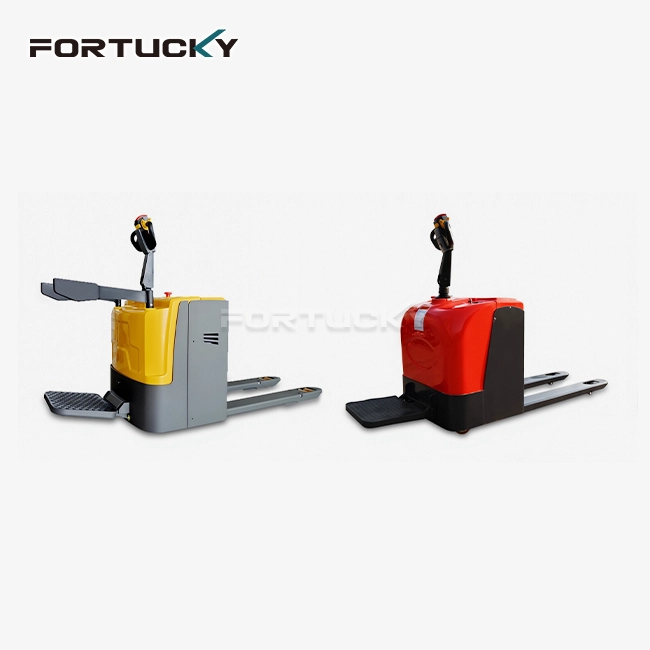
When warehouse operations hit a certain level of volume, efficiency needs, and labor limitations, the full electric pallet jack transitions from a nice-to-have to an absolute necessity. Unlike manual alternatives, this battery-powered equipment automatically handles lateral and vertical movement, eliminating the risk of musculoskeletal injuries while managing loads rated between 2000 kg and 3000 kg over long shifts. When moving more than 50 pallets per day, when aisles narrow below 2.5 metres, or when multi-shift operations place excessive strain on manual teams, full electric pallet jacks become essential for maintaining throughput and safety standards in modern logistics environments.
 Understanding Full Electric Pallet Jacks: Features, Benefits & Operations
Electric material handling equipment has transformed warehouse planning. These tools represent a significant step away from labour-intensive manual tasks toward smart automation.
Core Components and Technology
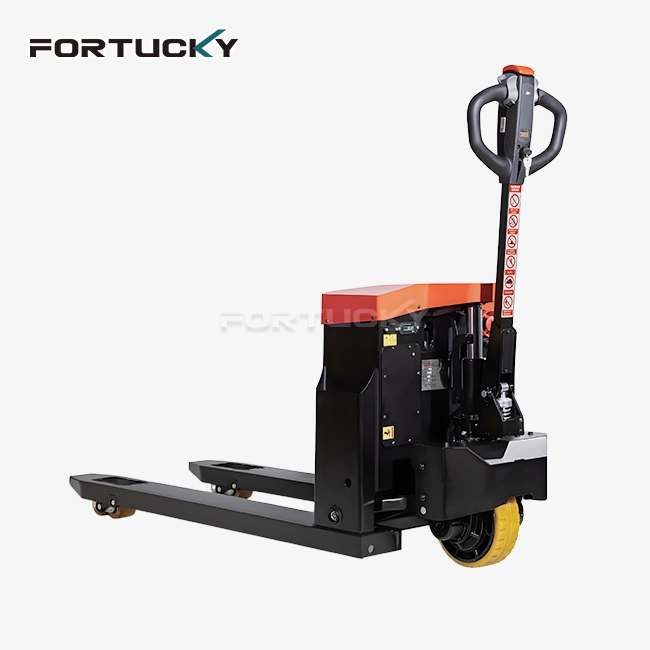
A battery-powered full electric pallet jack integrates a power system that combines robust motors with the latest battery technology. The drive motor typically delivers 1.2 kW, while lift motors range from 2.2 kW to 3 kW depending on load capacity requirements. Intelligent electronic control systems work with these motors to provide stepless speed regulation, allowing operators to adjust travel speed without abrupt starts or stops. The control interface includes fault reminder features that notify users of upcoming maintenance needs before failures occur, reducing unplanned downtime.
The chassis is constructed from high-manganese steel, ensuring years of heavy use without deformation. Plate chains and reinforced drive units efficiently transfer motor power to the wheels. The dual-wheel front design distributes weight evenly for stable operation. This engineering approach directly addresses the durability concerns procurement managers have when evaluating long-term equipment investments.
Performance Advantages Over Manual Alternatives
When comparing electric models to traditional manual pump jacks, the operational efficiency gains are immediately apparent. Travel speeds can reach 5 km/h under full load, significantly faster than pushing by hand. Lifting occurs at 90 mm per minute, allowing the full 200 mm lift range to be achieved without physical effort in just over two minutes. The air-spring handle design absorbs vibrations and reduces operator fatigue, enabling continuous eight-hour shifts.
Gradeability emerges as another valuable feature. Under full load, these units can operate on inclines of up to 10 degrees, navigating loading docks and minor grade changes that would require substantial effort with manual tools. The 1250 mm turning radius allows manoeuvrability in tight spaces where forklifts cannot operate, making them ideal for narrow rack aisles.
Battery configurations with 120 Ah or 210 Ah capacities support continuous operation throughout full shifts without midday recharging. Intelligent chargers preserve battery health by preventing overcharging and optimising charge cycles, extending the lifespan of lead-acid batteries beyond typical expectations. This endurance eliminates work interruptions caused by physical worker breaks or battery changeovers.
Environmental and Safety Considerations
Full electric pallet jacks align with stricter indoor air quality regulations because they produce zero emissions during operation. This feature is particularly valuable in food processing, pharmaceutical storage, and cold chain facilities, where combustion by-products could contaminate sensitive products. Quiet operation also reduces noise pollution, creating a more comfortable workplace that improves worker retention and safety awareness.
When Does a Full Electric Pallet Jack Become Essential?
High-Frequency Movement Requirements
Warehouses processing more than 200 pallets daily face increased labour costs and injury risks when using manual equipment. Repetitive motions such as pumping hydraulic jacks and pushing heavy loads can cause cumulative trauma injuries, leading to higher workers' compensation claims and absenteeism. Full electric pallet jacks eliminate the pumping action and reduce the required pushing force by over 80%, protecting worker health while maintaining operational pace.
This is what happens in distribution centers that work with FMCG clients. Because of the need to ship orders the same day, pallets must constantly move from the receiving docks to the picking zones and then to the staging areas. A single full electric pallet jack can keep working at the same level of efficiency throughout the shift, while manual equipment can't keep up with the pace without rotating workers.
Space-Constrained Facilities
Narrow aisles are common in urban warehouses and older facilities built decades ago when inventory levels were lower. Modern racking systems maximise vertical storage but create pathways that prevent forklift turning. With their compact dimensions and tight turning radius, full electric pallet jacks navigate these constraints, accessing stock that would otherwise require relocation or building modifications.
Cold storage areas intensify space challenges. Insulated walls consume floor space, and workers wearing bulky protective gear struggle with manual equipment in confined areas. Electric models compensate for reduced dexterity by minimising physical effort, allowing bundled workers to remain productive in sub-zero environments.
Multi-Shift Operations and Labor Availability
Businesses operating two or three shifts face difficulties finding and retaining workers willing to perform manual pallet handling on nights and weekends. Manufacturing regions experience persistent warehouse labour shortages, driving up wages and turnover costs. Full electric pallet jacks make these roles more accessible to older workers and those with physical limitations by reducing physical demands.
The equipment itself maintains performance over extended periods without degradation. While manual teams experience productivity declines during late shift hours due to fatigue, electric units deliver consistent speed and pulling power. This reliability improves inventory accuracy and order processing consistency, directly supporting customer service metrics that differentiate companies from competitors.
How to Choose the Right Full Electric Pallet Jack for Your Business?
Selecting the appropriate equipment requires careful evaluation of technical specifications and operational factors.
Load Capacity and Dimensional Requirements
The rated capacity indicates the maximum safe load under specified conditions. Businesses regularly moving 2000 kg pallets need full electric pallet jacks rated for at least that weight. Operations handling heavier loads up to 3000 kg require equipment designed for that capacity. Exceeding rated capacity accelerates wear, voids warranties, and creates serious safety risks. Rather than relying on estimates, procurement professionals should verify actual load weights using scales, as mixed inventory often contains surprisingly heavy items.
Fork dimensions must accommodate standard pallet sizes and facility space constraints. Fork lengths of 1150 mm suit standard 48-inch pallets, while 1200 mm forks better accommodate larger European pallets. Different fork outer width options (550 mm vs. 685 mm) affect stability and manoeuvrability. Wider forks distribute loads better but require more aisle space. The 85 mm minimum ground clearance affects clearance over dock plates and uneven floors—an important requirement for facilities with rough surfaces.
Battery Technology and Runtime Analysis
Large-capacity batteries with capacities between 120Ah and 210Ah store energy for long periods of time for applications such as a battery-powered pallet jack. Facilities that only work one shift and have overnight charging options can use smaller capabilities, which lowers the initial cost of the equipment. Higher-capacity batteries that can be used continuously for eight hours are better for multi-shift operations because they eliminate the need to charge in the middle of a shift, which slows down work.
The charging system must accommodate either 24 V or 240 V battery power. Businesses with existing charging stations should verify compatibility before purchasing new equipment. The eight-hour standard runtime assumes typical duty cycles including loaded and empty returns as well as lifting activities. High-intensity applications requiring constant travel may experience shorter runtimes and should consider backup batteries or opportunity charging procedures.
Wheel Material Selection
Wheel choice affects floor marking, noise levels, and maintenance requirements. Polyurethane wheels perform excellently on smooth concrete floors common in modern distribution centres. They operate quietly and leave no marks on painted surfaces. Their durability provides easy rolling and thousands of hours of service before replacement.
Nylon wheels offer greater longevity in rough environments with dirt, water, debris, or outdoor yard areas. They resist damage from impacts and abrasive surfaces better than soft polyurethane materials. However, nylon produces more noise and provides a rougher ride, transmitting vibrations to both operators and goods. Businesses handling finished products susceptible to vibration damage should carefully consider this trade-off.
Brand Reputation and After-Sales Support
Long-term parts availability and service support are critical when purchasing equipment that outlasts its warranty period. Established manufacturers maintain substantial parts inventories and trained service networks, minimising downtime when repairs are needed. Generic brands may offer lower initial prices but can create supply chain problems if parts become unavailable or technical support proves inadequate.
Warranty terms reflect the manufacturer's confidence in product performance. Comprehensive warranties covering both parts and labour indicate high build quality and customer commitment. Procurement teams should carefully review warranty exclusions, particularly regarding batteries, as battery replacement represents the most significant equipment maintenance cost over the product lifecycle.
 Maintenance, Safety, and Operational Best Practices
Battery Care and Charging Protocols
Battery health directly affects operational reliability and total cost of ownership. Intelligent chargers included with quality equipment automate charge cycles, but users must follow basic protocols to maximise battery life. Avoiding deep discharges below 20% capacity prevents cell damage that reduces overall capacity over time. Opportunity charging during breaks supports continuous operation but should not replace full overnight charging cycles that balance cells and prevent sulfation.
Regular cleaning of battery terminals prevents corrosion, which increases electrical resistance and reduces performance. Facilities operating in dusty environments should inspect and clean terminals monthly. Proper ventilation during charging prevents hydrogen accumulation—a critical safety factor often overlooked in equipment storage areas.
Component Inspection Schedules
With preventive upkeep, problems are found before they become major problems. For the high-efficiency electric pallet lifter, check the amounts of hydraulic fluid once a week, look for oil leaks around the pump units, and look at the forks for cracks or deformation. In monthly reviews, the state of the wheels is also checked, and uneven wear patterns that point to alignment issues or bad loading methods are looked for.
Drive unit lubrication is required at intervals specified by the manufacturer, typically every 200 operating hours. Neglecting this maintenance leads to premature bearing failure and costly repairs. Maintaining detailed service logs helps identify recurring problems and supports warranty claims when components fail.
Operator Training and Safety Protocols
Comprehensive training reduces accidents and equipment damage. Operators must understand load capacity limits and proper load distribution to avoid tip-overs. The intelligent electronic control system provides fault alerts, but workers need training to interpret these alerts and respond appropriately so that problems do not escalate while the system remains in operation.
Proper movement techniques protect both equipment and facility infrastructure. Training operators to slow down before turns, avoid sudden stops, and maintain clear sightlines prevents collisions with racks, walls, and pedestrians. The emergency reverse feature requires specific training so operators instinctively use it when encountering obstructions or impending hazards.
Conclusion
The transition point at which a full electric pallet jack becomes necessary occurs when operating volume, space constraints, labour availability, or safety concerns render manual options too costly or impractical. Businesses handling high pallet volumes, operating multiple shifts, or facing hiring difficulties find immediate returns through reduced injury claims, increased throughput, and operational stability. Selecting the right equipment requires careful matching of specifications to duty cycles, comparing battery capacity to operational demands, and choosing manufacturers with proven support infrastructure. With enterprise-level programming, customisation capabilities, and a global service presence, Fortucky serves as a strong partner for companies pursuing warehouse automation or digital transformation.
FAQ
1. What is the typical battery lifespan for electric pallet jacks?
Battery lifespan depends on charging practices and usage intensity. With proper care and intelligent charging systems, batteries typically handle 1,500 to 2,000 charge cycles before capacity degrades enough to require replacement. This translates to approximately five years in single-shift use or three years in heavy multi-shift operation. Properly timed charging and avoiding deep discharges extend longevity, while extreme operating temperatures accelerate degradation.
2. Can these units operate in cold storage environments?
Standard models perform adequately in cool conditions above freezing, but deep‑freeze applications below -10°C require specially designed configurations. Cold‑storage hydraulic fluids maintain viscosity at low temperatures, and battery chemistry modifications preserve capacity in cold conditions. Operators should also be aware that batteries discharge faster in cold environments, reducing effective range. Facilities with both ambient and cold areas should consider dedicated equipment fleets or heated battery rooms.
Partner with Fortucky for Your Material Handling Solutions
Fortucky stands ready to address your warehouse automation challenges with battle-tested Full Electric Pallet Jack solutions trusted by industry leaders across automotive, electronics, and FMCG sectors. Our engineering team brings deep expertise in designing systems for complex manufacturing environments, backed by implementation experience across over 1,000 successful deployments worldwide. Whether you need standard configurations for immediate deployment or customized specifications addressing unique operational constraints, our team provides comprehensive support from initial consultation through installation and ongoing maintenance. Contact our specialists at sales@fortuckyrobot.com to discuss your specific requirements and receive detailed proposals comparing our Full Electric Pallet Jack models.
References
1. Material Handling Industry of America. (2022). Electric Pallet Jack Safety and Operating Guidelines. Charlotte: MHIA Publications.
2. Zhang, Wei & Johnson, Mark. (2021). "Ergonomic Impact Assessment of Powered Versus Manual Pallet Jacks in Distribution Centers." International Journal of Industrial Ergonomics, 84, 103-118.
3. European Materials Handling Federation. (2023). Technical Standards for Class III Electric Rider Pallet Trucks. Brussels: FEM Publications.
4. Patterson, Robert. (2022). Total Cost of Ownership Analysis for Warehouse Equipment Procurement. New York: Supply Chain Management Press.
5. Occupational Safety and Health Administration. (2023). Powered Industrial Truck Operator Training Requirements. Washington: U.S. Department of Labor.
6. Chen, Linda & Morrison, James. (2021). "Battery Technology Comparison for Material Handling Equipment: Lithium-Ion Versus Lead-Acid Performance." Journal of Warehouse Automation, 15(3), 245-262.
Learn about our latest products and discounts through SMS or email