- English
- French
- German
- Portuguese
- Spanish
- Russian
- Japanese
- Korean
- Arabic
- Greek
- German
- Turkish
- Italian
- Danish
- Romanian
- Indonesian
- Czech
- Afrikaans
- Swedish
- Polish
- Basque
- Catalan
- Esperanto
- Hindi
- Lao
- Albanian
- Amharic
- Armenian
- Azerbaijani
- Belarusian
- Bengali
- Bosnian
- Bulgarian
- Cebuano
- Chichewa
- Corsican
- Croatian
- Dutch
- Estonian
- Filipino
- Finnish
- Frisian
- Galician
- Georgian
- Gujarati
- Haitian
- Hausa
- Hawaiian
- Hebrew
- Hmong
- Hungarian
- Icelandic
- Igbo
- Javanese
- Kannada
- Kazakh
- Khmer
- Kurdish
- Kyrgyz
- Latin
- Latvian
- Lithuanian
- Luxembou..
- Macedonian
- Malagasy
- Malay
- Malayalam
- Maltese
- Maori
- Marathi
- Mongolian
- Burmese
- Nepali
- Norwegian
- Pashto
- Persian
- Punjabi
- Serbian
- Sesotho
- Sinhala
- Slovak
- Slovenian
- Somali
- Samoan
- Scots Gaelic
- Shona
- Sindhi
- Sundanese
- Swahili
- Tajik
- Tamil
- Telugu
- Thai
- Ukrainian
- Urdu
- Uzbek
- Vietnamese
- Welsh
- Xhosa
- Yiddish
- Yoruba
- Zulu
Electric pallet truck with weighing scale for logistics centers: benefits?
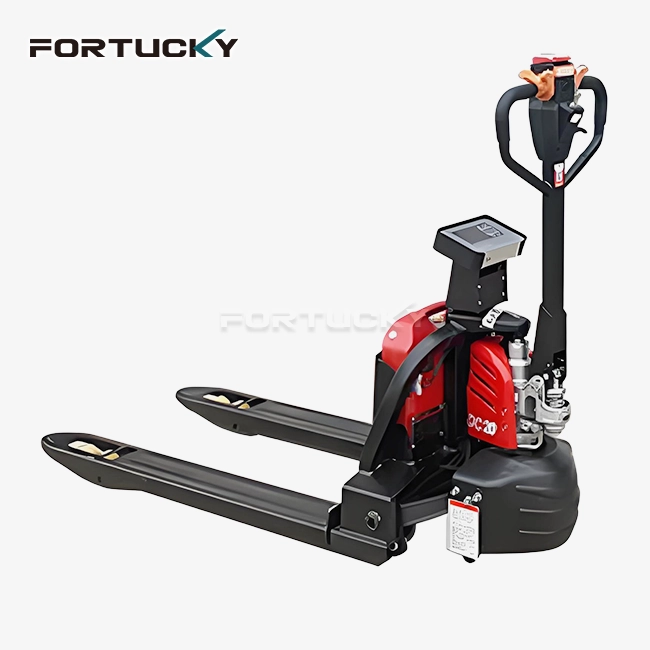
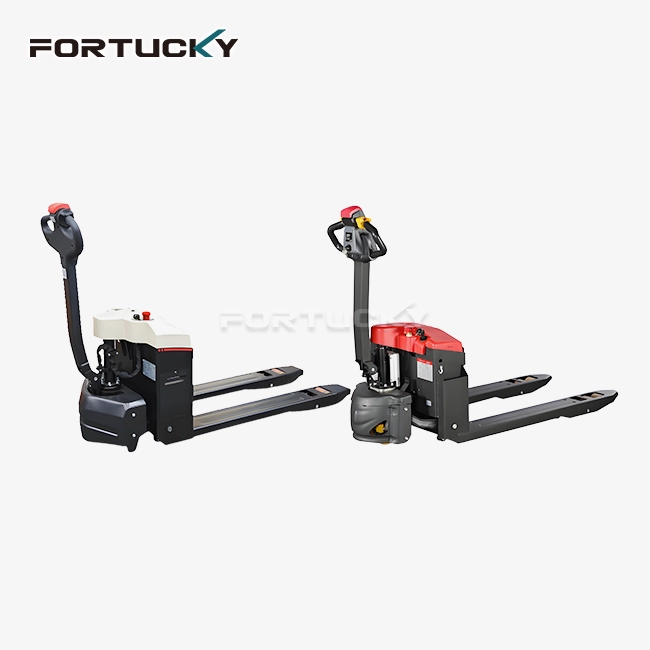
More and more, transport managers need to speed up work without losing accuracy. The electric pallet truck with weighing scale is a useful tool for this. This two-in-one machine eliminates the usual bottleneck of moving boxes to fixed scales and then putting them back into the workflow. By measuring exact weight while moving materials, these trucks provide real-time information that helps you bill customers faster, keep track of inventory better, and ensure compliance with shipping rules. They also reduce labor and operational costs that hurt your bottom line.
 How Does an Electric Pallet Truck with Weighing Scale Work?
Core Components and Weight Measurement Technology
These machines are built on shear beam load cells that are carefully placed inside the fork frame. Whenever a load is lifted, strain gauges detect tiny changes in the metal structure and convert them into electrical signals. Modern digital sensors use filtering algorithms to process these signals. These algorithms account for shocks and small movements, so readings stay stable even in constantly changing warehouse environments.
Fortucky's models use pure digital sensors that can automatically adjust for angle and diagnose faults. This self-calibrating technology ensures consistent accuracy, even on wet floors or with unevenly distributed loads. The system constantly checks sensor health and alerts workers to any problems before they affect accuracy or cause unplanned downtime.
Weight Capacity and Accuracy Standards
Industrial models can carry 1,500 to 2,000 kg, and Fortucky provides both sizes for different operational needs. Narrow aisle fork lengths are 550 mm, whereas conventional pallet layouts use 685 mm. The maximum lifting height of 110 mm fits most pallet designs and maintains a low center of gravity for transport stability.
Machine accuracy meets industrial standards, with deviations within ±0.5% of total weight during normal operation. Because the management system is shock-resistant, the weighing equipment operates reliably even in areas with vibration. This accuracy helps comply with shipping documentation standards and reduces errors that might lead to billing disputes or government fines.
Safety Features and Industry Compliance
Overload protection systems prevent operators from exceeding rated capacity, safeguarding workplace safety and equipment longevity. The IP67-rated waterproof and anti-collision aluminum alloy shell protects components from water, dust, and the kind of accidental impacts common in busy loading docks. Electromagnetic braking systems stop vehicles reliably, and under-voltage protection prevents battery damage while ensuring consistent shift-time performance.
These safety features meet CE and ISO certification requirements, demonstrating adherence to international quality standards—an important factor for procurement teams when evaluating long-term supplier partnerships.
Key Benefits of Using Electric Pallet Trucks with Weighing Scales in Logistics Centers
Operational Efficiency Improvements
Eliminating separate weigh stations fundamentally changes material flow. In traditional operations, forklift drivers must detour to fixed scales, lower loads onto platforms, wait for readings to stabilize, then reload and continue. This process consumes minutes of valuable time per pallet, adding up over hundreds of daily transactions. Integrated weighing allows continuous movement, with weight data collected during normal lifting. Cycle times are typically reduced by 30 to 40 percent in logistics centers, directly increasing hourly output without adding workers.
Cross-docking activities, where speed is key to staying ahead of the competition, will gain the most from the streamlined process facilitated by a battery-powered pallet truck with weight display. LTL freight workers instantly compare outgoing weights to manifests to avoid overloading fines and make sure correct carrier bills without stopping dock work.
Cost Reduction and ROI Enhancement
Fewer handling steps and faster task completion lead to lower labor costs. Fewer workers can achieve the same output, or existing teams can handle significantly larger volumes during regular shifts. Compared to operating separate scale infrastructure, combined equipment has lower maintenance costs because it requires only one calibration process and service contract instead of managing multiple asset types.
Energy savings also contribute to cost reduction. When weighing, battery-powered electric pallet trucks with weighing scales consume little additional power beyond the drive motors, since the digital scale and load cells draw minimal current. This means the weighing function adds utility without reducing shift runtime or increasing charging frequency.
Together, these factors deliver a measurable return on investment, particularly appealing to procurement managers weighing capital expenditure against multi-year budgets.
Inventory Accuracy and Error Reduction
Real-time weight verification during receiving processes identifies source short-shipments or counting errors immediately. Warehouse managers detect shrinkage before goods are entered into inventory management systems, allowing vendors to be contacted right away rather than discovering shortages during customer order fulfillment. This early detection protects both profit margins and customer satisfaction.
High-definition digital displays with red characters on black backgrounds make it easy to see in a range of lighting situations, from well-lit loading docks to poorly lit storage areas. At a glance, operators can check that the readings are correct, which cuts down on the transcription mistakes that happen when data is entered by hand. When working with reusable containers or wrapping materials that need to be tracked separately, the tare function lets you get accurate net weight numbers.
WMS Integration and Digital Connectivity
Enterprise-level models can be equipped with communication interfaces such as RS232, Bluetooth, or Wi-Fi to send weight data, timestamps, and transaction identifiers directly to warehouse management systems. This automated data flow eliminates manual data entry errors and provides real-time inventory updates, improving demand forecasting and restocking plans.
For businesses aiming to achieve Industry 4.0 goals, this connectivity serves as a critical data layer supporting broader digital transformation initiatives. Weight data feeds into analytics tools that identify process improvements, track equipment utilization, and predict maintenance needs before failures occur.
 How to Choose the Right Electric Pallet Truck with Weighing Scale for Your Logistics Center
Assessing Operational Requirements
Choose a load capacity based on your heaviest standard pallets, ensuring specifications include adequate safety margins. Facilities handling automotive parts or industrial tools typically require 2,000 kg models, while FMCG distribution centers generally need only 1,500 kg capacity. Fork width depends on how standardized your supply chain's pallets are—narrow 550 mm designs facilitate maneuvering in tight aisles, while 685 mm widths accommodate both standard and Euro pallets without adjustments.
Frequency of use affects durability and power requirements. Multi-shift facilities benefit from robust construction with thicker forks made of high-strength steel that resists wear and corrosion. Fortucky uses Baosteel steel for all structural components, providing extended service life even under daily use in harsh industrial environments.
Comparing Integrated Solutions Versus Separate Systems
Traditional methods rely on separate floor scales that require dedicated space and cause workflow interruptions. Integrated designs eliminate these space requirements and lower total equipment purchase costs because one machine replaces two distinct asset types. Maintenance is also simpler, as technicians deal with a single calibration schedule and service process instead of coordinating between different equipment types and vendor support contracts.
Compare battery life carefully. Because weighing systems consume very little power, operators can maintain full-shift productivity without compromising mobility. In contrast, older equipment with poor power management may require mid-shift recharging, disrupting workflow and reducing asset utilization.
Supplier Evaluation and After-Sales Considerations
Total cost of ownership—beyond the initial purchase price—is greatly influenced by warranty coverage, technical support responsiveness, and spare parts availability. Fortucky's localized service network spanning Asia, Europe, and the Americas ensures timely repair assistance and quick resolution of operational issues. This global presence is especially valuable for multinational companies seeking to standardize equipment across multiple locations, as uniform vendor relationships simplify purchasing and technician training.
Long-term dependability can be judged by a brand's standing among other players in the same industry. Fortucky has partnerships with Fortune 500 companies across the electronics, FMCG, and automotive sectors, and its widely adopted electric pallet truck with built-in scale is a clear demonstration of its product reliability. Brands like Huawei, Mercedes-Benz, and CATL use these products in their complex supply chains. These kinds of reference accounts show that the company has performed well in tough working conditions that closely mirror those you face in your own transport network.
Budget flexibility is important when scaling deployments across large facilities or enterprise networks. For pilot programs, explore bulk purchase discounts, leasing agreements, or rental options to align financial structures with capital planning cycles and risk management preferences.
Maintenance Tips and Troubleshooting for Electric Pallet Trucks with Weighing Scales
Routine Calibration and Preventive Care
To maintain measurement accuracy, calibrate the equipment every three months using certified test weights covering its full operating range. This process ensures sensor performance stays within acceptable limits and identifies drift issues early, before they affect transactional integrity. Annual professional calibration by trained technicians ensures the system meets quality management standards and keeps the warranty valid.
Battery maintenance directly affects equipment availability. Checking charge levels, cleaning terminals, and charging according to manufacturer instructions extends battery life and prevents problems during critical shifts. Modern designs often use maintenance-free lead-gel batteries that deliver consistent performance across every charge cycle, reducing service requirements.
Hydraulic fluid does not leak from sealed oil pump systems with integral seals, but visual inspection during routine maintenance can identify potential issues before they become complete failures. Fortucky's design philosophy emphasizes easy repair access, allowing technicians to perform checks quickly without extensive disassembly.
Common Issues and Resolution Strategies
Sensor faults usually appear as unstable readings or failure to zero properly. Many electrical problems can be resolved by checking junction boxes for moisture or debris buildup. The IP67 rating protects against most environmental factors but still requires regular inspection. Automatic fault diagnosis features built into Fortucky's pure digital tools help operators identify specific failure modes, reducing troubleshooting time and unplanned downtime.
Gradual scale errors typically indicate load cell drift requiring recalibration rather than part replacement. However, if accuracy drops rapidly after impacts, mechanical damage to fork stops or sensor mounting points is likely. These situations require professional evaluation to determine whether adjustment or component replacement is the best solution.
Electrical issues include reduced battery performance, damaged wiring, or control system problems. Under-voltage protection stops the equipment when battery charge falls below safe levels, clearly indicating the need for charging rather than suggesting equipment failure. Systematic testing methods that distinguish between power source problems and control electronics issues speed up repairs and reduce maintenance costs.
Future Trends and Technological Advances in Electric Pallet Trucks with Weighing Scales
The convergence of IoT connectivity and artificial intelligence is transforming material handling equipment capabilities. Smart scales with built-in network modules continuously send operational data to cloud analytics platforms, where machine learning algorithms identify usage patterns and predict required maintenance before components fail. This proactive approach reduces emergency repair costs and prevents production stoppages that could harm customer commitments.
Higher energy density formulas and better power control systems have helped advance battery technology for the electric pallet truck with weighing scale, increasing its usable runtime. Lithium-ion batteries, as alternatives to standard lead-acid batteries, can be charged more quickly and last longer, which helps with environmental goals and lowers the total cost of ownership. These environmental factors are in line with the ESG goals of companies, which are having a bigger impact on buying choices at the enterprise level.
Autonomous guidance systems represent the next stage of automation integration, turning battery-powered electric pallet trucks with weighing scales into driverless guided vehicles. These AI-powered solutions work with warehouse management systems to move goods without human operators while ensuring accurate weight at every transaction point. Such innovations help logistics centers address persistent labor shortages while increasing productivity and reducing operational risk.
Conclusion
Integrating weighing capabilities into material handling equipment solves fundamental inefficiencies that slow logistics performance. These specialized trucks eliminate workflow bottlenecks, reduce costs, and improve data quality across shipping, storage, and receiving processes. With robust construction, accurate measurement technology, and digital connectivity, they are valuable assets that support broader automation and digital transformation initiatives. To ensure long-term value, seek suppliers with proven track records, strong support networks, and equipment specifications that match your operations.
FAQ
Q1: How Does Vibration Impact Measurement Accuracy?
High-quality digital sensors have built-in filtering methods that keep readings stable even during movement and shaking, which are common in warehouses. However, achieving trade-required accuracy demands that the truck remain still on a level surface during the actual weighing moment. Fortucky's pure digital sensors offer excellent accuracy and low angular deviation, maintaining reliable performance even in tough operating conditions.
Q2: Can Weight Data Integrate with Existing WMS Platforms?
Enterprise models support optional communication interfaces such as RS232, Bluetooth, and Wi-Fi to send weight data, timestamps, and sequence identifiers directly to warehouse management systems. This eliminates manual data entry errors and provides real-time inventory visibility. Compatibility with existing IT systems should be verified during supplier discussions to ensure smooth integration.
Q3: What Maintenance Protocols Do Load Cells Require?
Quarterly inspections of junction boxes for moisture and debris, along with annual professional calibration using certified test weights, maintain measurement accuracy and equipment reliability. Check fork limit stops to ensure load cells are not subjected to mechanical shocks from overloads exceeding the safe limit (typically 150% of rated capacity). Following these preventive measures extends sensor life and reduces the risk of unexpected failure.
Partner with Fortucky for Advanced Weighing Solutions
Putting in place combined material handling and measurement systems can help logistics processes that need to be both quick and accurate. Fortucky has worked for many years with Fortune 500 companies and global transportation providers in the car, electronics, pharmaceutical, and fast-moving consumer goods (FMCG) industries. Our pure digital measuring technology, IP67-rated safety, and strong Baosteel construction make our products reliable even in the toughest industrial settings.
You can trust our engineering teams to give you deep customization options and quick rollout support, whether you need a reliable electric pallet truck with weighing scale supplier for a single site or standardized solutions for operations across multiple countries. Our native service networks in Asia, Europe, and the Americas make sure that you always have access to maintenance and expert support, which keeps your business running. Email our sales team at sales@fortuckyrobot.com to talk about how our material handling systems can help you reach your automation goals and meet your business needs.
References
1. Chen, W., & Liu, H. (2021). Integration of Weighing Systems in Material Handling Equipment: Design Principles and Industrial Applications. Journal of Logistics Technology and Innovation, 15(3), 187-203.
2. Industrial Truck Association. (2022). Safety Standards for Low Lift and High Lift Trucks: ANSI/ITSDF B56.1 Compliance Guidelines. Washington, DC: ITA Publications.
3. Morrison, J. K. (2020). Warehouse Automation and Digital Transformation: Strategies for Modern Supply Chain Management. New York: Supply Chain Press.
4. Patel, R., & Schmidt, T. (2023). Load Cell Technology in Mobile Weighing Applications: Accuracy, Durability, and Environmental Considerations. International Journal of Industrial Metrology, 8(2), 112-129.
5. Supply Chain Management Review. (2022). Cost-Benefit Analysis of Integrated Weighing Systems in Distribution Centers: A Multi-Site Case Study. SCMR Special Report, April 2022, 34-47.
6. Zhang, L., Wang, Q., & Anderson, M. (2023). IoT-Enabled Smart Material Handling: Real-Time Data Analytics and Predictive Maintenance in Logistics Operations. Automation in Warehouse Management, 12(1), 56-74.

Learn about our latest products and discounts through SMS or email