- English
- French
- German
- Portuguese
- Spanish
- Russian
- Japanese
- Korean
- Arabic
- Greek
- German
- Turkish
- Italian
- Danish
- Romanian
- Indonesian
- Czech
- Afrikaans
- Swedish
- Polish
- Basque
- Catalan
- Esperanto
- Hindi
- Lao
- Albanian
- Amharic
- Armenian
- Azerbaijani
- Belarusian
- Bengali
- Bosnian
- Bulgarian
- Cebuano
- Chichewa
- Corsican
- Croatian
- Dutch
- Estonian
- Filipino
- Finnish
- Frisian
- Galician
- Georgian
- Gujarati
- Haitian
- Hausa
- Hawaiian
- Hebrew
- Hmong
- Hungarian
- Icelandic
- Igbo
- Javanese
- Kannada
- Kazakh
- Khmer
- Kurdish
- Kyrgyz
- Latin
- Latvian
- Lithuanian
- Luxembou..
- Macedonian
- Malagasy
- Malay
- Malayalam
- Maltese
- Maori
- Marathi
- Mongolian
- Burmese
- Nepali
- Norwegian
- Pashto
- Persian
- Punjabi
- Serbian
- Sesotho
- Sinhala
- Slovak
- Slovenian
- Somali
- Samoan
- Scots Gaelic
- Shona
- Sindhi
- Sundanese
- Swahili
- Tajik
- Tamil
- Telugu
- Thai
- Ukrainian
- Urdu
- Uzbek
- Vietnamese
- Welsh
- Xhosa
- Yiddish
- Yoruba
- Zulu
How to Use a Full Electric Pallet Jack: Safety Guide
Operating a Full Electric Pallet Jack safely requires understanding its controls, performing pre-operation inspections, and following proper handling protocols. Begin by inspecting the battery charge level, checking tire condition, and testing emergency stop functions. Position yourself behind the ergonomic handle, engage the power, and use thumb controls for directional movement while maintaining clear visibility around the load. Always ensure loads are balanced, stay within rated capacity limits, and navigate at controlled speeds—especially around corners and on inclines. Proper training and adherence to manufacturer guidelines drastically reduce workplace accidents and equipment damage.
 Understanding Your Electric Pallet Jack Components
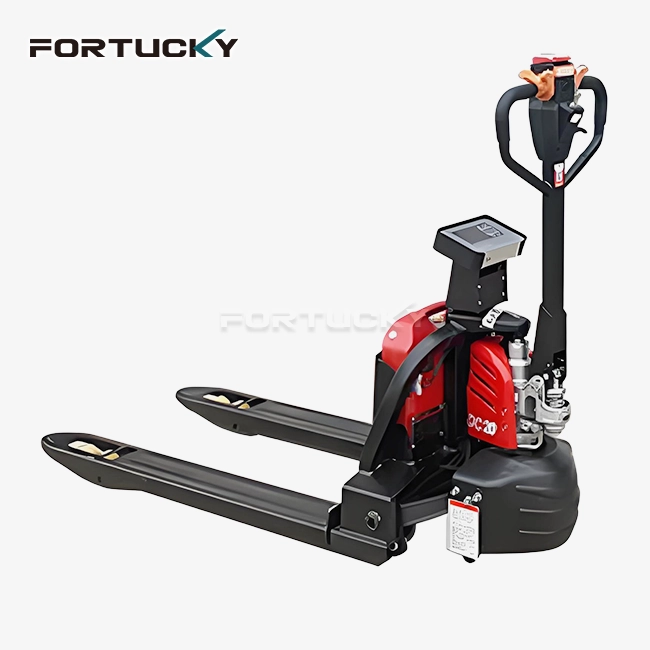
Modern electric pallet movers have evolved into sophisticated material handling tools that combine mechanical engineering with intelligent control systems. Recognizing each component's function helps operators maximize safety and equipment longevity.
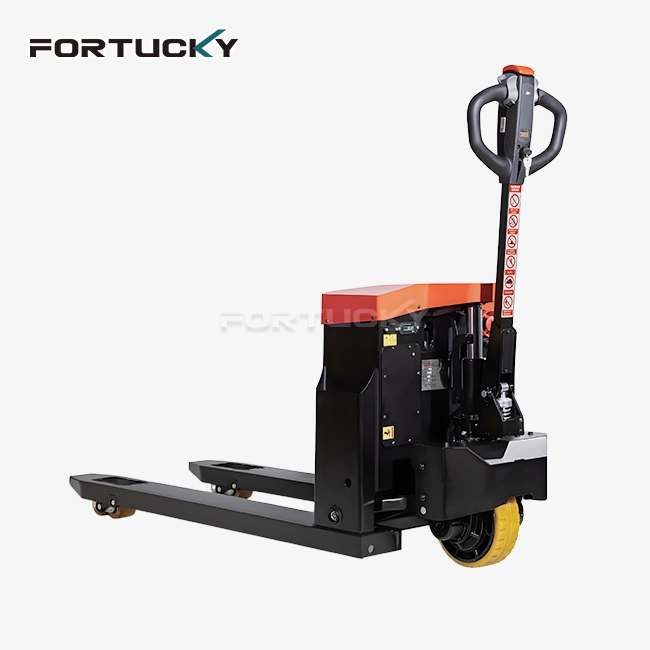
The tiller head serves as your command center, housing directional controls, speed adjustment mechanisms, and emergency shut-off buttons. High-quality units incorporate air-spring handle designs that absorb vibrations during operation, reducing operator fatigue during extended shifts. The intelligent electronic control system monitors fault conditions in real-time, alerting operators to potential issues before they escalate into safety hazards.
Battery technology has transformed operational capabilities. Large-capacity lithium-ion batteries ranging from 120 Ah to 210 Ah enable continuous eight-hour shifts without recharging interruptions. These power sources feed dedicated drive motors (typically 1.2 kW) and lifting motors (2.2 kW to 3 kW, depending on capacity), delivering consistent performance across various load conditions.
The chassis construction matters significantly. High manganese steel frames withstand the torsional stresses encountered in demanding manufacturing environments. The front dual-wheel design, combined with polyurethane or nylon drive wheels measuring 250×80 mm, ensures operational balance even when transporting maximum-rated loads of 2000 kg to 3000 kg.
Fork dimensions vary based on application requirements. Standard configurations include 1150 mm lengths for 2000 kg models and 1200 mm for 3000 kg variants, with outer widths available in 550 mm or 685 mm options. This versatility accommodates different pallet specifications across industries—from pharmaceutical production to automotive parts distribution.
Pre-Operation Safety Inspection Checklist
Workplace accidents involving Full Electric Pallet Jack equipment often stem from skipped inspections rather than mechanical failure. Establishing a systematic pre-shift routine transforms safety from an abstract concept into a practical habit.
Start with visual examination. Walk completely around the equipment, looking for hydraulic fluid leaks, damaged welds, or structural deformities. Check fork integrity—bent or cracked forks compromise load stability and create catastrophic failure risks. The minimum ground clearance of 85 mm should remain unobstructed by debris accumulation.
Battery assessment comes next. Verify the charge indicator shows sufficient capacity for planned operations. Lithium battery systems display precise remaining capacity, unlike older lead-acid technologies. Confirm the charging port cover seals properly, preventing moisture ingress that damages electrical components
Test all control functions before loading cargo. Activate the forward and reverse mechanisms, ensuring responsive engagement without unusual noises. The stepless speed regulation should transition smoothly across its range. Lift the forks through their full 200 mm travel distance, listening for hydraulic pump irregularities.
Emergency systems demand particular attention. Press the emergency stop button to confirm immediate power disconnection. Test the electromagnetic brake function—the unit should halt instantly when the controls are released. These safety mechanisms protect operators during unexpected situations in crowded warehouse environments.
Tire condition directly affects stability and maneuverability. Inspect polyurethane wheels for flat spots, chunking, or excessive wear. Uneven tire degradation indicates alignment issues requiring maintenance intervention before continued operation.
Document your inspection. Many enterprise-level operations serving FMCG or cold chain logistics maintain digital inspection logs, creating accountability trails and identifying recurring maintenance patterns across fleet equipment.
Proper Operating Techniques for Maximum Safety
Technique separates competent operators from safety liabilities. Understanding equipment capabilities within specific operational contexts prevents the majority of workplace incidents.
Approach loads deliberately. Position forks perpendicular to pallet stringers, ensuring equal insertion depth on both sides. Uneven fork engagement creates lateral instability, particularly dangerous when traversing slopes or uneven surfaces. The 600 mm load center distance specification exists for precisely calculated weight distribution—exceeding this parameter compromises the advertised 10-degree climbing slope capability.
Master speed modulation before attempting loaded operation. The electric pallet trolley achieves travel speeds up to 5 km/h under full load conditions—substantially faster than manual alternatives. However, maximum speed suits straight-line travel on smooth concrete only. Reduce velocity approaching corners, utilizing the 1250 mm turning radius efficiently without centrifugal load shifting.
Visibility governs safe navigation. Loaded pallet heights frequently exceed operator sightlines, creating blind spot hazards. Travel in reverse when forward visibility becomes compromised, using frequent glance-backs to monitor your path. This practice proves especially critical in high-traffic manufacturing zones where pedestrians and electric pallet jack operators share confined spaces.
Incline navigation demands heightened awareness. The 10-degree climbing grade applies to properly balanced loads within rated capacity. Ascending requires maintaining steady throttle input—jerky acceleration risks load slippage. Descending introduces greater danger. Never coast downhill; use motor braking through controlled reverse throttle application, allowing regenerative systems to manage descent speed safely.
Door thresholds, expansion joints, and surface transitions present tipping hazards. Approach perpendicular to obstacles when possible, reducing fork angle during transition. The 85mm ground clearance accommodates most standard transitions, but operators must visually confirm adequate space, especially when maneuvering electric ride-on pallet truck alternatives with different dimensional profiles.
Load security extends beyond initial pickup. During transport, monitor cargo for shifting, particularly when handling unstable items like bagged materials or top-heavy configurations. Strapping or wrapping unstable loads prevents mid-transit failures that endanger nearby personnel.
Navigating Common Workplace Hazards
Real-world working environments present factors that cannot be simulated in sterile training situations. Identifying hazards translates classroom knowledge into practical skills.
One of the most dangerous situations in shared workplace areas is pedestrian interaction. People do not always behave predictably—they may be distracted by phones, wear noise-blocking headphones, or simply be unaware of approaching equipment. Make eye contact with pedestrians before approaching. Use audible warnings judiciously; excessive horn use causes alarm fatigue, rendering alerts ineffective.
Dock plates and ramps alter elevation, challenging stability systems. When transitioning from warehouse floor to trailer beds, verify plate capacity ratings, confirm secure placement, and assess slope steepness. If the gradient appears questionable, seek alternative loading methods rather than risking rollback incidents.
In congested aisles, situational awareness is essential. Calculate the space required for your entire turning radius, not just fork width. Standard units have overall dimensions of 1800×860×1420 mm, meaning minimum lane widths must exceed simple box measurements. Contact with rack uprights weakens entire storage system structures—an accident that costs far more than a few extra minutes of care.
Extreme temperatures affect both equipment and operators. In sub-zero conditions, cold chain facilities using specialized stainless steel models experience different hydraulic response properties. Allow equipment to reach appropriate temperatures before expecting full performance. The converse also holds: high heat accelerates battery degradation and shortens time between charges.
Surface contamination reduces traction. Spilled liquids, product dust, or cardboard pieces impair wheel grip, increasing stopping distances and raising slide risk during turns. Address contamination immediately instead of attempting to navigate through compromised areas.
Overhead clearances receive insufficient attention until they are violated. Powered pallet jacks have low profiles compared to order pickers or reach trucks, but the combined height of loaded goods and elevated forks can contact sprinkler heads, light fixtures, or low-hanging wires. Route planning must account for three-dimensional space requirements.
 Maintenance Practices That Prevent Accidents
Equipment reliability directly correlates with maintenance diligence. Neglected full-electric hydraulic pallet truck units transition from productivity assets to safety liabilities.
Battery care determines operational lifespan and daily reliability. Lithium-ion systems tolerate opportunity charging better than lead-acid predecessors, but proper practices still matter. Avoid complete discharge cycles; recharge when capacity drops to 20-30% remaining. Keep terminals clean and connections tight—resistance at connection points generates heat, degrading battery chemistry and creating fire risks.
Hydraulic system integrity requires regular attention. Check fluid levels monthly, using manufacturer-specified oil grades. Contaminated hydraulic fluid accelerates seal degradation, causing pressure loss that manifests as sluggish lifting response or fork drift under load. Any hydraulic weeping around seals or cylinders demands immediate service intervention.
Drive motor and lifting motor performance should remain consistent over time. Unusual sounds—grinding, squealing, or clicking—indicate bearing wear, gear damage, or electrical issues. These components operate within precisely engineered tolerances; degradation accelerates rapidly once initiated. Early intervention prevents catastrophic failures during loaded operation.
Tire replacement follows measurable criteria rather than arbitrary schedules. Polyurethane wheels should be replaced when tread depth reduces by 50% or when chunking exceeds 10 mm in diameter. Uneven wear patterns signal alignment problems that simultaneously reduce equipment performance and accelerate tire consumption.
Control system diagnostics have advanced significantly. Modern intelligent electronic control systems log fault codes and operational parameters. Regular diagnostic downloads identify developing issues before they manifest as operational failures. This predictive approach suits enterprise customers managing large fleets across multiple facilities where unplanned downtime disrupts production schedules.
Documentation creates accountability and trend visibility. Maintenance logs tracking service intervals, parts replacements, and repair histories enable data-driven decisions about equipment lifecycle management. For organizations operating hundreds of electric pallet lifter units across global facilities, this information proves invaluable for capital planning and vendor performance evaluation.
Training Requirements for Operator Certification
Regulations for operating material handling equipment vary by jurisdiction, but fundamental competency standards remain consistent. When employees and organizations receive proper training, liability exposure decreases significantly.
Foundational knowledge is built through theoretical instruction. Operators must understand load capacity calculation, equipment stability principles, and how specifications translate to real-world limitations. Recognizing why a 3000 kg-rated unit cannot safely handle that load on a 10-degree slope with forks raised prevents operators from making poor decisions during machine operation.
Ample time must be spent on hands-on skill development. New operators need supervised practice with common tasks such as tight turns, load pickup from various rack heights, speed modulation, and emergency procedures. Repetition under observation builds proficiency, allowing instructors to correct mistakes before they become habits.
Customized training addresses workplace-specific risks. An electric pallet pump operator in a pharmaceutical clean room faces different challenges than one in a steel fabrication area. Effective certification methods incorporate facility layouts, traffic patterns, product-specific handling standards, and site safety measures.
Refresher training maintains skill currency and introduces new tools. Annual recertification checks for complacency and ensures workers stay current with evolving safety standards. When new electric pallet jack models feature different control systems or performance characteristics, targeted training prevents operators from applying outdated techniques learned on older equipment.
Documentation protects everyone. Training records demonstrating thorough instruction, skill verification, and regular renewal safeguard organizations during incident investigations. Operators benefit from clear performance standards and reliable methods for assessing competence.
Conclusion
Safe full electric pallet jack operation combines equipment knowledge, systematic inspection routines, proper technique application, and ongoing maintenance diligence. Understanding your electric pallet mover's capabilities and limitations transforms it from a potential hazard into a reliable productivity tool. Whether managing a single unit or coordinating fleet operations across multinational facilities, safety principles remain constant. Invest time in comprehensive training, respect equipment specifications, and maintain rigorous inspection standards. These practices protect personnel, preserve equipment investments, and optimize the operational efficiency that electric pallet trolley technology promises to deliver across modern warehousing and manufacturing environments.
Partner with Fortucky for Advanced Material Handling Solutions
Leading Full Electric Pallet Jack manufacturers understand that equipment specifications represent just the starting point. Fortucky delivers comprehensive automation solutions integrating material handling hardware with intelligent warehouse management systems, serving over 1,000 global customers across automotive, electronics, and cold chain sectors. Our localized deployment capabilities, 5G-enabled super production factory, and competitive R&D team ensure every solution balances immediate operational needs with long-term digital transformation objectives. Contact our specialists at sales@fortuckyrobot.com to discuss customized configurations meeting your specific throughput requirements and safety standards.
References
1. Occupational Safety and Health Administration. (2021). Powered Industrial Trucks: Operator Training Requirements and Safety Guidelines. U.S. Department of Labor Publication.
2. Industrial Truck Association. (2022). ANSI B56.1 Safety Standard for Low Lift and High Lift Trucks. Washington, DC: American National Standards Institute.
3. Chartered Institute of Logistics and Transport. (2020). Best Practices for Electric Pallet Jack Operation in Warehouse Environments. Logistics Professional Development Series.
4. European Materials Handling Federation. (2023). Risk Assessment Protocols for Battery-Powered Material Handling Equipment. Brussels: EMHF Technical Standards Committee.
5. National Safety Council. (2022). Preventing Material Handling Injuries: Equipment Operation and Ergonomic Considerations. Workplace Safety Research Division Report.
6. International Warehouse Logistics Association. (2021). Electric Pallet Jack Maintenance Programs: Extending Equipment Life and Ensuring Operator Safety. Global Warehouse Management Standards Publication.
Learn about our latest products and discounts through SMS or email