- English
- French
- German
- Portuguese
- Spanish
- Russian
- Japanese
- Korean
- Arabic
- Greek
- German
- Turkish
- Italian
- Danish
- Romanian
- Indonesian
- Czech
- Afrikaans
- Swedish
- Polish
- Basque
- Catalan
- Esperanto
- Hindi
- Lao
- Albanian
- Amharic
- Armenian
- Azerbaijani
- Belarusian
- Bengali
- Bosnian
- Bulgarian
- Cebuano
- Chichewa
- Corsican
- Croatian
- Dutch
- Estonian
- Filipino
- Finnish
- Frisian
- Galician
- Georgian
- Gujarati
- Haitian
- Hausa
- Hawaiian
- Hebrew
- Hmong
- Hungarian
- Icelandic
- Igbo
- Javanese
- Kannada
- Kazakh
- Khmer
- Kurdish
- Kyrgyz
- Latin
- Latvian
- Lithuanian
- Luxembou..
- Macedonian
- Malagasy
- Malay
- Malayalam
- Maltese
- Maori
- Marathi
- Mongolian
- Burmese
- Nepali
- Norwegian
- Pashto
- Persian
- Punjabi
- Serbian
- Sesotho
- Sinhala
- Slovak
- Slovenian
- Somali
- Samoan
- Scots Gaelic
- Shona
- Sindhi
- Sundanese
- Swahili
- Tajik
- Tamil
- Telugu
- Thai
- Ukrainian
- Urdu
- Uzbek
- Vietnamese
- Welsh
- Xhosa
- Yiddish
- Yoruba
- Zulu
Heavy-duty electric stacker for industrial storage: which model to choose?
When picking a Heavy Duty Electric Stacker for industrial storage tasks, the choice relies on how often you need to use it, how much weight you need to store, and how your warehouse is set up. A modern electric stacker can usually hold between 1,200 kg and 3,000 kg of weight and can lift things up to 6 meters high. The best model weighs efficiency features like battery life, ability to move through tight spaces, and safety features against the overall cost of ownership. To get the most out of your investment and boost productivity, you should think about motor power, battery technology, ergonomic controls, and the ability to connect to current warehouse management systems.

 Understanding Heavy-Duty Electric Stackers
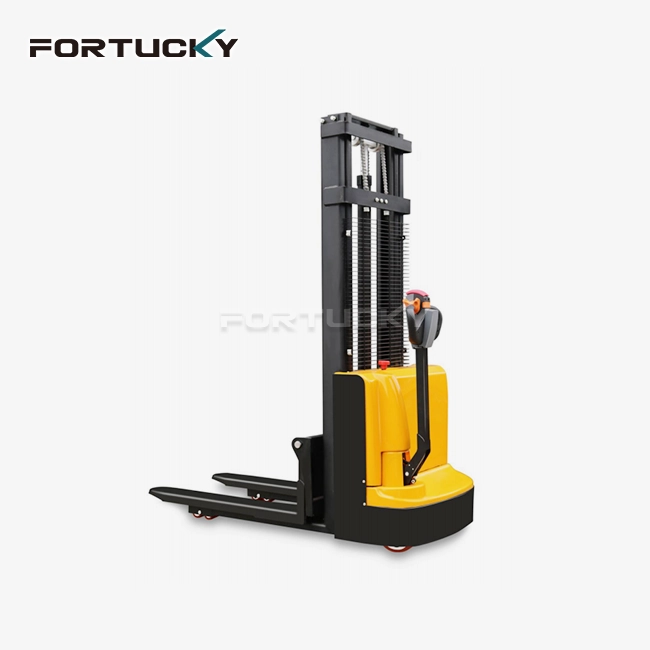
Heavy-duty electric stackers are a huge step forward in the way industrial materials are moved, and they are essential to running a modern warehouse. These high-tech tools are built to last and have precise electric control systems that make them work reliably in harsh industrial settings.
Core Functions and Applications
Electric stackers are powered by batteries that control both the driving and lifting tasks. Unlike manual options, these machines don't put any strain on your body and make operations much more efficient. The fully electric drive system makes the machine more productive by keeping it running at the same level for longer work cycles. Some of the most common uses are in factories, distribution centers, cold storage warehouses, and car assembly plants, all of which need to accurately place materials and work quickly.
Differentiating Stacker Types
Electric walking stackers, like those that can hold 2 tonnes of weight and have a lifting height of 3000 mm, are very adaptable to a wide range of workplace conditions. These units are usually 1770 mm long and 850 mm wide, which lets them work in tight areas while still having a minimum turning radius of 1390 mm. Some models are counterbalanced to keep heavier loads stable, and others are narrow aisle to make the most of limited storage room. Knowing these differences helps procurement teams match the skills of equipment with the needs of operations and the layout of warehouses.
Key Features and Benefits of Heavy-Duty Electric Stackers
Modern electric stackers deliver comprehensive performance advantages that directly impact operational efficiency and cost management. The integration of advanced motor systems and ergonomic design principles creates equipment that addresses both productivity and safety concerns.
Load Capacity and Performance Specifications
Modern electric stackers can usually hold up to 2,000 kg of weight, and the best ones can hold up to 3,000 kg. The performance balance between speed and control can be seen in a standard 2-ton unit that can move 135 mm/s at 3.5 km/h full-load speed. The 5-degree climbing ability lets it work on a variety of warehouse floors, and the DC motor configuration (0.75kw drive, 2.2kw lifting) ensures stable power delivery. These specs directly lead to faster output and shorter cycle times in warehouses that are always busy.
Advanced Safety and Ergonomic Features
Modern stackers incorporate sophisticated safety mechanisms that protect both operators and equipment. The multi-function handle design considers ergonomic principles, ensuring each control button remains easily accessible during operation. Here are the essential safety and ergonomic advantages these systems provide:
- Direction control lever heavy-capacity electric hydraulic stackers with air spring technology - reduces operator fatigue while maintaining precise control during extended operations
- Silent bearing wheels with nylon pulleys - minimize noise pollution while protecting floor surfaces across various venue types
- Chain drive steering system - enables flexible turning capabilities with integrated protection devices to prevent damage
- AC motor with self-diagnosis capabilities - includes timer and electricity meter functions, automatic low voltage protection, and easy disassembly for maintenance
These features collectively address the critical challenge of maintaining high productivity while ensuring operator safety and equipment longevity. The integration of controller self-diagnosis systems and automatic battery protection extends operational lifespan while reducing unexpected downtime costs.
How to Choose the Right Heavy-Duty Electric Stacker: A Decision Support Guide
Selecting the appropriate electric stacker requires a systematic evaluation of operational requirements against available equipment capabilities. This decision-making process directly impacts long-term productivity and cost efficiency.
Operational Requirements Assessment
Successful stacker selection begins with a comprehensive analysis of warehouse workflows and material handling patterns. Load characteristics, including weight distribution and dimensions, determine minimum capacity requirements, while warehouse layout influences maneuverability needs. Facilities with narrow aisles benefit from compact designs with tight turning radii, whereas open warehouses can accommodate larger, more powerful units. Usage frequency affects battery specifications and motor durability requirements, with high-volume operations demanding robust construction and extended battery life.
Technical Specification Comparison
Critical parameters include load capacity alignment with typical pallet weights, lifting height compatibility with racking systems, and aisle width accommodation. Battery technology selection between lead-acid and lithium-ion options impacts operational costs and charging infrastructure requirements. Motor specifications determine performance characteristics, with higher power ratings supporting faster cycle times but potentially increasing energy consumption. The 24V/80Ah battery configuration provides balanced performance for moderate to heavy usage patterns while maintaining reasonable charging intervals.
Total Cost of Ownership Considerations
Beyond the initial purchase price, ongoing operational costs significantly influence equipment value. Maintenance requirements vary between motor types, with brushless systems typically offering longer service intervals. Energy efficiency affects operating costs, particularly in facilities with high utilization rates. Warranty coverage and parts availability impact long-term service costs, making manufacturer support capabilities an important selection criterion. Financing and leasing options enable equipment acquisition without significant capital expenditure, supporting cash flow management in growing operations.
 Top Heavy-Duty Electric Stacker Models in 2026
The current market offers diverse electric stacker options from established manufacturers, each targeting specific operational requirements and budget constraints. Leading brands continue advancing technology integration while maintaining reliability standards.
Market-Leading Manufacturers
Toyota, Crown, and Jungheinrich maintain dominant positions through continuous innovation and comprehensive support networks. These manufacturers offer load capacities spanning 1,200kg to 2,000kg with lifting heights reaching 6.3 meters. Advanced models feature regenerative braking systems, proportional control mechanisms, heavy-capacity electric hydraulic stackers, and integrated safety protocols. The competitive landscape includes emerging manufacturers offering cost-effective alternatives with comparable performance specifications, creating opportunities for budget-conscious procurement decisions.
Performance Comparison Analysis
Different types of modern electric stackers have a lot of different ways of working. Standard units can only lift at 135mm/s, but premium models can lift at speeds over 150mm/s while still controlling the load precisely. The battery lasts between 6 and 10 hours, based on how much it is used and how loaded it is. Different sizes can be moved around in very different ways. Smaller units can turn with circles of less than 1,400 mm, while bigger models need more room to be safe. These differences in performance have a direct effect on how much work gets done in the warehouse and should be in line with specific business needs.
Value Proposition Assessment
Different models have different prices that reflect their different capabilities. Basic models that weigh 1,500 kg start at around $15,000, while expensive models that weigh 2,000 kg cost $25,000 or more. Most warranties cover you for two to three years, but you can get longer warranties if you want to. The quality of after-sales support changes a lot between manufacturers, which affects how happy long-term owners are. Rental choices give you more freedom for operationsthat only happen during certain times of the year or for test runs, and markets for used equipment make it affordable for smaller businesses to start up. There are different budgets and cash flow needs that financing plans can meet.
Purchasing and Post-Purchase Support for Heavy-Duty Electric Stackers
Getting the right equipment requires more than just making the purchase choice. It also requires setting up full support systems and building long-term partnerships. Procurement strategies that work take into account both current wants and the ability to grow in the future.
Procurement Channels and Logistics
Authorised dealerships offer direct help from the manufacturer and can provide local service. Online platforms, on the other hand, offer a wider range of options at lower prices. Industrial equipment dealers help with complicated buying needs by combining knowledge of the products with flexible financing options. Shipping and delivery logistics need to work together with warehouse operations so that equipment placement doesn't cause too much trouble. Professional installation services make sure that everything is set up correctly and that the first operators are trained. This lowers the risks of execution and speeds up productivity gains.
Financing and Acquisition Options
Equipment financing plans allow for a range of capital structures, from buying the equipment outright to leasing it for a number of years. Short-term rental choices help seasonal businesses or short-term capacity increases without requiring long-term commitments. Volume prices help projects that buy a lot of things, such as Heavy Duty Electric Stacker, and trade-in programs lower the cost of upgrading old equipment that needs to be replaced. Flexible payment terms allow for alignment with cash flow cycles and budget approval processes, which helps with planning when to buy key equipment.
Service and Maintenance Support
Comprehensive service plans make sure that equipment works well and keep unexpected downtime costs to a minimum. Scheduled preventative repair keeps equipment running at its best and extends its life. Parts availability and delivery speed have a direct effect on service quality, which is why the manufacturer's support network capabilities are such important selection factors. Operator training programs make sure that safety rules are followed and that equipment is used as much as possible. How quickly technical help responds affects the continuity of operations, especially in high-volume facilities where equipment downtime has a big effect on productivity.
Conclusion
It's important to carefully weigh operational needs, technical specs, and total cost when choosing the best Heavy duty Electric Stacker. Modern electric stackers are much more productive because they have better power systems, better ergonomic designs, and more safety features. To make sure long-term operational success and investment protection, the choice process should put load capacity alignment, warehouse compatibility, and quality of manufacturer support at the top of the list.
FAQ
Q1: What type of equipment is this?
A1: It is a heavy-duty electric stacker, a walking all-electric stacker truck designed for heavy-load scenarios.
Q2: What is the standard load capacity of this stacker?
A2: The standard load capacity is 2 tons (2T), and the load weight can be customized according to customer requirements.
Q3: What is the maximum lifting height of this electric stacker?
A3: Its maximum hoisting height reaches 3000mm, suitable for high-level stacking tasks.
Q4: How does this stacker enhance operational efficiency?
A4: It adopts fully electric drive (replacing manual labor) to improve the efficiency of loading, unloading and goods transportation in industrial sites.
Q5: What are the key advantages of its design?
A5: Core advantages include:
- Air-spring direction control lever (light, labor-saving, and easy to operate)
- Silent bearing + nylon pulley (smooth movement, no damage to floors)
- Chain-driven steering wheel (flexible turning with a protection device)
- Brushless permanent magnet drive wheel (high power, maintenance-free)
- Reliable hydraulic system (high-strength gearbox, low noise)
Partner with Fortucky for Advanced Electric Stacker Solutions
Maximize your warehouse efficiency with Fortucky's comprehensive Heavy duty Electric Stacker portfolio, engineered for demanding industrial environments. Our walking all-electric stacker trucks deliver a 2-ton capacity with 3000mm lifting height, featuring advanced DC motor systems and ergonomic controls. With over 1,000 satisfied customers across manufacturing, logistics, and automotive sectors, Fortucky combines deep customization capabilities with rapid deployment support. Contact us at sales@fortuckyrobot.com to explore tailored solutions that optimize your material handling operations while reducing the total cost of ownership.
References
1. Industrial Material Handling Equipment Standards and Safety Guidelines, International Organization for Standardization, 2024.
2. Electric Stacker Performance Benchmarks in Modern Warehouse Operations, Journal of Industrial Engineering, Vol. 45, 2024.
3. Battery Technology Advancement in Industrial Equipment Applications, Power Systems Research Institute, 2024.
4. Cost-Benefit Analysis of Automated Material Handling Systems, Manufacturing Technology Review, 2024.
5. Ergonomic Design Principles for Industrial Equipment Safety, Occupational Health and Safety Administration Guidelines, 2024.
6. Global Market Analysis: Electric Stacker Technology Trends and Manufacturer Comparison, Industrial Equipment Research Foundation, 2024.

Learn about our latest products and discounts through SMS or email