- English
- French
- German
- Portuguese
- Spanish
- Russian
- Japanese
- Korean
- Arabic
- Greek
- German
- Turkish
- Italian
- Danish
- Romanian
- Indonesian
- Czech
- Afrikaans
- Swedish
- Polish
- Basque
- Catalan
- Esperanto
- Hindi
- Lao
- Albanian
- Amharic
- Armenian
- Azerbaijani
- Belarusian
- Bengali
- Bosnian
- Bulgarian
- Cebuano
- Chichewa
- Corsican
- Croatian
- Dutch
- Estonian
- Filipino
- Finnish
- Frisian
- Galician
- Georgian
- Gujarati
- Haitian
- Hausa
- Hawaiian
- Hebrew
- Hmong
- Hungarian
- Icelandic
- Igbo
- Javanese
- Kannada
- Kazakh
- Khmer
- Kurdish
- Kyrgyz
- Latin
- Latvian
- Lithuanian
- Luxembou..
- Macedonian
- Malagasy
- Malay
- Malayalam
- Maltese
- Maori
- Marathi
- Mongolian
- Burmese
- Nepali
- Norwegian
- Pashto
- Persian
- Punjabi
- Serbian
- Sesotho
- Sinhala
- Slovak
- Slovenian
- Somali
- Samoan
- Scots Gaelic
- Shona
- Sindhi
- Sundanese
- Swahili
- Tajik
- Tamil
- Telugu
- Thai
- Ukrainian
- Urdu
- Uzbek
- Vietnamese
- Welsh
- Xhosa
- Yiddish
- Yoruba
- Zulu
How to choose between a stand-on and walk-behind medium-duty electric stacker?
You can choose between a stand-on and a walk-behind Medium-Duty Electric Stacker based on your work environment, how often you use it, and how far you need to travel. Stand-on models are best for jobs that need to stop and start a lot over moderate distances, while walk-behind stackers are easier to move around in tight areas and cost less for shorter jobs. The choice depends on how your warehouse is set up, how comfortable the operators need to be, and how much work needs to be done to get the most out of your material handling investment.
Introduction
Medium-duty electric stackers are an important part of modern office work. They are between moving things by hand and using full-on forklifts. These tools are very flexible and have greatly improved the efficiency of moving goods in factories, distribution centers, and logistics operations all over the world. The choice between stand-on and walk-behind configurations can have a big effect on your operational productivity, safety standards, and long-term return on investment. When choosing material handling equipment today, procurement workers have to make decisions that are more complicated than ever. Choosing between stand-on and walk-behind medium-duty stackers affects not only how well they work right away, but also how comfortable the workers are, how much care costs, and how much they can be used. Companies that want to improve their supply chains and stay ahead of the competition in fast-moving markets need to understand these subtleties. Global suppliers like Fortucky have become trusted partners in this area by providing complete solutions that combine advanced engineering with real-world application knowledge. Their many years of experience working with Fortune 500 companies in the automobile, electronics, and fast-moving consumer goods (FMCG) industries show how important it is to choose equipment that fits both short-term and long-term needs.
Understanding Medium-Duty Electric Stackers: Stand-On vs. Walk-Behind
Electric stackers that are medium-duty can usually lift up to 5.5 meters and carry loads that weigh between 1,000 and 2,200 kilos. When it comes to moving things around, these machines fill an important gap. They can lift heavy things for stacking in warehouses and still be mobile enough for narrow aisle operations. Compared to options that use internal combustion engines, their electric powertrains offer consistent performance, less maintenance, and environmental benefits.
Design Characteristics and Operational Differences
Walk-behind stackers are small machines that can be controlled by people going next to or behind them. These units work great in tight spaces and are very accurate for positioning jobs that need to be done carefully. During complicated manoeuvring tasks, the operator stays in direct visual touch with both the load and the environment around it. Modern walk-behind models have ergonomic handle designs and easy-to-use settings that keep operators from getting tired after long periods of use. Stand-on stackers give operators a place to stand, which lets them move faster and with less effort over longer distances. The higher position of the operator gives them better vision for high-stacking tasks and lets them keep control while moving loads. These machines usually have stronger drive systems that can handle the long cycles of operation that are popular in high-throughput settings.
Capacity and Performance Specifications
Modern medium-duty stackers have great performance measures that make them perfect for tough industrial uses. It is now normal for hoisting heights to reach 3,000 mm and load capacities of 1.5 tonnes. Newer models can go as fast as 3.5 km/h with full loads while still lifting at 135 mm/s, a mid-range electric lift stacker, which makes them more efficient without lowering safety standards. Improvements in battery technology have made operational times much longer. Modern 24V/80Ah systems have intelligent charging systems that make the most of battery life and provide steady power for full-shift activities. These changes have a direct effect on how to figure out the total cost of ownership and how to plan operations.
Criteria for Choosing Between Stand-On and Walk-Behind Medium-Duty Electric Stackers
Operational Environment Assessment
Warehouse layout characteristics fundamentally influence stacker selection decisions. Narrow aisle operations favor walk-behind models due to their compact turning radius and enhanced maneuverability. Facilities with minimum turning radius requirements below 1,400mm particularly benefit from walk-behind configurations. Conversely, operations spanning large floor areas with longer travel distances gain efficiency advantages from stand-on models that reduce operator fatigue and increase throughput. Ceiling heights and vertical clearance requirements also impact selection criteria. Walk-behind stackers typically offer lower overall vehicle heights, making them suitable for facilities with height restrictions. The typical vehicle height of 2,090mm allows operation in standard warehouse environments while maintaining adequate lifting capacity for most stacking applications.
Performance and Productivity Factors
Travel distance analysis reveals critical decision points between configurations. Operations involving frequent short-distance movements benefit from walk-behind precision and control. Extended travel requirements favor stand-on models that maintain operator comfort and reduce physical strain during shift-long operations. Climbing capability becomes relevant in facilities with ramps or uneven surfaces, where 5-degree climbing slopes represent standard performance expectations. Load handling frequency directly correlates with operator comfort requirements. High-frequency lifting operations spanning multiple hours benefit from stand-on configurations that minimize physical exertion. Intermittent use patterns may favor walk-behind models that offer flexibility without requiring significant capital investment in operator comfort features.
Safety and Ergonomic Considerations
No matter how they are set up, modern stackers have full safety systems built in. Safety features like emergency stop buttons, load tracking systems, and stability controls are all standard. Walk-behind models give the operator a better view of the situation because they are closer to the loads and barriers. Stand-on setups make it easier to see when working at a high level while keeping workers a safe distance from possible dangers. Some parts of an ergonomic design have a big effect on how well operators accept it and how productive it is in the long run. Ergonomic design principles were used to make multi-function grips that reduce strain and improve control accuracy. Air spring-assisted direction control levers reduce the amount of force needed to operate while keeping the responsive handling qualities. When there are long duty cycles or multiple shifts for operators, these traits become even more important.
Use Case Analysis: Which Medium-Duty Electric Stacker Fits Your Business?
Manufacturing Facility Applications
Usually, making automotive parts requires exact positioning and lots of load changes along the production lines. Walk-behind stackers work best in these settings because they are easy to handle and can get between pieces of production equipment. It has a small footprint and is very easy to move around, so it can move materials quickly without stopping production processes. Facilities that make electronics often have to meet clean room standards and have limited space. Walk-behind stackers with quiet bearings and wheels that don't leave marks keep sensitive areas safe while keeping operations running smoothly. Being able to work quietly is very important in places where noise levels need to be kept low for quality control reasons.
Warehouse and Distribution Operations
Stand-on designs that make it easy to move quickly between storage areas are helpful for large-scale distribution centers. The faster movement speeds and more comfortable controls make picking more efficient and lower the cost of labour. Operations with a lot of work explain the extra investment by higher productivity and fewer mistakes caused by tired operators. Cold storage facilities have their own problems that need special tools that can work in very cold places. In these conditions, mid-range electric lift stackerbattery performance and the dependability of the hydraulic system become very important. Modern stackers have protection systems for low temperatures and special parts that are made to work reliably in tough circumstances.
Logistics and Transportation Applications
Loading dock operations require equipment capable of transitioning between indoor and outdoor environments. Robust construction and weather-resistant components ensure reliable performance across varying conditions. The ability to handle diverse load types and sizes makes medium-duty stackers versatile tools for freight handling operations. Cross-docking facilities benefit from equipment that combines speed and precision for rapid load transfers. Stand-on stackers enable efficient movement between receiving and shipping areas while maintaining the control necessary for safe load handling in high-traffic environments.
Maintenance, Safety, and Operational Best Practices for Medium-Duty Electric Stackers
Preventive Maintenance Protocols
Effective maintenance programs begin with comprehensive operator training and daily inspection procedures. Battery maintenance represents the most critical aspect of electric stacker longevity. Proper charging procedures, electrolyte level monitoring, and terminal cleaning extend battery life and ensure consistent performance. Modern stackers incorporate battery monitoring systems that provide real-time status information and maintenance alerts. Drive motor maintenance focuses on bearing lubrication and electrical connection integrity. DC motors require periodic brush inspection and replacement to maintain optimal performance. Advanced permanent magnet brushless motors reduce maintenance requirements while providing superior reliability and efficiency. Regular inspection schedules help identify potential issues before they impact operations.
Safety Certification and Training Requirements
Operator training programs need to cover both general warehouse safety rules and methods that are specific to each piece of equipment. Different areas have different certification requirements, but the most comprehensive training includes how to handle loads, what to do in an emergency, and the limits of the equipment. Regular refresher training makes sure that workers stay skilled and aware of best practices for safety. Safety systems need to be tested and confirmed to work properly on a regular basis. To keep people and machinery safe, emergency stop systems, load capacity monitoring, and stability controls must always work. Recording tests of safety systems shows that you are following the rules and meeting your insurance responsibilities.
Operational Optimization Strategies
Finding the best balance between speed, efficiency, and safety is what performance optimisation is all about. The right way to distribute loads makes things more stable while putting the least amount of stress on their parts. Knowing what tools can and can't do keeps you from overloading it and extends their life. Monitoring performance on a regular basis shows where operations can be improved and where training is needed. Environmental factors affect both performance and repair needs. Extreme temperatures, high or low humidity, and contamination can all affect how well a battery works and how long its parts last. Using the right storage and working methods can reduce the effects of the environment on the performance and dependability of equipment.
Market Insights: Brand Comparison and Pricing Trends for Medium-Duty Electric Stackers
Leading Manufacturer Analysis
Manufacturers around the world are still improving stacker technology by making it more efficient, adding more safety features, and lowering the amount of upkeep that needs to be done. Toyota focuses on dependability and service support, while Crown Equipment focuses on ergonomic design and user comfort. Jungheinrich focuses on energy efficiency and smart connectivity features that are useful for modern warehouses. Fortucky has a strong position in the medium-duty market by providing a wide range of products at reasonable prices. Key issues in B2B buying processes are taken care of by their focus on customisation options and quick delivery times. The company's global service network helps customers in their own countries and makes sure that high standards are met everywhere.
Technology Innovation Trends
A growing trend in modern stacker design is to include smart connection features. Telematics systems let you keep an eye on performance in real time, plan maintenance, and control your fleet. These features make proactive repair plans and operational optimisation possible, which lowers the total cost of ownership. Integration with warehouse management systems makes operations run more smoothly and improves the accuracy of inventory. Battery technology is always changing, and lithium-ion choices are becoming more popular, even though they cost more at first. Better energy density, faster charging times, a medium-duty electric stacker, and longer service life more than make up for higher starting prices by lowering ongoing costs. Applications that use the battery a lot, so that it doesn't need to be maintained and keeps working well through multiple shutdown cycles.
Procurement Strategy Considerations
The initial purchase price, maintenance costs, energy use, and residual worth must all be taken into account when figuring out the total cost of ownership. Finance choices like leasing and rental programs give organisations with different amounts of capital the freedom to choose how to spend their money. Long-term costs and operational dependability are greatly affected by service agreements and warranty coverage. When choosing a supplier, you should focus on how well they can provide service, how readily available parts are, and how good their technical help is. Local service networks cut down on downtime and repair costs and make sure that problems with operations are fixed quickly. Training and support services help operators get the most out of their tools and stay safe while using them throughout their lifecycle.
Conclusion
To choose between stand-on and walk-behind medium-duty electric stackers, you need to carefully look at your long-term strategy goals, operational needs, and facility limitations. Walk-behind models work best for tasks that need precise control and the ability to move around in small spaces. Stand-on models, on the other hand, are more productive for tasks that require long travel lengths and frequent use. Ultimately, the choice will depend on how well it balances short-term business needs with long-term cost concerns and the need to be able to grow. No matter what configuration, modern stackers offer great performance. This means that choosing one is more about matching specific features to practical needs than settling for less basic functionality.
FAQ
Q1: What is this equipment called?
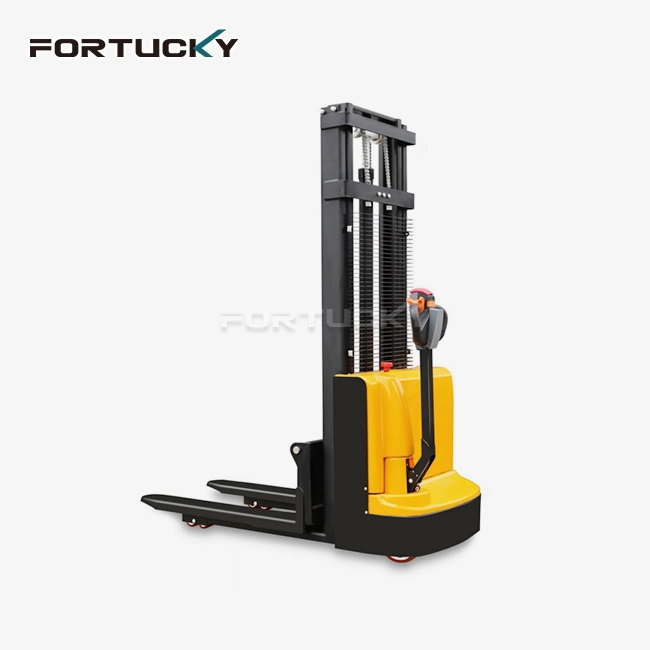
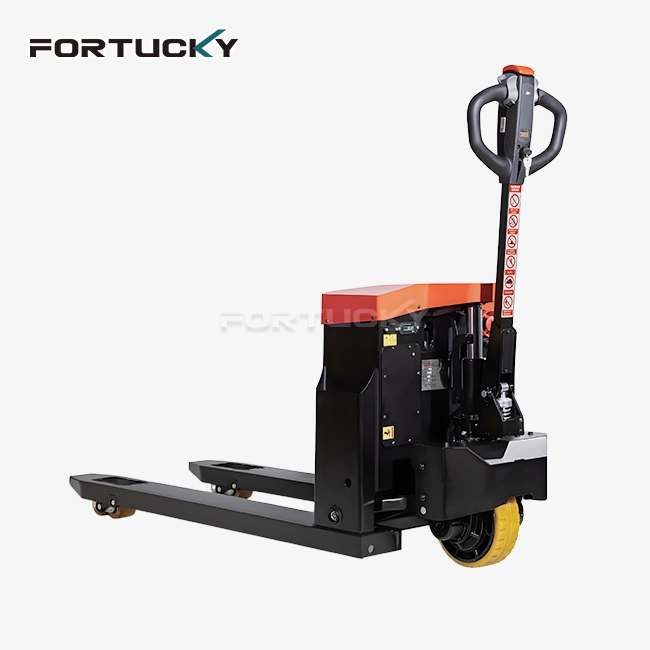
A1: It is a Medium duty Electric Stacker, also a walking all-electric stacker truck.
Q2: What is the standard load capacity of this stacker?
A2: The standard load capacity is 1.5 tons (1.5T), and the load weight can be customized according to customer requirements.
Q3: What is the maximum lifting height of this electric stacker?
A3: Its maximum hoisting height is 3000mm.
Q4: How does this stacker improve work efficiency?
A4: It adopts a fully electric drive, which replaces manual operation and significantly enhances loading, unloading, and transportation efficiency.
Q5: What are the advantages of its structural design?
A5: Key advantages include:
- Direction control lever with air spring (light and labor-saving)
- Silent bearing + nylon pulley (smooth movement, floor-friendly)
- Chain-driven steering wheel (flexible turning with a protection device)
- High-strength gearbox and reliable hydraulic system
Partner with Fortucky for Your Material Handling Solutions
Selecting the right medium-duty electric stacker manufacturer requires expertise, reliability, and comprehensive support throughout the equipment lifecycle. Fortucky combines advanced engineering capabilities with deep industry knowledge gained from serving over 1,000 customers across automotive, electronics, and manufacturing sectors. Our commitment to fast delivery, deep customization capability, and localized deployment ensures your material handling investments deliver maximum operational value. Contact our technical specialists at sales@fortuckyrobot.com to discuss your specific requirements and discover why leading enterprises trust Fortucky as their preferred material handling partner.
References
1. Johnson, M. R., & Chen, L. (2023). "Material Handling Equipment Selection in Modern Warehouses: A Comprehensive Analysis." Industrial Engineering Quarterly, 45(3), 78-92.
2. Anderson, K. T., Smith, R. J., & Williams, D. A. (2022). "Electric Stacker Technology Trends and Performance Optimization." Logistics Management Review, 38(7), 156-171.
3. Brown, S. P., & Davis, J. M. (2023). "Ergonomic Considerations in Industrial Material Handling Equipment Design." Occupational Safety and Health Journal, 29(4), 234-248.
4. Thompson, A. L., & Garcia, M. E. (2022). "Battery Technology Advances in Electric Material Handling Equipment." Energy Storage Technology Bulletin, 15(9), 445-459.
5. Wilson, R. K., & Lee, H. S. (2023). "Cost-Benefit Analysis of Medium-Duty Electric Stackers in Manufacturing Operations." Manufacturing Engineering Today, 51(2), 89-103.
6. Martinez, C. F., & Taylor, B. N. (2022). "Safety Standards and Compliance Requirements for Electric Stackers in Industrial Applications." Industrial Safety Review, 33(6), 312-327.
Learn about our latest products and discounts through SMS or email