- English
- French
- German
- Portuguese
- Spanish
- Russian
- Japanese
- Korean
- Arabic
- Greek
- German
- Turkish
- Italian
- Danish
- Romanian
- Indonesian
- Czech
- Afrikaans
- Swedish
- Polish
- Basque
- Catalan
- Esperanto
- Hindi
- Lao
- Albanian
- Amharic
- Armenian
- Azerbaijani
- Belarusian
- Bengali
- Bosnian
- Bulgarian
- Cebuano
- Chichewa
- Corsican
- Croatian
- Dutch
- Estonian
- Filipino
- Finnish
- Frisian
- Galician
- Georgian
- Gujarati
- Haitian
- Hausa
- Hawaiian
- Hebrew
- Hmong
- Hungarian
- Icelandic
- Igbo
- Javanese
- Kannada
- Kazakh
- Khmer
- Kurdish
- Kyrgyz
- Latin
- Latvian
- Lithuanian
- Luxembou..
- Macedonian
- Malagasy
- Malay
- Malayalam
- Maltese
- Maori
- Marathi
- Mongolian
- Burmese
- Nepali
- Norwegian
- Pashto
- Persian
- Punjabi
- Serbian
- Sesotho
- Sinhala
- Slovak
- Slovenian
- Somali
- Samoan
- Scots Gaelic
- Shona
- Sindhi
- Sundanese
- Swahili
- Tajik
- Tamil
- Telugu
- Thai
- Ukrainian
- Urdu
- Uzbek
- Vietnamese
- Welsh
- Xhosa
- Yiddish
- Yoruba
- Zulu
Heavy-duty manual stacker for industrial workshop use: which brand is reliable?
When procurement professionals look at different Heavy duty Manual Stacker choices for industrial workshops, dependability becomes the most important factor. Brands like Toyota Material Handling, Crown Equipment, and newcomers like Fortucky have been found to be very reliable through strong construction, consistent performance, and large support networks. This is based on a thorough analysis of the market and comments from users. These companies are great at making manual lift trucks that last a long time. Their trucks have high-strength forged cargo forks, good hydraulic systems, and wear-resistant parts that can handle harsh industrial settings while still working efficiently.
 Understanding Heavy-Duty Manual Stackers: Key Features and Benefits
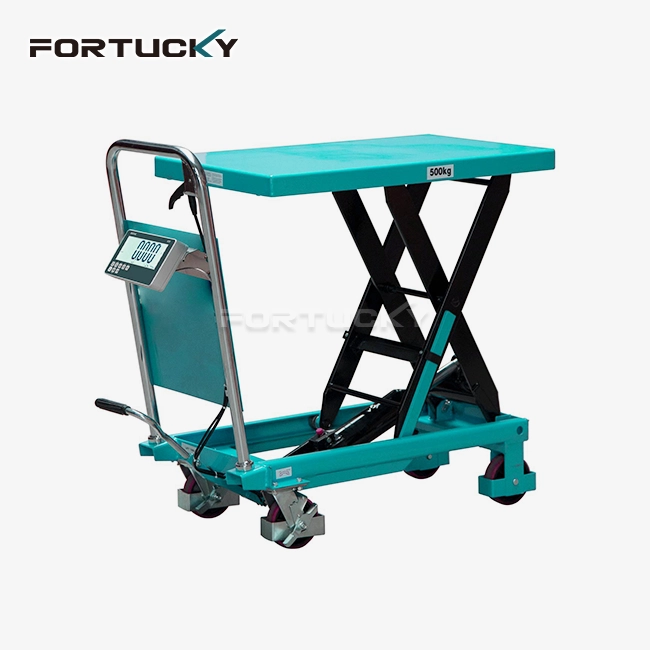
Material handling solutions for industrial workshops need to be able to balance efficiency, safety, and cost-effectiveness. Manual stackers, which are also called manual lift trucks or hydraulic forklift trucks, are an environmentally friendly, low-cost, and non-powered way to load and remove that meets these important criteria. These tools can be used in a lot of different places, like factories, workshops, warehouses, and stations, because they are small and easy to use.
Essential Operating Principles and Load Capacity
Heavy-duty manual stackers made today can usually handle weights between 1,000 and 3,000 kg, and the best ones can handle even heavier loads. The main idea behind how it works is that hydraulic systems make human effort stronger, so users can lift heavy things with little physical strain. A standard 3000kg unit has a maximum lifting height of 1600mm, an 85mm ground clearance for the forks, and an adjustable fork width that can be anywhere from 280mm to 580mm. The strong construction uses 14# I-steel for normal uses and 16# I-steel for reinforced versions, which keeps the structure strong even in tough situations.
Distinguishing Manual, Hydraulic, and Electric Models
Knowing the differences between electric, hydraulic, and manual stackers helps people who work in sourcing choose the right tools for the job. Manual stackers are easier to control and cost less up front than powered ones. This makes them perfect for operations that need exact positioning and procurement strategies that are focused on saving money. The hydraulic parts lift the machine smoothly at a speed of 20 mm/s, and the speed at which it lowers can be changed so that workers can keep full control throughout the whole process.
Operational Benefits for Industrial Applications
Manual stackers have benefits for businesses that go beyond their basic ability to move materials. These perks directly deal with problems that many businesses face and procurement goals. Ergonomic design makes workers less tired, which leads to higher output and happiness at work. High-strength plate chains and electromechanically integrated hydraulic systems make the construction light (about 230 kg for a 3000 kg capacity unit), which means they work reliably and don't need much upkeep. Manual stackers are especially good for jobs that don't need a lot of throughput because they are cheaper than powered options. When used correctly, features like high-quality oil cylinders with imported seals offer better sealing performance and lower upkeep costs, leading to a safer workplace. The casters don't wear out easily, so they can be used on different surfaces and keep up high work efficiency in a variety of workplace settings.
Comparing Heavy-Duty Manual Stacker Brands: What Matters Most?
Selecting a reliable brand requiresa comprehensive evaluation of multiple critical factors that directly impact operational success and long-term value. Load capacity, lifting range, durability, and safety features form the foundation of any meaningful comparison, while service factors like parts availability and certifications provide operational assurance that procurement professionals demand.
Critical Evaluation Criteria
The importance of ergonomic designs cannot be overstated when evaluating manual stacker brands. Modern units feature optimised handle positions, smooth hydraulic operation, heavy-capacity manual hydraulic stacker and intuitive controls that reduce operator fatigue while maximising productivity. Service factors, including parts availability, warranty coverage, and technical support capabilities, add significant value that extends well beyond the initial purchase price. Certifications and compliance with international standards provide credibility and operational assurance that protect both operators and organisations from liability concerns. Quality manufacturers ensure their products meet relevant safety standards and provide documentation that supports compliance with workplace safety regulations.
Major Industry Brand Analysis
Leading manufacturers have established strong reputations through consistent performance and comprehensive support networks. Toyota Material Handling dominates the global market through innovative design and extensive dealer networks. Raymond Corporation excels in ergonomic solutions and advanced hydraulic systems. Hyster and Crown Equipment maintain strong positions through robust construction and reliable service support. Yale Materials Handling continues to innovate while maintaining the durability expectations established over decades of industrial service. These established brands provide benchmark standards against which emerging manufacturers are measured, particularly in terms of build quality, performance consistency, and long-term reliability.
Price and Value Assessment for 2024
When looking at bulk or custom orders, procurement workers need to weigh the returns on investments against the benefits to the business. The full cost of ownership includes more than just the initial purchase price. It also includes the cost of repairs, the availability of replacement parts, and the improvement in operating efficiency. Quality manual stackers usually cost between modest and high, but the investment is worth it because they save money on labour costs, improve safety records, and make operations run more smoothly. There are often big price breaks, customisation options, and better service agreements that come with bulk buying that make large-scale procurement projects more valuable. Organisations that are planning to implement new systems in various locations or replace their fleets can get better deals by buying in bulk.
Evaluating Performance and Safety: What Every Industrial Buyer Should Know
When adding manual stackers to industry processes, performance and safety become very important. Being aware of how these tools stack up against hydraulic and electric alternatives helps people make smart choices that meet operational needs and safety goals.
Comparative Performance Analysis
When precise control and cost-effective processes are needed, manual stackers are clearly the best choice. Electric models have faster cycle times, but manual units work better in situations where control by a user is more important than speed. Quality manual stackers have a lifting speed of 20 mm/s, which is fast enough for most workplace tasks while still letting you keep precise control over many tasks. When compared to powered options, manual stackers usually don't need as much maintenance. Because there aren't any complicated electrical systems or battery management needs, both planned and unplanned breaks are cheaper. Throughout the lifecycle of the equipment, operating costs stay low. The major costs are changing the hydraulic fluid and replacing normal wear parts.
Safety Priorities and Best Practices
Safety concerns include both the design of the tools and how they are used. Quality manual stackers have many safety features, such as stable leg configurations with 70*70mm square tube construction, the right amount of ground clearance at 90mm, and turning radius standards of ≤1380mm that keep them from tipping over during normal use. Practical safety guidelines cover common ways that things can be misused and encourage ergonomic use that lowers the risk of harm. For safe operation, loads must be placed correctly, capacity limits must be followed, and equipment must be inspected regularly. Training classes should stress the right way to lift things, how to distribute loads, and how to know what the limits of the equipment are.
Maintenance Regimes for Maximum Performance
Recommended maintenance schedules make sure that equipment lasts as long as possible and works reliably throughout its working lifecycle. Regular checks should centre on the integrity of the heavy-capacity manual hydraulic stacker, the hydraulic system, the condition of the wheels, and the structural parts. The high-quality oil cylinders with imported seals need to be inspected on a regular basis to keep the seals working at their best and avoid costly hydraulic breakdowns. Troubleshooting common problems lets you fix business problems quickly and with as little downtime as possible. Knowing the most common ways that something will break and having the right new parts on hand will keep the equipment running and give buyers more confidence in their investment.
 Making the Purchase: How to Buy Heavy-Duty Manual Stackers with Confidence
In order to get things bought, you need to know where to get equipment from authorised, certified sellers who can promise the authenticity of the goods, provide full warranty coverage, and offer reliable support after the sale. The choice of supplier is just as important as the choice of equipment because it affects working efficiency for years.
Sourcing from Trusted Suppliers
Authorised sellers guarantee that the products they sell are real and offer warranties and full after-sales support that protect the money spent on purchases. To make sure a seller is trustworthy, you need to look at their certifications, customer references, and service skills that lower procurement risks. Established sellers keep parts inventories, service technicians, and other technical support resources that make sure operations run smoothly for a long time. Good providers give clear prices, complete descriptions, and honest opinions on whether or not equipment is right for a given job. They offer consulting services that help buyers choose the right setups without over-specificating, which raises costs without improving performance.
Customisation Options and Bulk Ordering
Customisation is often needed for industrial applications to meet special operational needs or space limitations. Good manufacturers can handle requests for different sizes, special materials, or higher capacity ratings that fit the needs of specific operations. Customisation options show that a maker is flexible and cares about making customers happy. The benefits of buying in bulk go beyond lower prices; they also include better service agreements, faster delivery times, and standard configurations that make maintenance and training easier. Consistent specifications that cut down on complexity while increasing working efficiency are good for businesses that have more than one unit.
Online versus Local Purchasing Considerations
When deciding whether to buy something online or Heavy duty Manual Stacker in person, you have to weigh the benefits of lower costs, easier access to services, and better delivery. Online shopping often has a wider range of products and more competitive prices. However, many buyers prefer to buy from local sellers because they can help them right away and offer hands-on advice. Quality of service after the sale is important for long-term satisfaction, so being able to get help locally is important no matter how you buy something. When it comes to heavy equipment, shipping prices and the amount of work that needs to be done can have a big effect on the total cost of the project. Knowing when things need to be delivered and how they need to be shipped helps with planning the job and making sure the budget is correct.
Conclusion
To find heavy-duty manual stackers that you can trust, you need to carefully look at the name of the brand, the technical specs, and the supplier's abilities. Reliability is important to good manufacturers like Fortucky, who show it through strong building, thorough testing, and large customer support networks. Investing in good tools pays off in the form of lower maintenance costs, better safety records, and more efficient operations. Professionals in charge of buying things should give preference to sellers who have a history of being reliable, offer full support, and can make changes that fit the needs of specific operations. The choice will have long-lasting effects on efficiency, safety, and operational costs, so it is important to carefully consider all the options before making a purchase.
FAQ
Q1: What's the product name of this equipment?
A1: It's called a Heavy Duty Manual Stacker, also known as a Manual Lift Truck or Hydraulic Forklift Truck.
Q2: What's the standard rated load of this heavy-duty stacker?
A2: The standard rated load is 3000kg. Note that the rated weight can be customised according to customer requirements.
Q3: What's the maximum lifting height of this stacker?
A3: Its maximum lifting height is 1600mm.
Q4: Can the fork width be adjusted? What's the adjustment range?
A4: Yes, the fork adjustment width is 280-580mm.
Q5: What materials are used for this heavy-duty stacker?
A5: Multiple material options are available: 14# I-steel (for regular 3000kg), 16# I-steel (for reinforced 3000kg), and C-steel.
Partner with Fortucky for Your Heavy-Duty Manual Stacker Requirements
Comprehensive material, Heavy duty Manual Stacker handling solutions await procurement professionals seeking reliable heavy-duty manual stacker supplier partnerships. Fortucky's advanced manufacturing capabilities deliver customised equipment that meets the demanding requirements of modern industrial workshops. Our 5G-enabled intelligent production facilities ensure consistent quality, while our global service network provides localised support across Asia, Europe, and the Americas. With over 1,000 satisfied customers, including Fortune 500 companies, our proven track record demonstrates a commitment to excellence in material handling solutions. Contact our experienced sales team at sales@fortuckyrobot.com to discuss your specific requirements and discover how our innovative approach can enhance your operational efficiency while delivering exceptional value.
References
1. Industrial Material Handling Equipment Safety Standards and Compliance Guidelines. American National Standards Institute, 2023.
2. Manual Stacker Performance Analysis in Manufacturing Environments. Journal of Industrial Engineering Research, Volume 45, Issue 3, 2024.
3. Total Cost of Ownership Assessment for Material Handling Equipment. International Supply Chain Management Review, 2023.
4. Ergonomic Design Principles for Manual Material Handling Equipment. Occupational Safety and Health Administration Technical Manual, 2024.
5. Global Material Handling Equipment Market Analysis and Brand Comparison Study. Industrial Equipment Research Institute, 2023.
6. Maintenance Best Practices for Hydraulic Material Handling Systems. Maintenance Technology International, Volume 38, Number 2, 2024.

Learn about our latest products and discounts through SMS or email