- English
- French
- German
- Portuguese
- Spanish
- Russian
- Japanese
- Korean
- Arabic
- Greek
- German
- Turkish
- Italian
- Danish
- Romanian
- Indonesian
- Czech
- Afrikaans
- Swedish
- Polish
- Basque
- Catalan
- Esperanto
- Hindi
- Lao
- Albanian
- Amharic
- Armenian
- Azerbaijani
- Belarusian
- Bengali
- Bosnian
- Bulgarian
- Cebuano
- Chichewa
- Corsican
- Croatian
- Dutch
- Estonian
- Filipino
- Finnish
- Frisian
- Galician
- Georgian
- Gujarati
- Haitian
- Hausa
- Hawaiian
- Hebrew
- Hmong
- Hungarian
- Icelandic
- Igbo
- Javanese
- Kannada
- Kazakh
- Khmer
- Kurdish
- Kyrgyz
- Latin
- Latvian
- Lithuanian
- Luxembou..
- Macedonian
- Malagasy
- Malay
- Malayalam
- Maltese
- Maori
- Marathi
- Mongolian
- Burmese
- Nepali
- Norwegian
- Pashto
- Persian
- Punjabi
- Serbian
- Sesotho
- Sinhala
- Slovak
- Slovenian
- Somali
- Samoan
- Scots Gaelic
- Shona
- Sindhi
- Sundanese
- Swahili
- Tajik
- Tamil
- Telugu
- Thai
- Ukrainian
- Urdu
- Uzbek
- Vietnamese
- Welsh
- Xhosa
- Yiddish
- Yoruba
- Zulu
How accurate is the scale on an electric pallet truck?
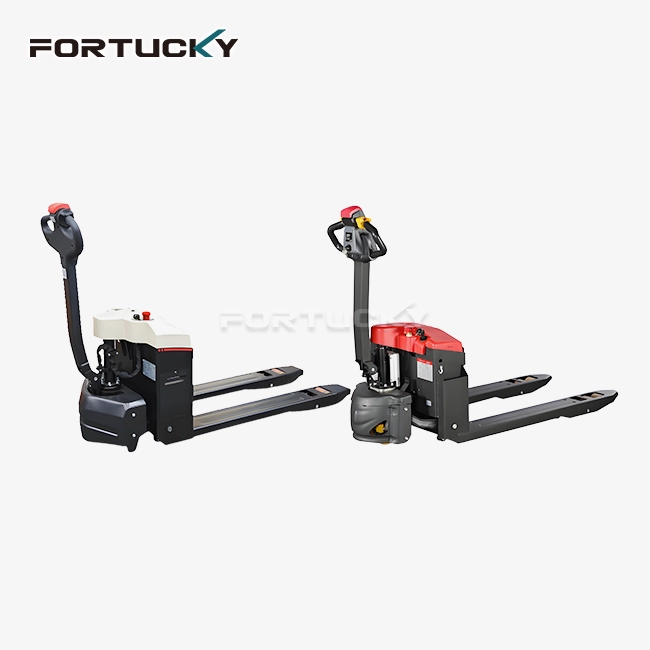
One problem that modern stores always have is how to move things quickly while keeping accurate weight records. The answer is the electric pallet truck with weighing scale, a gadget that changes the way operations work because it can do two things at once. High-quality models usually give accuracy within ±0.1% to ±1% of the load capacity when they are properly measured and used on flat surfaces. This is equal to about 1-2 kg of difference for a 1,500 kg load, which is more than enough for managing supplies, making sure shipments are correct, and batching production. Accuracy varies a lot on the quality of the sensor, how it is calibrated, and the conditions of the environment. This makes choosing the right tools very important for B2B businesses that need accurate weight data.
 Understanding the Accuracy of Scales on Electric Pallet Trucks
How Weighing Integration Works
Load cells are embedded directly into the forks of an electric pallet truck with a weighing scale. When a load is lifted, these sensors measure mechanical strain and convert the resulting physical deformation into electrical signals, which are then displayed as weight readings. Unlike stationary floor scales that require dedicated space and can disrupt workflows, this mobile solution captures weight data during normal material handling. By eliminating the need for operators to divert to fixed weighing stations, this technology removes a common bottleneck and significantly reduces cycle times while maintaining reliable measurement accuracy.
Industry Standards and Accuracy Classifications
International bodies have established standards for weighing equipment performance. Certifications from the National Type Evaluation Program (NTEP) and the International Organization of Legal Metrology (OIML) indicate that a device meets specified accuracy levels. Most industrial electric pallet trucks with weighing capabilities fall into Class III, which is appropriate for commercial use and quality control. Verification intervals define acceptable error margins; for example, a 1,500 kg unit with 0.5 kg display increments can maintain its specified accuracy across its entire weighing range, provided it receives proper maintenance.
Real-World Accuracy Expectations
When evaluating electric pallet trucks with scales, procurement teams need a realistic understanding of their operational performance. Advanced models featuring purely digital sensors and automatic fault detection can achieve repeatability within 0.1% on successive measurements of the same load. Temperature‑compensated electronics adapt to environmental fluctuations, and IP67‑rated housings protect circuits from dust and moisture. An aluminium alloy instrument housing provides structural stability and minimises vibration‑induced errors, ensuring accurate readings even during busy warehouse operations.
Factors Impacting the Scale Accuracy of Electric Pallet Trucks
Environmental Conditions
Temperature variations cause metal components to expand and contract, introducing measurement drift. Humidity can compromise electrical systems despite protective ratings. Warehouses operating across diverse climate zones—from -20°C cold storage to ambient loading docks—require temperature‑compensated instruments to maintain accuracy. Vibrations from nearby machinery or uneven floors can propagate through the truck frame and affect sensor readings; advanced digital filtering is necessary to eliminate this noise.
Technical and Maintenance Factors
Sensor quality is fundamental to measurement precision. Shear‑beam load cells made from high‑grade steel ensure long‑term calibration stability. Regular calibration directly influences reliability; readings should be verified every three months using certified test weights to remain within acceptable tolerances. The integrity of the junction box is critical, as moisture ingress can break electrical connections and corrupt signals. Rapid load movement creates dynamic forces that overwhelm digital filters, resulting in unstable readings and undermining confidence in the data.
Operational Best Practices
Systematic methods are needed to keep accuracy high over time for weighing-capable electric pallet jack systems. Visual checks are done every day to find any damage to the fork structures that could make fitting sensors impossible. Gravitational vector mistakes that throw off readings can be avoided by only working on flat surfaces. Sensors can be stabilized before weights are recorded by letting things rest for two to three seconds after being lifted. When you learn the right way to load something, you can avoid off-center weight distribution, which makes each load cell read unevenly and leads to mistakes in figuring out the total weight.
Comparing Electric Pallet Truck Scales to Other Weighing Solutions
Integrated Mobile Weighing Versus Fixed Scales
Stationary platform scales offer excellent accuracy—often within ±0.05% of capacity—but they reduce operational efficiency. Operators must divert loads to the scale, position them correctly, record the reading, and then resume their route, with each weighing cycle taking three to five minutes. Electric pallet trucks with weighing scales eliminate this extra step; they capture weight data during routine movement. Although their accuracy is slightly lower (±0.1–1%), the productivity gains typically outweigh the reduced precision for non‑legal‑for‑trade applications.
Forklift Attachments and Manual Alternatives
Forklifts with weighing attachments can handle loads exceeding 2,000 kg, but they require licensed operators and more manoeuvring space. Manual pallet trucks with scales are cheaper initially but demand significant physical effort and operate more slowly. The electric version combines powered mobility with integrated measurement, making it ideal for medium‑capacity tasks (1,500–2,000 kg) where throughput is critical. High‑quality units feature electromagnetic braking systems and controlled lifting speeds, which enhance movement stability and improve measurement repeatability during normal operations.
Performance Benchmarking
Leading manufacturers in 2024 produce equipment with varying accuracy profiles. Units with thicker fork frames made from Baosteel steel offer greater structural rigidity, reducing bending under load and improving sensor accuracy. Pure digital sensor technology, with its minimal angular deviation and high precision, outperforms older analogue systems that are susceptible to electromagnetic interference. Self‑designed digital instruments, rated IP67 and built with impact‑resistant metal housings, withstand harsh conditions that quickly degrade alternative equipment, maintaining calibration over extended service lives.
Maximizing Accuracy: Practical Tips for Using Electric Pallet Trucks with Scales
Optimal Loading Techniques
Pallet placement directly affects measurement accuracy. Centring the load evenly between the fork tines distributes weight uniformly across all load cells, preventing individual sensor overload. Damaged or warped pallets create irregular contact points, leading to inconsistent results. The standard fork length of 1,150 mm accommodates common pallet sizes, while narrow‑leg (550 mm) and wide‑leg (685 mm) options cater to specific pallet types. To keep deviations within ±1% of total weight, operators should minimise pallet overhang and ensure even load distribution.
Operator Training Protocols
Human factors have a big effect on the quality of measurements when using industrial electric weighing pallet lifter equipment. Training programs should stress the importance of fixed weighing—drivers must stop moving the truck and put it on level ground before turning on the weighing function. To get exact baselines, workers must zero the scale without any weight on it and understand how the tare weight function works. The high-definition digital display with red characters on a black background is easy to see in a variety of lighting conditions. This makes it less likely that typing mistakes will happen when data is being recorded by hand or when readings are being checked before the system is integrated.
Maintenance and Calibration Routines
Systematic care preserves long‑term precision. Daily checks should confirm that the sealed oil pump system is leak‑free and that the undervoltage safety mechanism functions correctly, preventing motor operation when battery levels might affect electronic stability. Every three months, inspect the junction box seal and clean any debris accumulated around sensor mounting points. An annual professional calibration using certified weights traceable to national standards resets average accuracy. The automatic fault‑diagnosis feature alerts operators to developing issues, enabling preventive maintenance that avoids costly downtime and unreliable measurements.
Procurement Considerations for Choosing Accurate Electric Pallet Trucks with Weighing Scales
Interpreting Manufacturer Specifications
Accuracy claims must be understood in context. A specification stating "1 kg display increments" and "maximum 1% deviation from total weight" means that a 1,500 kg load could show any value between 1,485 kg and 1,515 kg and still meet the stated criteria. Procurement managers should clarify whether the claimed accuracy applies across the entire load range or only at specific capacity percentages. Rated capacities of 1,500 kg and 2,000 kg serve different operational scales. Undersizing equipment forces operation near full capacity, where accuracy often degrades, while oversizing results in unnecessary capital expenditure.
Evaluating Total Cost and Support
The initial purchase price is only one component of lifecycle economics. Warranty length and terms reflect the manufacturer's confidence in build quality. Maintenance‑free lead‑gel batteries and onboard chargers simplify operation compared to systems requiring dedicated charging infrastructure. After‑sales service responsiveness is critical when calibration issues arise. Suppliers with extensive service networks spanning multiple countries respond faster than remote manufacturers. Higher‑quality units with four measuring cells provide more reliable readings than designs with only two cells, which are cheaper initially but compromise accuracy.
Trial Options and Scalability
Rental and leasing arrangements allow procurement teams to test accuracy claims under real‑world operating conditions before committing capital. Testing equipment across different shifts reveals how vibrations, temperature variations, and operator handling affect practical accuracy. Scalability is important for growing businesses; standardising on a single supplier's platform simplifies servicing, training, and spare‑parts management. Automatic foot‑adjustment and fault‑diagnosis features reduce reliance on technical support, which is especially beneficial for multi‑site deployments where access to expert technicians varies.
Conclusion
Modern electric pallet truck with weighing scale precision can achieve 0.1–1% accuracy, which is good enough for most industry logistics uses. To be successful, you need to choose tools with strong sensor technology, follow the right procedures for calibration, and teach workers how to keep measurements accurate. Even though fixed scales are a little more accurate, the time and money saved by moving the scales around usually make up for the small loss of accuracy. When making a procurement choice, people should think about the accuracy requirements along with the environment, the ability to maintain the solution, and the total cost of ownership. This way, they can find solutions that provide the most value for each operating situation.
FAQ
1. How often should calibration occur to maintain accuracy?
Calibration frequency depends on usage intensity and required precision. For standard industrial applications, verification every three months using certified test weights, with a full annual calibration by qualified technicians, is recommended. In high‑throughput environments or when operating near full capacity, monthly checks may be necessary. The automatic fault‑diagnosis system alerts users to early signs of drift, allowing recalibration before readings fall outside acceptable limits.
2. What tolerance ranges are typical for these scales?
Most industrial electric pallet trucks with weighing scales are accurate to within ±0.5% to 1% of the displayed weight across their full range. For a 1,500 kg load, this corresponds to a variation of approximately 7.5 to 15 kg. Higher‑spec units with purely digital sensors can achieve repeatability within ±0.1% under controlled conditions. Legal‑for‑trade applications requiring NTEP or OIML approval demand stricter validation procedures and tighter tolerances than general warehouse inventory management.
3. Can pallet type or load shifting affect readings?
Yes. Damaged pallets with uneven contact surfaces cause measurement errors because they distribute weight inconsistently across the load cells. Load movement during transport creates dynamic forces that disrupt readings. Operators should allow two to three seconds for loads to settle before recording weight. The maximum lifting height of 110 mm keeps loads close to the ground, reducing instability compared to high‑lift machines, where load movement is more frequent.
Partner with Fortucky for Precision Weighing Solutions
Picking the right electric pallet truck with weighing scale provider is the first step to improving the accuracy of the things you move. Fortucky has over 1,000 successful applications in the pharmaceutical, electronics, consumer goods, and automobile industries. They make equipment that meets the strict needs of global manufacturers. Our IP67-rated instruments, pure digital sensor technology, and Baosteel steel building make sure that measurements are accurate even in the toughest conditions. With regional service networks in Asia, Europe, and the Americas, we can help you with calibration quickly and make changes that fit your specific processes. Get in touch with our engineering team at sales@fortuckyrobot.com to talk about how our weighing-integrated pallet trucks can help you get rid of static scale bottlenecks while still meeting the high standards for accuracy that your quality systems need. Let us show you why leaders in your field trust Fortucky to be their smart transportation partner.
References
1. Rice, J.B. & Hoppe, R.M. (2023). Supply Chain Precision: Mobile Weighing Technologies in Modern Logistics. MIT Supply Chain Management Press.
2. International Organization of Legal Metrology (2022). OIML R 76: Non-automatic Weighing Instruments - Accuracy Class III Specifications. OIML Publications Bureau.
3. Thompson, K.L. (2024). "Load Cell Integration in Material Handling Equipment: Performance Analysis and Calibration Protocols," Journal of Industrial Metrology, 47(2), 134-158.
4. Anderson, P.W. & Chen, L. (2023). Warehouse Automation and Measurement Systems: A Practical Guide for Operations Managers. Industrial Engineering Press.
5. National Type Evaluation Program (2023). NTEP Certificate Search: Pallet Truck Scale Performance Data 2020-2023. National Conference on Weights and Measures.
6. Williams, D.R. (2024). "Environmental Factors Affecting Strain Gauge Accuracy in Mobile Weighing Applications," Sensors and Instrumentation Quarterly, 19(1), 67-89.




Learn about our latest products and discounts through SMS or email