- English
- French
- German
- Portuguese
- Spanish
- Russian
- Japanese
- Korean
- Arabic
- Greek
- German
- Turkish
- Italian
- Danish
- Romanian
- Indonesian
- Czech
- Afrikaans
- Swedish
- Polish
- Basque
- Catalan
- Esperanto
- Hindi
- Lao
- Albanian
- Amharic
- Armenian
- Azerbaijani
- Belarusian
- Bengali
- Bosnian
- Bulgarian
- Cebuano
- Chichewa
- Corsican
- Croatian
- Dutch
- Estonian
- Filipino
- Finnish
- Frisian
- Galician
- Georgian
- Gujarati
- Haitian
- Hausa
- Hawaiian
- Hebrew
- Hmong
- Hungarian
- Icelandic
- Igbo
- Javanese
- Kannada
- Kazakh
- Khmer
- Kurdish
- Kyrgyz
- Latin
- Latvian
- Lithuanian
- Luxembou..
- Macedonian
- Malagasy
- Malay
- Malayalam
- Maltese
- Maori
- Marathi
- Mongolian
- Burmese
- Nepali
- Norwegian
- Pashto
- Persian
- Punjabi
- Serbian
- Sesotho
- Sinhala
- Slovak
- Slovenian
- Somali
- Samoan
- Scots Gaelic
- Shona
- Sindhi
- Sundanese
- Swahili
- Tajik
- Tamil
- Telugu
- Thai
- Ukrainian
- Urdu
- Uzbek
- Vietnamese
- Welsh
- Xhosa
- Yiddish
- Yoruba
- Zulu
How to Choose the Right Mobile Drum Lifter for Your Facility
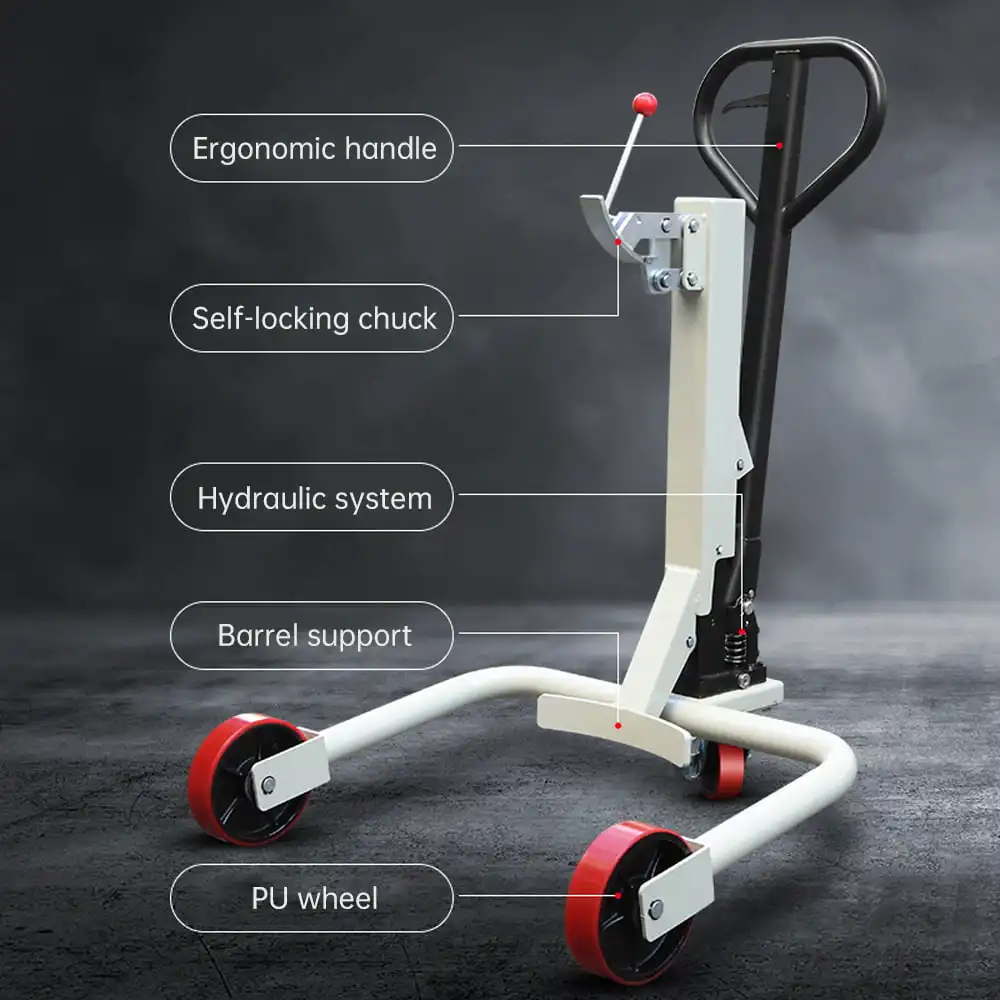
Choosing the right Mobile Drum Lifter or drum handling tool can reduce workplace accidents and improve operational efficiency. When evaluating options for your facility, you should consider the lifting mechanism, load capacity, drum compatibility, frequency of use, and safety standards. The best option strikes a balance between rugged construction and ergonomic design. It should feature self-locking clamps and adjustable lifting ranges to handle drums of different sizes and weights commonly found in logistics and industrial settings.
 Understanding Mobile Drum Lifters – Basics and Benefits
Modern factories are constantly under pressure to improve material handling and keep workers safe. Equipment for moving drums has evolved from simple mechanical aids to sophisticated systems designed to address the unique challenges of handling heavy, cylindrical liquid containers.
What Defines a Quality Drum Handling System
A dedicated drum handling device is designed to safely hold, lift, move, and empty standard industrial drums ranging from 30 to 55 gallons. Unlike conventional material handling equipment, these units address the specific ergonomic and safety challenges associated with heavy cylindrical loads. The design reduces manual force requirements, helping prevent musculoskeletal injuries that commonly occur when workers attempt to manipulate drums weighing between 200 kg and 450 kg without mechanical assistance.
Core Operational Mechanisms
The market mainly offers three types of lifting systems. Foot-pedal-activated pumps create pressure in manual hydraulic systems, which are reliable because they do not need electricity. Electric versions have battery-powered wheels, eliminating the need for manual pumping; these are suitable for high-frequency tasks. Pneumatic (air-powered) types are used in environments where spark-free operation is required, such as when working with volatile liquids or in explosion-proof zones.
Strategic Benefits Across Industries
When facilities install the right mobile hydraulic drum lifters, they see measurable improvements in several operational metrics. Safety records improve significantly when workers no longer have to wrestle heavy drums by hand, reducing back injuries and other strain-related accidents. Streamlined processes increase efficiency because workers can handle drums on their own without waiting for a forklift – especially helpful in tight production areas where large machines cannot maneuver easily. Pharmaceutical and food processing plants can use stainless steel versions that withstand harsh cleaning agents and prevent bacterial growth, ensuring compliance with strict hygiene standards.
Key Criteria for Choosing the Right Mobile Drum Lifter
In industrial automation, purchasing decisions should be based on a systematic analysis of operational needs and equipment capabilities. The right selection process balances short-term practical requirements with long-term integration into existing workflows.
Analyzing Load Capacity Requirements
Matching capacity is the first step in any equipment decision. Most standard commercial models can handle loads of 300 kg to 500 kg, which covers most standard steel and plastic drums. Exceeding the stated limit compromises both safety and equipment lifespan. Instead of relying on theoretical capacities, facilities handling specialized applications – such as battery manufacturing with thick electrolyte drums or chemicals with concentrated solutions – should check the actual weights of full drums. Professional units have hydraulic release valves that bypass fluid when users try to exceed the rated capacity, preventing damage from overloading.
Evaluating Lifting Height and Range
The vertical reach required varies greatly by task. Standard dispensing into floor-level containment needs lift heights of at least 250 mm to 375 mm, but serving raised hoppers or production lines may require lift heights over 1,400 mm. The lifting range between the lowest and highest points affects operational flexibility. Adjustable-range equipment can handle various tasks – from moving low-profile pallets to serving at high levels – without needing multiple specialized units.
Matching Mechanism to Operation Frequency
Daily usage patterns should guide your choice. Manual hydraulic systems work best for irregular tasks where drums are moved about 10 to 15 times per shift. During high-frequency operations, the physical effort of foot-pedal pumping becomes tiring. Electric models do not cause operator fatigue even when drums are moved 30 to 50 times per day, making the higher initial investment worthwhile due to increased productivity and reduced physical strain. When comparing electric versions, consider battery life and charging options.
Ensuring Drum Compatibility
Drum specifications differ across industries and applications. Standard rim-clamp grippers work on steel drums because their rims are reinforced. However, plastic drums require wide-beak grippers or dual-clamping belt systems to prevent deformation under pressure. The ability to accommodate different diameters is also important. Standard equipment can usually handle drums up to 600 mm in diameter, but larger containers need special models. Eagle-beak automatic buckles with spring self-locking systems ensure firm clamping across various rim shapes, preventing slippage during movement or lifting.
Accounting for Facility Layout Constraints
The physical dimensions of a facility directly affect how well equipment performs there. Overall length and width determine ease of movement through doors and aisles. Due to their longer legs and handles, standard units typically need turning circles of 1.5 to 2 meters. For factories with narrow production lanes, carefully measure clearances before purchasing. Straddle-leg designs that clear standard pallets allow workers to extract drums from the middle of pallets – a common challenge when drums are not located near edges accessible by forklifts.
Comparing Mobile Drum Lifters with Alternative Drum Handling Solutions
Understanding how specialized drum equipment stacks up against alternatives helps you decide when it is worth the investment and when simpler options will suffice.
Drum Handling Trolleys and Basic Carts
Basic Mobile Drum Lifter drum carts are cheap and can be moved by hand, but they cannot lift anything. Operators still have to load drums onto the trolley by hand, risking injury during the initial transfer. These methods work well where drums are already at a comfortable working height and only need horizontal movement over short distances. The lack of lifting capability limits their range of applications.
Forklift Attachments and Drum Clamps
Forklift attachments for moving drums leverage existing equipment, which can save money when forklifts are readily available. However, this approach creates interdependencies – drum handling becomes impossible when trucks are busy with other tasks. When facilities rely heavily on shared material handling equipment, work slows down as workers wait for equipment to become available. Forklifts are also less maneuverable than compact, dedicated drum handlers in tight production areas and around process equipment.
Integrated Advantages of Dedicated Systems
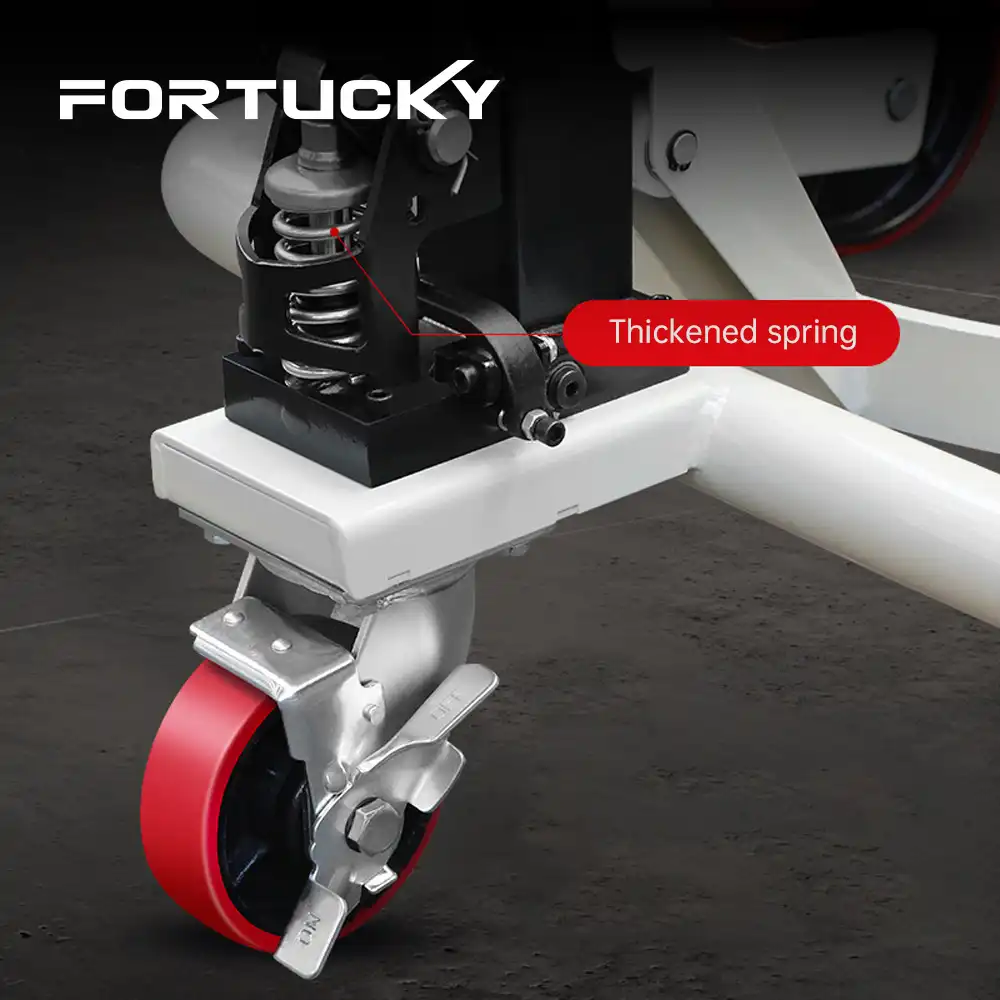
Specialized drum handling tools eliminate operational dependencies and provide task-optimized functionality. Transporting, lifting, and controlled tipping can all be done with a single compact unit, speeding up tasks that would otherwise require multiple tools or equipment types. Ergonomic handle designs with soft grips reduce worker fatigue during long shifts. Robust hydraulic systems with high-strength springs enable fast, stable lifting and lowering – something not possible with manual systems. Forged chuck parts made from high-quality steel resist wear and last longer, lowering replacement costs over time.
Maintenance and Safety Best Practices for Mobile Drum Lifters
Equipment safety and longevity depend on following regular maintenance procedures and good operator practices. Systematic approaches keep people safe and prevent costly mistakes.
Establishing Routine Inspection Schedules
Preventative maintenance plans should include regular inspection intervals. Weekly, check the hydraulic cylinder for physical damage and look for fluid leaks around seals and joints. During monthly thorough checks, test the release valve system to ensure smooth operation free of debris. Every three months, grease pivot points and moving parts using manufacturer-specified oils. During annual comprehensive checks, replace the hydraulic fluid with ISO VG32 grade oil, inspect the condition of seals, and check the structural frame for stress cracks or weld integrity problems.
Addressing Common Performance Issues
Lift droop – when loads slowly fall under pressure – usually indicates dirty hydraulic fluid damaging internal seals. To fix this, drain the system, replace valves, and add clean hydraulic oil. Inconsistent gripping or slippage often results from worn clamping surfaces or weak spring systems. Forged steel chuck parts resist wear, but gripping surfaces will eventually need replacement. Unusual noises during operation should be investigated immediately, as they often indicate a worn bearing or a loose structural connection that needs tightening.
Implementing Operator Training Protocols
Without proper training, even well-maintained equipment can be dangerous. Employees must know load capacity limits and the consequences of exceeding them. Training should emphasize centering loads to prevent tipping during transport. When working with hazardous chemical drums, workers need to learn spill control procedures and wear appropriate safety gear. Controlled tilting methods prevent sudden fluid shifts that could destabilize the unit. Regular refresher training reinforces safe practices and incorporates updated procedures as site conditions change.
 Why Choose Fortucky? Trusted Solutions for Your Drum Handling Needs
Global manufacturing leaders need equipment partners who understand the complexity of modern production environments. Fortucky offers comprehensive solutions proven in demanding industrial settings.
Engineered for Industrial Reliability
Fortucky's drum handling range reflects deep understanding of real-world operator challenges. Different capacity needs are met by various models with 300 kg and 350 kg load ratings to accommodate different drum weights and materials. Lifting heights range from 250 mm to 375 mm to suit diverse facility requirements – from floor-level storage to elevated dispensing. With overall lengths of 1,080 mm to 1,250 mm and widths of 730 mm to 760 mm, these compact machines work in space-constrained production areas such as chemical, pharmaceutical, and automotive factories.
Design Features That Deliver Performance
Ergonomic handle construction provides comfortable grips, reducing operator fatigue during long shifts. Simple operation interfaces also cut training time. Robust hydraulic systems with high-strength springs enable fast, stable lifting cycles and smooth, controlled lowering. Eagle-beak automatic buckles with spring self-locking mechanisms keep drums securely clamped during handling, preventing slips and falls. Forged from high-quality steel, chuck parts resist wear and deformation, maintaining secure gripping performance over a long period. The maximum drum diameter capacity is 600 mm, and the maximum height capacity is 915 mm – standard drum sizes for many industries.
Proven Track Record with Global Leaders
Fortucky portable drum handling truck equipment is used for mission-critical material handling tasks by Huawei, CATL, Mercedes-Benz, BMW, BYD, and Baowu Group, among others. Fortucky has more than 1,000 industrial and logistics facilities as clients around the world. These facilities are in businesses ranging from fast-moving consumer goods and autos to medicines and the production of new energy. This a lot of experience leads to better solutions that have been tested and proven to work in a wide range of working settings, from chemical plants with dangerous atmospheres to cleanrooms where drugs are made.
Comprehensive Support Infrastructure
Localized service networks in Asia, Europe, and the Americas ensure that facilities can receive prompt technical assistance when needed. Competitive R&D capabilities allow deep customization to meet specific operational requirements that standard configurations cannot address. Short lead times reduce purchasing wait times, accelerating facility improvement or expansion projects. Durable construction extends equipment lifespan and reduces maintenance needs, resulting in high cost-effectiveness. Full certification portfolios covering international safety standards give businesses confidence when purchasing across different regulatory regimes.
Conclusion
Choosing the right drum handling tools means balancing several factors specific to your operation. Load capacity should match the weight of a full drum. Lifting height should meet both current and future needs. The choice between manual hydraulic and electric mechanisms depends on daily usage frequency and operator fatigue considerations. Drum compatibility features, such as specialized clamping systems, ensure safe handling of both steel and plastic containers. Facility layout constraints – including aisle widths and turning radii – directly affect equipment performance. Ease of maintenance and operator training requirements influence long-term total cost of ownership. By systematically matching these factors to your facility's needs, you can find solutions that improve both safety and productivity.
FAQ
Q1: What maximum weight capacity should I specify for my drum handling equipment?
Your capacity requirement should be based on the weight of your largest full drums, not empty containers. Standard equipment handles loads of 300 kg to 500 kg, sufficient for most common tasks. Facilities handling dense materials like battery electrolytes or concentrated chemicals should verify actual operating weights. Professional units have hydraulic release valves that bypass pressure when capacity is exceeded, preventing overload damage.
Q2: How do I choose between manual hydraulic and electric lifting mechanisms?
Frequency of use drives this choice. Manual hydraulic systems suit facilities that move 10–15 drums per shift on an irregular basis; they are reliable and independent of electricity. Electric models avoid operator fatigue during heavy workloads of 30–50+ moves per day, making the higher initial investment worthwhile due to improved efficiency. When evaluating electric versions for multi-shift operations, consider battery life and charging options.
Q3: Can standard equipment safely handle both steel and plastic drums?
Drum material significantly affects clamping requirements. Rim-clamp grippers work well with steel drums, which have reinforced rims. Plastic drums require special wide-beak grippers or dual-clamping belt systems to prevent deformation under pressure. Eagle-beak automatic buckles with spring self-locking mechanisms fit various rim shapes and maintain grip during handling.
Q4: What maintenance protocols extend equipment service life?
Regular upkeep prevents costly breakdowns. Weekly visual checks ensure hydraulic components work correctly and look for leaks. Monthly inspections verify release valve operation and remove debris. Every three months, lubricate pivot points with specified oils. During annual comprehensive service, replace hydraulic fluid with ISO VG32 grade oil, inspect and replace seals as needed, and check the structural frame for stress-related damage.
Partner with Fortucky for Optimized Material Handling
To make your drum handling more efficient, you should start by talking to a Mobile Drum Lifter maker who knows the problems your business faces. Fortucky adds decades of experience in automation to sites all over the world, creating custom solutions that work with current processes without any problems. Our engineering team can look at your specific needs—from handling dangerous materials in chemical production to making sure that pharmaceutical uses follow cleanroom rules—and suggest the best designs for you. Get in touch with our experts at sales@fortuckyrobot.com to talk about your facility's drum handling needs, get full technical specs, or set up equipment demos that show how well it works in real life.
References
1. American National Standards Institute. "Industrial Material Handling Equipment Safety Standards." ANSI MH16.1-2020, Materials Handling Industry Association, 2020.
2. Occupational Safety and Health Administration. "Ergonomic Guidelines for Manual Material Handling." OSHA Technical Manual, Section VII, Chapter 1, U.S. Department of Labor, 2021.
3. Materials Handling Institute. "Drum Handling Equipment: Selection and Application Guide." MHI Technical Report Series, Volume 12, 2022.
4. National Safety Council. "Preventing Musculoskeletal Injuries in Material Handling Operations." NSC Workplace Safety Research, 2021.
5. International Organization for Standardization. "Industrial Trucks—Safety Requirements and Verification." ISO 3691-4:2020, Hydraulic Lifting Equipment Standards, 2020.
6. Chen, Robert and Williams, Patricia. "Optimization of Material Handling Systems in Manufacturing Facilities." Journal of Industrial Engineering and Management, Volume 15, Issue 3, 2022, pp. 487-506.

Learn about our latest products and discounts through SMS or email