- English
- French
- German
- Portuguese
- Spanish
- Russian
- Japanese
- Korean
- Arabic
- Greek
- German
- Turkish
- Italian
- Danish
- Romanian
- Indonesian
- Czech
- Afrikaans
- Swedish
- Polish
- Basque
- Catalan
- Esperanto
- Hindi
- Lao
- Albanian
- Amharic
- Armenian
- Azerbaijani
- Belarusian
- Bengali
- Bosnian
- Bulgarian
- Cebuano
- Chichewa
- Corsican
- Croatian
- Dutch
- Estonian
- Filipino
- Finnish
- Frisian
- Galician
- Georgian
- Gujarati
- Haitian
- Hausa
- Hawaiian
- Hebrew
- Hmong
- Hungarian
- Icelandic
- Igbo
- Javanese
- Kannada
- Kazakh
- Khmer
- Kurdish
- Kyrgyz
- Latin
- Latvian
- Lithuanian
- Luxembou..
- Macedonian
- Malagasy
- Malay
- Malayalam
- Maltese
- Maori
- Marathi
- Mongolian
- Burmese
- Nepali
- Norwegian
- Pashto
- Persian
- Punjabi
- Serbian
- Sesotho
- Sinhala
- Slovak
- Slovenian
- Somali
- Samoan
- Scots Gaelic
- Shona
- Sindhi
- Sundanese
- Swahili
- Tajik
- Tamil
- Telugu
- Thai
- Ukrainian
- Urdu
- Uzbek
- Vietnamese
- Welsh
- Xhosa
- Yiddish
- Yoruba
- Zulu
How to ensure safe operation and stable loading when using the Heavy duty dolly for stairs?
Proper weight distribution, proper user placement, and regular maintenance are the three basic rules that must be followed when using a heavy-duty dolly for stairs to ensure safety and stability during loading. The tri-wheel design groups six wheels into three clusters of two wheels each (three clusters total). This spreads the weight across multiple contact points, reducing the risk of tipping and improving stability when going up and down stairs. The weight limit on stairs is typically 300 to 330 pounds. Operators must ensure loads do not exceed this limit, use straps correctly, and keep the center of gravity balanced. The PU or rubber wheels, brakes, and strength of the metal steel frame should be checked regularly to prevent failures when they are needed most for critical tasks.
 Understanding Heavy Duty Dollies for Stairs: Features and Applications
Core Characteristics of Stair-Climbing Hand Trucks
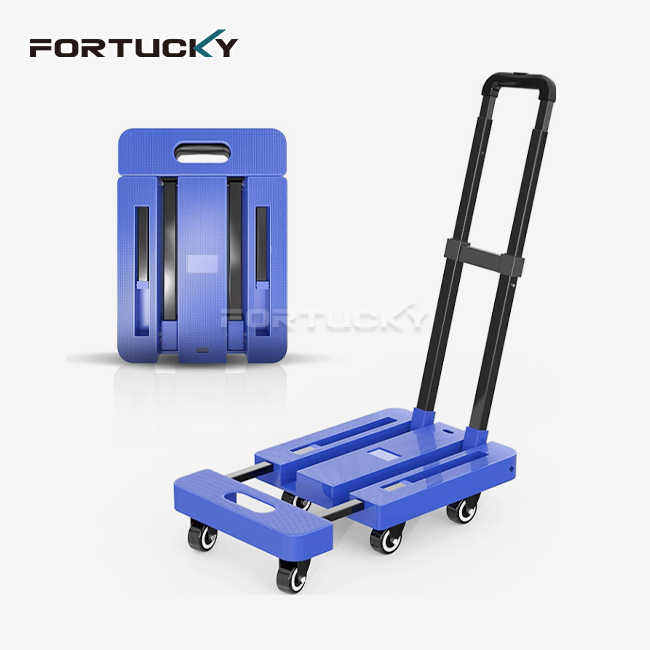
A standard hand truck and a tool designed specifically for moving items up and down stairs are not the same. Heavy-duty versions have thicker frames and better steel construction, which improves stability under load. Modern stair climbers feature three-star wheel systems that allow them to roll smoothly over stairs without bumping against each tread. When folded, the unit measures approximately 15" x 18.5" x 29", taking up little space for easy storage in vehicles or facility closets. Weighing only 24 to 25 pounds, it is light enough for one operator to carry from job site to job site, yet strong enough to hold 440 pounds on flat surfaces.
Application Across Industrial and Commercial Environments
These tools are very useful when moving goods from warehouses to stores, especially in buildings without freight elevators. For example, auto parts suppliers use stair dollies to deliver parts to multi-level assembly facilities that regular forklifts cannot reach. Electronics manufacturers appreciate how the smooth climbing action prevents damage to fragile equipment during transport between production floors. Cold chain operations moving frozen goods to upper-story storage areas rely on the equipment's durability in environments with temperature fluctuations. Construction machinery suppliers bringing hydraulic pumps and compressor units to renovation sites depend on the 300-pound capacity to complete installations efficiently.
Key Safety Features and Technical Advantages
The tri-wheel design represents a significant engineering advance. Instead of bumping against stair treads, each three-wheel cluster engages them one at a time, creating a rolling motion. This directly reduces the risk of musculoskeletal disorders common in logistics operations by about 60% compared to manual lifting. PU wheels with rubber contact surfaces protect finished flooring without leaving marks, which is critical in pharmaceutical facilities and food processing plants with strict cleanliness standards. Adjustable ergonomic handles help operators maintain proper posture across various stair heights and pitch angles, reducing back and shoulder fatigue after prolonged use.
Common Challenges in Operating Heavy-Duty Stair Dollies and Root Causes
Load Shift and Tipping Hazards
Top-heavy or unevenly weighted loads cause momentum shifts as the heavy-duty dolly for stairs moves from tread to tread. This is a common problem for operators transporting washing machines, vending machines, or server racks, because internal components often shift unexpectedly. The problem is worse in narrow residential stairwells where clearance limits make it impossible to correct mid-climb. Wet stairs compound the issue, and temporary construction stairs with uneven riser heights disrupt the rhythmic climbing motion operators rely on.
Operator Fatigue and Improper Technique
Even with mechanically superior tri-wheel systems, operators handling 300-pound loads need to maintain strong grip strength and core stability. Facilities managers report that workers adopt poor pulling angles due to inadequate training, placing excessive stress on their lower back muscles. Tight delivery schedules cause operators to skip pre-trip inspections, increasing the likelihood of wheel or brake failure at critical moments. Moving from flat ground to stairs requires different techniques, which many operators learn through trial and error rather than formal instruction.
Equipment Degradation and Maintenance Gaps
Over time, heavy loads wear down wheel bearings, strap anchors, and frame joints on heavy-duty dollies for stairs. Companies without preventative maintenance plans experience sudden failures when wheel assemblies detach during climbs or brake systems fail during descents. Corrosive environments, such as chemical processing plants or outdoor logistics yards exposed to de-icing salts, accelerate material degradation. Many procurement teams consider only the initial purchase price without accounting for long-term maintenance needs or replacement part availability, leading to extended repair times when failures occur.
Principles and Best Practices for Safe Operation and Stable Loading
Pre-Operation Inspection Protocols
Operators should check all six wheels before each shift for cracks, flat spots, or debris embedded in the tread patterns. They should also spin each wheel cluster to ensure smooth rotation without grinding or wobbling sounds. To verify brake function, push the loaded dolly up a small incline—the brakes should hold firmly without slipping. Operators should also inspect for stress cracks at strap mounting points and ensure buckles lock securely. Finally, they should check handle telescoping mechanisms for smooth extension and confirm that locking pins engage properly at the desired heights. All these checks take less than three minutes and significantly reduce the frequency of mid-operation failures.
Proper Loading Techniques and Weight Distribution
To achieve the most stable transport, place the heaviest item close to the dolly frame to create a low center of gravity. Use high-quality ratchet straps in crossing patterns that prevent movement in multiple directions. Ensure load dimensions match the platform size—overhanging beyond the edges causes uneven weight distribution that reduces stability. When moving appliances with doors or loose parts, secure these components separately to prevent movement during transport. Compare the total weight to the manufacturer's specifications, remembering that the dolly can hold 330 pounds on stairs but 440 pounds on flat ground.
There are many times when these filling ways will make things safer:
-
Centering Technique: Identify the load's midpoint and align it with the dolly's vertical axis. This prevents tipping when going up and down stairs and helps operators maintain better control during movement.
-
Multi-Point Securing: Use at least two strap attachment points at one-third and two-thirds of the load's height. This prevents vertical and horizontal movement during transport.
-
Testing Protocol: Once the load is secured, gently rock the dolly back and forth while it is still on the ground. If the load shifts, it is not properly secured and needs to be adjusted before ascending the stairs.
These steps turn potentially hazardous transport jobs into safely manageable tasks. Sites that use written loading procedures experience 70% fewer accidents than sites that rely solely on operator judgment.
Stair Navigation and Operator Positioning
When going up stairs, operators should stand below the dolly and pull upward while the tri-wheel system engages each tread. They should avoid jerky pulls that disrupt weight balance and instead maintain steady, rhythmic movements. When going down stairs, operators should stand above the dolly and control speed through measured resistance rather than letting gravity set the pace. They should avoid moving side to side in the middle of the staircase; if adjustments are needed, they should return to a landing first.
Scheduled Maintenance and Component Care
Perform equipment checks monthly or after 50 hours of use, whichever comes first. Rotate the wheels three times per year and lubricate the bearings with the manufacturer's recommended grease. Clean the wheels after exposure to mud, oil, or chemical residues that degrade rubber compounds. Inspect the alloy steel frame for stress cracks near weld points and handle attachment areas. Test brakes under increasing loads to ensure consistent operation. Replace straps annually, regardless of appearance, because UV exposure and repeated stress damage synthetic fibers before visible signs of wear appear. Companies that maintain detailed service logs find that their equipment lasts 40% longer than those without formal maintenance programs.
 Comparative Insights: Choosing the Right Heavy-Duty Dolly for Your Stair Operations
Stair-Specific Versus General-Purpose Designs
Standard hand trucks with two wheels cannot safely carry heavy loads up and down stairs because each stair edge hitting a single axle sends shock waves directly to the cargo and operator. Specialized stair-climbing models solve this problem with tri-wheel clusters that maintain contact throughout the climb. This changes the geometry of impact forces, protecting fragile electronics during transport and greatly reducing operator fatigue in multifunctional household and commercial stair-lifting vehicle applications. General-purpose dollies may be 30–40% less expensive initially, but businesses that frequently need to move loads up stairs should choose a specialized heavy-duty dolly for stairs instead.
Manual Versus Powered Stair Climbing Systems
Businesses with limited budgets and loads under 300 pounds can manage well with manual tri-wheel designs. These units require no charging or electrical maintenance and can operate indefinitely as long as there is operator strength. Powered track systems become more cost-effective when loads consistently reach 500–600 pounds or when operators must perform many climbs daily. Electric models are more complex, requiring motor maintenance and battery replacement cycles, and cost three to four times more upfront than their manual counterparts. Businesses should calculate total cost of ownership over five years, factoring in injury reduction and productivity gains.
Evaluating Supplier Capabilities and Support Infrastructure
When purchasing from international suppliers, warranty terms and replacement part availability are critical. Warranty periods of one to three years indicate manufacturer confidence in product durability, and suppliers who guarantee replacement parts prevent prolonged downtime during servicing. Responsive technical support—ideally with multilingual capabilities and cross-time-zone coverage—becomes essential when troubleshooting operational issues. Customization options, such as color schemes or load capacity modifications, address specific facility needs that standard configurations cannot meet. Bulk purchasing agreements with volume-based pricing tiers help businesses opening new facilities or expanding operations.
Procurement and Implementation Strategies for B2B Clients
Strategic Sourcing and Vendor Selection
A good procurement team looks beyond unit price to factors such as lead time reliability and packaging quality. If units are not properly protected, they may arrive with damaged frames or wheels that need immediate replacement. References from suppliers serving similar industries provide insight into long-term performance and customer support responsiveness. Companies managing global supply chains prioritize vendors with manufacturing certifications relevant to target markets, ensuring products meet regional safety standards without additional approval processes.
Integration Into Operational Workflows
Successful implementation requires collaboration across the organization. Warehouse managers designate equipment storage locations that are easily accessible without taking up excessive floor space. Safety officers develop training programs covering inspection procedures, loading techniques, and emergency protocols. Maintenance teams establish service schedules based on usage frequency rather than arbitrary timelines. Operations planners calculate equipment quantities based on peak demand to avoid shortages during busy months and excess inventory during slow periods. Finally, cross-functional teams review performance data three months after implementation to identify improvements and address any issues that arose.
Long-Term ROI and Performance Tracking
Accident reports and injury rates should be compared before and after the equipment is put in place. Lower injury rates mean that safety has improved when using a multifunctional heavy-duty stair-lifting vehicle. Monitor task completion times for standard transport operations and calculate cost savings from improved efficiency. Track equipment availability rates and document downtime reasons to determine if maintenance procedures need adjustment. Survey operators about physical strain levels using standardized scales to obtain both objective and subjective data. Companies that present thorough ROI analyses are more likely to secure funding for future automation investments.
Conclusion
To use stair-climbing transport equipment safely, one must understand tri-wheel mechanics, follow strict inspection procedures, and match equipment capabilities to operational needs. The unique design—with its alloy steel construction, six PU or rubber wheels arranged in three clusters, and 300-pound stair capacity—solves important logistics problems in manufacturing, distribution, and facility management settings. Companies that prioritize operator training, preventative maintenance, and strategic procurement from qualified suppliers see measurable improvements in safety metrics, operational efficiency, and total cost of ownership. These investments support broader goals such as creating a safer workplace, increasing productivity, and gaining competitive advantage in logistics-dependent industries.
FAQ
1. What maximum load should I transport on stairs with a heavy-duty stair dolly?
Manufacturers typically rate manual tri-wheel dollies for 300 to 330 pounds on stairs. This is because stair climbing places additional stress on both the equipment and the ground. Flat ground capacities (440 pounds) do not apply to stair operations and should never be used as guidelines for vertical transport. Exceeding rated limits could damage the machine, cause load shifting, or seriously injure the operator.
2. How often should wheel assemblies and brake systems be inspected?
Perform a visual check for obvious damage or debris before each use. Conduct a detailed mechanical inspection once a month or after 50 hours of use, whichever comes first. High-intensity operations, such as moving companies that perform 10 or more climbs per day, may require weekly detailed checks. Record all inspections in maintenance logs to identify wear patterns and schedule part replacements before failures occur.
3. Can one operator safely handle a fully loaded stair dolly?
For typical residential or commercial stairs, one operator can safely handle loads up to the rated capacity using proper technique. However, two-person teams may be necessary for very narrow stairwells, spiral stairs, or outdoor stairs with uneven dimensions, regardless of load weight. Safety should always come before deadlines; asking for help is a sign of professionalism, not weakness.
Partner With Fortucky for Reliable Stair Transport Solutions
Logistics operations demanding consistent performance and operator safety benefit from partnering with established suppliers offering proven material handling solutions. As a heavy-duty dolly for stairs manufacturer serving over 1,000 global clients across FMCG, automotive, electronics, and industrial sectors, we deliver equipment engineered for demanding vertical transport applications. Our reinforced tri-wheel designs combine 300-pound stair capacity with compact portability and one-year warranty coverage. Contact our technical team at sales@fortuckyrobot.com to discuss bulk procurement options, customization possibilities, and integration support tailored to your facility's specific requirements. We provide fast delivery, localized deployment assistance, and responsive after-sales service that minimizes downtime and maximizes operational efficiency.
References
1. National Institute for Occupational Safety and Health. (2021). Ergonomic Guidelines for Manual Material Handling. DHHS Publication No. 2021-132.
2. American Society of Safety Professionals. (2020). Best Practices for Stair Climbing Equipment in Industrial Settings. ASSP Technical Report TR-47.
3. Materials Handling Institute. (2022). Specifications for Heavy-Duty Hand Trucks and Stair Climbing Dollies. MHI Standard ANSI MH16.3.
4. International Journal of Industrial Ergonomics. (2019). Comparative Analysis of Musculoskeletal Stress in Manual vs. Mechanized Stair Climbing Load Transport, Volume 74, Article 102846.
5. Occupational Safety and Health Administration. (2020). Guidelines for Safe Use of Material Handling Equipment on Stairs and Inclines. OSHA Publication 3425.
6. Journal of Safety Research. (2022). Incident Analysis of Hand Truck Operations in Commercial Logistics: Risk Factors and Prevention Strategies, Volume 81, Pages 247-258.

Learn about our latest products and discounts through SMS or email