- English
- French
- German
- Portuguese
- Spanish
- Russian
- Japanese
- Korean
- Arabic
- Greek
- German
- Turkish
- Italian
- Danish
- Romanian
- Indonesian
- Czech
- Afrikaans
- Swedish
- Polish
- Basque
- Catalan
- Esperanto
- Hindi
- Lao
- Albanian
- Amharic
- Armenian
- Azerbaijani
- Belarusian
- Bengali
- Bosnian
- Bulgarian
- Cebuano
- Chichewa
- Corsican
- Croatian
- Dutch
- Estonian
- Filipino
- Finnish
- Frisian
- Galician
- Georgian
- Gujarati
- Haitian
- Hausa
- Hawaiian
- Hebrew
- Hmong
- Hungarian
- Icelandic
- Igbo
- Javanese
- Kannada
- Kazakh
- Khmer
- Kurdish
- Kyrgyz
- Latin
- Latvian
- Lithuanian
- Luxembou..
- Macedonian
- Malagasy
- Malay
- Malayalam
- Maltese
- Maori
- Marathi
- Mongolian
- Burmese
- Nepali
- Norwegian
- Pashto
- Persian
- Punjabi
- Serbian
- Sesotho
- Sinhala
- Slovak
- Slovenian
- Somali
- Samoan
- Scots Gaelic
- Shona
- Sindhi
- Sundanese
- Swahili
- Tajik
- Tamil
- Telugu
- Thai
- Ukrainian
- Urdu
- Uzbek
- Vietnamese
- Welsh
- Xhosa
- Yiddish
- Yoruba
- Zulu
What is the precision of a Two Way Shuttle in cargo placement?
Precision is an absolute must when warehouse managers and supply chain leaders look at investments in robotics. German-made laser and photoelectric sensors, along with industrial-grade PLC control, make the Two Way Shuttle very accurate in placement, achieving tolerances within ±2 mm to ±3 mm. This level of repeatability ensures that boxes are always placed correctly in the rack channels, preventing structural damage and inventory mistakes that can occur with manual forklift operations. For high-throughput centers, this accuracy directly translates into more storage space, less downtime, and a steady return on investment.
 Understanding Two Way Shuttle Precision in Cargo Placement
What Defines a Two Way Shuttle System?
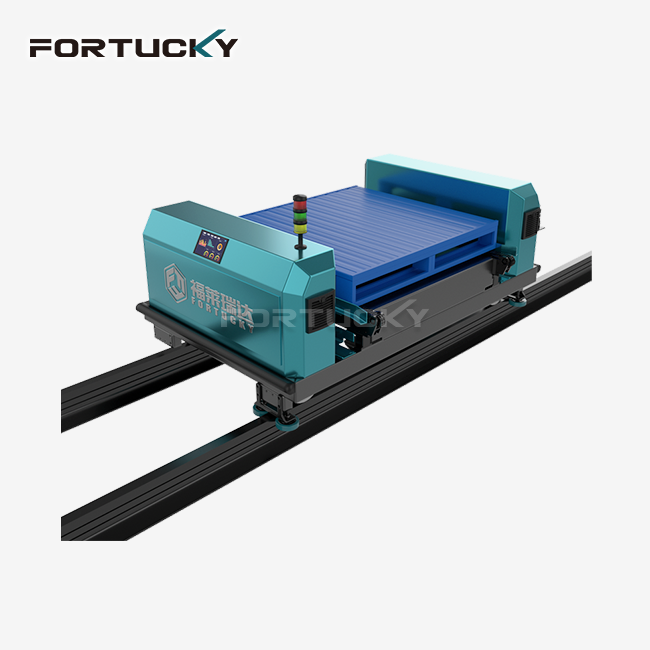
As a semi-automated vehicle, a two-way shuttle moves boxes back and forth between rack channels on specialized guide rails, eliminating the need for a forklift to enter the lane. This separation of the forklift from the racks avoids collision risks and speeds up the process. The forklift driver drops off a pallet at the lane entrance, and the two-way shuttle then transports the load to its predetermined location, which can be 40 or more pallet positions deep.
Modern two-way shuttle systems feature brushless motors and smart tracking sensors that continuously monitor travel distance and orientation. The control design often uses RF communication at 433 MHz or Wi-Fi, enabling easy integration with handheld devices or warehouse control systems. This connectivity allows real-time adjustments, so the device can correct minor issues immediately while traveling.
Critical Factors Influencing Placement Accuracy
Accurate cargo placement relies on several interconnected components working together. Laser sensors on the two-way shuttle body detect reference points along the rail system. Encoders then use wheel movement to calculate the shuttle's exact position. Modern models employ dual sensors that work together to improve reading accuracy and prevent error propagation.
Software algorithms are equally important; they constantly process sensor data and adjust motor speed during approach stages. The deceleration curves are designed to prevent load tip-overs while maintaining efficient cycle times. Temperature changes, rail alignment quality, and battery power stability can all affect accuracy. That is why professional-grade two-way shuttles have built-in logic to account for these factors.
Measurable Metrics: Accuracy, Repeatability, and Reliability
Positioning accuracy measures how close the two-way shuttle gets to its intended pallet placement target. Under normal conditions, the most precise tools in this field achieve ±2 mm accuracy. Repeatability measures consistency over thousands of cycles. With proper maintenance, a high-quality two-way shuttle will maintain this tolerance over millions of operations.
Uptime and fault tolerance are both aspects of reliability. Premium two-way shuttles have self-diagnostic features that detect issues like sensor drift or motor overheating before they affect placement accuracy. Professional systems typically achieve more than 10,000 operating hours between failures, ensuring consistent performance across multiple shifts.
Operational Impact: Space, Inventory, and Error Reduction
Precision directly enables denser storage configurations. When placement accuracy is within ±3 mm, warehouse planners can safely reduce gaps between boxes and uprights, freeing up valuable floor space. This allows 20–30% more space utilization compared to traditional drive-in racking served by forklifts, where operator skill varies.
When the Two Way Shuttle automatic tracking is integrated with a warehouse management system (WMS), it creates real-time location records that eliminate "lost" boxes. Facilities report placement errors dropping from 2–3% with manual handling to less than 0.1% with two-way shuttle automation. Rack damage almost never occurs because the shuttle's guided operation stops costly upright impacts that require repairs and cause downtime.
Comparing Precision: Two Way Shuttle vs Traditional and Alternative Storage Solutions
Shuttles vs Manual Handling and Forklifts
Manual pallet placement using reach trucks or counterbalance forklifts introduces human variability. Even experienced operators struggle to maintain precise positions in deep-lane layouts, especially during high-pressure shifts. Manual placement tolerance typically ranges from ±50 mm to ±100 mm, depending on visibility and fatigue. The ±2 mm precision of the two-way shuttle transforms storage density economics by 25 to 50 times.
Forklift-based systems have safety issues—damaged uprights must be repaired immediately, or they may collapse. The two-way shuttle's rail-guided operation eliminates these concerns, protecting both people and property. There are also throughput benefits. Two-way shuttles can position items in 30–40 seconds regardless of lane depth, whereas forklift travel time increases linearly with distance.
Comparison with VLMs, Carousels, and AGVs
Vertical lift modules (VLMs) and horizontal carousels are accurate for small items but ineffective for pallet-level bulk storage. VLMs can handle loads under 500 kg and offer ±5 mm tracking precision, making them suitable for parts and tools but not full pallets.
AGVs provide more flexibility for moving items around a facility but are less precise with large loads. When AGVs interface with static storage, placement accuracy ranges from ±10 mm to ±25 mm due to uneven floors and tracking drift. Two-way shuttles maintain tighter tolerances at faster speeds because of their fixed rails and instrumentation. AGVs can change routes, while two-way shuttles excel in dedicated lanes.
Scalability and Automation Levels
Two-way shuttle systems can scale, unlike manual and some autonomous systems. Adding tracks and shuttle units increases capacity in days, compared to weeks for AGV guidance mapping. Networked two-way shuttle models connect via wireless modules to WMS, allowing multiple sites to operate as a single system.
Operation can range from remote-controlled to lights-out storage with automated stacker cranes. This flexibility supports phased adoption that matches capital budgets and operational readiness. Two-way shuttles help mid-sized companies go digital without requiring Fortune 500 budgets.
Factors that Enhance Precision in Two Way Shuttle Systems
WMS Integration and Real-Time Feedback
When two-way shuttles connect to a warehouse management system, they transform from isolated units into nodes of an intelligent transportation network. Stacker-integrated and networked shuttle types can connect to WMS via wireless modules, enabling two-way data flow. The WMS uses inventory algorithms to assign storage locations for each item, and the shuttle reports real-time completion status and any issues.
Real-time feedback loops allow the system to detect and correct placement mistakes immediately. If sensors detect a misaligned box edge during placement, the two-way shuttle can make minor adjustments before disengaging, maintaining accuracy without human intervention. This closed-loop control ensures consistent accuracy even as operating conditions change across shifts.
Safety Mechanisms and Collision Avoidance
Advanced two-way shuttles have multiple safety layers that improve accuracy by preventing accident-related errors. Collision avoidance uses photoelectric sensors that quickly stop the vehicle if an object is detected in its path. Under-voltage protection stops the motor from responding correctly when battery charge drops below a certain level.
Anti-tipping algorithms check load stability during acceleration and braking, dynamically adjusting motion profiles. Together, these safety features ensure the two-way shuttle never attempts a placement when it might not be able to do so accurately—for example, if it detects an out-of-place box already in the target slot.
Customization, Installation, and Calibration
Every warehouse has unique challenges. Ceiling height limits, temperature zones, and SKU movement patterns can all affect optimal two-way shuttle configuration. Professional providers conduct site surveys to adjust control logic, sensor calibration settings, and rail spacing. Low-temperature models designed for -25°C cold storage feature self-heating and fully sealed components that maintain accuracy even in harsh conditions.
Long-term accuracy in an automated two-way shuttle racking is directly related to installation quality. Rail flatness must meet at least FM2 standards, because any misalignment will compound placement errors. During commissioning, technicians verify sensor readings against physical measurements, adjusting reference points until the system consistently meets specifications.
Proactive Maintenance for Sustained Accuracy
Regular upkeep preserves the accuracy established during installation. Sensor cleaning, rail alignment checks, and bearing wear inspections should be performed every three months. Brushless motors used in high-performance two-way shuttles require less maintenance than brushed motors, but should still be checked periodically for electrical faults.
Manufacturers' software updates often include improved positioning algorithms based on field data from thousands of units. Operator training complements technical maintenance. Teaching proper pallet preparation and loading procedures prevents supply chain issues that could affect shuttle accuracy. Facilities that follow comprehensive maintenance plans report precision loss of less than ±0.5 mm over five years of use.
 How to Evaluate and Choose a Two Way Shuttle System Based on Precision?
Defining Criteria Aligned with Operational Demands
Procurement professionals should first determine the level of precision required based on their storage density goals. For facilities seeking aggressive space optimization with 50 mm gaps, two-way shuttles need ±2 mm accuracy. Operations with slightly larger tolerances can consider standard models with ±3 mm accuracy and lower capital costs.
Load characteristics are critical. Standard models can handle up to 1500 kg, sufficient for most tech and FMCG applications. Heavy-duty models with a 2000 kg capacity are used in automotive parts and industrial equipment industries, where pallet weights often exceed normal limits. Choosing the right speed depends on throughput needs. Empty travel speeds between 1.0 m/s and 1.5 m/s balance cycle time and accuracy, since higher speeds require more complex deceleration control.
Comparing Leading Shuttle Brands and Models
The market offers many options, ranging in capability and investment level. Standard models provide basic accuracy with reliable tracking sensors and domestic brushless motors, making them a good choice for normal-temperature warehouse use. These units work well for medium-sized distribution centers that want to automate without extensive system integration.
High-performance and heavy-duty two-way shuttles feature imported drives and advanced control systems, justifying their higher price with better acceleration profiles and longer maintenance intervals. Stacker-integrated versions designed for fully automated warehouses have improved communication protocols and additional sensors to meet the strict uptime requirements of lights-out operations. Networked models allow multiple two-way shuttles to work together in a single lane, doubling throughput while maintaining individual unit accuracy.
During equipment trials, procurement teams should request precision validation data and, if possible, test with sample pallets in real-world conditions. Performance testing should run over multiple shifts to observe consistency during temperature changes and battery charge/discharge cycles.
Installation Expertise and After-Sales Support
Even the most advanced two-way shuttle will not achieve its promised accuracy if installation is done incorrectly. When selecting a supplier, prioritize partners with a proven track record in rail laying and appropriate testing methods. Ask for case studies showing precision verification methods used at customer sites similar to yours.
After-sales support structures directly affect long-term accuracy maintenance. Localized service networks enable rapid response when recalibration is needed after building changes or seismic events. Comprehensive support packages should include online troubleshooting, allowing technicians to review sensor data and detect drift patterns before they affect placement accuracy. Training programs that teach in-house maintenance staff basic precision checks build internal capabilities while reducing the need for external service calls.
Investment Models: Leasing vs Purchasing
Capital expenditure models work best for businesses with strong balance sheets that want maximum customization and long-term cost savings. Outright purchase typically offers the lowest total cost of ownership over a 7–10 year equipment life, especially in multi-shift operations.
Leasing gives companies that are careful with their cash flow or want to test the warehouse two-way shuttle cart automation before full deployment. Operating lease structures preserve capital for other investments and include maintenance and upgrade clauses that protect precision as contract terms. Some suppliers now offer performance-based contracts where monthly fees are linked to uptime and accuracy metrics, aligning the supplier's goals with customer success.
Conclusion
Precise pallet placement fundamentally changes warehouse economics, and two-way shuttle systems deliver levels of accuracy unattainable with manual or traditional automated methods. With laser scanners and intelligent controls, positioning accuracy of ±2 mm to ±3 mm is achievable, enabling greater storage density, more accurate inventory, and higher throughput—all leading to a measurable return on investment. Successful implementation requires careful consideration of operational needs, selection of the right equipment, and partnership with suppliers that provide comprehensive installation and support services. As logistics and industrial sectors continue their digital transformation, accurate cargo placement will become increasingly important for staying competitive in complex supply chain environments.
FAQ
Q1: How accurate are shuttle systems compared to doing things by hand?
Professional two-way shuttle systems maintain placement accuracy within ±2 mm to ±3 mm, which is 25–50 times better than manual forklift placement, typically within 50 mm to 100 mm. With proper maintenance, this accuracy remains consistent over millions of cycles.
Q2: Can shuttles handle different pallet sizes without losing accuracy?
Advanced models have adjustable sensing settings for pallet sizes between 1000 mm and 1400 mm in the fork entry direction. Operators can select the appropriate configuration via remote control, allowing the system to maintain precision with different pallet types. However, mixing very different sizes in the same lane without reconfiguration is not recommended, because sensor spacing logic is designed for specific dimensions.
Q3: What level of accuracy can be achieved in places with very high or very low temperatures?
Low-temperature two-way shuttle models designed for -25°C environments have sealed components and self-heating parts that maintain positioning accuracy within ±2.5 mm to ±3 mm. Temperature changes do not affect performance, but battery capacity drops by about 10–15% compared to normal conditions. This should be accounted for when planning shifts and charging schedules.
Partner with a Trusted Two Way Shuttle Manufacturer for Precision You Can Measure
To get the positioning accuracy your business needs, you need more than just the right equipment. You also need a seller with a track record of deploying equipment in a wide range of industry settings. Fortucky has provided precise Two Way Shuttle solutions to more than 1,000 customers around the world, including Fortune 500 companies in the pharmaceutical, FMCG, and car industries. Our engineering team makes systems that are exactly what you need, from normal ambient stores to -25℃ cold storage facilities. German laser sensors and imported brushless drive systems make sure that the systems are accurate to within 2mm.
We have quick shipping times, full localized support in Asia, Europe, and the Americas, and cost-effective solutions backed by our intelligent production skills that are enabled by 5G. Whether you need a single-lane test or a launch across multiple facilities, our team can help you from the site inspection to ongoing maintenance. Talk to our experts at sales@fortuckyrobot.com about how our Two Way Shuttle systems can give your business the accuracy, volume, and return on investment (ROI) it needs.
References
1. Richards, G. (2022). Warehouse Management: A Complete Guide to Improving Efficiency and Minimizing Costs in the Modern Warehouse. Kogan Page Publishers.
2. Bartholdi, J.J. & Hackman, S.T. (2021). Warehouse & Distribution Science: Release 0.98. Supply Chain and Logistics Institute, Georgia Institute of Technology.
3. Frazelle, E. (2020). World-Class Warehousing and Material Handling (2nd ed.). McGraw-Hill Education.
4. Tompkins, J.A. et al. (2019). Facilities Planning (5th edition). John Wiley & Sons.
5. Mulcahy, D.E. (2018). Materials Handling Handbook: The Essential Reference for Practitioners. McGraw-Hill Professional.
6. Baker, P. & Canessa, M. (2021). "Warehouse Design and Performance Evaluation: A Systematic Literature Review." International Journal of Production Research, 59(13), 3840-3865.
Learn about our latest products and discounts through SMS or email