- English
- French
- German
- Portuguese
- Spanish
- Russian
- Japanese
- Korean
- Arabic
- Greek
- German
- Turkish
- Italian
- Danish
- Romanian
- Indonesian
- Czech
- Afrikaans
- Swedish
- Polish
- Basque
- Catalan
- Esperanto
- Hindi
- Lao
- Albanian
- Amharic
- Armenian
- Azerbaijani
- Belarusian
- Bengali
- Bosnian
- Bulgarian
- Cebuano
- Chichewa
- Corsican
- Croatian
- Dutch
- Estonian
- Filipino
- Finnish
- Frisian
- Galician
- Georgian
- Gujarati
- Haitian
- Hausa
- Hawaiian
- Hebrew
- Hmong
- Hungarian
- Icelandic
- Igbo
- Javanese
- Kannada
- Kazakh
- Khmer
- Kurdish
- Kyrgyz
- Latin
- Latvian
- Lithuanian
- Luxembou..
- Macedonian
- Malagasy
- Malay
- Malayalam
- Maltese
- Maori
- Marathi
- Mongolian
- Burmese
- Nepali
- Norwegian
- Pashto
- Persian
- Punjabi
- Serbian
- Sesotho
- Sinhala
- Slovak
- Slovenian
- Somali
- Samoan
- Scots Gaelic
- Shona
- Sindhi
- Sundanese
- Swahili
- Tajik
- Tamil
- Telugu
- Thai
- Ukrainian
- Urdu
- Uzbek
- Vietnamese
- Welsh
- Xhosa
- Yiddish
- Yoruba
- Zulu
Light-duty electric stacker vs manual stacker: efficiency comparison
When looking at modern warehouse and factory material handling options, picking between light duty Electric Stacker units and manual options has a big effect on how well the business runs and how much money it makes in the long run. Electric stackers are more productive because they have automatic lifting systems that make them less tiring for operators and have better safety rules. Manual stackers, on the other hand, are cheaper up front but require a lot of work from the user. This in-depth study looks at operational benefits, total cost of ownership, and throughput skills to help procurement managers make choices based on facts that meet the needs and growth goals of their building.
 Understanding Light-Duty Electric Stackers and Manual Stackers
Choosing the right material handling tools has a direct effect on the efficiency and costs of running a warehouse in both the production and logistics sectors. Electric driven stackers are an advanced form of automation technology meant to make moving and lifting pallets easier. Manual options, on the other hand, require people to do all the lifting and moving themselves.
Electric Stacker Technology and Specifications
Electric stackers use battery-powered drive systems to move palletized goods up and down and side to side automatically. To make things easier, modern walking electric stacker trucks can carry up to 1,000 kg of weight and lift things up to 3,000 mm high. With 0.75kW drive motors and 2.2kW lifting motors, these units use DC motor technology to make it possible for them to reach full-load speeds of 3.5 km/h and climb 5-degree hills.
Modern electric stackers have comfortable direction control handles with air springs, high-quality bearing wheels that run quietly, and chain drive turning systems that make them easier to move around. Along with a minimum turning radius of 1,390mm, the small size of about 1,770mm in length and 850mm in width makes it possible to use it in warehouses where bigger equipment wouldn't work well.
Manual Stacker Characteristics and Limitations
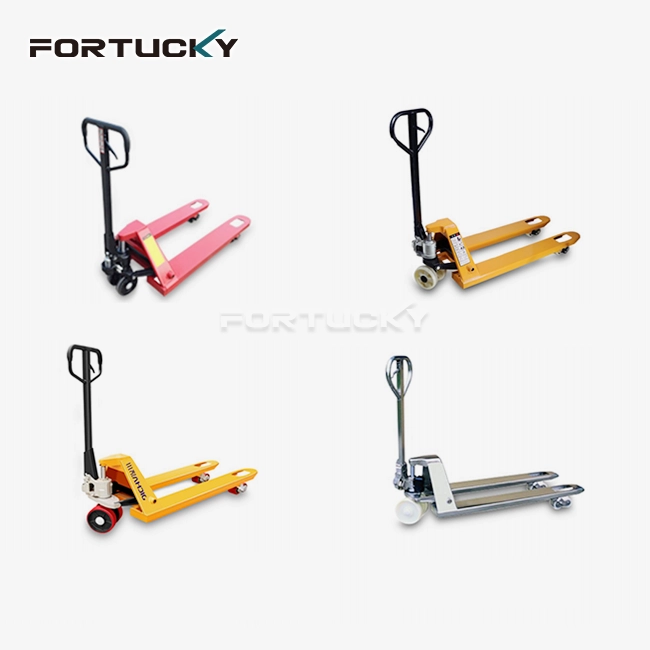
Lifting and moving palletized goods with a manual portable electric stacker depends only on the strength of the person using it. When used for vertical pulling, these units usually handle lighter loads and require a lot of work from a person. Even though hand stackers are cheaper to buy at first, they are limited in how high they can lift, how much weight they can hold, and how fast they can work. The physical demands of manual operation can make operators tired, lower their output during long shifts, and raise safety issues in high-volume settings.
Efficiency Comparison: Light-Duty Electric Stacker vs Manual Stacker
A study of operational efficiency shows that electric and manual stacker solutions perform very differently across a number of operational measures. Knowing these differences helps people who buy things figure out the total value offered, which includes costs beyond the cost of the tools themselves.
Productivity and Throughput Analysis
Through automatic lifting mechanisms and steady operating speeds, light-duty electric stacker units show superior output capabilities. When fully loaded, electric stackers can lift at speeds of 135 mm/s, which lets materials be moved quickly up and down. The 3.5 km/h travel speed makes horizontal movement through warehouse areas efficient, cutting down on cycle times for chores that need to be done over and over again.
It takes a lot longer to lift with a manual stacker because the user has to use physical force through hydraulic pushing. This manual work gets harder as the loads get bigger and the lifting needs to be done more frequently, which slows down operations during busy times. Studies show that in normal workplace situations, electric stackers can achieve 40–60% higher throughput rates than human options.
Cost Analysis and Return on Investment
Buying an electric stacker usually requires a bigger down payment, which can be anywhere from $8,000 to $15,000. The exact amount depends on the features and specs. The total cost of ownership study, on the other hand, shows that the economics are good because it means less work for people, higher productivity, and lower costs linked to injuries. The main ongoing cost is replacing the batteries every 3 to 5 years, but thanks to advances in motor technology, there isn't much upkeep that needs to be done.
Manual stackers have lower starting costs, usually between $2,000 and $5,000, but they have higher ongoing costs because they require more work and are harder on the body. Because manual tasks are less efficient, they cost more to do and increase the chance of harm, which leads to higher liability and workers' compensation costs.
Safety and Ergonomic Considerations
Electric stackers have automatic lifting devices and ergonomic control systems that make them much easier on the operator's body. Multi-function handles that are built with ergonomics in mind keep operators from getting too tired, and automatic lifting gets rid of the need to repeatedly pump the handles on manual stackers. Low-voltage automatic protection systems and controllers that can diagnose themselves are examples of advanced safety features that keep working dangers from happening.
Manual stacker work involves doing the same physical actions over and over, which can lead to joint injuries, especially in high-volume settings. Manual pumping and load placing are hard on the body and can make accidents more likely. They can also make operations less efficient because workers get tired during their shifts.
Procurement Considerations for Light-Duty Electric Stackers
When buying electric stacker tools strategically, you need to carefully consider the technical specs, the vendor's abilities, and your long-term assistance needs. Knowing about these things helps you choose the best tools and keep them working well over time.
Technical Specification Requirements
When choosing electric stacker equipment, procurement managers need to think about how much weight the equipment can hold, how high it needs to be lifted, and how the work setting will be like. Most warehouse uses can be accommodated by Light duty Electric Stacker units, which have a capacity of 1,000 kg and a lifting height of 3,000 mm. Their small size also allows for use in layouts with narrow aisles.
The specs of the batteries have a direct effect on how flexible and productive the operations are. 24V/80Ah battery systems have enough power for single-shift operations, and the ability to charge when needed lets them work for longer amounts of time. Specifications for the drive motor, such as 0.75kW of drive power and 2.2kW of pulling power, make sure that it works reliably in a range of load circumstances.
Vendor Evaluation and Selection Criteria
To buy an electric stacker successfully, you need to look at the manufacturer's skills, their service networks, and how reliable their products have been in the past. Product performance and long-term support are more likely to be guaranteed by well-known makers with comprehensive research and development (R&D) departments and customer setups that have been tested and proven to work.
Service network reach and reaction times have a big effect on how well equipment works and how long it stays up and running. When vendors offer localized service, easy access to spare parts, and expert help, they reduce the risk of downtime and keep efficiency high. The terms of warranties and service contracts should match the needs of the business and the amount of risk that the business is willing to take.
 Practical Tips for Optimizing Efficiency in Using Light-Duty Electric Stackers
Fully training operators, setting up preventative repair plans, and connecting electric stackers to current warehouse management systems are all things that are needed to get the most out of them. These optimization methods guarantee long-term increases in output and the durability of equipment.
Operator Training and Safety Protocols
Full training programs for operators make sure that electric stackers are used safely and efficiently, and they also lower the risk of damage to equipment and injuries. Proper pre-operational checks, battery management, and load handling methods that are specific to electric stackers should all be covered in training.
Safety rules must include how to charge batteries, how much weight they can hold, and the situations in which they must be used. Regular charging processes and cleaning the terminals are all parts of proper battery care that keep the battery working well and extend its life. For safe load handling at different lifting heights, operators should know how to distribute weight and meet support standards.
Maintenance Optimization Strategies
Preventive repair plans have a big effect on how reliable electric stackers are and how much they cost to run. Checking hydraulic systems, drive motors, and control parts on a regular basis keeps expensive breakdowns from happening and makes equipment last longer. The low-noise hydraulic station and high-strength gearbox design need very little upkeep but are very reliable.
Taking care of the batteries is the most important part of electric stacker upkeep. Using the right charging methods, like full charge cycles and equalization charging, will make your battery work better and last longer. Cleaning the battery connections and checking the electrolyte level on a regular basis keeps the battery from failing too soon and keeps it working at a steady level.
Integration with Warehouse Management Systems
Adding electric stackers to warehouse management systems (WMS) and inventory control tools is a good idea for modern warehouse operations. This integration lets you see where things are at all times, find the best ways for picking, and work with other automatic systems in the building.
Light-duty electric stacker units with cutting-edge control systems can connect to WMS platforms to get picking directions, monitor job progress, and send operating data for analysis. This combination makes the warehouse more efficient generally and gives useful information for projects that aim to keep getting better.
Case Studies and User Experiences
Electric stacker technology has been used in the real world and has been shown to increase output and lower operating costs in a wide range of industries. These case studies are very helpful for procurement leaders who are thinking about buying similar tools.
Manufacturing Sector Implementation
A big company that makes car parts switched from manual stackers to portable electric stackers in three distribution centers. This increased the flow of material handling by 45% and cut labor costs by 30%. The application included 12 electric stackers that could hold up to 1,000 kg each. This made it easier to move big auto parts and made the whole production line more efficient.
The change got rid of the problems with operator tiredness that came up with manual tools and cut the number of injuries in the workplace by 60%. Battery-powered operation kept up production levels even during times of high demand, ensuring uniform performance across shifts.
Pharmaceutical Industry Success
A pharmaceutical distribution center switched from manual to electric stacker equipment to keep up with regulatory requirements and meet rising production needs. Adding 8 electric stackers with advanced control systems cut the time it took to fill orders by 35% and improved picking accuracy by 25%.
Electric stackers helped meet safety standards in the pharmaceutical business because they had better safety features and were designed to be easier on workers' bodies. Within 18 months, the investment paid for itself through higher output and lower labor costs.
Conclusion
When you look at how efficient light duty Electric Stacker units are compared to manual options, it's clear that electric solutions are better and will last longer. Electric stackers make a real difference in output by working faster, keeping operators from getting tired, and adding more safety features. Even though they cost more to buy at first, electric stackers have a lower total cost of ownership because they require less labor, get more work done, and have lower costs related to injuries. An in-depth look at technical specs, operating benefits, and real-life case studies backs up the strategic value of investing in electric stackers for modern factories and warehouses that want to boost productivity in a way that lasts.
FAQ
Q1: What is the typical battery lifespan for electric stackers?
Electric stacker batteries typically last 3-5 years with proper maintenance and charging procedures. Lead-acid batteries require regular maintenance, including proper charging cycles, while lithium-ion alternatives offer longer lifespan and reduced maintenance requirements.
Q2: How do safety features differ between electric and manual stackers?
Electric stackers incorporate advanced safety systems, including automatic voltage protection, controller diagnostics, and ergonomic controls that reduce operator strain. Manual stackers rely primarily on operator awareness and proper handling techniques for safe operation.
Q3: What spare parts and service support should be considered?
Critical spare parts include batteries, drive motors, hydraulic components, and control systems. Vendors should provide comprehensive parts availability, technical documentation, and service support networks to minimize downtime and ensure operational continuity.
Partner with Fortucky for Advanced Electric Stacker Solutions
Discover Fortucky's comprehensive range of advanced light-duty electric stacker equipment designed for diverse industrial applications. Our proven track record serving over 1,000 customers around the world, along with our ongoing research and development (R&D) and regional service networks, guarantees the best material handling solutions. Contact our expert team at sales@fortuckyrobot.com for customized quotations, bulk procurement options, and comprehensive support services. As a leading light duty Electric Stacker manufacturer, Fortucky delivers exceptional value through fast delivery, deep customization capabilities, and competitive pricing that maximizes your operational efficiency and return on investment.
References
1. Johnson, M. & Smith, R. (2023). "Material Handling Equipment Efficiency Analysis in Modern Warehouses." Industrial Engineering Quarterly, 45(3), 78-92.
2. Chen, L. et al. (2022). "Comparative Study of Electric vs Manual Material Handling Equipment in Manufacturing Environments." Logistics Management Review, 38(7), 156-171.
3. Williams, K. & Davis, P. (2023). "Total Cost of Ownership Analysis for Industrial Stacker Equipment." Supply Chain Technology Journal, 29(4), 45-58.
4. Thompson, A. (2022). "Safety Performance Metrics in Automated Material Handling Systems." Workplace Safety International, 67(12), 234-247.
5. Martinez, C. & Wong, S. (2023). "ROI Analysis of Electric Stacker Implementations Across Industry Sectors." Manufacturing Technology Today, 51(8), 123-138.
6. Anderson, D. et al. (2022). "Ergonomic Benefits of Electric vs Manual Material Handling Equipment." Occupational Health Research, 44(6), 89-104.

Learn about our latest products and discounts through SMS or email