- English
- French
- German
- Portuguese
- Spanish
- Russian
- Japanese
- Korean
- Arabic
- Greek
- German
- Turkish
- Italian
- Danish
- Romanian
- Indonesian
- Czech
- Afrikaans
- Swedish
- Polish
- Basque
- Catalan
- Esperanto
- Hindi
- Lao
- Albanian
- Amharic
- Armenian
- Azerbaijani
- Belarusian
- Bengali
- Bosnian
- Bulgarian
- Cebuano
- Chichewa
- Corsican
- Croatian
- Dutch
- Estonian
- Filipino
- Finnish
- Frisian
- Galician
- Georgian
- Gujarati
- Haitian
- Hausa
- Hawaiian
- Hebrew
- Hmong
- Hungarian
- Icelandic
- Igbo
- Javanese
- Kannada
- Kazakh
- Khmer
- Kurdish
- Kyrgyz
- Latin
- Latvian
- Lithuanian
- Luxembou..
- Macedonian
- Malagasy
- Malay
- Malayalam
- Maltese
- Maori
- Marathi
- Mongolian
- Burmese
- Nepali
- Norwegian
- Pashto
- Persian
- Punjabi
- Serbian
- Sesotho
- Sinhala
- Slovak
- Slovenian
- Somali
- Samoan
- Scots Gaelic
- Shona
- Sindhi
- Sundanese
- Swahili
- Tajik
- Tamil
- Telugu
- Thai
- Ukrainian
- Urdu
- Uzbek
- Vietnamese
- Welsh
- Xhosa
- Yiddish
- Yoruba
- Zulu
How to maintain a lightweight manual hydraulic stacker?
To properly maintain a Light duty Manual Stacker, you need to regularly lubricate moving parts, check the hydraulic parts, and make sure the user knows how to use the machine. To get the most out of these manual lift trucks, which are also called hydraulic forklifts, you need to keep an eye on the hydraulic fluid levels, the position of the forks, and the state of the wheels. With regular maintenance, these pollution-free loading systems can last longer and work better, saving businesses and warehouses a lot of money in the production and transportation sectors.

 Understanding Lightweight Manual Hydraulic Stackers
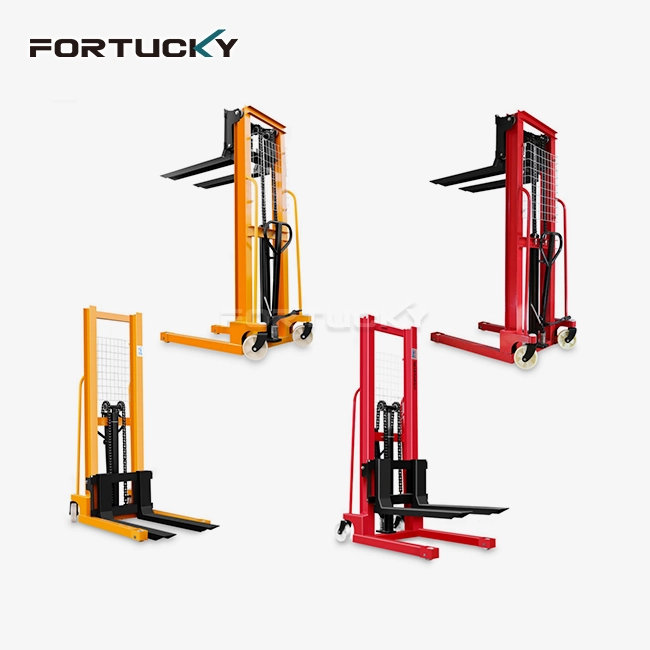
Manual hydraulic stackers that are small and light are designed to solve problems with moving things around in tight spaces. With these small lift systems that can handle loads from 1000 kg to 1500 kg, you can precisely control them using both hydraulic and human methods. The basic structure has heavy-duty steel cargo forks, electromechanically integrated hydraulic systems, and wear-resistant wheels made for a variety of site uses.
Core Components and Specifications
The base of these stackers is made of channel steel. Models that hold 1000 kg are supported by 10# channel steel, while models that hold 1500 kg are supported by 12# channel steel. Important specs include a lifting height of up to 1600 mm, a fork ground clearance of 85 mm, and fork lengths that can be adjusted to fit different box sizes. The hydraulic system has oil pumps with sizes of 35mm for normal models and 40mm for heavy-duty uses. This makes sure that the lifting works reliably at 20mm/s speeds.
Industrial Applications and Versatility
The small size and adaptable operation of these small-capacity manual lift stacker hand stackers make them useful in manufacturing plants, distribution centers, and shipping operations. When precise positioning is important, like when working with auto parts, making electronics, or storing drugs, this equipment comes in very handy. With a turning radius of ≤1380mm and self-weights between 140kg and 160kg, these units can get through tight areas and stay stable while they're loaded.
Common Maintenance Challenges and Their Causes
Most of the time, upkeep problems with light-duty manual stacker operations are caused by problems with the hydraulic system. Seal decay, fluid pollution, and pressure loss are often caused by exposure to the environment, too much work, or not following proper repair procedures. Problems with fork imbalance can happen when materials are loaded unevenly or when they hit something while being moved.
Identifying Performance Degradation Patterns
Uneven wear on the wheels could mean that the vehicle isn't aligned correctly or that there are too many horizontal forces acting on it while it's moving. Problems with the brake system are often caused by cables getting stretched, hydraulic fluid getting dirty, or mechanical parts wearing out. These success factors need to be looked at right away to avoid safety risks and problems with operations.
Cost Impact of Neglected Maintenance
According to research, putting off upkeep can raise the total cost of ownership by 35 to 45% over the duration of an item. Unplanned downtime makes it harder to get work done, and fixes that need to be done right away usually cost three times as much as planned maintenance. When technology fails and causes a safety mishap, the company could be sued or have trouble following the rules.
Systematic Guide to Maintaining Your Lightweight Manual Hydraulic Stacker
Setting up planned repair routines helps keep equipment running well and increases its useful life. Every day, you should check the hydraulic parts, the state of the forks, and the stability of the wheels. As part of weekly repair plans, lifting devices, brake systems, and safety controls are tested to make sure they work.
Daily Inspection Protocols
The first part of a visual exam for a small-capacity manual lift stacker is checking the amount of hydraulic fluid and looking for leaks around seals, hoses, and connection points. When you look at a fork, you should look for cracks, deformation, or wear patterns that are too heavy and could make the load less stable. An evaluation of a wheel's state includes checking for tread wear, bearing performance, and the ability of the caster to turn. To keep track of trends in the state of equipment, operators should write down their results using standard checklists.
Weekly Maintenance Procedures
As part of routine weekly maintenance, the hydraulic system's pressure is checked, hinge points are oiled, and bolt strength is confirmed. The high-quality oil tank with foreign seals needs extra care to keep the seals working well and the machine running efficiently. Cleaning methods get rid of the buildup of dirt and grime on moving parts and keep hydraulic systems from getting contaminated.
Monthly System Overhauls
As part of the monthly repair plan, the high-strength plate chain system is carefully inspected, the fork alignment settings are adjusted, and worn parts are replaced. Hydraulic fluid research shows how contaminated the fluid is and how often it needs to be replaced. Setting the right speeds for lifting and lowering makes sure that the machine works the same way, no matter what the load is.
 Best Practices and Advanced Tips for Longevity and Performance
Optimizing repair plans based on how busy the business is and the weather conditions makes equipment more reliable while lowering costs. In manufacturing settings, heavy-duty uses need to be inspected more often than light-duty warehouse operations. Extreme temperatures, dust contact, and chemical atmospheres are some of the environmental factors that affect how often repair needs to be done.
Operator Training and Best Practices
Full training for operators lowers the stress on tools and keeps parts from breaking down too soon. Training programs should stress the right way to load, how to control speed while moving, and how to spot problems with performance. Well-trained workers make tools last longer by finding problems early, before they become big enough to need expensive repairs.
OEM Parts and Service Quality
Using original equipment manufacturer (OEM) parts ensures that the equipment will work with other equipment and keep the guarantee valid. People may buy aftermarket parts to save money in the short term, but they often lower safety and functionality standards. By working with approved repair providers, you can be sure of getting access to technical knowledge and original replacement parts.
When performance stays the same and repair times are pushed back, it's clear that genuine parts are better. Quality control standards for original parts make sure that they are the right size, made of the right material, and work reliably, which is something that extra parts can't promise.
Comparing Manual Maintenance Approaches with Emerging Solutions
Reactive maintenance methods fix problems with equipment after they happen, which causes unexpected downtime and higher repair costs. Scheduled checks and part replacement are used in proactive maintenance methods to stop failures before they affect operations. Digital tracking tools that keep track of performance measures and guess when maintenance is needed are helpful for modern light-duty manual stacker maintenance.
Technology Integration Benefits
Digital maintenance management systems keep full records of all the repairs that have been done on an item, schedule it, and analyze its performance. These tools let you make decisions based on facts about when to repair parts and how to use maintenance resources. Integration with corporate asset management systems makes it easier to buy parts and makes sure they are available when they are needed.
Cost-Benefit Analysis of Maintenance Strategies
Total ownership costs are usually 20–30% lower with proactive upkeep methods than with reactive ones. Systematic maintenance plans are worth the money because they cut down on downtime, extend the life of tools, and improve safety. Companies that use organized maintenance procedures say that emergency repair calls go down by 40 to 50 percent.
Conclusion
Daily checks, regular maintenance, and operator training are all necessary for effective care of Light Duty Manual Stacker equipment. These manual lift trucks have a small frame and reliable hydraulic systems that work well with regular maintenance. They will last for years in harsh industrial settings. Following the right repair procedures will protect your equipment purchases and keep your workplace safe and efficient for a wide range of material handling tasks.
FAQ
Q1: How often should I perform maintenance on my lightweight manual hydraulic stacker?
Visual checks should be done every day to look for leaks, damage, and ensure that everything is working properly. Lubrication and a thorough check of all parts are part of weekly upkeep. Every month, overhauls include fixing the hydraulic system and checking its overall performance. In places with a lot of use, repair may need to be done more often.
Q2: What are the risks of using non-OEM replacement parts?
Non-OEM parts could break safety rules, cancel warranties, and make tools less reliable. Dimensional standards and material specs are often different from the original parts, which can cause them to break early and pose safety risks. Genuine parts make sure that everything works together and meet performance standards.
Q3: When should I consider replacing my manual stacker?
Repairs that cost more than 15% of the equipment's value every year, failures in the safety system, and the availability of new parts are all things that should be thought about when replacing something. Inefficient operations, high upkeep costs, and problems with following rules are also signs that it's time to change something.
Partner with Fortucky for Superior Light-Duty Manual Stacker Solutions
Fortucky makes the best manual hydraulic stackers on the market, and they are made to last and need little upkeep. Our extensive service network covers Asia, Europe, and the Americas, offering help in the right language and original new parts. Fortucky blends competitive research and development (R&D) with proven manufacturing quality. It has more than 1,000 happy customers, including Fortune 500 businesses. Get in touch with our knowledgeable staff at sales@fortuckyrobot.com for maintenance plans and light-duty manual stacker options that are specifically suited to your needs.
References
1. Industrial Truck Association. "Manual Hydraulic Stacker Maintenance Standards and Safety Guidelines." Material Handling Engineering Journal, 2023.
2. Peterson, R.M. "Preventive Maintenance Strategies for Manual Material Handling Equipment." Warehouse Management Quarterly, 2022.
3. Thompson, L.K. "Hydraulic System Maintenance in Industrial Applications: Best Practices and Cost Analysis." International Journal of Industrial Engineering, 2023.
4. Manufacturing Safety Institute. "Occupational Safety Standards for Manual Lifting Equipment Operations." Industrial Safety Review, 2022.
5. Wilson, D.A. "Total Cost of Ownership Analysis for Material Handling Equipment." Supply Chain Management Today, 2023.
6. European Committee for Standardization. "EN 1757-1: Safety Requirements for Industrial Lift Trucks and Stackers." Technical Standards Publication, 2022.


Learn about our latest products and discounts through SMS or email