- English
- French
- German
- Portuguese
- Spanish
- Russian
- Japanese
- Korean
- Arabic
- Greek
- German
- Turkish
- Italian
- Danish
- Romanian
- Indonesian
- Czech
- Afrikaans
- Swedish
- Polish
- Basque
- Catalan
- Esperanto
- Hindi
- Lao
- Albanian
- Amharic
- Armenian
- Azerbaijani
- Belarusian
- Bengali
- Bosnian
- Bulgarian
- Cebuano
- Chichewa
- Corsican
- Croatian
- Dutch
- Estonian
- Filipino
- Finnish
- Frisian
- Galician
- Georgian
- Gujarati
- Haitian
- Hausa
- Hawaiian
- Hebrew
- Hmong
- Hungarian
- Icelandic
- Igbo
- Javanese
- Kannada
- Kazakh
- Khmer
- Kurdish
- Kyrgyz
- Latin
- Latvian
- Lithuanian
- Luxembou..
- Macedonian
- Malagasy
- Malay
- Malayalam
- Maltese
- Maori
- Marathi
- Mongolian
- Burmese
- Nepali
- Norwegian
- Pashto
- Persian
- Punjabi
- Serbian
- Sesotho
- Sinhala
- Slovak
- Slovenian
- Somali
- Samoan
- Scots Gaelic
- Shona
- Sindhi
- Sundanese
- Swahili
- Tajik
- Tamil
- Telugu
- Thai
- Ukrainian
- Urdu
- Uzbek
- Vietnamese
- Welsh
- Xhosa
- Yiddish
- Yoruba
- Zulu
Safety Hazards and Precautions When Using Hand Trolly Cart
The simple hand trolly cart is often overlooked when we consider workplace safety and efficient material movement. Yet this essential tool is used daily across many industries. Hand trolley carts make moving bulky items easier and reduce physical strain during lifting. However, they also present certain safety risks that, if not properly managed, can lead to workplace injuries, operational disruptions, and costly liability claims. By understanding these risks and implementing organized safety measures, a routine task can be transformed into a safer, more productive operation. Overloading accidents, mechanical failures, and physical injuries are all real problems that can be prevented with the right knowledge and equipment choices. This comprehensive guide discusses the most common safety hazards associated with manual material handling and provides practical precautions for procurement managers, logistics planners, and warehouse leaders operating in complex industrial environments.
 Common Safety Hazards When Using Hand Trolly Carts
Even seemingly simple material handling equipment carries a range of risks that can affect worker safety and operational continuity. Identifying these hazards is the first step toward effective risk management in shipping and warehousing.
Overloading Beyond Designed Weight Limits
Overloading remains one of the most frequent causes of equipment failure and workplace accidents. When users place excessive weight on a hand trolley cart—typically exceeding 150 kg for portable models—the frame, axles, and wheel assemblies lose structural integrity. This stress can cause sudden equipment failure, dropping loads and damaging goods while potentially injuring nearby personnel. According to the Bureau of Labor Statistics, approximately 23% of all workplace injuries in material handling areas are attributed to overexertion, and many of these incidents are linked to poor load management. Procurement teams must carefully compare load capacity specifications with actual operational needs, considering both average loads and peak demands during high‑traffic periods.
Musculoskeletal Injuries from Improper Handling Techniques
Many warehouse workers develop chronic musculoskeletal disorders from repeatedly pushing, pulling, and maneuvering heavy carts without proper technique. Lower back pain, shoulder injuries, and wrist problems accumulate over time when workers fail to maintain neutral body postures or attempt to force heavy loads through tight spaces. The National Institute for Occupational Safety and Health identifies manual material handling as a primary contributor to workplace injuries. Even well‑designed equipment cannot fully mitigate risks if operators are not trained in proper body mechanics, correct pushing methods, and recognition of fatigue signals that indicate the need for rest or mechanical assistance.
Mechanical Failures and Component Malfunctions
Wheels, bearings, brakes, and structural joints are critical components of a hand trolley cart. Worn or damaged wheels can impair directional control, especially when navigating turns or ramps. Brake system failures, particularly on sloped surfaces, can result in runaway loads that endanger both users and bystanders. Frame welds and handle connections may develop microscopic cracks under cyclic stress, eventually leading to complete structural failure. Industrial accident records show that inadequate inspection procedures and deferred maintenance are directly linked to higher incident rates. Modern equipment featuring dual ball‑bearing PU wheels and reinforced clamping systems significantly reduces the likelihood of these mechanical failures, but only when paired with regular inspections.
Environmental Factors Compromising Stability
Uneven floors, threshold changes, uneven outdoor terrain, and variable weather conditions introduce uncertainty that challenges even experienced operators. Wet or oily surfaces reduce traction, while debris and obstacles can cause trips and sudden stops that destabilize loads. Low temperatures in cold storage areas add further difficulty, affecting both material properties and operator dexterity. Facilities handling a wide range of materials—from medical supplies to automotive parts—need to assess how different environmental conditions affect equipment performance. Compared to standard two‑wheel designs, modern portable Hand Trolly Cart hand trucks are more stable on uneven surfaces because they have six wheels instead of two. The front wheels are fixed, and the back wheels can rotate.
Essential Precautions to Ensure Safe Hand Trolly Cart Usage
Mitigating known hazards requires a multi‑layered approach that includes proper equipment selection, operating procedures, and continuous vigilance. In logistics‑dependent industries, these safety measures form the core of comprehensive workplace safety programs.
Conducting Thorough Pre-Use Inspections
At the start of each shift, equipment should undergo a systematic check of the most common failure points. Operators must examine wheel condition for cracks, flat spots, or bearing play that could indicate premature wear. Frame integrity inspections should identify visible damage such as bent sections, loose bolts, and weld defects. Handle components need to be verified for secure attachment points and smooth telescoping extension and retraction without binding. Securing devices such as elastic straps must be checked for retained flexibility and solid anchor points. When this inspection routine is documented in digital checklists or logbooks, it promotes accountability and enables early detection of issues before they become safety hazards. Quality control practices in manufacturing—including static load deformation tests and welding integrity checks—establish minimum performance standards that procurement professionals should demand from suppliers.
Implementing Proper Loading Techniques
Balanced load distribution prevents tip‑overs and reduces stress that accelerates equipment wear. Heavier items should be placed at the bottom of the load stack, directly over the wheel axle, to maintain a stable center of gravity. Loads should be secured with available elastic straps when using flexible platform configurations to prevent shifting during transport. Modern designs feature adjustable frames and expandable platform bases that accommodate various load shapes while maintaining stability. Operators need to understand how load positioning affects handling, especially when moving through doorways, elevators, or congested aisles with limited clearance. Training programs should include hands‑on demonstrations of correct and incorrect loading methods so employees can observe firsthand how load placement influences cart behavior.
Applying Ergonomic Handling Practices
Proper body mechanics can transform material handling from a hazardous task into one that is sustainable over a career. Whenever possible, operators should push rather than pull heavy carts, as pushing provides better visual control and reduces back strain. Maintaining a neutral spine and engaging core muscles distributes force across larger muscle groups rather than concentrating stress on vulnerable areas. High‑quality equipment with telescoping handles that adjust to individual user heights prevents workers from adopting awkward postures that lead to cumulative strain. When navigating ramps or inclines, loads approaching capacity should always be handled by a team. Rotating between tasks—such as moving materials and performing other duties—prevents the repetitive stress that causes long‑term injuries.
Selecting Equipment with Enhanced Safety Features
Procurement decisions directly affect long‑term safety and operational efficiency. Compared to cheap models made from basic plastics or thin‑gauge metals, modern portable hand trolly carts constructed from wear‑resistant materials such as reinforced polypropylene and stainless steel frames offer superior durability. Fixed front wheels paired with multiple swivel wheels mounted on sturdy brackets provide stability while maintaining maneuverability in tight spaces. Dual ball‑bearing wheel units enable smooth movement across various surfaces, from polished warehouse floors to outdoor concrete and carpeted office areas. Foldable designs that collapse for compact storage help multi‑use facilities optimize space while preserving structural integrity during use. Rather than relying solely on marketing claims, procurement managers should request documented evidence of load capacity testing, material specifications, and compliance with relevant safety standards when evaluating suppliers.
 Comparing Safety Aspects in Different Types of Hand Trolly Carts
Understanding different design variations and their safety implications helps procurement teams match equipment features to specific operational needs and risk profiles.
Foldable Versus Fixed-Frame Designs
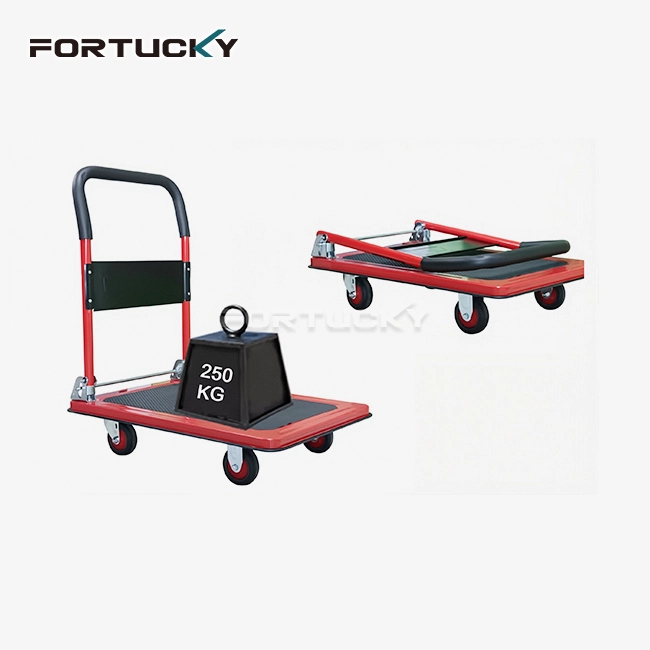
Foldable hand trucks offer convenience through compactness and light weight, but they introduce important structural considerations. Collapsible mechanisms include additional joints and pivot points that can fail if engineering tolerances are not strict or if components wear over time. However, high‑quality foldable designs with robust locking mechanisms and reinforced hinge sections can match the load‑bearing performance of fixed frames while providing greater storage flexibility for space‑constrained operations. These models are ideal for environments where equipment must be frequently relocated or for delivery services that need to return empty equipment folded flat for storage in a vehicle or closet. Fixed‑frame units, lacking adjustment points, offer the stiffest possible structure for demanding industrial settings where equipment is constantly in use and storage is not a priority.
Material Selection: Steel, Aluminum, and Reinforced Plastic
Choosing the right frame material involves balancing weight, strength, corrosion resistance, and cost. Steel frames excel in impact resistance and yield strength, making them suitable for rugged environments where heavy automotive parts or construction materials are handled. However, the weight of steel contributes to operator fatigue during repetitive tasks. Aluminum alloy construction reduces weight by approximately 30% while maintaining sufficient strength for most commercial applications, though material costs are higher. Reinforced plastic composites such as heavy‑duty polypropylene offer excellent corrosion resistance, making them ideal for cold chain logistics and pharmaceutical applications that require frequent cleaning to meet strict hygiene standards. Modern hybrid designs combining stainless steel structural elements with reinforced plastic components achieve the best of multiple materials, offering corrosion resistance, durability, and reasonable weight in a single solution capable of supporting 150‑kg loads.
Wheel Configuration and Bearing Systems
The change from old-fashioned hand trucks with two wheels to modern flat-panel silent-wheel hand trolly cart represents a significant safety advancement. Six‑wheel designs with dual ball‑bearing PU wheels distribute load forces across multiple contact points, reducing stress on each wheel and extending service life. Fixed front wheels maintain stability during forward travel, while swiveling rear wheels enable tight turns without the tipping risk associated with single‑pivot designs. Bearing quality directly affects both ease of use and longevity; for example, sealed ball bearings require no maintenance and provide low rolling resistance that reduces the force needed to initiate and sustain motion. This efficiency translates to less operator fatigue and lower injury risk during prolonged use. Procurement specifications should not accept generic claims of "smooth rolling" but should instead require clear documentation of bearing type and ABEC rating.
Conclusion
Hand trolley carts present a number of safety risks that require management through organizational culture, operational procedures, equipment selection, and maintenance discipline. Overloading, mechanical failures, ergonomic injuries, and environmental challenges are all well‑known hazards that can be effectively prevented through informed decisions and consistent practices. For businesses with demanding logistics requirements, procurement professionals must look beyond initial cost and consider the overall safety performance of equipment, including structural design, material quality, component specifications, and long‑term maintenance needs. By implementing thorough inspection routines, proper loading techniques, ergonomic handling practices, and ongoing training programs aligned with regulatory standards, material handling can be transformed from a source of risk into a controlled process that supports operational excellence. The industry trend toward more advanced designs with multiple wheels, sealed bearing systems, and hybrid material construction reflects a commitment to improved safety and performance, offering procurement teams proven solutions that protect both workers and business continuity.
FAQ
1. What load capacity should I specify when procuring hand trolley carts for warehouse operations?
Standard portable hand trolley carts typically support loads from 150 kg to 500 kg, and the appropriate capacity depends on the weight distribution of the materials being handled. For operations that regularly approach maximum ratings, choose equipment with built‑in safety margins that reduce operational limits by 30 to 40 percent to account for variable conditions such as ramps or uneven surfaces. Reviewing actual load weight data from your warehouse management system will help determine the right capacity specification.
2. How frequently should hand trolly carts undergo formal safety inspections?
Operators should perform daily pre‑use checks to verify basic functions such as wheel condition, frame stability, and securing device operation. Supervisors or maintenance staff should conduct weekly detailed inspections and document findings in official records. Monthly full inspections of bearings, bolts, and structural components identify progressive issues that require corrective action. Annual component‑level disassembly and inspection ensure continued safe operation in harsh industrial environments. Some facilities may require more frequent official inspections, especially if they operate multiple shifts or in severe conditions.
3. Are foldable hand trolly carts as safe as fixed-frame designs for industrial applications?
High‑quality foldable designs with robust locking systems, reinforced hinge assemblies, and appropriate materials can provide safety levels comparable to fixed‑frame units while offering greater storage flexibility. The critical factors are engineering quality, manufacturing precision, and maintenance discipline, not foldability itself. Rather than automatically excluding foldable designs due to structural concerns, procurement specifications should require documented load test results and locking mechanism lifecycle validation.
Partner with Fortucky for Superior Material Handling Solutions
Fortucky has a history of serving over 1,000 demanding customers around the world in industries like automotive, electronics, pharmaceuticals, and fast-moving consumer goods (FMCG). This makes them a reliable choice for logistics managers and procurement specialists looking for Hand Trolly Cart suppliers that deliver both safety performance and operational efficiency. Our customized Hand Trolly Cart options have chassis sizes that can be changed, strengthened six-wheel designs with dual ball-bearing systems, and materials that are resistant to wear and can hold up to 150 kg of weight for a very long time. We offer high cost-effectiveness without lowering quality standards because we can deliver quickly, offer deep customization, and help with localized rollout. Our 5G-enabled intelligent production facilities back this up. Contact our knowledgeable staff at sales@fortuckyrobot.com to talk about your specific material handling needs and find out how our wide range of products and quick technical support can improve safety in the workplace and make your shipping operations run more smoothly.
References
1. National Institute for Occupational Safety and Health. "Ergonomic Guidelines for Manual Material Handling." DHHS Publication No. 2007-131, Cincinnati, Ohio, 2007.
2. Bureau of Labor Statistics. "Nonfatal Occupational Injuries and Illnesses Requiring Days Away from Work in Material Handling Occupations." U.S. Department of Labor, Annual Survey Series, 2022.
3. American National Standards Institute. "Safety Requirements for Manual Material Handling Equipment: Hand Trucks and Platform Trucks." ANSI/ICWM Standard B56.10, Washington, DC, 2019.
4. Occupational Safety and Health Administration. "Materials Handling and Storage." OSHA Publication 3220, U.S. Department of Labor, revised 2021.
5. Waters, Thomas R., Putz-Anderson, Vern, and Garg, Arun. "Applications Manual for the Revised NIOSH Lifting Equation." Centers for Disease Control and Prevention, Publication No. 94-110, 1994.
6. International Organization for Standardization. "Materials Handling Equipment—Safety Requirements—Part 1: General Requirements." ISO 3691-1:2020, Geneva, Switzerland, 2020.

Learn about our latest products and discounts through SMS or email