- English
- French
- German
- Portuguese
- Spanish
- Russian
- Japanese
- Korean
- Arabic
- Greek
- German
- Turkish
- Italian
- Danish
- Romanian
- Indonesian
- Czech
- Afrikaans
- Swedish
- Polish
- Basque
- Catalan
- Esperanto
- Hindi
- Lao
- Albanian
- Amharic
- Armenian
- Azerbaijani
- Belarusian
- Bengali
- Bosnian
- Bulgarian
- Cebuano
- Chichewa
- Corsican
- Croatian
- Dutch
- Estonian
- Filipino
- Finnish
- Frisian
- Galician
- Georgian
- Gujarati
- Haitian
- Hausa
- Hawaiian
- Hebrew
- Hmong
- Hungarian
- Icelandic
- Igbo
- Javanese
- Kannada
- Kazakh
- Khmer
- Kurdish
- Kyrgyz
- Latin
- Latvian
- Lithuanian
- Luxembou..
- Macedonian
- Malagasy
- Malay
- Malayalam
- Maltese
- Maori
- Marathi
- Mongolian
- Burmese
- Nepali
- Norwegian
- Pashto
- Persian
- Punjabi
- Serbian
- Sesotho
- Sinhala
- Slovak
- Slovenian
- Somali
- Samoan
- Scots Gaelic
- Shona
- Sindhi
- Sundanese
- Swahili
- Tajik
- Tamil
- Telugu
- Thai
- Ukrainian
- Urdu
- Uzbek
- Vietnamese
- Welsh
- Xhosa
- Yiddish
- Yoruba
- Zulu
The Ultimate Guide to Choosing Heavy Plastic Pallets for Your Business Needs
Selecting the right heavy plastic pallets for your business operations requires careful consideration of multiple factors that directly impact your supply chain efficiency, cost-effectiveness, and long-term operational success. This comprehensive guide walks you through essential specifications, load capacities, material considerations, and industry-specific requirements to help manufacturing and logistics leaders make informed decisions that optimize warehouse automation, reduce operational costs, and support digital transformation initiatives across various sectors, including automotive, electronics, pharmaceuticals, and FMCG industries.
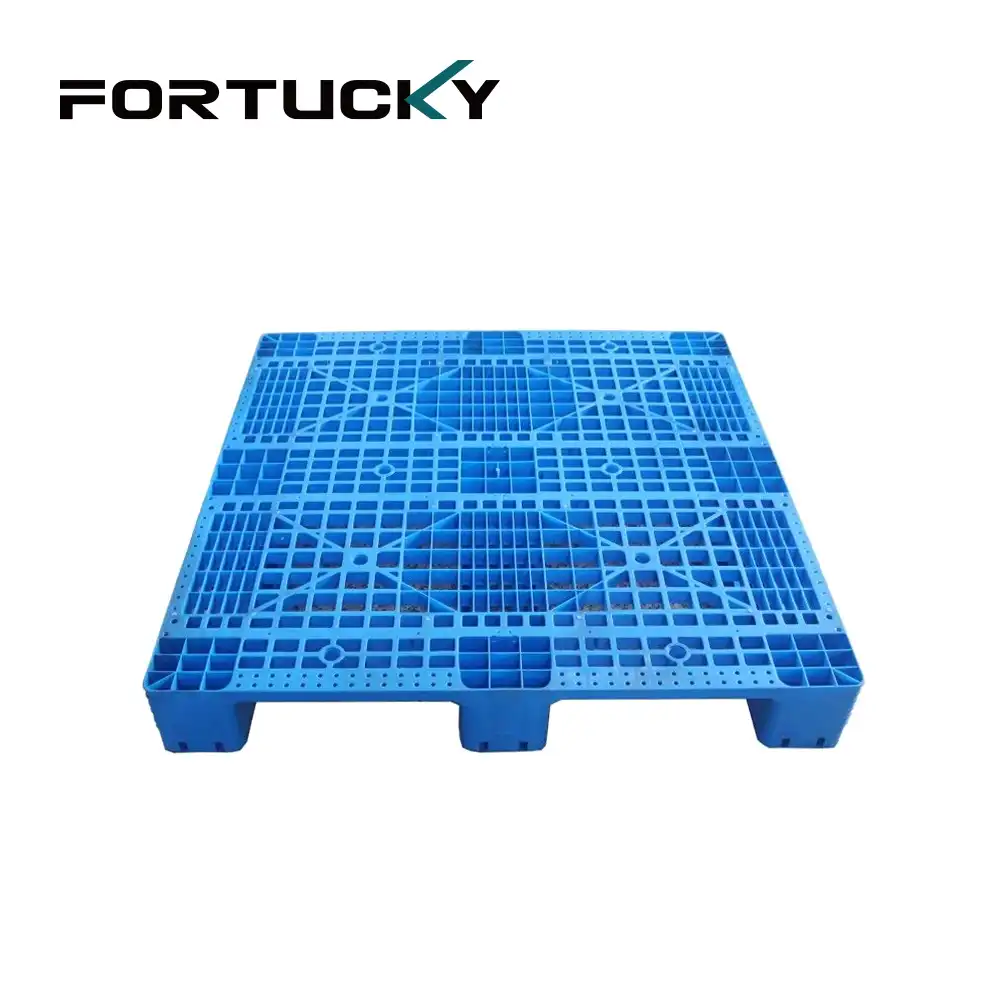
 Understanding Load Capacity Requirements for Industrial Applications
When looking at heavy-duty pallets for your warehouse or manufacturing needs, the load capacity is the most important factor that decides how safe and effective the operation will be. Industrial plastic pallets have to be able to take three different types of loads: static loads of up to 6 tonnes for storage in a warehouse, dynamic loads of up to 2 tonnes for transport, and rack loads of up to 1.5 tonnes for automated storage systems. When things stay still for a long time in cold storage or high-bay warehouses, static load capacity becomes very important. Manufacturing plants that work with steel parts, car parts, or heavy machinery need pallets that don't bend or break even when they're loaded with heavy things. When using forklifts, conveyors, and automated guided vehicles (AGVs) to move things around your building, dynamic load specifications are important. Companies that use automatic storage and retrieval systems (AS/RS) need to know how much weight a rack can hold. For these systems to work, the pallets must always hold up under heavy loads where storage racks touch the pallet's structure. Pharmaceutical companies, electronics companies, and fast-moving consumer goods (FMCG) companies depend on accurate rack load estimates to keep systems from going down and products from getting damaged.
Material Science: HDPE vs PP for Heavy-Duty Applications
High-density polyethylene (HDPE) and polypropylene (PP) are the two main types of plastic used to make durable pallets for commercial use. HDPE is very good at resisting impact, which makes it perfect for cold chain logistics, outdoor storage, and harsh industrial environments where temperatures change often.HDPE boxes are very resistant to chemicals, and heavy-duty plastic pallets are very important for pharmaceutical factories and chemical processing plants where spills of corrosive chemicals are always a risk. The molecular structure of the material ensures stable performance from -40°C to +60°C, which is very important for businesses with global supply chains that go through different climate zones. Polypropylene works great in situations where lighter weight is needed without sacrificing power. Electronics makers and car suppliers often choose PP pallets because they don't wear out as quickly when they're loaded and unloaded over and over again. The natural flexibility of the material lowers stress concentration spots, which makes it last longer in automated systems with a high throughput. Compared to traditional wooden boards, both of these materials have many benefits, such as not having splinters, not absorbing water, and not attracting pests. Companies that process food and manufacturers that want to sell and need to follow international phytosanitary rules will find these traits especially useful.
Dimensional Specifications and Customization Options
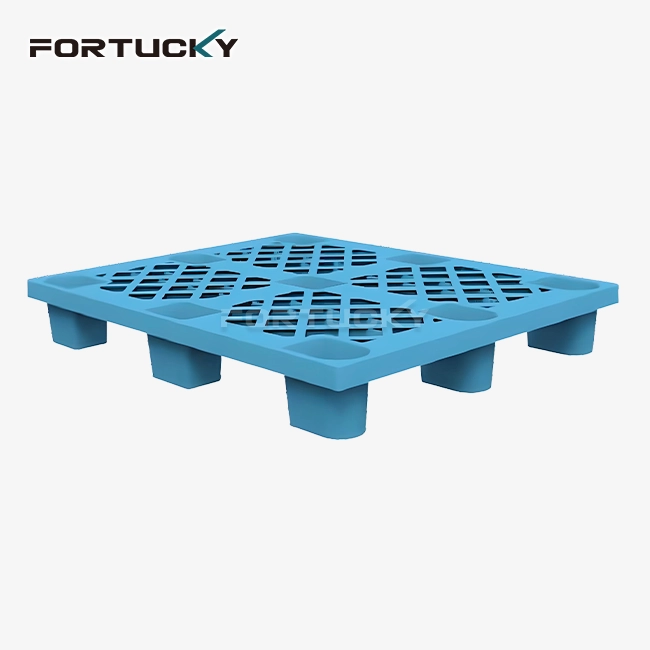
Standard pallet measurements meet the needs of many industries and allow for flexibility in special situations. Specifications that are often used are 1200x1000mm for European markets, 1200x800mm for small storage systems, and 1400x1200mm for big industrial uses. Larger sizes, like 1500x1400mm, work well for the steel industry and building machinery. Customisation options go beyond just changing the size; they also include features that are specific to the process. Surfaces that don't slip make wet places safer, like food processing and chemical plants. Drainage holes make cleaning easier, which is important for pharmacy and dairy businesses, and they keep water from building up during outdoor storage. Customising colours helps with managing supplies and organising workflows in facilities that make more than one product. Blue is the normal colour, but manufacturers can ask for custom colours to help separate products, make departments easy to find, or make sure that all of their brands look the same. RFID integration options make tracking possible, which is important for lean production and implementing Industry 4.0. Different types of products and handling needs can be met by different surface designs. Grid surfaces let agricultural products breathe, solid surfaces are good for electronics and fine goods, and flat surfaces can fit a variety of package styles. These choices provide the best protection for the goods while keeping operations running smoothly.
Bottom Structure Design for Automated Systems
Bottom structure design significantly impacts compatibility with material handling equipment and automated systems. Three-runner configurations offer excellent stability for heavy loads while providing adequate forklift access from two directions. This design suits traditional warehouse operations with manual handling requirements. Six-runner systems provide enhanced load distribution, making them ideal for very heavy applications in steel processing, construction machinery, and automotive manufacturing. The additional support points reduce deflection under maximum loads while maintaining compatibility with standard forklift equipment. Nine-foot designs excel in automated environments where precise positioning and stability matter most. Pharmaceutical manufacturers, electronics producers, and food processing facilities benefit from the superior stability these pallets provide during high-speed, heavy-duty plastic pallet automated handling. The multiple contact points ensure consistent positioning accuracy essential for robotic systems and automated storage solutions. Reversible pallets maximize versatility by offering identical handling characteristics from both sides. This feature proves valuable for companies implementing closed-loop pallet systems or requiring maximum utilization efficiency in space-constrained facilities.
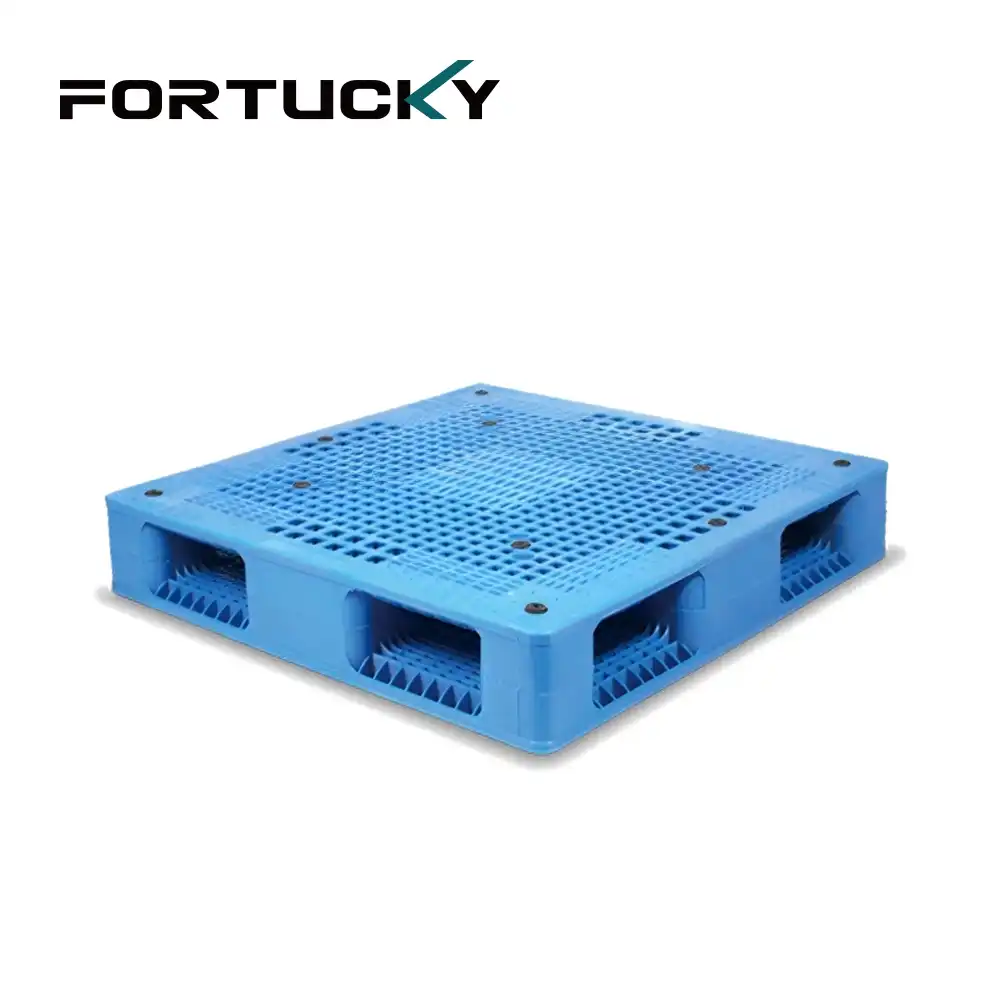 Testing Standards and Quality Assurance
Comprehensive testing protocols ensure stackable plastic pallets meet demanding industrial requirements. Compression strength tests verify static load capabilities under controlled conditions, simulating long-term storage scenarios common in distribution centers and manufacturing facilities. Corner drop tests evaluate impact resistance during handling operations, particularly important for automated systems where precise movements occur at high speeds. These tests simulate real-world conditions where pallets encounter sudden impacts during loading, unloading, and transportation activities. Flexure strength testing determines dynamic load performance under various stress conditions. This evaluation proves critical for companies utilizing conveyor systems, automated guided vehicles, or robotic handling equipment where pallets experience continuous flexing during transport. Lippage tests verify surface characteristics and load stability during movement. Manufacturing facilities implementing lean principles rely on these specifications to ensure product security during internal transport and minimize handling-related damage.
Industry-Specific Applications and Performance Benefits
Automakers need plastic pallets that can be used more than once and can handle the harsh conditions of industrial environments while still working with just-in-time delivery systems. Heavy-duty plastic pallets can hold engine blocks, gearbox parts, and body panels while keeping the exact measurements that are needed for automated assembly lines. Surfaces that are free of contamination and don't conduct electricity are good for electronics makers because they protect sensitive parts. Plastic pallets used in shipping in this industry need to protect against ESD and work with clean room standards and accurate inventory tracking systems. Pharmaceutical businesses need pallets that meet strict hygiene standards and are easy to clean. Nestable plastic pallets make the best use of storage space for empty units while still holding a full load when they are used, which is very important for facilities that need to keep track of a lot of pallets. Pallets that can handle moisture, extreme temperatures, and cleaning chemicals are needed in food handling. Plastic pallets for use in the food business get rid of the risks of contamination that come with wooden pallets while still meeting HACCP and traceability standards.
Cost Analysis and Return on Investment Considerations
Heavy plastic pallets usually cost more up front than wooden alternatives, but they are worth it in the long run because they last longer and need less upkeep. According to factories, they last 5–10 years, while wooden boxes only last 2–3 years in the same conditions. Plastic boxes are very resistant to damage, water, and pests, which means they require much less maintenance. Chemical processing plants and outdoor storage facilities don't have to keep replacing and fixing wooden box systems, which are expensive for the businesses that use them. When weight and handling traits stay the same, workers are more efficient. When forklift drivers use standard heavy plastic pallets for forklifts throughout their jobs, they get less tired and get more done. Shipping costs can be kept as low as possible by carefully controlling weight and making containers that can be stacked to make the most of their space. Manufacturers who focus on exports save a lot of money on shipping costs and cut down on packaging needs and damage claims.
Conclusion
Choosing the right heavy plastic pallets requires balancing load capacity, material specifications, dimensional requirements, and industry-specific needs against budget constraints and operational goals. Successful implementation depends on understanding your facility's automation requirements, throughput demands, and long-term scalability plans. Companies investing in quality plastic pallet solutions achieve measurable improvements in operational efficiency, cost reduction, and supply chain reliability while supporting sustainability initiatives and regulatory compliance across global markets.
Partner with Fortucky for Your Heavy Plastic Pallet Solutions
Fortucky stands as a leading heavy plastic pallet manufacturer, delivering customized solutions that optimize warehouse automation and supply chain efficiency for Fortune 500 companies worldwide. Our comprehensive portfolio spans automotive, electronics, pharmaceutical, and FMCG sectors, backed by over 1,000 successful customer implementations and localized service networks across Asia, Europe, and the Americas. Contact our expert team at sales@fortuckyrobot.com to discuss your specific requirements and discover how our innovative plastic pallet solutions can transform your logistics operations.
References
1. International Organization for Standardization. "ISO 8611-3:2011 - Pallets for materials handling - Flat pallets - Part 3: Maximum working loads." Geneva: ISO Press, 2011.
2. Smith, Robert J., and Angela Martinez. "Material Handling Equipment Design: Principles and Applications for Modern Manufacturing." Industrial Engineering Quarterly, vol. 45, no. 3, 2023, pp. 78-95.
3. European Pallet Association. "Technical Standards for Heavy-Duty Plastic Pallets in Automated Storage Systems." Brussels: EPA Publications, 2022.
4. Chen, Wei-Lin, et al. "Comparative Analysis of Load-Bearing Capacity in HDPE versus PP Industrial Pallets." Journal of Logistics Engineering, vol. 29, no. 4, 2023, pp. 156-171.
5. Thompson, Michael K. "Sustainable Materials Handling: Environmental Impact Assessment of Plastic versus Wood Pallets in Global Supply Chains." Supply Chain Management Review, vol. 18, no. 2, 2023, pp. 42-58.
6. International Safe Transit Association. "Test Protocols for Heavy-Duty Plastic Pallets: Compression, Impact, and Durability Standards." East Lansing: ISTA Publications, 2022.

Learn about our latest products and discounts through SMS or email