- English
- French
- German
- Portuguese
- Spanish
- Russian
- Japanese
- Korean
- Arabic
- Greek
- German
- Turkish
- Italian
- Danish
- Romanian
- Indonesian
- Czech
- Afrikaans
- Swedish
- Polish
- Basque
- Catalan
- Esperanto
- Hindi
- Lao
- Albanian
- Amharic
- Armenian
- Azerbaijani
- Belarusian
- Bengali
- Bosnian
- Bulgarian
- Cebuano
- Chichewa
- Corsican
- Croatian
- Dutch
- Estonian
- Filipino
- Finnish
- Frisian
- Galician
- Georgian
- Gujarati
- Haitian
- Hausa
- Hawaiian
- Hebrew
- Hmong
- Hungarian
- Icelandic
- Igbo
- Javanese
- Kannada
- Kazakh
- Khmer
- Kurdish
- Kyrgyz
- Latin
- Latvian
- Lithuanian
- Luxembou..
- Macedonian
- Malagasy
- Malay
- Malayalam
- Maltese
- Maori
- Marathi
- Mongolian
- Burmese
- Nepali
- Norwegian
- Pashto
- Persian
- Punjabi
- Serbian
- Sesotho
- Sinhala
- Slovak
- Slovenian
- Somali
- Samoan
- Scots Gaelic
- Shona
- Sindhi
- Sundanese
- Swahili
- Tajik
- Tamil
- Telugu
- Thai
- Ukrainian
- Urdu
- Uzbek
- Vietnamese
- Welsh
- Xhosa
- Yiddish
- Yoruba
- Zulu
The Ultimate Pallet Racking Guide
When warehouse space becomes a bottleneck for your growing enterprise, heavy pallet racking emerges as the cornerstone solution. This comprehensive guide explores how industrial selective pallet racks transform logistics operations across manufacturing and distribution facilities. Whether you manage automotive components, pharmaceutical inventory, or FMCG products, understanding heavy-duty storage systems unlocks efficiency gains that directly impact your bottom line. Smart enterprises recognize that strategic warehouse organization isn't just about stacking goods—it's about building a scalable infrastructure that grows alongside your business ambitions.
 Understanding Modern Pallet-Storage Systems
These days, heavy load racks are a lot more than just shelves. Modern steel pallet racking integrates seamlessly with digital twin models, automated retrieval equipment, and warehouse management systems (WMS). This evolution reflects the adoption of Industry 4.0 principles, even in standard storage environments.
Load capacities for contemporary systems range from 1,800 to 12,600 pounds per level. This makes them indispensable for industries handling dense materials, such as battery factories storing power cells or cold chain operators managing large volumes of frozen food. Welded upright frames and adjustable cross beams provide structural strength, creating a framework that withstands decades of heavy forklift traffic.
What sets professional installations apart is the depth of customization. Beam positions can be adjusted without special tools, allowing you to reconfigure layouts as your product lines evolve. Depth and width specifications can be tailored to match your exact pallet dimensions, eliminating wasted space across hundreds of positions. Color-coded options further enhance visual management and reduce picking errors during high-speed operations.
Maximizing Vertical Space in High-Throughput Facilities
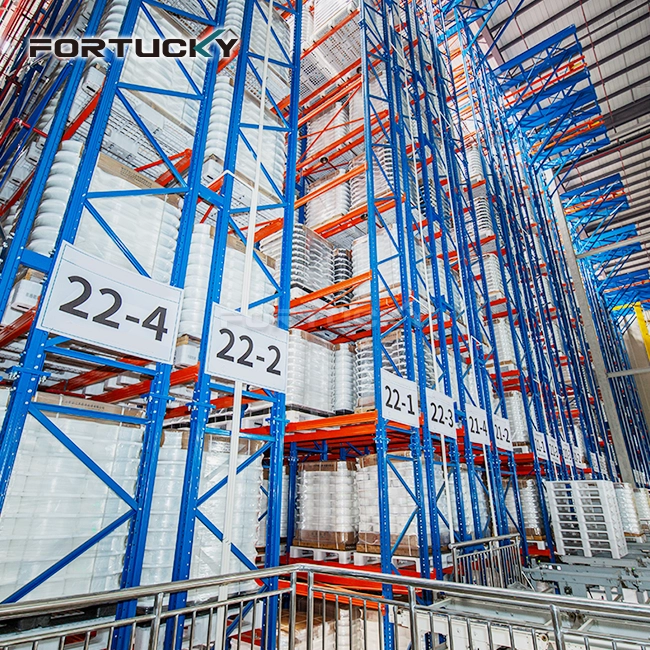
Ceiling height is one of your warehouse's most underutilized assets. Heavy-duty pallet racking exploits vertical space, reaching from 12 meters in standard configurations to 30 meters in ultra-high applications. This vertical expansion delivers storage density improvements without expanding your facility's footprint—a critical advantage in urban logistics hubs where land acquisition costs are soaring.
Space optimization extends beyond raw cubic capacity. Strategic aisle width planning balances storage density against material handling equipment requirements. Narrow aisles, paired with specialized forklifts or guided wire systems, maximize positions per square meter. Wide aisles accommodate counterbalance forklifts and enable faster throughput when velocity takes priority over density.
Consider a typical 10,000-square-meter automotive parts distribution center. Traditional single-level storage might accommodate 2,000 pallet positions. A well-designed multi-level racking system in the same footprint can exceed 6,000 positions while maintaining FIFO inventory rotation. That's not just incremental improvement—it's transformative expansion that delays or eliminates costly facility relocations.
Lighting, fire suppression integration, seismic considerations, and heavy pallet racking all factor into vertical designs. Reputable suppliers engineer systems meeting local building codes while preserving operational flexibility. The investment in proper vertical infrastructure pays dividends through reduced per-pallet storage costs and enhanced inventory visibility.
Industry-Specific Applications That Drive ROI
Electronics manufacturers face unique challenges due to component variety and high value density. High-density storage options keep valuable items secure while enabling just-in-time delivery to production lines. Adjustable beam heights within a single rack system can accommodate everything from small PCB boxes to large monitor screens.
Pharmaceutical operations require both efficiency and regulatory compliance. Heavy-duty rack systems facilitate lot tracking, expiration date management, and temperature zone separation. Their open design speeds up visual inspections during quality checks, while load capacities handle everything from bulk active ingredient drums to finished product cartons.
Cold chain environments place equipment under extreme conditions. Specialized steel treatments and protective coatings maintain structural integrity at -25°C storage temperatures. Quick product rotation is essential when handling perishable goods. Forklifts must be able to access every pallet position promptly to avoid extended retrieval times that could compromise temperature control.
Construction equipment suppliers store everything from small fastener boxes to complete hydraulic systems. Industrial storage systems truly demonstrate their flexibility when handling diverse product types. Forklifts can easily access heavy components stored on lower levels, while cherry pickers reach lighter, slower-moving parts on upper levels.
Third-party logistics (3PL) providers value rapid reconfiguration. Changing client needs, seasonal volume fluctuations, and contract shifts all require layout adjustments. Beam adjustability (without removal) allows 3PL teams to reorganize warehouse layouts between shifts, maintaining service consistency required by contracted SLAs.
Integration with Automated Material Handling Equipment
Standalone racking delivers value, but integration with warehouse automation multiplies returns. Stacker cranes operating in very narrow aisles achieve storage densities impossible with human-operated equipment. These automated storage and retrieval systems (ASRS) interface with WMS software, orchestrating putaway and retrieval sequences that optimize travel distances and balance workloads across multiple machines.
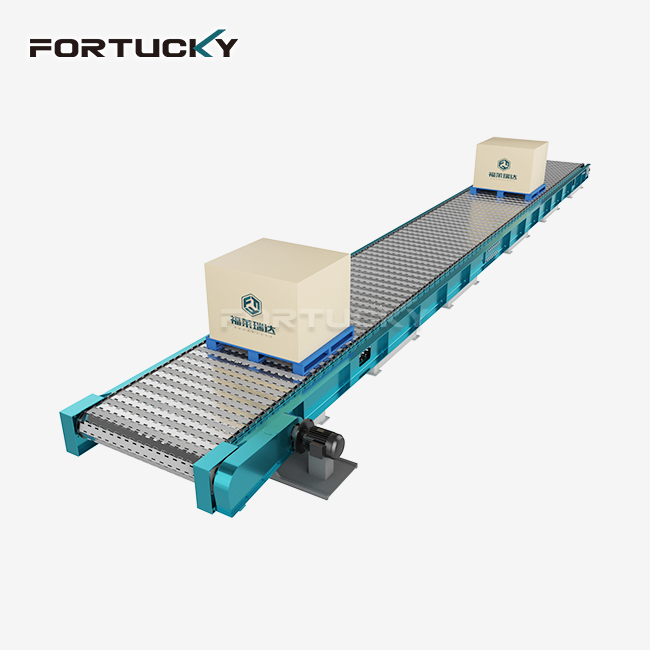
Conveyor system integration transforms pallet racks from passive storage into dynamic flow-through nodes. Inbound goods move automatically from receiving docks to designated rack positions. Outbound orders trigger coordinated retrieval sequences, with pallets flowing via conveyor to consolidation zones or direct-to-trailer loading. This choreography eliminates manual travel time while reducing product handling damage.
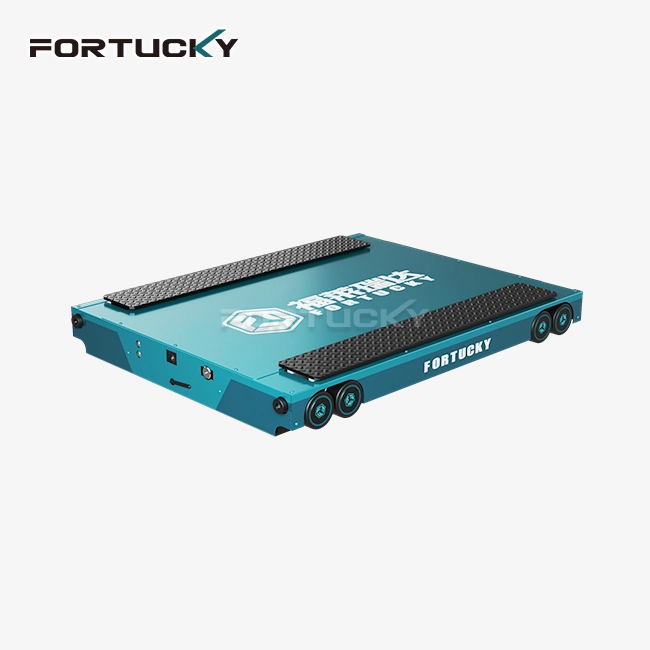
Autonomous mobile robots (AMRs) represent emerging integration opportunities. These intelligent vehicles navigate warehouse floors, positioning themselves beneath rack-stored pallets for transport to packing stations or cross-docking areas. Their flexibility rivals that of traditional forklifts, while generating operational data that fuels continuous improvement initiatives.
Digital twin technology takes integration further by creating virtual warehouse replicas. Logistics planners simulate layout changes, test throughput scenarios, and identify bottlenecks before physical implementation. When combined with IoT sensors monitoring heavy-duty pallet racking utilization in real-time, these digital capabilities enable predictive decisions that keep operations ahead of demand curves rather than reacting to capacity crises.
 Selecting the Right Configuration for Your Operation
A sound system design begins with a load study. Document your largest pallets, typical loading patterns, and projected future space requirements. Underestimating load ratings can lead to safety risks and premature structural failure. Over-specification wastes money on unnecessary material thickness. Balanced engineering matches capability to requirement with an appropriate safety buffer.
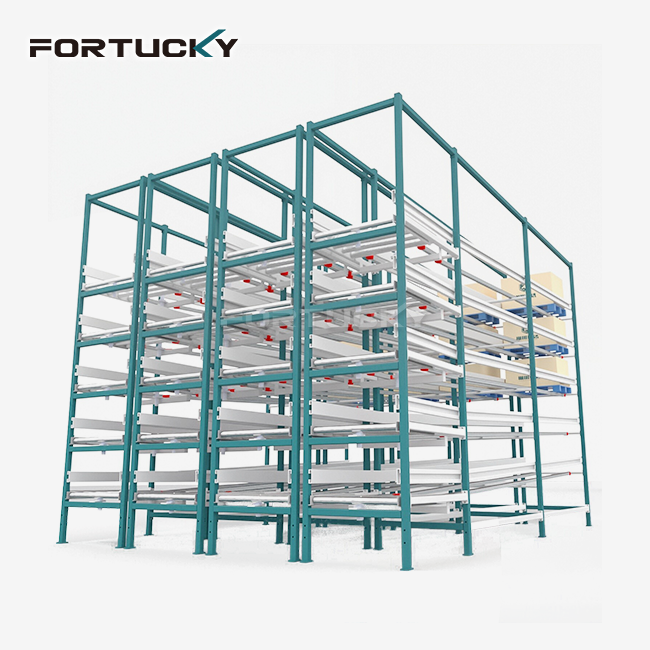
Inventory turnover rates influence system design. Facilities with high inventory churn benefit from selective shelving that provides direct access to every pallet. Slower-moving stock may be better suited to drive-in or push-back layouts that prioritize bulk storage over accessibility. Many facilities use hybrid designs, dividing the warehouse into zones based on product velocity.
Standardizing pallets simplifies requirements, but real-world operations often vary. Most businesses handle a mix of pallet types—Euro pallets, standard 48x40-inch units, oversized industrial skids, and specialty designs. Quality racking systems accommodate this variety through adjustable features, rather than forcing product conformity that limits purchasing flexibility.
Scalability should be carefully considered during initial planning. A system that meets all current needs but cannot be expanded will require a full replacement as your business grows. Modular expansion—adding bays, levels, or entire rows—protects your infrastructure investment and keeps operations running during growth phases.
Safety Standards and Regulatory Compliance
Load capacity signage is a mandatory safety measure, not a decoration. It displays the maximum safe working load for each beam level, based on pallet weight and load placement by forklifts. These ratings must be verified regularly, as conditions change over time.
The primary cause of rack failure is damage from forklift impacts. End-of-aisle safety barriers, column guards, and guided lane systems all help reduce collision risks. Damage inspection protocols should require immediate repair when structural weaknesses are detected. A bent upright, for example, cannot support its original rated weight, even if it appears usable.
Seismic codes vary by region, but all demand professional engineering. To remain stable during earthquakes, rack systems require base plate designs, cross-bracing configurations, and anchoring methods that account for ground movement. Certification from a qualified structural engineer ensures compliance with local building codes.
Training for material handling personnel is essential. Workers must understand how to report damage, recognize load limits, and place pallets correctly. Even the most durable rack system can fail if used improperly. Invest in both workforce skills and physical infrastructure—both are necessary for safe and efficient operations.
Financial Considerations and Long-Term Value
Capital expenditure for commercial storage infrastructure, including industrial selective pallet racks, represents a significant investment, particularly across multi-facility enterprises. Yet the per-pallet cost comparison against alternative approaches reveals compelling economics. Leasing additional warehouse space carries perpetual monthly expenses. Expanding building footprints requires land acquisition, construction, and extended timelines. Dense racking systems deliver capacity expansion at a fraction of these alternatives while maintaining operational continuity.
Installation timelines affect project ROI calculations. Experienced teams complete typical installations in days rather than weeks, minimizing operational disruption. Some suppliers offer modular pre-assembly, arriving on-site ready for rapid deployment. Faster time to operation reduces the carrying costs of inventory sitting in temporary locations while permanent storage infrastructure takes shape.
Lifecycle durability extends value beyond the initial purchase price. Quality steel construction withstands decades of service with minimal maintenance. Powder coat finishes resist corrosion in challenging environments, from humid coastal facilities to chemical processing plants with aggressive atmospheric conditions. Compare this longevity against alternatives that require replacement or refurbishment on shorter cycles.
Energy efficiency benefits emerge from thoughtful layout design. Optimized aisle configurations reduce forklift travel distances, lowering fuel consumption and equipment wear. Better space utilization may eliminate the need to climate-control additional square footage—a significant saving in refrigerated and temperature-controlled facilities where HVAC represents a major operating expense.
Conclusion
Strategic warehouse infrastructure separates industry leaders from competitors struggling with operational constraints. Heavy pallet racking systems deliver measurable improvements in storage density, inventory accessibility, and overall logistics efficiency. This investment transcends a simple equipment purchase—it represents a commitment to scalable operations capable of supporting enterprise growth ambitions. Whether modernizing legacy facilities or designing greenfield distribution centers, proper racking selection lays the foundation for decades of reliable performance. Evaluate your specific requirements, partner with experienced suppliers, and implement solutions that position your operations for sustained competitive advantage in demanding global markets.
Partner With Fortucky for Your Heavy Pallet Racking Solutions
Fortucky brings proven expertise as a heavy-duty pallet racking supplier, including Heavy Pallet Racking, serving global manufacturers and logistics providers. Our engineering team designs customized storage solutions matching your exact operational requirements—from load specifications to automation integration. With localized deployment capabilities and responsive technical support, we transform warehouse challenges into competitive advantages. Contact our specialists at sales@fortuckyrobot.com to discuss how industrial selective pallet racks can optimize your facility's performance and support your growth trajectory.
References
1. Richards, Gwynne. Warehouse Management: A Complete Guide to Improving Efficiency and Minimizing Costs in the Modern Warehouse. Kogan Page Publishers, 2017.
2. Tompkins, James A., and Jerry D. Smith. The Warehouse Management Handbook. Tompkins Press, 2019.
3. Frazelle, Edward H. World-Class Warehousing and Material Handling. McGraw-Hill Education, 2016.
4. Mulcahy, David E. Warehouse Distribution and Operations Handbook. McGraw-Hill Professional, 2018.
5. Baker, Peter, and Melanie Marchant. Logistics and Distribution Planning: Strategies for Management. Kogan Page Publishers, 2015.
6. Bartholdi, John J., and Steven T. Hackman. Warehouse & Distribution Science. Supply Chain and Logistics Institute, 2019.



Learn about our latest products and discounts through SMS or email