- English
- French
- German
- Portuguese
- Spanish
- Russian
- Japanese
- Korean
- Arabic
- Greek
- German
- Turkish
- Italian
- Danish
- Romanian
- Indonesian
- Czech
- Afrikaans
- Swedish
- Polish
- Basque
- Catalan
- Esperanto
- Hindi
- Lao
- Albanian
- Amharic
- Armenian
- Azerbaijani
- Belarusian
- Bengali
- Bosnian
- Bulgarian
- Cebuano
- Chichewa
- Corsican
- Croatian
- Dutch
- Estonian
- Filipino
- Finnish
- Frisian
- Galician
- Georgian
- Gujarati
- Haitian
- Hausa
- Hawaiian
- Hebrew
- Hmong
- Hungarian
- Icelandic
- Igbo
- Javanese
- Kannada
- Kazakh
- Khmer
- Kurdish
- Kyrgyz
- Latin
- Latvian
- Lithuanian
- Luxembou..
- Macedonian
- Malagasy
- Malay
- Malayalam
- Maltese
- Maori
- Marathi
- Mongolian
- Burmese
- Nepali
- Norwegian
- Pashto
- Persian
- Punjabi
- Serbian
- Sesotho
- Sinhala
- Slovak
- Slovenian
- Somali
- Samoan
- Scots Gaelic
- Shona
- Sindhi
- Sundanese
- Swahili
- Tajik
- Tamil
- Telugu
- Thai
- Ukrainian
- Urdu
- Uzbek
- Vietnamese
- Welsh
- Xhosa
- Yiddish
- Yoruba
- Zulu
When Is a Foldable Platform Hand Truck Trolley Better Than a Fixed Cart?
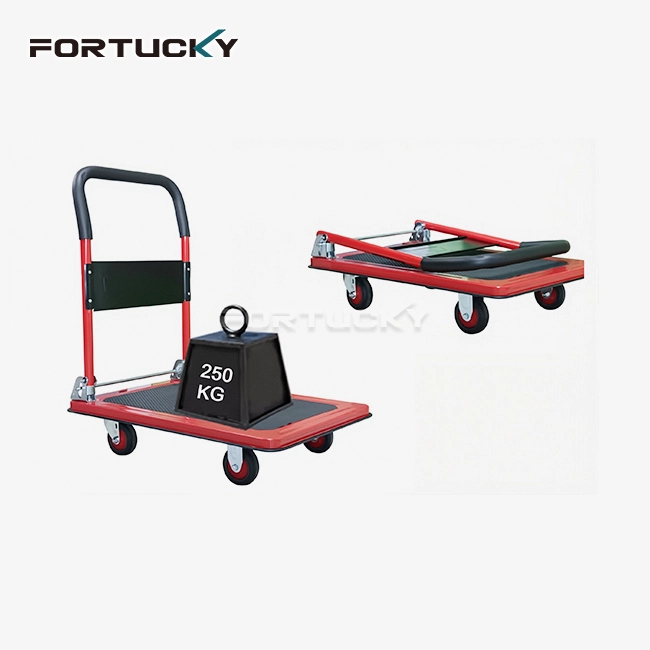
When operating freedom, limited storage space, and cost-effectiveness are top concerns, a foldable platform hand truck trolley often proves more practical than a fixed cart. These versatile material handling tools are ideal for warehouses with confined floor areas, where equipment must be used across multiple locations and set up or stowed away quickly. Unlike rigid fixed carts that permanently occupy the same footprint, foldable platform hand truck trolleys consume far less floor space when not in use, enabling warehouse managers to keep aisles clear during peak periods while still maintaining substantial material handling capacity.
 Understanding the Core Differences Between Foldable Platform Hand Truck Trolleys and Fixed Carts
Structural Design and Engineering Fundamentals
The engineering behind fixed and foldable platform hand truck trolleys reflects fundamentally different approaches to material transport. A foldable platform hand truck trolley typically features a flat load‑bearing deck attached to a steel or aluminium tube frame via a spring‑loaded hinge mechanism. This design allows the handle to be folded down flat against the deck, reducing the unit’s storage footprint by approximately 70%. The deck itself may be constructed from high‑impact injection‑moulded polyethylene with integral ribbed reinforcement, or from powder‑coated steel, depending on the required weight capacity and operating environment.
Fixed carts, in contrast, have welded or bolted frames that maintain a permanent shape, prioritising stability over storability. These units generally incorporate four fixed or swivel casters mounted permanently beneath the platform, with integrated side rails or handles. The rigid construction enables predictable load distribution and eliminates the mechanical weak points associated with articulating joints.
Wheel design also represents a significant differentiator. Most foldable platform hand truck trolleys are equipped with four heavy‑duty casters, two swivel and two fixed, featuring precision double ball bearings to minimise rolling resistance. Wheel materials range from thermoplastic rubber for quiet operation on smooth floors to polyurethane, which offers high load‑carrying capacity and wear resistance on rough surfaces. Fixed carts often employ larger wheels with wider treads to enhance stability when moving heavy or awkwardly shaped items.
Mobility and Operational Versatility
Manoeuvrability in confined areas is a key determinant of material‑handling efficiency. Foldable platform hand truck trolleys excel in this regard due to their light weight, typically ranging from fifteen to thirty pounds when empty. This low weight allows a single operator to move the equipment quickly between floors, load it onto delivery vehicles, or reposition it across a facility.
The folding mechanism adds an operational flexibility that fixed carts cannot match. During peak shipping periods, warehouse staff can deploy multiple units simultaneously; when volumes subside, they can fold and stack them upright against walls or in storage rooms. This adaptability is especially valuable for businesses with multiple locations that require equipment to be moved daily between sites. Courier services with small delivery fleets maximise cargo space by folding these trolleys flat inside vans, freeing room for additional packages while still enabling drivers to handle bulky boxes at drop‑off points.
Fixed carts are useful in situations where they need to be used all the time without needing to be set up, unlike a foldable platform hand truck trolley. For manufacturing assembly lines, rigid carts that stay at desks forever make things ready right away. Since there are no folding joints, there is no need for pre-operation safety checks. This speeds up the start of a job in production settings where time is of the essence.
When to Choose a Foldable Platform Hand Truck Trolley Over a Fixed Cart?
Space-Constrained Warehouse Environments
Warehouse space costs continue to rise across all industry sectors, making efficient utilisation a financial imperative rather than merely an operational convenience. In facilities operating at or near full capacity, floor space must be allocated carefully between active inventory, staging areas, and material‑handling equipment. Foldable platform hand truck trolleys directly address this challenge by transforming from functional tools into compact storage units less than six inches high when collapsed.
These trolleys are especially beneficial for distribution centres that experience seasonal traffic fluctuations. During peak periods, operations managers can deploy twenty or thirty folding units to meet heightened output demands. When volumes return to normal, the same equipment condenses into a storage footprint of just ten square feet, freeing valuable space for revenue‑generating products rather than idle equipment. This capability eliminates the need to maintain separate fleets for different activity levels.
Multi-Site Operations and Mobile Workforce Applications
Businesses with multiple locations require equipment that can move easily between sites without specialised transport. Foldable platform hand truck trolleys can be carried in passenger cars, service vans, and even public transportation, allowing field technicians and mobile service teams to bring professional‑grade material‑handling capacity wherever their work takes them. This flexibility is critical for retailers with multiple stores, temporary event setups, or on‑site service calls.
The aviation and aerospace industries rely heavily on foldable platform hand truck trolleys for ground support tasks, where tools must be moved between hangars, repair shops, and aircraft multiple times a day. The ability to fold units for transport in ground service vehicles reduces the need for excess equipment inventory and ensures that every work site has immediate material‑handling capability.
Load Handling Capacity With Enhanced Safety Features
Modern foldable platform hand truck trolleys challenge conventional assumptions about the trade‑off between flexibility and load capacity. Advances in materials science and structural engineering have enabled compact units to handle loads between 300 and 600 kilograms with ease. Decks are constructed from high‑impact polymers or reinforced steel, providing structural integrity under stress while weighing significantly less than traditional fixed cart materials.
Well‑designed folding models incorporate safety features such as foot‑activated locking pedals that secure the handle in the upright position and prevent accidental collapse during use. A resilient PVC rim around the platform edge protects both goods and building infrastructure from impact damage. Non‑slip platform surfaces, with textured coatings or raised patterns, prevent load shifting during transport—a common safety concern in manual material handling.
Professional‑grade foldable platform hand truck trolleys undergo static capacity tests in which they are loaded to twice their rated capacity while deck deflection is measured over twenty‑four hours. Performance standards require that displacement remain within 0.5% of the platform’s original dimensions. Dynamic fatigue testing involves moving loaded units over obstacle courses for 5,000 cycles, ensuring that welded joints, caster mounts, and folding mechanisms withstand repeated stress without failure.
Total Cost of Ownership and ROI Considerations
Lifecycle costs, rather than initial purchase price alone, are increasingly decisive in B2B procurement decisions. Foldable platform hand truck trolleys offer a low total cost of ownership for several economic reasons. Their reduced storage footprint lowers facility overhead by freeing floor space that can be used for revenue‑generating inventory rather than equipment storage. Companies operating in urban areas where warehouse space exceeds fifty dollars per square foot per year can achieve substantial savings by minimising equipment storage requirements.
Good foldable platform hand truck trolleys and portable folding flatbed carts don't need much maintenance because they are mechanically simple and only have a few moving parts, like wheels and folding joints. Replacement parts, such as wheels, axles, and platform surfaces, are easy to find and can usually be installed with simple hand tools, so you don't need to hire expert repair staff. Under normal industrial use, commercial-grade foldable platform hand truck trolleys have an average service life of five to eight years. This gives planning for capital equipment a way to plan for reliable depreciation schedules.
Insurance and risk‑management considerations also favour equipment that reduces workplace injury exposure. The light weight of foldable platform hand truck trolleys reduces physical strain when moving heavy tools, potentially lowering workers’ compensation claims related to musculoskeletal injuries. Their compact storage footprint improves pedestrian safety in high‑traffic areas, another common source of workplace accidents.
 How to Evaluate and Select the Right Foldable Platform Hand Truck/Trolley?
Critical Performance Specifications for Industrial Applications
Procurement professionals must evaluate several technical factors when selecting material‑handling equipment. The load capacity rating indicates the maximum weight a unit can safely carry under normal operating conditions. Best practice suggests choosing models rated twenty to thirty percent above typical load requirements, to accommodate occasional overloading and to extend equipment life by reducing stress on structural components.
Platform dimensions directly affect suitability for different product types. Standard sizes range from 24 by 36 inches to 30 by 48 inches, with larger variants capable of accommodating palletised loads and bulk cases. The platform surface material influences both durability and maintenance frequency. Plywood decking is an option for general use, while injection‑moulded polymer surfaces are preferred in pharmaceutical or food processing environments because they resist moisture, chemicals, and microbial growth.
Caster specifications determine ease of movement and floor compatibility. Wheel width affects the trolley’s ability to traverse obstacles and uneven surfaces; larger diameters roll more smoothly over expansion joints and floor irregularities. Material hardness, measured on the Shore A scale, influences rolling resistance and floor protection. Softer compounds provide quieter operation and reduced floor marking but have lower load capacity and shorter service life.
Customization Options and Industry-Specific Requirements
Leading material‑handling suppliers offer customisation to meet the needs of specific industries. Adjustable handle heights accommodate different operator statures and ergonomic preferences, reducing physical strain during extended use. Platform edge solutions such as removable side panels or folding extension wings allow larger items to be carried while maintaining a compact storage footprint.
Industry‑specific certifications are critical in controlled environments. Pharmaceutical companies require equipment that complies with FDA standards for material composition and surface finish. Food processing plants need NSF‑certified components that resist bacterial growth and withstand frequent cleaning. Automotive parts suppliers often request units with grounding straps and static‑dissipative casters to protect sensitive electronic components from electrostatic discharge.
Colour coding and identification marking systems help businesses track equipment across large facilities. Custom powder coating in corporate or departmental colours facilitates rapid visual identification and prevents equipment from migrating between operating areas. Engraved or stamped identification numbers simplify asset management, supporting preventive maintenance scheduling and usage analysis.
Supplier Verification and Quality Assurance Standards
Sourcing from reputable manufacturers and distributors protects procurement investments by ensuring product performance and providing after‑sales support. B2B buyers should verify that potential suppliers hold ISO 9001 quality management certification, indicating a structured approach to product consistency and continuous improvement. Compliance with EN 1757‑3 safety standards and TUV/GS approval provide independent confirmation that designs meet established safety requirements.
Warranty terms reflect the manufacturer’s confidence in product durability and expected lifespan. Comprehensive warranties covering structural components for three to five years indicate robust construction. Shorter or more restrictive warranties may signal lower manufacturing standards. Parts availability and the supplier’s inventory depth are essential for operational continuity, particularly for businesses in remote locations or those requiring rapid repairs to maintain production schedules.
Suppliers can do more than just send products; they can also help with installation, train operators, and give expert advice. Suppliers that offer site assessment services that suggest the best equipment setups, including lightweight foldable storage trolleys, based on process analysis and space constraints, are helpful for companies that want to improve how they handle materials in multiple locations. Instead of just completing purchase orders, this interactive method helps procurement teams come up with solutions that make operations better in a way that can be measured.
Conclusion
The choice between a foldable platform hand truck trolley and a fixed cart should be guided by operational objectives such as space efficiency, flexibility, and total cost of ownership. Collapsible designs excel in environments where floor space is at a premium, operations span multiple sites, or fluctuating capacity requirements dictate variable material‑handling needs. These units handle professional loads while occupying minimal space when not in use, allowing businesses to maximise storage utilisation without sacrificing functional capability. High‑quality foldable platform hand truck trolleys incorporate robust engineering, comprehensive safety features, and the latest materials science innovations, making them at least as capable as fixed carts in most workplace settings. Procurement professionals who evaluate lifetime costs rather than upfront prices consistently find that collapsible models offer superior return on investment through reduced facility expenses, easy maintenance, and broad operational adaptability.
FAQ
1. What maximum load capacity should I specify for industrial applications?
Professional‑grade foldable platform hand truck trolleys typically offer load capacities ranging from 300 to 600 kilograms. Purchasing best practice recommends selecting models rated twenty to thirty percent above your normal load requirements, to accommodate occasional overloading and to prolong equipment life. For applications that consistently use full capacity, consider models with reinforced decks and heavy‑duty caster components engineered for sustained high‑load operation.
2. Are foldable trolleys suitable for temperature-controlled environments?
Quality foldable platform hand truck trolleys perform well in cold‑chain operations and chilled warehouses, provided they are constructed with appropriate materials. Stainless steel frames resist corrosion in damp conditions, and specialised caster materials retain flexibility and rolling characteristics at sub‑zero temperatures. Pharmaceutical and food preparation applications should verify that materials are NSF‑certified and comply with industry sanitation standards to meet regulatory requirements for cleanability and microbial resistance.
3. How do foldable trolleys compare to fixed carts in total cost analysis?
Lifecycle cost analyses consistently favour foldable platform hand truck trolleys for businesses that require adaptability or have limited storage space. Their reduced storage footprint lowers facility operating costs, and their simple mechanical design demands less maintenance than specialised fixed‑cart configurations. Businesses in high‑real‑estate‑cost areas realise particularly strong returns by converting unused floor space from equipment storage into revenue‑generating areas.
Partner With Fortucky for Advanced Material Handling Solutions
Fortucky's specialized material handling portfolio has everything logistics managers and purchasing teams need to find trusted Foldable platform hand truck trolley providers. Our engineering team has worked with Fortune 500 companies and global transportation providers in the pharmaceutical, electronics, FMCG, and automobile industries for a long time. We provide personalized equipment setups that work well with current production and warehouse management systems. Our services are backed by support networks in Asia, Europe, and the Americas. Our intelligent production sites that are connected to 5G make sure that quality control is always the same and that large orders are filled quickly. Our research and development (R&D) skills allow for deep customization to meet specific operational needs. Get in touch with our technical experts at sales@fortuckyrobot.com to talk about your specific material handling problems and get full specs for Foldable platform hand truck trolley models made for tough industrial settings.
References
1. Thompson, R. & Martinez, L. (2023). Material Handling Equipment Selection: Engineering and Economic Analysis for Modern Warehouses. Industrial Press.
2. Chen, W. (2024). "Comparative Performance Analysis of Collapsible versus Fixed Material Handling Equipment in High-Density Distribution Centers." Journal of Supply Chain Management Technology, 18(3), 234-251.
3. European Committee for Standardization. (2022). EN 1757-3: Safety of Industrial Trucks – Pedestrian Controlled Trucks – Part 3: Platform Trucks. CEN Publishing.
4. Anderson, K. & Patel, S. (2023). "Total Cost of Ownership Models for Material Handling Equipment Procurement in Multi-Site Operations." International Journal of Logistics Management, 34(2), 412-429.
5. Industrial Truck Association. (2024). Safety Standards and Best Practices for Manual Material Handling Equipment. ITA Technical Publications.
6. Rodriguez, M., Kim, J., & O'Brien, T. (2023). "Ergonomic Assessment of Foldable Platform Trolleys in Manufacturing Environments: A Longitudinal Study." Applied Ergonomics in Industrial Settings, 56(4), 178-195.
Learn about our latest products and discounts through SMS or email