- English
- French
- German
- Portuguese
- Spanish
- Russian
- Japanese
- Korean
- Arabic
- Greek
- German
- Turkish
- Italian
- Danish
- Romanian
- Indonesian
- Czech
- Afrikaans
- Swedish
- Polish
- Basque
- Catalan
- Esperanto
- Hindi
- Lao
- Albanian
- Amharic
- Armenian
- Azerbaijani
- Belarusian
- Bengali
- Bosnian
- Bulgarian
- Cebuano
- Chichewa
- Corsican
- Croatian
- Dutch
- Estonian
- Filipino
- Finnish
- Frisian
- Galician
- Georgian
- Gujarati
- Haitian
- Hausa
- Hawaiian
- Hebrew
- Hmong
- Hungarian
- Icelandic
- Igbo
- Javanese
- Kannada
- Kazakh
- Khmer
- Kurdish
- Kyrgyz
- Latin
- Latvian
- Lithuanian
- Luxembou..
- Macedonian
- Malagasy
- Malay
- Malayalam
- Maltese
- Maori
- Marathi
- Mongolian
- Burmese
- Nepali
- Norwegian
- Pashto
- Persian
- Punjabi
- Serbian
- Sesotho
- Sinhala
- Slovak
- Slovenian
- Somali
- Samoan
- Scots Gaelic
- Shona
- Sindhi
- Sundanese
- Swahili
- Tajik
- Tamil
- Telugu
- Thai
- Ukrainian
- Urdu
- Uzbek
- Vietnamese
- Welsh
- Xhosa
- Yiddish
- Yoruba
- Zulu
Why an Electric Flatbed Trolley May Be Best for Moving Heavy Loads?
It's not enough to just have something that can move big things across your building or production floor; you also need something that can do it quickly, safely, and without putting your workers or your budget at risk. An electric flatbed trolley directly addresses this challenge by combining motorised propulsion with a flexible platform design. It eliminates the physical strain of manual handling and accelerates material flow. With steel construction and intelligent drive systems, these battery‑powered units enable operators to move loads of up to one tonne or more with minimal effort, reduced injury risk, and significantly lower operating costs than conventional manual carts or forklifts in confined spaces.
 Understanding Electric Flatbed Trolleys: Features and Benefits
Electric flatbed trolleys have transformed internal transport operations. Unlike traditional manual carts that demand repeated physical effort, these powered units move loads automatically via built‑in electric drive systems. As a result, musculoskeletal injuries have decreased markedly—a critical improvement in industries and logistics where workers routinely push or pull heavy carts over long distances.
Core Technical Architecture
Modern electric flatbed trolleys are equipped with powerful motors ranging from 500W to 1200W, typically paired with 24V, 36V, or 48V battery systems. Our model features an 800W motor and a 48V/20Ah lithium‑ion battery, delivering zero emissions and very low noise—ideal for hospitals or pharmaceutical plants where quiet operation is essential. This configuration supports loads up to one tonne and reaches speeds of up to 25 km/h, balancing power and safety.
The platform is constructed from heavy‑gauge structural steel, usually powder‑coated or galvanised to resist corrosion in harsh conditions. Deck sizes accommodate standard pallets, oversized components, or custom cases, making these trolleys versatile across industries from automotive parts to cold‑chain logistics.
Operational Comfort and Adaptability
Operator ergonomics are vital for safety and efficiency. Newer models feature 360‑degree rotatable seats, allowing drivers to work facing forward or backward depending on the load and available space. This adaptability is especially useful in congested aisles or production lines where visibility and manoeuvrability are key to productivity.
The four‑wheel design and adjustable steering angles (40 to 60 degrees) enable easy navigation in tight spaces and around corners. Operators can manoeuvre around machinery, racking, and personnel without the fatigue associated with manual equipment. These design factors directly protect worker wellbeing while meeting throughput targets in large factories.
Environmental and Economic Impact
Replacing internal‑combustion forklifts or gasoline‑powered tuggers with electric flatbed trolleys aligns with environmental goals and regulatory requirements. Electric trolleys produce no tailpipe emissions, improving indoor air quality—particularly important in food processing, electronics manufacturing, and pharmaceutical production where contamination control is critical.
In operational terms, electricity is far cheaper than gasoline or propane. Advances in battery technology have made lithium‑ion systems superior to traditional lead‑acid batteries: they support opportunity charging, offer over 2,000 cycle lives, and require minimal maintenance. These factors lower total cost of ownership while enabling continuous shift operations without long charging interruptions.
How Electric Flatbed Trolleys Work and What Makes Them Effective?
Understanding the technical operation helps procurement teams match performance specifications to practical needs. The propulsion system is based on an electric motor controlled by programmable electronics that govern speed, regenerative braking, and hill‑hold anti‑rollback functions.
Drive System and Battery Technology
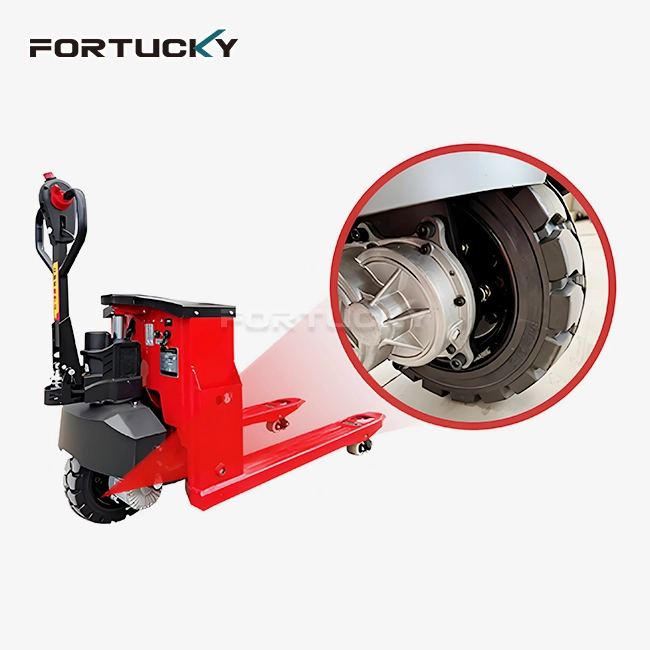
The electric motor converts battery power into rotational force transmitted through a transaxle or hub motor. High‑quality controllers allow adjustable speed limits, acceleration rates, and automatic deceleration when cornering, improving safety compliance and operator confidence.
Choosing the right batteries has a big effect on how well the system works. Lithium-ion phosphate (LiFePO₄) batteries are now the most popular choice because they have a higher energy density, can be charged faster, and have built-in battery management systems (BMS) that keep cells balanced and stop overcharging. A standard 48V/20AH battery system can run continuously for six to eight hours on a single charge, which is enough to run full work shifts without stopping in an electric flatbed trolley.
Load Handling Versatility
The open platform design enables electric flatbed trolleys to carry a wide range of materials. Factories transport raw materials, work‑in‑progress, and finished goods. Logistics centres move palletised packages, oddly shaped cargo, or bulky containers that standard pallet jacks cannot safely handle.
Items such as automotive battery packs and construction machinery parts can be securely placed on the flat surface, with optional side rails or custom fixtures. Unlike forklifts, where uneven loads can compromise stability, flatbed designs have a low centre of gravity, enhancing stability and reducing tip‑over risk even on uneven floors.
Performance in Varied Environments
Industrial settings present unique challenges. Smooth concrete floors in distribution centres differ from rough surfaces in cold storage facilities (below freezing) or epoxy‑coated factory floors exposed to coolants. Quality electric flatbed trolleys are fitted with pneumatic or solid rubber tyres selected according to floor type, ensuring consistent grip and a smooth ride.
Extreme temperatures can affect performance. Cold‑chain operations require carts rated for sub‑zero conditions, with battery systems that retain charge in low temperatures. Conversely, high‑heat environments such as foundries or steel mills need cooling systems and heat‑resistant components to prevent premature wear.
Comparing Electric Flatbed Trolleys to Other Solutions in Heavy Load Handling
Choosing material‑handling equipment requires weighing the pros and cons of different technologies against specific operational contexts. Electric flatbed trolleys offer a unique blend of capabilities between manual carts and heavy‑duty trucks, with benefits that procurement managers focused on efficiency will appreciate.
Manual Trolleys: The Hidden Costs
Manual push carts have the lowest initial purchase price, but they incur significant hidden costs in lost time and injury risk. Studies show that repeatedly pushing or pulling loads over 200 kg increases the incidence of joint disorders, leading to workers' compensation claims and absenteeism.
Fatigued workers move more slowly or require extra help to move heavy items safely, reducing productivity. Electric‑powered units eliminate these issues, enabling a single operator to move heavy loads over long distances with ease. When accounting for wage savings and reduced injury costs, the investment typically pays back within 12 to 24 months.
Electric Pallet Jacks: Application Differences
Electric pallet jacks excel at moving standard palletised loads on flat warehouse floors. However, their fork‑based design limits flexibility when handling non‑palletised materials, oversized components, or items needing custom support fixtures.
Electric flatbed trolleys, with their flat, unobstructed platform, are better suited for items that do not fit on standard pallets—such as automotive body panels, HVAC ducting, industrial pipes, or construction materials. The open design speeds up loading and unloading from multiple directions, especially in small assembly areas where fork insertion is not possible.
Forklift Alternatives for Specific Applications
Forklifts are still needed for high storage and recovery, but they aren't very good at moving things horizontally over short to medium distances compared to an electric flatbed handling vehicle. The costs of running the business include paying qualified operators, buying fuel or energy for bigger battery systems, and keeping up with the upkeep of complicated hydraulic and mast systems.
Electric flatbed trolleys require minimal operator training, consume less energy, and can navigate tight spaces that conventional forklifts cannot. In mixed‑use facilities, using trolleys for horizontal movement frees up forklifts for their primary purpose, maximising overall asset utilisation.
Procurement Guide: How to Buy the Right Electric Flatbed Trolley
Strategic purchasing goes beyond comparing specification sheets. Decision‑makers must consider how a new trolley integrates with existing workflows, supports long‑term business goals, and delivers a clear return on investment.
Critical Specification Parameters
Load capacity is the primary selection criterion. Heavy‑duty models can handle up to 5,000 kg, while light‑duty versions start around 300 kg. Accurately measuring maximum and average load weights helps avoid under‑sizing (leading to premature failure) or over‑sizing (adding unnecessary cost).
Platform dimensions must be large enough to accommodate typical loads while still fitting through doorways, aisles, and elevator openings. Check clearance heights for overhead obstructions and turning radii in congested areas. For varied handling heights, consider platforms with special profiling or adjustable deck heights.
Supplier Evaluation Criteria
Battery capacity directly determines operating runtime. Analyse daily transport routes and cycle frequencies to determine required ampere‑hour ratings. Lithium‑ion systems are more expensive upfront but offer faster charging, longer life, and opportunity charging during breaks, keeping operations running continuously.
It is important to work with manufacturers that provide comprehensive lifecycle support. Technical assistance during specification development ensures the equipment meets application needs. Customisation options—such as specialised deck surfaces, built‑in scales, or fleet management connectivity—can add value.
Integration with Digital Systems
Geographic proximity affects service response times. Suppliers with regional parts and service centres reduce downtime when repairs are needed. Warranties should cover critical components like battery systems, controllers, and motors, not just basic parts.
Industry 4.0 projects stress the importance of connected technology that gives real-time information about operations. Through Internet of Things (IoT) connections, advanced electric flatbed trolleys and heavy-duty long-distance electric transportation vehicles communicate usage data, battery state, and repair alerts to Warehouse Management Systems (WMS) and Manufacturing Execution Systems (MES).
Conclusion
Electric flatbed trolleys represent a sound investment for businesses prioritising operational efficiency, worker safety, and environmental sustainability. By automating heavy‑load movement while retaining flexibility across diverse industrial settings, they address daily challenges faced by manufacturing and logistics leaders. Advanced battery technology, ergonomic design, and robust construction yield measurable improvements in throughput, cost savings, and regulatory compliance.
Successful deployment requires careful specification aligned with actual operational needs, collaboration with suppliers offering full lifecycle support, and commitment to training and maintenance protocols that ensure safety and reliability. As industries embrace automation and digital transformation, electric flatbed trolleys provide an accessible entry point that delivers rapid value while supporting broader strategic objectives.
FAQ
1. What maximum load capacity should we specify for our application?
The load capacity should be based on the heaviest routine load plus a safety margin. Manufacturers offer electric flatbed trolleys ranging from 300 kg to over 5,000 kg. Accurately weighing regular loads prevents overworking and premature wear. Consult suppliers about duty cycle ratings if your operation involves continuous heavy loads rather than intermittent light ones.
2. How long does battery charging typically require?
Standard lead‑acid batteries take eight to ten hours for a full charge, so multi‑shift operations need battery swap programmes. Lithium‑ion systems charge in two to four hours and allow opportunity charging during breaks, eliminating the need for battery changes. Fast‑charging options reduce downtime but may accelerate long‑term capacity loss if used exclusively.
3. Can electric flatbed trolleys operate in cold storage environments?
Specialised sub‑zero models feature insulated battery compartments, low‑temperature lubricants, and enhanced seals to prevent moisture ingress. Standard units lose battery power and become more brittle in freezing conditions. When purchasing, clearly define your environmental operating ranges to ensure the equipment will perform reliably in your specific conditions.
Partner with Fortucky for Your Material Handling Solutions
Choosing the right electric flatbed trolley provider is important for long-term business success. Fortucky has decades of experience working with over 1,000 customers around the world in heavy industry, electronics, medicines, and the car industry. Our engineering team works closely with buying managers and operations leaders to create unique solutions for moving materials that work with the way things are already done.
As a top electric flatbed trolley maker, we keep up-to-date factories with 5G-enabled production systems that make sure quality is always high and deliveries are quick. Our national service network in Asia, Europe, and the Americas gives you quick technical support, access to extra parts, and help right where you need it most.
Email our team at sales@fortuckyrobot.com to talk about how we can help you move big things. We provide thorough talks, in-depth ROI studies, and demonstration units so that you can check the performance of our products before committing to buying them on a large scale for your fleet. Discover the competitive benefits that have made Fortucky the partner of choice for Fortune 500 companies and world leaders in its field.
References
1. Materials Handling Institute. (2022). Ergonomic Guidelines for Manual Material Handling. Charlotte: MHI Publications.
2. National Safety Council. (2021). Injury Facts: Workplace Safety Data and Trends. Itasca: NSC Press.
3. Industrial Truck Association. (2023). Safety Standards for Low-Lift and High-Lift Trucks. Washington: ITA Technical Committee.
4. Battery University. (2023). Lithium-Ion Battery Care and Maintenance Practices. Cadex Electronics Reference Library.
5. Occupational Safety and Health Administration. (2022). Powered Industrial Trucks Standard 1910.178. Washington: US Department of Labor.
6. International Organization for Standardization. (2021). ISO 3691-1: Industrial Trucks—Safety Requirements and Verification. Geneva: ISO Standards Catalog.
Learn about our latest products and discounts through SMS or email