- English
- French
- German
- Portuguese
- Spanish
- Russian
- Japanese
- Korean
- Arabic
- Greek
- German
- Turkish
- Italian
- Danish
- Romanian
- Indonesian
- Czech
- Afrikaans
- Swedish
- Polish
- Basque
- Catalan
- Esperanto
- Hindi
- Lao
- Albanian
- Amharic
- Armenian
- Azerbaijani
- Belarusian
- Bengali
- Bosnian
- Bulgarian
- Cebuano
- Chichewa
- Corsican
- Croatian
- Dutch
- Estonian
- Filipino
- Finnish
- Frisian
- Galician
- Georgian
- Gujarati
- Haitian
- Hausa
- Hawaiian
- Hebrew
- Hmong
- Hungarian
- Icelandic
- Igbo
- Javanese
- Kannada
- Kazakh
- Khmer
- Kurdish
- Kyrgyz
- Latin
- Latvian
- Lithuanian
- Luxembou..
- Macedonian
- Malagasy
- Malay
- Malayalam
- Maltese
- Maori
- Marathi
- Mongolian
- Burmese
- Nepali
- Norwegian
- Pashto
- Persian
- Punjabi
- Serbian
- Sesotho
- Sinhala
- Slovak
- Slovenian
- Somali
- Samoan
- Scots Gaelic
- Shona
- Sindhi
- Sundanese
- Swahili
- Tajik
- Tamil
- Telugu
- Thai
- Ukrainian
- Urdu
- Uzbek
- Vietnamese
- Welsh
- Xhosa
- Yiddish
- Yoruba
- Zulu
Why Choose Blow Moulding Plastic Pallet?
Blow Moulding Plastic Pallets are a smart investment for companies looking to upgrade their material handling operations. Manufactured as a single seamless piece, these pallets eliminate the weak points found in traditional pallets. They offer superior impact resistance even in freezing conditions or high‑speed shipping environments. Designed to be lightweight, with a smooth surface, they can support static loads of up to 6 tonnes. These features address key challenges faced by procurement managers in industrial and logistics sectors, including durability, operating costs, and regulatory compliance.
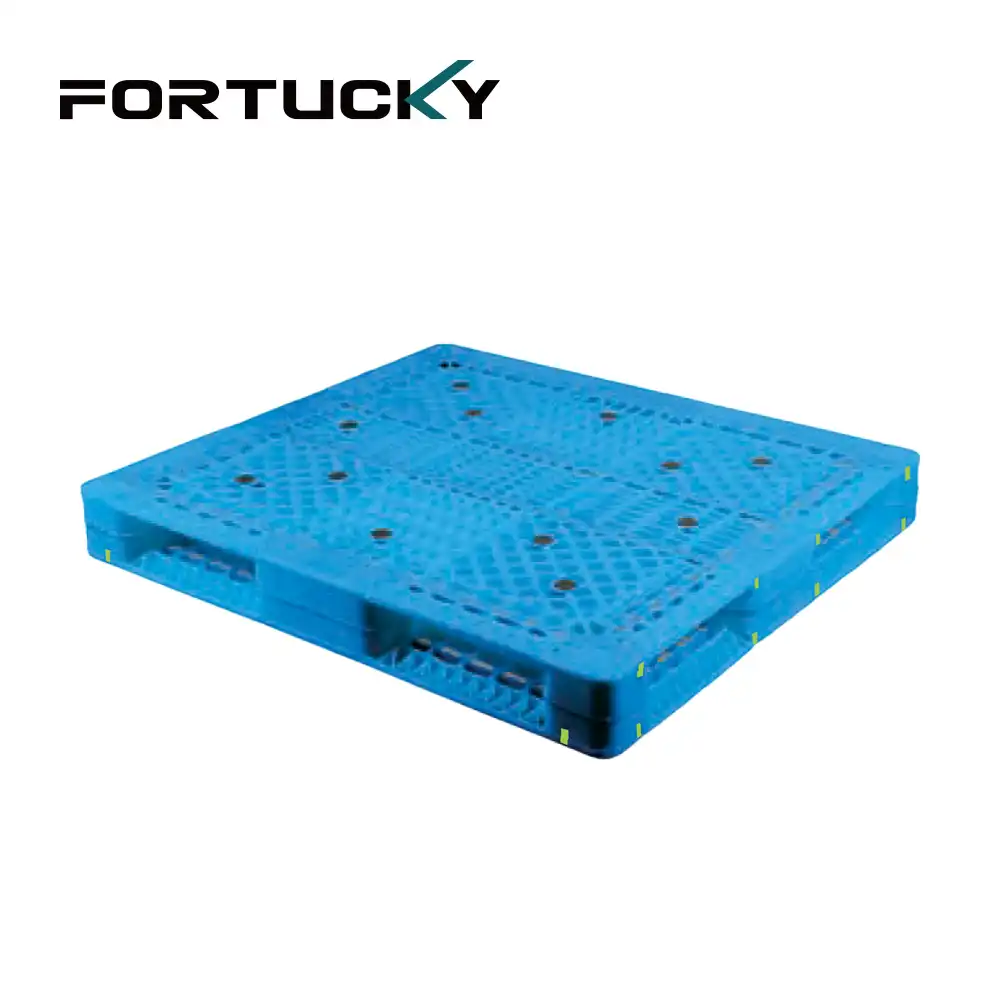
 Understanding Blow Moulding Plastic Pallets
A specialised blow moulding process transforms high‑density polyethylene (HDPE) or polypropylene (PP) into durable handling platforms. Molten plastic is expanded inside precision moulds using compressed air, creating hollow‑core structures that are both strong and lightweight. This technique differs significantly from injection moulding, where solid plastic fills the cavity, resulting in heavier products and higher material costs.
The Production Process Explained
In blow moulding, plastic resin is heated to a pliable state and extruded through a die to form a parison—a tube‑like shape. This parison is enclosed in a mould, and compressed air inflates it against the mould walls to achieve the final shape. The hollow core maintains structural strength by distributing forces while minimising material usage. Cooling systems rapidly solidify the plastic, and automated equipment removes finished pallets for quality inspection.
Material Selection and Performance
HDPE and PP offer distinct advantages in transport applications. HDPE provides excellent chemical resistance and performs reliably from ‑40°C to 70°C, making it suitable for cold‑chain food and pharmaceutical handling. PP offers greater stiffness and higher temperature tolerance, which is beneficial for automotive and electronic applications exposed to heat. Both materials are fully recyclable, supporting circular economy initiatives that align with corporate sustainability goals.
Dimensional Flexibility for Diverse Applications
Different industries require different dimensions. Common specifications include 1200×1000mm for European transport networks, 1200×800mm for retail distribution, and 1500×1200mm for heavy industrial use. Fortucky offers pallets ranging from 1100×900mm to 1500×1400mm, with two‑way or four‑way entry options to optimise compatibility with forklifts, automated guided vehicles, and conveyor systems. Reversible designs with three runners or nine feet on the base increase utilisation rates because either side can serve as the load surface.
Key Advantages of Blow Moulding Plastic Pallets
Material handling equipment must deliver measurable performance improvements to justify investment. Blow moulding pallets provide tangible benefits that directly affect operational efficiency and profitability.
Unbreakable Strength Through Seamless Construction
The one‑piece moulding process eliminates joints, welds, and mechanical fasteners that can fail in assembled pallets. This design resists stress fractures because it can withstand repeated impacts during loading, transport, and unloading. This durability is particularly valuable in environments handling heavy machinery parts, steel products, or automotive components, where pallets remain intact even under 1.5‑tonne loads. The absence of weak points extends service life significantly beyond that of conventional wooden or metal pallets, which often fail under stress.
Superior Impact Resistance in Demanding Environments
The inherent flexibility of hollow‑core construction absorbs shock loads. When dropped from loading docks or struck by handling equipment, the plastic deforms temporarily and returns to its original shape without cracking. This toughness is especially useful in shared pallet pools where handling practices vary across sites. Cold storage operations benefit because HDPE remains flexible at sub‑zero temperatures, whereas other materials become brittle and prone to fracture.
Weight Reduction Driving Transportation Savings
Wooden pallets weigh 25–30 kg, and injection-moulded pallets weigh 20–25 kg. Blow Moulding Plastic Pallets, on the other hand, weigh 12–18 kg while holding the same amount of weight. This lower weight directly leads to lower freight costs for long-distance shipping, where companies charge by the total weight of the package. A storage center that ships 100 pallet loads every week can cut the weight of all the goods it transports by 60 to 130 tons per year, which saves a lot of money. Lighter pallets also make it less likely for workers to get tired or hurt while moving things by hand, which helps meet safety goals in the workplace.
Enhanced Hygiene Standards for Regulated Industries
Smooth, non‑porous surfaces resist moisture and microbial growth, which is critical for food, beverage, and pharmaceutical supply chains. Solid top deck options—available in grid, flat, or solid configurations—are easy to clean with standard sanitation methods and dry quickly to prevent contamination. For international shipping, wooden pallets can harbour bacteria in their grain structure, and corroded metal pallets trap residues in welds. Blow moulding designs meet stringent hygiene standards without requiring heat treatment or chemical fumigation.
Blow Moulding Plastic Pallets vs. Other Pallet Types
Comparative analysis of different manufacturing processes and materials informs procurement decisions. Understanding performance trade‑offs helps match pallet selection to specific operational needs.
Blow Moulding vs. Injection Moulding
In automated high‑bay storage systems where precise dimensional tolerances prevent jams, injection‑moulded pallets offer greater rigidity. However, blow moulding excels at impact absorption in general transport scenarios where pallets are handled by diverse equipment and methods. Production costs differ significantly: blow moulding requires less expensive tooling and faster setup, making it suitable for custom sizes and lower volumes. Injection moulding has faster cycle times for large runs of standard designs, but blow moulding’s design flexibility allows integrated features such as reinforced corners or drainage channels without secondary operations.
Blow Moulding vs. Wooden Pallets
Wooden pallets are the most widely used type globally due to their availability and low purchase price. However, total cost of ownership analysis reveals a different economic picture. In humid environments, wooden pallets degrade quickly and may need repair every 5–10 trips. They also harbour pests that trigger international quarantine issues. Blow moulding pallets last 5–7 years with minimal maintenance, avoiding frequent costly replacements. They also meet ISPM 15 phytosanitary standards without heat treatment, simplifying export documentation and customs clearance.
Environmental Performance Comparison
As companies try to meet their carbon reduction goals, sustainability metrics are becoming more and more important in their purchasing decisions. It takes less energy to make blow-moulded plastic pallets than injection-moulded ones, and they can be made from recycled materials that have already been used. Once their useful life is over, they can be fully recycled into new goods, which helps with closed-loop material flows. Integrated blow-molding plastic cardboards offer similar environmental advantages, as their single-piece construction eliminates the need for adhesives or separate components, simplifying the recycling process and reducing material complexity at end-of-life. Even though wooden pallets break down naturally, they add to tree loss when they are gathered in an unsustainable way, and cost a lot to throw away when they get broken. Life cycle studies show that because plastic pallets can be reused and recycled, they often have less of an effect on the environment than options that are only used once or don't last long.
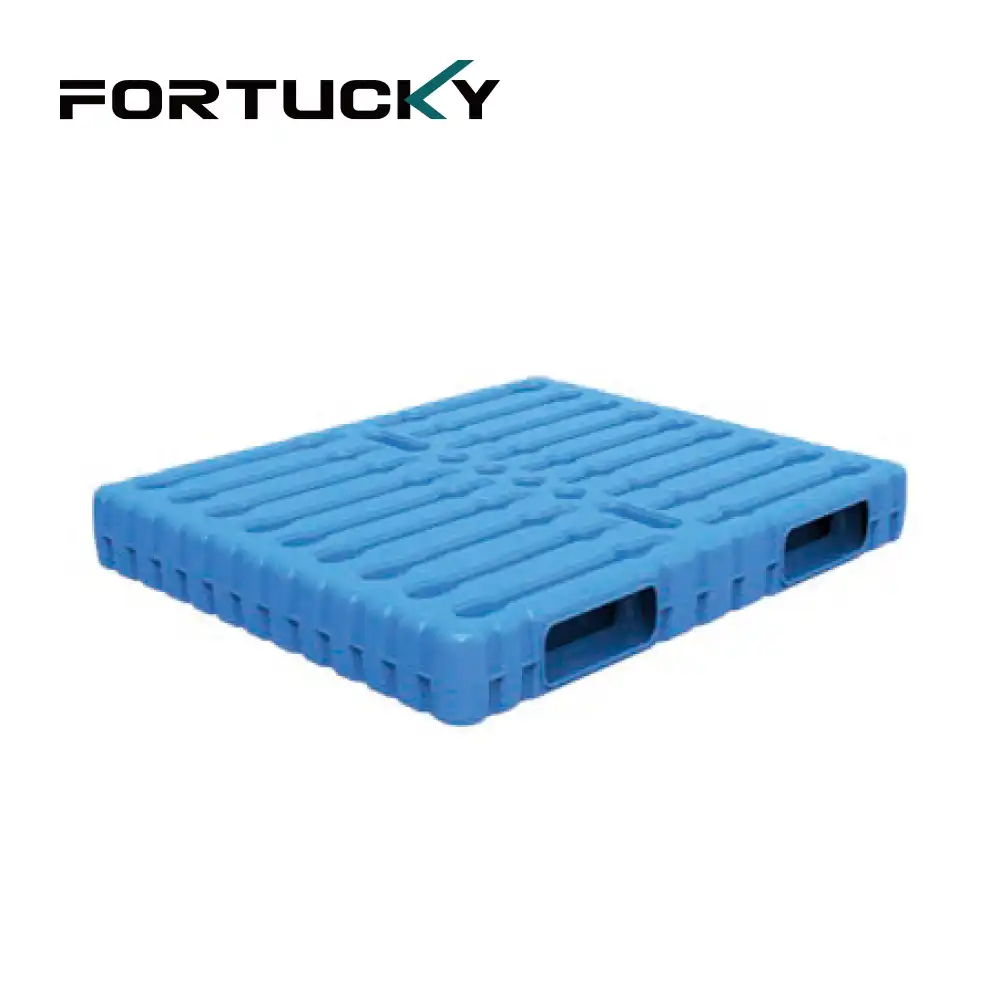 Procurement Considerations for Blow Moulding Plastic Pallets
Strategic sourcing requires aligning supplier capabilities with operational goals and needs. Several factors influence successful procurement outcomes.
Customization and Technical Specifications
Fortucky's engineering expertise enables extensive customisation to meet specific process requirements. Buyers can select dimensions, load capacities, surface layouts, and colour‑coding systems aligned with inventory management protocols. Static loads can reach 6 tonnes for floor storage, dynamic loads up to 1.5 tonnes during transport, and rack loads up to 1 tonne for selective racking. As part of quality assurance, engineering teams conduct corner drop tests, flexure strength tests, slip tests, and compression strength tests to verify performance claims.
Order Quantities and Lead Times
Minimum order quantities typically range from 100 to 500 units, depending on customisation complexity and production scheduling. Standard configurations in popular sizes ship within two to three weeks. For first orders requiring custom tooling, lead times may extend to eight weeks. Fortucky’s 5G‑enabled manufacturing facilities improve production efficiency through predictive maintenance and real‑time tracking, ensuring on‑time delivery that supports just‑in‑time logistics and prevents supply‑related disruptions.
Supplier Qualification Criteria
Reliable suppliers demonstrate compliance with international quality standards such as ISO 9001. Material certifications confirm that food‑grade HDPE and PP resins meet FDA or EU regulations for direct food contact. Third‑party test reports validate material properties and load capacity claims. Fortucky maintains comprehensive qualifications and has provided solutions to over 1,000 customers worldwide, including Fortune 500 companies like Huawei, Mercedes‑Benz, BMW, and CATL, demonstrating expertise in demanding industrial applications.
Best Practices and Industry Insights
Efficient material handling requires adherence to quality assurance standards and awareness of technological advances.
Quality Standards and Compliance Requirements
Industry standards such as ISO 8611 specify pallet dimensions and performance test methods, establishing expected benchmarks. Procurement specifications should reference these standards, and suppliers should provide test results demonstrating compliance. Incoming inspections verify dimensional accuracy, surface quality, and structural integrity before acceptance. Tracking pallet performance throughout their lifecycle provides data on longevity, failure modes, and maintenance needs, informing future procurement decisions and supplier evaluations.
Real-World Implementation Examples
A major cold‑chain logistics company replaced wooden pallets with blow‑moulded HDPE units across 15 distribution centres, cutting pallet replacement costs by 60% and eliminating wood‑splinter contamination. An automotive parts manufacturer uses custom 1400×1200mm pallets with reinforced edges for engine components; over 18 months, zero pallet failures occurred, compared to a 12% failure rate for previously used wooden pallets. These results demonstrate measurable ROI through extended service life, reduced damage, and lower maintenance labour.
Future Trends in Pallet Technology
Innovations include RFID integration for real‑time asset tracking, enhancing inventory control and loss prevention. Smart pallets with embedded sensors monitor temperature, humidity, and shock during transit, providing supply chain visibility for high‑value or fragile goods. Bio‑based plastics from renewable feedstocks are being developed to further reduce carbon footprints while maintaining performance. Automation‑ready designs with standardised dimensions and tight tolerances facilitate integration with robotic handling systems and automated storage and retrieval systems driving Industry 4.0.
Conclusion
Choosing Blow Moulding Plastic Pallets is a significant strategic decision that affects production and logistics efficiency, cost, and sustainability. Their seamless construction, impact resistance, light weight, and hygienic properties are essential for FMCG, automotive, pharmaceutical, and electronics industries. Total cost of ownership studies and long‑term performance data confirm their superiority over injection‑moulded and wooden alternatives. Successful procurement requires partnering with qualified suppliers offering customisation, technical support, and reliable delivery. With a global service network, advanced manufacturing capabilities, and extensive project experience, Fortucky is a trusted partner for businesses seeking to optimise and digitalise their operations
Frequently Asked Questions
1. How long do blow-moulded plastic pallets typically last in industrial use?
Under normal operating conditions, blow moulding pallets last 5 to 7 years. In controlled environments, some units remain usable beyond 10 years. Longevity depends on handling practices, load frequency, and environmental exposure. Pallets used solely indoors with trained forklift operators last longer than those circulated across multiple sites with varying equipment.
2. Can these pallets be customized for specific load requirements?
Yes, extensive customisation options include dimensions ranging from 1100×900mm to 1500×1400mm, load capacities from light‑duty to 6‑tonne static loads, surface layouts (grid, solid, or flat), and colour coding for inventory management. Engineering support helps select appropriate structural reinforcements for specific applications such as chemical storage or high‑speed transport.
3. Are blow-moulded pallets more sustainable than alternatives?
The HDPE and PP materials are fully recyclable; they are lighter, reducing transport emissions, and their longer service life lowers replacement frequency. Manufacturing uses less energy than injection moulding, and products can incorporate recycled content. Proper end‑of‑life collection enables material re‑entry into the circular economy.
Partner with Fortucky for Advanced Material Handling Solutions
Fortucky makes engineered Blow Moulding Plastic Pallet products that help global industry leaders improve the performance of their supply chains. Our technical team can help you choose pallets that meet your specific needs, ranging from standard setups to fully customized designs with built-in features and unique load capacities. As a reliable Blow Moulding Plastic Pallet maker, we have over 1,000 satisfied customers, including Fortune 500 companies in the electronics, automotive, FMCG, and pharmaceutical industries. We offer full research and development services and have service networks in Asia, Europe, and the Americas. Contact our experts at sales@fortuckyrobot.com to talk about your material handling problems and get reasonable quotes that come with fast delivery, the ability to make many changes, and helpful technical support.
References
1. Kelley, S.W. and White, M.S. (2019). Comparative Analysis of Plastic Pallet Manufacturing Technologies. Journal of Materials Processing Technology, 267, 445-458.
2. Thompson, R.L. (2021). Sustainable Material Handling: Life Cycle Assessment of Pallet Systems. International Journal of Logistics Management, 32(3), 789-812.
3. Garcia, J.M. and Chen, H. (2020). Load Capacity Testing Methodologies for Polymer-Based Pallets. Packaging Technology and Science, 33(7), 301-318.
4. Anderson, P.K. (2018). Hygiene Standards in Food Supply Chain Equipment. Food Quality and Safety, 2(4), 187-199.
5. Mitchell, D.R. and Zhao, Y. (2022). Economic Analysis of Pallet Pooling Systems in Global Logistics. Supply Chain Management Review, 26(2), 34-47.
6. Williams, E.F. (2020). Advanced Manufacturing Processes for Industrial Plastic Products. Polymer Engineering and Science, 60(5), 912-927.


Learn about our latest products and discounts through SMS or email