- English
- French
- German
- Portuguese
- Spanish
- Russian
- Japanese
- Korean
- Arabic
- Greek
- German
- Turkish
- Italian
- Danish
- Romanian
- Indonesian
- Czech
- Afrikaans
- Swedish
- Polish
- Basque
- Catalan
- Esperanto
- Hindi
- Lao
- Albanian
- Amharic
- Armenian
- Azerbaijani
- Belarusian
- Bengali
- Bosnian
- Bulgarian
- Cebuano
- Chichewa
- Corsican
- Croatian
- Dutch
- Estonian
- Filipino
- Finnish
- Frisian
- Galician
- Georgian
- Gujarati
- Haitian
- Hausa
- Hawaiian
- Hebrew
- Hmong
- Hungarian
- Icelandic
- Igbo
- Javanese
- Kannada
- Kazakh
- Khmer
- Kurdish
- Kyrgyz
- Latin
- Latvian
- Lithuanian
- Luxembou..
- Macedonian
- Malagasy
- Malay
- Malayalam
- Maltese
- Maori
- Marathi
- Mongolian
- Burmese
- Nepali
- Norwegian
- Pashto
- Persian
- Punjabi
- Serbian
- Sesotho
- Sinhala
- Slovak
- Slovenian
- Somali
- Samoan
- Scots Gaelic
- Shona
- Sindhi
- Sundanese
- Swahili
- Tajik
- Tamil
- Telugu
- Thai
- Ukrainian
- Urdu
- Uzbek
- Vietnamese
- Welsh
- Xhosa
- Yiddish
- Yoruba
- Zulu
How do I Choose the Best Hand Trolly Cart?
To choose the best material handling equipment, you need to know both what your operations need and what the equipment can do. When procurement workers choose a hand trolly cart, they must consider weight capacity, available space, frequency of use, and durability. The ideal cart reduces manual labor, integrates with current systems, and delivers a clear return on investment (ROI) through lower labor costs and higher productivity. Performance in warehouses, production areas, and transportation hubs is directly affected by factors such as wheel type, frame materials, folding mechanisms, and weight capacity. Logistics managers can identify efficiency improvements while maintaining safety standards in manufacturing and distribution settings by carefully reviewing these factors.
 Understanding Hand Trolley Carts – Key Basics You Need to Know
What Defines a Modern Material Handling Cart?
A material handling cart is a lever-based transportation tool that moves heavy loads using mechanical advantage. Its design reduces the required input force by shifting the load's center of gravity to wheels that act as a pivot. In industrial settings, these devices help reduce the risk of musculoskeletal disorders among warehouse workers and improve the speed of last-mile shipping in non-palletized environments. Modern versions are both portable and robust, featuring adjustable body sizes and flexible handles to accommodate various item dimensions.
Core Classifications and Design Variants
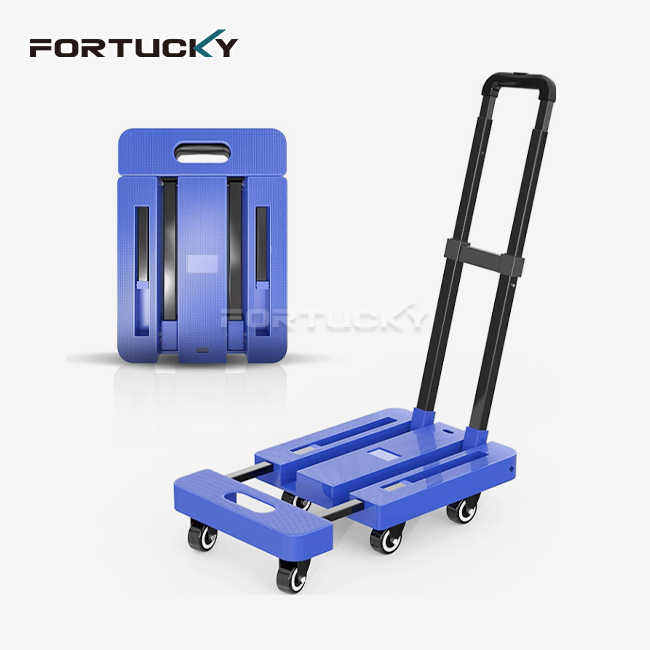
Material handling carts come in various types based on their intended use. The L-shaped frame of an upright hand truck allows for tilting and rolling boxed goods, while the flat bases of platform dollies enable stacking multiple items. Convertible models can switch between different configurations, making them suitable for mixed-load situations. Some stair-climbing models feature tri-wheel systems for safe navigation up and down stairs. Folding designs can be stored compactly, which is advantageous in spaces with limited room. For heavy-duty applications, electric options eliminate manual labor but come with higher initial costs and maintenance requirements.
Critical Specifications That Impact Performance
The safe working load refers to the weight capacity, defined as the mass evenly distributed on a level surface. When used on an incline or with shifting loads, the capacity should be reduced by about 30 to 40 percent to maintain safety margins. Frame materials range from lightweight aluminum alloys, which are easy to handle, to steel designs, which offer greater strength and durability in rough conditions. Wheel width and composition affect maneuverability; for example, larger pneumatic tires absorb shocks on uneven ground, while solid polyurethane wheels eliminate puncture risks on debris-laden floors. Adjustable handle height and platform size also influence operator comfort and load fit across various work environments.
Core Criteria for Choosing the Best Hand Trolly Cart (Decision Support Approach)
Evaluating Operational Needs and Use Cases
Before making a purchase decision, frequency trends and load profiles should be analyzed. High-throughput areas require sturdy construction with sealed ball bearings to withstand continuous use. Lighter-duty options are sufficient for occasional transport tasks. The working surface determines the appropriate wheel type: narrow solid wheels perform well on smooth factory floors, whereas larger pneumatic tires provide stability on outdoor loading docks. Extreme temperatures in cold chain facilities necessitate materials that resist thermal stress, such as powder-coated steel or specialized plastics that remain flexible below freezing.
Capacity planning extends beyond figuring out the highest load. Patterns of distribution are important because putting a lot of weight on a few small platforms causes more stress than putting the same amount of weight on many bigger surfaces. For example, operators who move pharmaceutical boxes through narrow hallways need small footprints with tight turning radii in a hand trolly cart. On the other hand, operators who handle automobile parts need longer platforms for big parts.
Performance Metrics and Durability Standards
Professional buyers evaluate weld quality at high-stress points, such as axle bolts and handle connections. As part of quality assurance, carts undergo at least 10,000 cycles of simulated loads over obstacles to verify bearing integrity. Static load tests apply overload factors of 1.25x to 1.5x for 24 hours, with frame deflection measured against strict limits of less than 0.5%. Coating adhesion testing ensures that powder-coated finishes resist chipping and corrosion over their multi-year service lives.
Ergonomic design reduces worker fatigue during repetitive tasks. Handle grips with non-slip surfaces and appropriate thickness help prevent hand strain. Different wheel configurations affect push and pull forces; front swivel casters enhance maneuverability, while fixed rear wheels maintain directional stability. In environments handling thousands of moves daily, these ergonomic factors directly influence both productivity levels and workplace injury rates.
Safety Compliance and Maintenance Considerations
Industry standards govern load capacity labeling, structural testing, and material safety. Regular maintenance schedules extend equipment life, including lubricating plain sleeve bearings as needed. Precision double-sealed ball bearings, by contrast, are maintenance-free. Wheel inspections reveal wear patterns that indicate misalignment or overloading. Proper training in load management helps prevent damage; operators must understand proper weight distribution and avoid exceeding de-rated limits on slopes.
Cost Versus Value Analysis
Total cost of ownership includes purchase price, repair costs, warranty length, and replacement expenses. Premium carts with commercial-grade components and reinforced frames have higher upfront costs but lower per-use expenses over longer service periods. After-sales support availability affects downtime risks; suppliers offering fast parts delivery reduce operational disruptions. Payback period calculations should account for labor time saved through reduced physical handling and medical cost savings from fewer injuries.
Comparing Popular Types of Hand Trolly Carts (Rational Choice Approach)
Foldable Versus Fixed-Frame Structures
Collapsible models can be folded flat in seconds for storage in closets or vehicle trunks. This portability suits mobile workers and multi-location businesses that frequently transport equipment. However, folding mechanisms introduce additional potential failure points and slightly reduce structural strength compared to welded fixed frames. Reinforced hinges with locking pins mitigate structural concerns, but buyers should verify hinge stability through supplier certifications. Fixed-frame carts, lacking complex mechanisms, offer optimal strength-to-weight ratios for permanent installation in facilities with adequate storage space.
Wheel Material and Configuration Decisions
Pneumatic tires use air pressure to cushion shocks from rough outdoor surfaces and loading dock level changes. Puncture risks require carrying spare supplies and inflation tools. Polyurethane cushion options eliminate flat-tire concerns while providing sufficient shock absorption for most industrial floors. Dual ball-bearing hubs reduce rolling resistance, enabling smooth operation in factories, airports, and on tile, pavement, and carpet. Non-marking compounds prevent floor damage in customer-facing HORECA environments where appearance matters.
Six-wheel designs with fixed front wheels and swivel rear feet make portable hand trolly carts transporting things more stable while they are full and easier to move when they are empty. When there is horizontal stress, the wheels don't come off because the brackets are reinforced and fastened with grade-8 screws. When choosing a wheel diameter, you need to think about how much weight it can hold and how hard it is to turn. Larger diameter wheels are easier to roll over obstacles, but they need more pivot force in tight areas.
Material Construction Trade-Offs
Steel frames offer greater strength and cost-effectiveness for rough industrial settings where impact resistance is important. Aluminum construction reduces weight, easing operator fatigue over extended periods, but comes at a higher purchase cost. Chemical processing plants can use wear-resistant PP plastics with metal supports to prevent corrosion while maintaining rigidity for loads up to 150 kg. Stainless steel versions are preferred in pharmaceutical and food processing environments requiring cleanliness and frequent washdowns.
 How to Effectively Procure Your Hand Trolley Cart (Demand-Matching Approach)?
Sourcing Strategies for B2B Procurement
Global purchasing platforms connect buyers with manufacturers capable of customizing products to specific needs, though supplier reliability should be carefully vetted. Certifications such as ISO 9001 quality management and product testing compliance provide baseline confidence. Requesting proof of weld soundness and stress test results substantiates structural claims. Local wholesalers may offer faster delivery and easier returns but with less customization. Bulk purchases should include discussions of volume discounts, payment terms, and long-term supply agreements that hedge against price fluctuations.
Customisation and OEM Collaboration
Customized solutions address specific operational challenges for specialized applications. Adjustable frame dimensions accommodate different product sizes across multiple lines within the same facility. Custom color coding aids organization when multiple departments are involved. Elastic straps secure loads during transport, particularly useful for fragile electronics or pharmaceutical packaging. Manufacturers offering technical support collaborate on specifications that ensure designs align with space constraints, capacity needs, and environmental conditions unique to cold chain logistics or automotive assembly lines.
Brand Evaluation Criteria
Supplier selection extends beyond product specifications to include reputation, service infrastructure, and environmental practices. Suppliers with long-standing relationships in automotive, FMCG, and pharmaceutical industries, serving Fortune 500 clients, demonstrate proven reliability. Localized service networks across Asia, Europe, and the Americas ensure consistent access to expertise and parts. Case study references from vendors documenting over 1,000 customer implementations validate performance claims across diverse industry settings.
Maintenance and Safety Guidelines to Maximise Your Hand Trolley Cart's Lifespan
Preventive Maintenance Protocols
Regular cleaning of wheel components and bearing housings prevents premature wear. Roller bearings and plain sleeve parts should be lubricated according to manufacturer recommendations, typically every three months under normal usage. Routine inspections check frame welds for cracks, wheel treads for uneven wear, and handle mechanisms for secure locking. Addressing minor issues during scheduled maintenance prevents major failures during operation, reducing unplanned downtime and repair costs.
Safe load management involves distributing weight evenly across the platform to avoid stress concentrations that could cause permanent deformation. Operators should be trained on both rated capacity limits and proper load tilting techniques to maintain control during movement. Using rubber straps to secure loads prevents shifting that could destabilize the cart or damage goods.
Common Safety Hazards and Mitigation
Tip-over risks rise when flat-panel silent-wheel hand trolly cart loads are heavier than what is recommended or when workers don't know how to handle slopes properly. Setting rules for the maximum amount and marking them so they can be seen helps keep people safe. When the floor goes from smooth concrete to rough asphalt, you have to slow down to keep things stable. Storage rules make sure that carts don't become tripping dangers in walks by marking specific parking spots away from walking routes. When you do ergonomic training, you focus on good balance and push/pull techniques that help keep your back healthy and prevent injuries from repeated stress.
Conclusion
Choosing the right material handling equipment requires balancing short-term needs against long-term benefits. The optimal cart setup depends on load types, environmental conditions, and integration requirements of production and logistics workflows. Procurement professionals achieve the best outcomes through systematic analysis of structural integrity, wheel performance, ergonomic design, and supplier reliability. When purchasing equipment that enhances output, labor efficiency, and workplace safety, demand specifications that lower total ownership costs over an extended service life.
FAQ
1. What load capacity should I select for my operations?
The rated capacity indicates the safe working load for properly distributed weight on flat surfaces. When operating on slopes or with variable loads, choose carts rated 30 to 40 percent above expected maximum loads to maintain safety margins and prevent structural stress.
2. Can these carts perform reliably on outdoor and uneven surfaces?
Larger inflatable wheels or high-grade polyurethane casters help carts handle outdoor environments by cushioning shocks from rough terrain. Wheel width and tread design should match surface conditions; for example, larger contact areas improve stability on unpaved ground.
3. Do electric models justify their higher cost compared to manual alternatives?
Electric carts eliminate the physical strain of moving heavy loads repeatedly over shifts, reducing fatigue-related errors and injuries. High-volume facilities covering long distances achieve faster ROI through increased productivity and fewer workers' compensation claims, offsetting the higher battery and maintenance costs.
Partner with Fortucky for Industrial-Grade Material-Handling Solutions.
Choosing the right material handling tools affects how well your transportation network works and how safe your workers are. Fortucky creates custom cart solutions for tough industrial settings and has worked with over 1,000 clients around the world, including Fortune 500 manufacturers across the automotive, FMCG, pharmaceutical, and electronics sectors. Our product portfolio balances comprehensive coverage with specialised capabilities, offering adjustable platforms, reinforced wheel assemblies, and load capacities tailored to your workflow requirements.
As a trusted Hand Trolly Cart manufacturer with localised service networks spanning Asia, Europe, and the Americas, we provide rapid deployment, deep customisation, and responsive technical support that minimises downtime. Our R&D team leverages 5G-enabled smart manufacturing capabilities to produce equipment meeting rigorous quality standards while maintaining competitive pricing structures. Contact our procurement specialists at sales@fortuckyrobot.com to discuss your operational challenges and receive detailed specifications matched to your facility's unique demands.
References
1. Smith, J. and Roberts, M. (2022). Material Handling Equipment Selection for Modern Warehouses. Industrial Engineering Press.
2. Chen, L. (2021). "Ergonomic Assessment of Manual Transport Devices in Logistics Operations." Journal of Occupational Safety and Health, 45(3), 287-304.
3. Thompson, R. (2023). Total Cost of Ownership Analysis for Industrial Equipment Procurement. Supply Chain Management Institute.
4. Davis, K. and Martinez, A. (2022). "Wheel Material Performance Under Variable Load Conditions." International Journal of Mechanical Engineering, 38(2), 145-162.
5. Anderson, P. (2021). Safety Standards and Compliance in Material Handling Systems. Workplace Safety Publications.
6. Williams, S. (2023). "Comparative Analysis of Folding Versus Fixed-Frame Transport Equipment." Logistics and Supply Chain Review, 29(1), 78-95.
Learn about our latest products and discounts through SMS or email