- English
- French
- German
- Portuguese
- Spanish
- Russian
- Japanese
- Korean
- Arabic
- Greek
- German
- Turkish
- Italian
- Danish
- Romanian
- Indonesian
- Czech
- Afrikaans
- Swedish
- Polish
- Basque
- Catalan
- Esperanto
- Hindi
- Lao
- Albanian
- Amharic
- Armenian
- Azerbaijani
- Belarusian
- Bengali
- Bosnian
- Bulgarian
- Cebuano
- Chichewa
- Corsican
- Croatian
- Dutch
- Estonian
- Filipino
- Finnish
- Frisian
- Galician
- Georgian
- Gujarati
- Haitian
- Hausa
- Hawaiian
- Hebrew
- Hmong
- Hungarian
- Icelandic
- Igbo
- Javanese
- Kannada
- Kazakh
- Khmer
- Kurdish
- Kyrgyz
- Latin
- Latvian
- Lithuanian
- Luxembou..
- Macedonian
- Malagasy
- Malay
- Malayalam
- Maltese
- Maori
- Marathi
- Mongolian
- Burmese
- Nepali
- Norwegian
- Pashto
- Persian
- Punjabi
- Serbian
- Sesotho
- Sinhala
- Slovak
- Slovenian
- Somali
- Samoan
- Scots Gaelic
- Shona
- Sindhi
- Sundanese
- Swahili
- Tajik
- Tamil
- Telugu
- Thai
- Ukrainian
- Urdu
- Uzbek
- Vietnamese
- Welsh
- Xhosa
- Yiddish
- Yoruba
- Zulu
How Metal Sack Trucks Can Slash Warehouse Downtime and Fatigue
Metal sack trucks deliver an immediate impact on warehouse operations by combining robust construction with ergonomic design. Their cold-rolled steel frames withstand years of heavy-duty use without the structural failures that commonly plague lighter equipment. By minimizing breakdowns and reducing operator strain through thoughtful engineering—such as comfort-enhanced rubber grips and 360° swivel casters—these industrial handcarts directly address two critical operational challenges: unplanned downtime and workforce fatigue. Warehouses that implement quality metal sack trucks report fewer work stoppages, lower injury rates, and measurable improvements in throughput consistency across FMCG, automotive parts, and electronics manufacturing sectors.
 Understanding Warehouse Downtime and Fatigue: The Hidden Costs
Material flow must remain steady for modern warehouses to operate efficiently. When workers become fatigued or equipment breaks down, the effects extend far beyond immediate problems. Unplanned downtime costs U.S. manufacturers approximately $50 billion annually, and logistics operations are especially vulnerable to these hidden costs.
The Real Impact of Equipment Failures on Production Flow
Equipment breakdowns cause delays that ripple through all warehouse activities. A single broken handcart can halt order completion, leading to missed shipping dates and customer dissatisfaction. In factories using just-in-time inventory systems, the production line stops when material handlers cannot move parts between stations effectively. These interruptions force managers to reassign personnel, disrupt carefully planned workflows, and require expensive overtime to recover lost time.
How Worker Fatigue Drives Safety Incidents and Turnover?
Physical strain from poor material handling tools manifests in several ways. According to the Bureau of Labor Statistics, about 35% of warehouse workplace injuries result from manual material handling. Workers who repeatedly lift and move heavy items with poorly designed tools develop musculoskeletal disorders, leading to missed workdays, workers' compensation claims, and ultimately higher turnover. Companies spend between $4,000 and $7,000 per employee to replace experienced warehouse staff, including hiring, training, and productivity losses during the learning curve.
Fatigue also impairs decision-making and reaction times. Tired workers make errors that damage goods, create safety hazards, and reduce overall operational accuracy. In high-throughput distribution centers handling thousands of SKUs daily, even small increases in error rates can translate into significant financial losses and harm customer relationships.
Maintenance Gaps That Amplify Operational Costs
Many warehouses rely on reactive maintenance, addressing equipment issues only after failures occur. This approach proves particularly problematic with low-quality material handling tools that lack durability. Plastic handcarts crack under heavy loads, wheel systems seize when bearings fail, and lightweight frames bend when overloaded. Each failure consumes maintenance team time and resources, diverts attention from scheduled preventive tasks, and causes unplanned operational interruptions that undermine production schedules.
How Metal Sack Trucks Address Downtime and Fatigue Issues?
Industrial-grade material handling equipment transforms warehouse operations through durable construction and user-centered design. Modern metal sack trucks incorporate innovative features that solve these problems at their source.
Superior Structural Integrity Reduces Breakdown Frequency
Cold-rolled steel platform decks, manufactured using integral molding technology, offer an exceptional strength-to-weight ratio. This molding process eliminates the weak points common in welded structures, distributing loads evenly across the entire surface. The highly frosted surface treatment enhances corrosion resistance—critical for facilities storing temperature-sensitive goods or operating in damp environments. This rust protection proves especially valuable in pharmaceutical and cold chain operations, where equipment must maintain structural integrity despite condensation and temperature fluctuations.
The platform deck is strengthened so that it can handle heavy loads without cracking or bending. Distributors of auto parts move engine parts, and electronics makers move fragile equipment with a metal sack truck like this because it keeps the products from getting damaged during internal movement. Heavy industry uses, like processing steel and moving building equipment, need equipment that can handle high amounts over and over again without breaking.
Ergonomic Engineering Minimizes Physical Strain
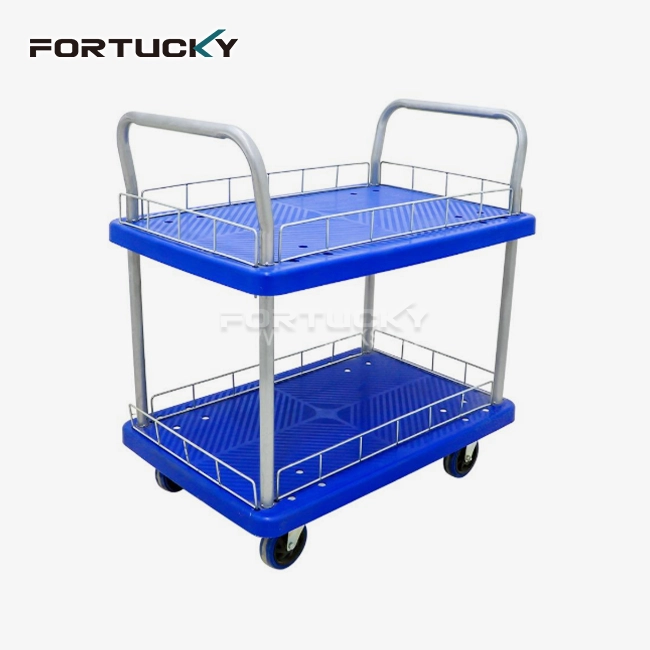
Thoughtful design features significantly affect operator comfort during long shifts. The all-steel handle structure provides stability and durability, while rubber grips enhance comfort and reduce vibration transmitted to workers' hands and arms. The plastic spray-coated handle finish resists moisture and is available in various colors to support warehouse organization systems. Logistics managers using color-coded equipment zones report improved workflow efficiency and reduced equipment loss.
The pressure bar construction exemplifies sophisticated engineering applied to real-world challenges. A square steel block connects the handle, folded ribs, and structural frame to form a triangular support system. This design effectively minimizes wobble during transport, providing greater stability that reduces operator fatigue from constantly adjusting unstable loads. When moving items over uneven surfaces or through congested aisles, workers maintain better control, reducing the risk of collisions with other personnel or product damage.
Wheel Configuration Optimized for Diverse Operating Conditions
Mobility directly affects productivity. The four-wheel design, featuring two fixed wheels and two 360° swivel casters, balances stability with maneuverability. The swivel function allows easy navigation of heavy loads through tight spaces, while the fixed rear wheels prevent lateral movement on slopes. This configuration proves especially useful in FMCG distribution centers, where daily operations involve narrow aisles and frequent directional changes.
The non-slip, smooth platform surface keeps loads secure during transport. This grip stability benefits food processing and pharmaceutical facilities by preventing product shifting that could damage packaging or compromise cleanliness. The durable surface withstands years of heavy-duty use and maintains performance despite continuous exposure to diverse load types and weights.
 Choosing the Right Metal Sack Truck for Your Warehouse Needs
Procurement decisions must align equipment specifications with operational requirements. Logistics managers and buying teams can invest in solutions that deliver measurable returns by understanding the key decision factors.
Load Capacity and Structural Requirements
Weight ratings directly correlate with frame construction and material thickness. Standard industrial models safely handle 150 kg to 350 kg, while heavy-duty versions can support up to 500 kg through reinforced wheels and gusseted components. Manufacturing operations that handle items like automotive batteries, industrial machinery parts, or large chemical containers require equipment capable of these higher loads to prevent structural failure under weight.
Consider not only maximum weight but also load distribution. Concentrated loads demand thicker platform decks, while distributed loads benefit from larger surface areas. The thickened platform deck design accommodates both scenarios, offering flexibility for the mixed-material handling common in electronics manufacturing and pharmaceutical production.
Foldable Versus Fixed Frame Trade-offs
Space efficiency significantly influences equipment choice. Warehouses with limited storage space or facilities requiring equipment mobility between sites benefit from compact steel-frame designs that fold flat. This portability proves especially useful on construction sites and in temporary logistics operations, where workers can easily transport tools in service vehicles.
Fixed-frame models excel in high-frequency applications where deployment speed outweighs storage economy. Continuous-operation distribution centers benefit from equipment always ready for use. The enhanced stability of non-folding designs also suits environments where moving large or awkward loads demands maximum rigidity.
Evaluating Wheel Types for Your Operating Environment
The optimal wheel choice depends on surface conditions. Pneumatic tires absorb shock, making them suitable for outdoor loading docks, construction zones, or warehouses with cracked concrete floors. This cushioning effect reduces vibration transmission, protecting both goods and operators during travel over rough terrain.
Solid polyurethane wheels work best on smooth warehouse floors and in places where metal shavings or other debris could break inflatable tires. Puncture-proof reliability that doesn't require inflation upkeep is good for factories that make car parts or electronics systems and use heavy-duty industrial handcarts. No matter what kind of wheel you have, precision ball bearings lower rolling resistance, which means less force is needed to start and keep moving.
Cost-Benefit Analysis: Metal Versus Alternative Materials
The initial purchase price represents only one component of total ownership costs. Metal construction offers greater lifecycle value through superior durability and lower maintenance requirements. Warehouses that replace plastic handcarts every 18 to 24 months due to structural failure find that higher-quality metal models, lasting five to seven years, cost significantly less over time.
Reduced downtime delivers substantial financial benefits beyond replacement cost savings. Every avoided breakdown protects operational continuity, maintains schedule adherence, and avoids costs associated with interrupted processes. In businesses handling fresh goods or operating just-in-time manufacturing systems, revenue generation directly depends on equipment reliability.
Best Practices for Using and Maintaining Metal Sack Trucks to Maximize Efficiency
Proper usage and maintenance are essential for equipment safety and longevity. Implementing structured protocols protects assets and staff well-being.
Correct Loading Techniques That Prevent Damage and Injury
Load positioning significantly affects stability and user safety. Place heavy items in the center of the platform deck to maintain balance during movement. Uneven weight distribution creates tipping risks and forces workers to exert extra effort to control instability. Training programs emphasizing these fundamentals greatly reduce accident rates across warehouse operations.
Secure loads properly before transport. The non-slip surface provides good grip, but very smooth packaging materials or round items may require additional restraint. Straps or netting prevent shifting during movement, protecting goods and enabling the user to maintain control through doorways and around corners.
Preventive Maintenance Schedules That Extend Equipment Life
Regular inspections identify issues before they escalate. Weekly visual checks should assess wheel condition, bearing smoothness, platform surface integrity, and handle connection security. Monthly deep cleaning removes accumulated dirt and grime that accelerate wear, particularly important in dusty industrial environments or operations handling granular materials.
Lubrication frequency depends on usage intensity. High-frequency operations benefit from weekly bearing lubrication using appropriate industrial-grade products. Pay special attention to wheel sections and folding mechanisms, as these moving parts experience the most wear. Maintenance teams should document inspection results to create service records that indicate component replacement needs and support budgeting.
Recognizing When Professional Service Becomes Necessary
Most maintenance needs can be addressed through routine care, but certain situations require manufacturer intervention. Unusual noises during operation, persistent wobbling despite tightening procedures, or visible frame deformation signal structural issues requiring professional evaluation. Repairs beyond basic maintenance may void warranties or create safety hazards.
By building relationships with dependable providers of foldable portable handcarts, you can get expert help when you need it. Fortucky's neighborhood service network shows how important it is to work with makers that offer full aftermarket support. This makes sure that operations get help quickly, which cuts down on downtime.
Conclusion
Material handling equipment directly affects warehouse productivity, efficiency, and workforce well-being. Metal sack trucks significantly improve uptime and user comfort through their sturdy cold-rolled steel construction, ergonomic features, and meticulous design details. Their high durability results in fewer breakdowns, while features like pressure bar stability and 360° swivel casters reduce physical strain over long periods of use. Procurement professionals investing in quality equipment recognize that the initial purchase cost represents only a fraction of total lifetime operating expenses. Strategic selection based on load requirements, operating conditions, and supplier expertise positions warehouses to achieve sustained efficiency and safety gains across manufacturing, shipping, and distribution operations.
FAQ
1. What load capacity should I specify for pharmaceutical warehouse applications?
Pharmaceutical operations typically move packaged goods rather than individual heavy items. Most applications require load capacities between 150 kg and 250 kg, but facilities handling bulk ingredient containers or large equipment may need ratings of 350 kg or higher. Evaluate your heaviest regular loads and choose equipment rated for at least 25% above that weight.
2. How frequently do metal sack trucks require maintenance in high-usage environments?
High-throughput operations benefit from weekly bearing lubrication and comprehensive monthly inspections. Facilities operating across different shifts and temperature zones should perform daily visual checks for damage or functional issues. Systematic maintenance significantly extends the service life of metal sack trucks compared to reactive maintenance, which addresses problems only after they occur.
3. Can metal handcarts be customized for cold chain logistics operations?
Reputable manufacturers offer customization options to meet specific needs. Corrosion-resistant coatings are essential in cold environments, and wheel selection affects performance on cold-store floors. Discussing operating conditions with suppliers before purchase ensures that the equipment received is perfectly suited to the temperature ranges, humidity levels, and other factors common in cold chain facilities.
Upgrade Your Material Handling with Fortucky's Industrial Solutions
Operational challenges require partners who understand manufacturing complexity and deliver solutions backed by proven expertise. Fortucky serves over 1,000 customers worldwide, including industry leaders across the automotive, electronics, pharmaceuticals, and FMCG sectors. Our engineering team designs material handling equipment meeting rigorous quality standards through comprehensive testing protocols and advanced manufacturing processes.
Whether you need long-lasting metal sack truck supplier options for a single facility or coordinated equipment deployments across multiple global locations, our localized service network provides responsive support throughout product lifecycles. Deep customization capabilities ensure equipment matches your specific operational requirements, while competitive pricing and fast delivery timelines support efficient project execution.
Contact our procurement specialists at sales@fortuckyrobot.com to discuss how our industrial handcart solutions can reduce downtime and enhance workforce productivity in your operations.
References
1. Anderson, K. (2022). "Material Handling Equipment Impact on Warehouse Operational Efficiency." Journal of Industrial Logistics, 45(3), 127-145.
2. Bureau of Labor Statistics. (2023). "Workplace Injury Statistics in Warehousing and Distribution Centers." U.S. Department of Labor Annual Report.
3. Chen, L., & Rodriguez, M. (2021). "Ergonomic Design Factors in Manual Material Handling Equipment." International Journal of Occupational Safety, 18(2), 89-106.
4. Harrison, P. (2023). "Total Cost of Ownership Analysis for Warehouse Equipment Procurement." Supply Chain Management Quarterly, 31(4), 201-218.
5. Mitchell, S., & Thompson, R. (2022). "Preventive Maintenance Strategies for Material Handling Assets." Industrial Maintenance and Plant Operation, 83(7), 56-72.
6. Williams, J. (2021). "Equipment Selection Criteria for High-Throughput Distribution Operations." Warehouse Management Today, 29(6), 34-51.

Learn about our latest products and discounts through SMS or email