- English
- French
- German
- Portuguese
- Spanish
- Russian
- Japanese
- Korean
- Arabic
- Greek
- German
- Turkish
- Italian
- Danish
- Romanian
- Indonesian
- Czech
- Afrikaans
- Swedish
- Polish
- Basque
- Catalan
- Esperanto
- Hindi
- Lao
- Albanian
- Amharic
- Armenian
- Azerbaijani
- Belarusian
- Bengali
- Bosnian
- Bulgarian
- Cebuano
- Chichewa
- Corsican
- Croatian
- Dutch
- Estonian
- Filipino
- Finnish
- Frisian
- Galician
- Georgian
- Gujarati
- Haitian
- Hausa
- Hawaiian
- Hebrew
- Hmong
- Hungarian
- Icelandic
- Igbo
- Javanese
- Kannada
- Kazakh
- Khmer
- Kurdish
- Kyrgyz
- Latin
- Latvian
- Lithuanian
- Luxembou..
- Macedonian
- Malagasy
- Malay
- Malayalam
- Maltese
- Maori
- Marathi
- Mongolian
- Burmese
- Nepali
- Norwegian
- Pashto
- Persian
- Punjabi
- Serbian
- Sesotho
- Sinhala
- Slovak
- Slovenian
- Somali
- Samoan
- Scots Gaelic
- Shona
- Sindhi
- Sundanese
- Swahili
- Tajik
- Tamil
- Telugu
- Thai
- Ukrainian
- Urdu
- Uzbek
- Vietnamese
- Welsh
- Xhosa
- Yiddish
- Yoruba
- Zulu
How Does It Outperform Manual Carts in Large Warehouse Transport?
Electric flatbed trolleys are more efficient than manual carts due to their motorized propulsion, advanced battery systems, and ergonomic design. They also enable faster material movement and lower operating costs. Traditional hand-pulled carts can only handle loads under 500 kg and move at walking speed. In contrast, an electric flatbed trolley equipped with an 800W motor and a 48V/20AH battery can transport up to 1 ton at speeds of up to 25 km/h, with minimal noise and zero emissions. This fundamentally transforms logistics operations in large warehouses.
 Understanding the Limitations of Manual Flatbed Carts in Large Warehouses
Factory workers have used manual flatbed carts for a long time, but their flaws are making things harder to handle now. People who work with heavy things put a lot of stress on their bodies over time. People who do this may have problems with their muscles and bones, which cause them to miss more work and file more workers' compensation claims. The Bureau of Labor Statistics says that about 25% of all injuries on the job in the transportation sector are caused by moving or handling materials. Most of these accidents happen when people use hand carts.
Physical Strain and Safety Risks
Pushing a fully loaded manual cart over long distances across expansive warehouse floors requires substantial physical effort. Operators working eight-hour shifts often move loads over several kilometers, frequently exceeding what can be comfortably managed by hand. Repetitive pushing and pulling can injure the lower back, shoulders, and knees, and in severe cases may lead to permanent disability. Beyond health concerns, manual carts also pose safety risks due to the lack of braking systems or speed controls, making it difficult for operators to maintain safe stopping distances, especially on inclines or in congested aisles.
Productivity Bottlenecks
Manual carts move at a walking pace of approximately 3 to 5 km/h when fully loaded. This speed becomes a bottleneck in facilities spanning hundreds of thousands of square feet, common in pharmaceutical, FMCG, and automotive parts manufacturing. The time required to transport goods from receiving docks to storage zones or from picking areas to shipping bays is excessive, extending order fulfillment cycles and limiting the number of tasks an operator can complete within a shift.
Limited Load Capacity and Flexibility
Standard manual carts have a load capacity of up to 500 kg, yet many warehouse operations frequently need to move larger or bulkier items. This often necessitates multiple trips or additional personnel to handle oversized construction materials or large quantities of steel components, driving up labor costs. Moreover, manual carts have fixed platform sizes and inflexible steering systems, reducing their usefulness in confined spaces or when operational requirements change rapidly.
Understanding these constraints underscores why logistics leaders at companies such as CATL, BYD, and Mengniu Dairy are increasingly turning to mechanized alternatives that align with Industry 4.0 transformation goals and deliver measurable ROI improvements.
How Electric Flatbed Trolleys Revolutionize Large-Scale Warehouse Transport?
Electric flatbed trolleys surpass manual carts through intelligent design and cutting-edge technology. These battery-powered material handling solutions eliminate the need for physical pushing, allowing workers to focus on accuracy and decision-making rather than brute force.
Motorized Propulsion and Enhanced Speed
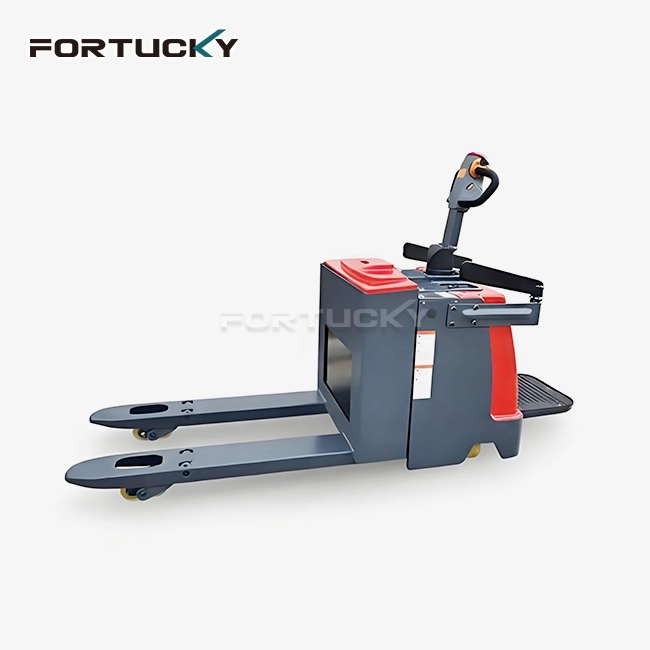
Modern electric flatbed trolleys are equipped with powerful motors (typically rated between 800W and 2000W) that deliver consistent speed and torque. Fortucky's electric flatbed trolley, for instance, features a 48V battery and 800W motor, enabling it to reach speeds of up to 25 km/h while carrying a 1-ton load. This speed is approximately five times faster than manual cart movement, significantly reducing transport cycle times. In a 200,000-square-foot distribution center, cutting trip time by just three minutes per round can translate into dozens of additional tasks completed daily, boosting productivity without adding staff.
Ergonomic Design and Operator Comfort
Electric flatbed trolleys are equipped with ride-on platforms and swivel seats that allow the driver to face forward during forward travel and backward when loading or maneuvering in reverse. Steering angles can be adjusted from 40 to 60 degrees, enabling tight turns around racks or through narrow aisles. Padded seats and intuitive controls help operators remain alert throughout full shifts, reducing errors that could damage goods or create safety hazards.
Zero Emissions and Noise Reduction
Forklifts with internal combustion engines make more than 85 dB of noise and pollute the air. On the other hand, electric flatbed trolleys are quiet and don't give off any direct pollution. People who work in clean rooms for drugs, food processing plants, and medical supply lines must follow strict health and environmental rules. This quality is very important in these places. The 48V/20AH battery gives steady power during shifts, and it can be charged during breaks so that there is never a need for special charging stations.
Advanced Safety Features
Modern electric flatbed trolleys incorporate customizable control settings, such as Curtis or ZAPI systems, which allow for precise acceleration curves, regenerative braking, and anti-rollback protection on slopes of up to 15%. Overload sensors prevent equipment from operating beyond its rated capacity; when weight limits are approached, the sensors trigger audible warnings and reduce speed automatically. These built-in safety features comply with ISO 3691-1 and Machinery Directive 2006/42/EC (CE Marking), giving transport managers peace of mind and reducing liability risks.
What was once a labor-intensive, injury-prone task has now become a smooth, controlled, and scalable process capable of continuous improvement.
Detailed Capacity and Operational Benefits for Large Warehouse Applications
Before purchasing an electric flatbed trolley, it is important to ensure that it meets your specific operational needs. Platform sizes can be customized to accommodate boxes, crates, or irregularly shaped items, with load capacities ranging from 300 kg for light-duty applications up to 5000 kg for heavy-duty industrial transport.
Load Capacity and Customization
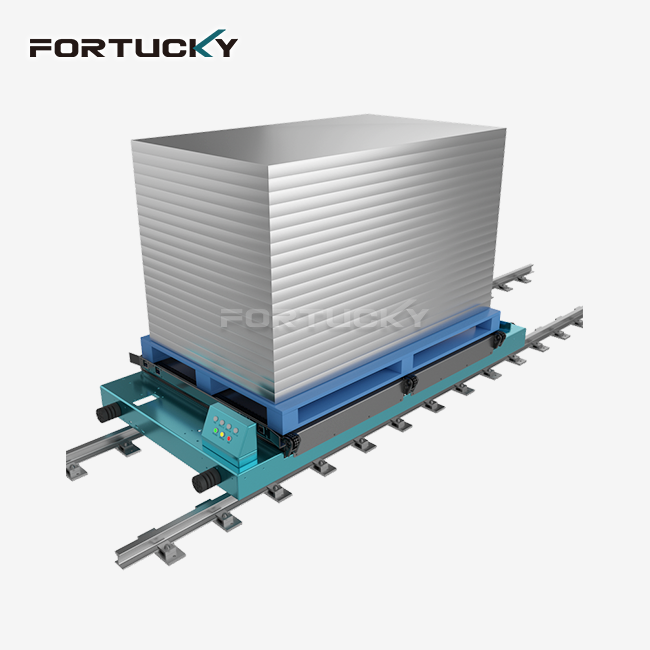
Fortucky's electric flatbed trolley features a rugged steel platform frame capable of supporting substantial weights. It can be used to transport automotive parts, food and beverage pallets, or construction tool components. For hygienic environments such as pharmaceutical or dairy production, stainless steel (AISI 304) platforms are available, offering excellent corrosion resistance. Four-wheel designs ensure even weight distribution, and optional adjustable side rails and tie-down points help secure loads during transit.
Measurable Productivity Gains
When a global electronics manufacturer replaced 15 manual carts with 10 electric flatbed trolleys, internal transport times dropped by 40%. Meanwhile, daily pallet moves increased from 320 to 480, representing a 50% productivity gain. Injury rates decreased by 70% within one year, generating savings on workers' compensation and improving employee retention. Warehouse managers reported better delivery performance and shorter order cycle times, directly enhancing customer satisfaction.
Battery Life and Maintenance Protocols
The 48V/20AH battery typically provides six to eight hours of continuous operation, sufficient for most shifts. Lithium-ion variants, such as LiFePO4 cells, can be opportunity-charged during quiet periods, such as lunch breaks, to extend runtime. Maintenance-free AGM or lithium batteries eliminate the need for water level checks and equalization cycles, reducing downtime and simplifying fleet management. Regular inspections of tires, brakes, and electrical connections ensure reliable performance and can extend equipment service life beyond five years under normal usage.
Following proper maintenance procedures protects your capital investment and maximizes service life. Advanced maintenance software can track motor and battery usage cycles, sending service alerts before failures occur, thereby preventing unplanned outages that could disrupt schedules.
Comparing Electric Flatbed Trolleys to Manual Alternatives and Market Options
When evaluating total cost of ownership, speed, and flexibility, electric flatbed trolleys clearly outperform manual carts and offer distinct advantages over other electric material handling options.
Efficiency and TCO Analysis
Manual carts typically cost between $200 and $800 per unit initially, but long-term costs are higher due to reduced labor productivity and injury-related expenses. For instance, moving 30 boxes per day manually takes approximately 2.5 hours; the same task can be completed in under one hour with an electric flatbed trolley. At a factory wage of $18 per hour, each user saves over $6,500 annually, recovering the higher purchase price of the electric trolley within 18 to 24 months.
Unlike machines with internal combustion engines, electric flatbed handling vehicles and electric flatbed trolleys don't need to have their oil changed, air filters replaced, or pollution systems fixed. This means they are easier to maintain. Batteries can last longer than three years if you take good care of them. This is the main cost of supplies.
Supplier Landscape and Differentiation
Well-known brands in electric material handling include Toyota, Hyster, Crown, and Raymond, each offering distinct product lines. Industrial-grade models are built for durability and heavy loads, while compact models prioritize maneuverability in retail settings. Warranties typically range from 12 to 36 months, with some premium suppliers offering extended coverage and rapid expert support.
Fortucky distinguishes itself through competitive pricing, rapid customization, and localized deployment support. Its smart manufacturing center, connected via 5G, accelerates order processing so that custom units can be delivered in weeks rather than months. With over 1,000 completed projects across electronics, automotive, FMCG, and pharmaceutical industries, Fortucky demonstrates proven reliability and adaptability to diverse business requirements.
Leasing and Procurement Flexibility
Capital expenditure concerns often deter businesses from purchasing outright, especially during digital transformation initiatives. Leasing spreads costs over three to five years, preserving cash flow and enabling flexible fleet expansion. Volume discounts reduce per-unit costs, making electric flatbed trolleys more accessible for mid-sized companies seeking gradual automation.
Best Practices for Safe Operation and Integration in Warehouse Workflow
To maximize the benefits of electric flatbed trolleys, operators must receive thorough training, follow safety protocols, and ensure smooth integration with existing warehouse systems.
Operator Training and Certification
Structured training programs teach operators how to perform pre-use inspections, secure loads properly, and handle emergency situations. They learn to interpret battery charge indicators, adjust seating for optimal visibility, and navigate safely through busy aisles. Certified training that aligns with OSHA guidelines reduces liability exposure and fosters a culture of safety accountability.
WMS Integration and Fleet Optimization
Electric flatbed trolleys can be integrated with warehouse management systems for real-time asset tracking. Fleet utilization is optimized based on workload demands. Trolley locations are relayed via RFID tags or GPS modules, allowing dispatchers to assign units dynamically and reduce idle time. Automated charging schedules ensure all batteries are ready for peak periods, maintaining smooth operations.
For better space utilization, WMS software plans optimal trolley routes, reducing travel distances and keeping aisles clear. Data analytics identify bottlenecks and suggest layout adjustments for further efficiency gains.
Future-Proofing Through Scalability
Factories use autonomous mobile robots (AMRs) and automated storage and retrieval systems (AS/RS), but electric flatbed trolleys and heavy-duty long-distance electric transportation vehicles are still useful for tasks that need human judgment, like checking the quality of something or moving big things in an uneven way. This keeps investments safe as automation trends change and makes equipment last longer.
Conclusion
Electric flatbed trolleys represent an advanced approach to heavy-load material transport in warehouses. They outperform manual carts in speed, ergonomics, and built-in safety features. Fortucky's Electric Flatbed Trolley, with a top speed of 25 km/h, 800W motor, 48V battery, and 1-ton capacity, enhances productivity while reducing injury risks and operating costs. Successfully deployed in electronics, pharmaceutical, FMCG, and automotive industries, this equipment aligns with Industry 4.0 objectives and supports scalable automation strategies. Logistics professionals seeking to boost throughput, improve worker safety, and achieve a stable ROI should consider electric flatbed trolleys as an essential component of modern material handling infrastructure.
FAQ
1. What is the typical battery lifespan for an electric flatbed trolley?
Battery lifespan depends on usage patterns and battery chemistry. Lithium-ion (LiFePO4) batteries can endure 2,000 to 3,000 charge cycles, lasting four to six years under daily shift operations. Lead-acid AGM batteries offer 800 to 1,200 cycles and typically last two to four years. To maximize lifespan, avoid discharging below 20% capacity and store the battery within the recommended temperature range.
2. Can electric trolleys be customized for unique warehouse layouts?
Yes, customization options include platform dimensions, load ratings, steering systems, and material types. Stainless steel platforms suit food and pharmaceutical environments, while heavy-duty steel platforms are better for automotive or steel processing applications. Adjustable steering angles and wheel configurations can accommodate various building layouts, including narrow aisles and tight turning radii.
3. How do electric trolleys improve safety over manual carts?
Electric flatbed trolleys feature automatic braking systems that prevent rollaway, especially on inclines. Programmable speed limits reduce accident risks in congested areas. Ergonomic ride-on designs eliminate pushing and pulling strain, dramatically reducing joint injuries. Overload sensors alert operators when approaching capacity limits, preventing equipment failure and unsafe load conditions.
Discover How Fortucky's Electric Flatbed Trolley Elevates Your Warehouse Efficiency
Because warehouse work needs reliability, speed, and safety, every Fortucky Electric Flatbed Trolley is made with those things in mind. Our team has worked on projects for decades and has regional rollout support to make sure that our services fit right in with how you do things now. Our solutions are adaptable and give you a clear return on investment (ROI) within 24 months. This is true whether you're in charge of busy delivery centers for big-name consumer goods or tricky handling for auto parts. Email our pros at sales@fortuckyrobot.com to learn more about discounts for buying in bulk, full technical specs, and to set up a personal meeting. Over 1,000 people from all over the world have bought Electric Flatbed Trolleys from Fortucky and trust them. They are ready to help you turn problems with moving things into advantages that will help you compete.
References
1. Bureau of Labor Statistics, U.S. Department of Labor. (2022). "Nonfatal Occupational Injuries and Illnesses Requiring Days Away From Work, 2021." Washington, DC: U.S. Government Printing Office.
2. Material Handling Institute. (2023). "Annual Industry Report: Trends in Warehouse Automation and Material Handling Equipment." Charlotte, NC: MHI Publications.
3. International Organization for Standardization. (2019). "ISO 3691-1:2011 Industrial Trucks – Safety Requirements and Verification – Part 1: Self-Propelled Industrial Trucks." Geneva, Switzerland: ISO Central Secretariat.
4. American Society of Safety Professionals. (2021). "Ergonomic Guidelines for Manual Material Handling." Park Ridge, IL: ASSP Press.
5. Logistics Management Magazine. (2023). "TCO Analysis: Electric vs. Manual Material Handling Equipment in Large Distribution Centers." Boston, MA: Peerless Media LLC.
6. European Commission. (2006). "Machinery Directive 2006/42/EC: Essential Health and Safety Requirements Relating to the Design and Construction of Machinery." Brussels, Belgium: Official Journal of the European Union.
Learn about our latest products and discounts through SMS or email