- English
- French
- German
- Portuguese
- Spanish
- Russian
- Japanese
- Korean
- Arabic
- Greek
- German
- Turkish
- Italian
- Danish
- Romanian
- Indonesian
- Czech
- Afrikaans
- Swedish
- Polish
- Basque
- Catalan
- Esperanto
- Hindi
- Lao
- Albanian
- Amharic
- Armenian
- Azerbaijani
- Belarusian
- Bengali
- Bosnian
- Bulgarian
- Cebuano
- Chichewa
- Corsican
- Croatian
- Dutch
- Estonian
- Filipino
- Finnish
- Frisian
- Galician
- Georgian
- Gujarati
- Haitian
- Hausa
- Hawaiian
- Hebrew
- Hmong
- Hungarian
- Icelandic
- Igbo
- Javanese
- Kannada
- Kazakh
- Khmer
- Kurdish
- Kyrgyz
- Latin
- Latvian
- Lithuanian
- Luxembou..
- Macedonian
- Malagasy
- Malay
- Malayalam
- Maltese
- Maori
- Marathi
- Mongolian
- Burmese
- Nepali
- Norwegian
- Pashto
- Persian
- Punjabi
- Serbian
- Sesotho
- Sinhala
- Slovak
- Slovenian
- Somali
- Samoan
- Scots Gaelic
- Shona
- Sindhi
- Sundanese
- Swahili
- Tajik
- Tamil
- Telugu
- Thai
- Ukrainian
- Urdu
- Uzbek
- Vietnamese
- Welsh
- Xhosa
- Yiddish
- Yoruba
- Zulu
How to Choose Heavy Duty Pallet Racking Systems
Choosing the right Heavy Pallet Racking system can completely transform how your facility operates, but it is not as simple as picking the tallest or strongest option. For those managing manufacturing or distribution centers with high inventory volumes, the racking infrastructure you select directly impacts throughput, labor costs, and safety compliance. Heavy pallet racking systems are the backbone of modern logistics. Each pallet position can hold up to 2,000 kg, and the systems maximize space utilization, reaching heights of up to 30 meters. The challenge lies in matching technical specifications to your operational processes, equipment compatibility, and future growth goals. By understanding load requirements, structural design, and integration with warehouse management systems, you can find a solution that meets stringent safety standards and delivers a measurable return on investment (ROI).
 Understanding Heavy Duty Pallet Racking Systems
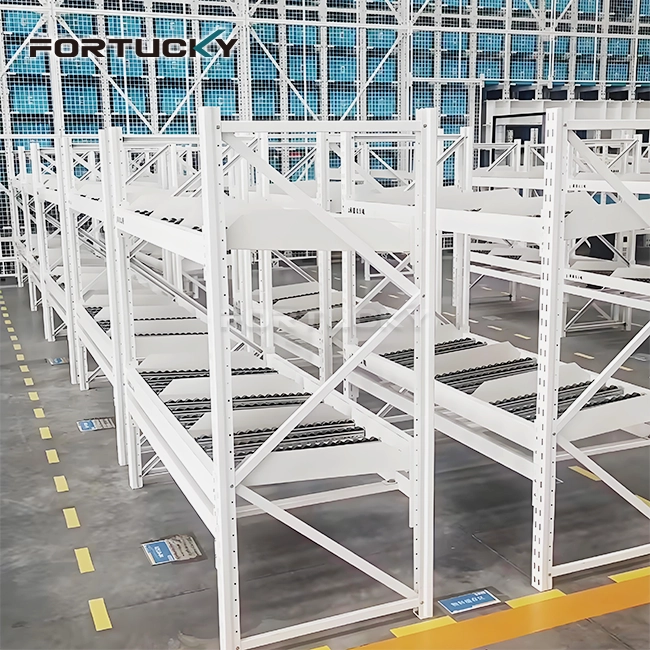
Heavy pallet racking is a type of storage equipment designed to operate in demanding industrial environments. These systems differ significantly from standard shelving, as they are constructed from reinforced steel with upright frames typically joined by structural beams. The open design allows forklifts direct access to every storage position, speeding up loading and unloading—critical for high-throughput operations.
Core Structural Components
The load-bearing framework consists of upright columns and horizontal beams that form the basic structure. Steel quality is critically important. Most industrial-grade systems are made from cold-rolled steel with protective coatings to resist corrosion and damage. Beam connections use specialized safety locks that prevent accidental disengagement during operation. The modular design allows field adjustments without compromising structural integrity, which is highly valuable as storage needs evolve.
Load Capacity and Performance Standards
Industrial selective pallet racks typically support between 1,800 and 2,000 kg per pallet position, although the exact capacity depends on beam length, upright size, and load distribution across the floor. Systems that comply with RMI (Rack Manufacturers Institute) guidelines and ANSI MH16.1 standards can safely handle stated loads under varying warehouse conditions. Even load distribution across multiple levels prevents overloading risks that could lead to catastrophic failures.
Vertical Space Optimization
Warehouse managers are constantly under pressure to increase storage density without expanding floor space. Heavy pallet racking systems solve this by making effective use of vertical space. Ultra-high designs can reach up to 30 meters when paired with automated stacker cranes or specialized high-reach forklifts, while lower configurations start at 12 meters. Compared to traditional single-level floor stacking, this vertical expansion can triple storage capacity, directly improving the cost-per-pallet-position metrics that CFOs review when evaluating capital expenditures.
Key Criteria to Consider When Choosing Heavy Duty Pallet Racking
Purchasing decisions require careful evaluation of multiple factors that affect your unique operational situation. The most successful approach treats rack selection as a system design problem, not merely an equipment purchase.
Inventory Characteristics Assessment
Begin by examining what you are storing. Different industries use different pallet sizes. In North America, most operations use standard 48×40-inch pallets, but automotive parts or electronics manufacturers may require custom dimensions. Product weight distribution affects beam selection, as concentrated loads need heavier-gauge steel than evenly distributed weights. Your inventory turnover rate will determine whether you need full selectivity for every SKU or can adopt higher-density systems with less immediate accessibility.
Equipment Compatibility Requirements
The material handling equipment you already own dictates aisle width and rack configuration choices. Counterbalance forklifts require aisles 11–12 feet wide, reach trucks perform best in aisles 8–9 feet wide, and very narrow aisle (VNA) trucks can operate in aisles as narrow as 6 feet. The trade-off between purchasing new equipment and maximizing space efficiency becomes a critical financial calculation. Matching rack heights to equipment lift capacity ensures that upper storage levels remain accessible, preventing wasted vertical space and investment.
Operational Workflow Integration
Consider how goods move through your facility. For fast-moving consumer goods, selective racking is advantageous because it provides immediate access to every pallet position, supporting first-in, first-out (FIFO) rotation. In contrast, automotive parts staging areas might use drive-in layouts to store large quantities of identical components. The rack structure should align with pick paths, reduce travel distances for equipment operators, and integrate seamlessly with warehouse management software that directs putaway and retrieval tasks.
Financial Analysis Framework
Total cost of ownership extends beyond the purchase price. To calculate cost per pallet position, divide the total system investment by the number of storage positions provided. Remember to include installation costs, floor preparation requirements, and potential building modifications. Over a 10–15-year operational life, maintenance costs will include regular inspections, replacement of damaged beams, and safety audits. When calculating ROI, factor in time savings from improved accessibility, reduced product damage from better organization, and increased throughput enabled by optimized processes.
Exploring Popular Heavy Duty Pallet Racking Types and Their Applications
Different rack configurations address different storage challenges, and understanding these differences helps match technical capabilities to operational needs.
Selective Pallet Racking Advantages
Selective systems provide access to every pallet without moving other loads, making them ideal for environments with high SKU diversity. This layout is most common in electronics manufacturing, pharmaceutical distribution, and food processing, where product variety and batch traceability take precedence over maximum density. Adjustable beam heights accommodate different load sizes, and the simple design results in predictable maintenance costs. However, the need for aisles means overall storage density is lower than with high-density alternatives.
Drive-In and Drive-Through Configurations
Drive-in heavy duty pallet racking eliminates aisles between rack rows while storing large quantities of similar products. Forklifts enter along rails and deposit pallets into deep lanes that maximize space utilization. Cold storage operators favor this approach because reduced aisle space lowers temperature control costs. Drive-through versions allow access from both ends, supporting product flow management. The trade-off is reduced selectivity and slower throughput, as workers may need to remove front pallets to reach rear positions.
Specialized Solutions for Unique Requirements
Cantilever racks serve businesses handling long or odd-shaped items such as steel bars, lumber, or pipes. These systems have no front columns, allowing side loading—ideal for materials that do not fit on standard pallets. Push-back systems with gravity-fed tracks maintain greater depth than drive-in configurations while offering better selectivity. Each loaded pallet rolls back on inclined tracks; during retrieval, pallets automatically move forward to the pick face. These solutions address specific challenges that conventional selective racks cannot handle effectively.
Customization and Scalability Potential
Heavy Pallet Racking is built on modular design principles, allowing adaptation to changing business conditions. Beam levels can be adjusted vertically to accommodate different product heights, and additional bays can be added horizontally as inventory grows. This flexibility helps businesses protect their investments when introducing new products or changing operational processes. Custom engineering can overcome obstacles such as low ceilings, non-straight columns, or integration with conveyor systems and automated storage and retrieval systems (AS/RS).
 Installation, Maintenance, and Safety Best Practices
Properly installed racking systems perform as expected and maintain safe working conditions throughout their service life.
Professional Installation Requirements
Certified installers have the expertise to avoid costly assembly errors. The process begins with a thorough site survey to assess floor levelness, load-bearing capacity, and seismic considerations in earthquake-prone areas. Anchor bolts must be embedded into concrete slabs to specified depths, and shim adjustments ensure plumb and level alignment. Installers verify that beam connector safety clips are fully engaged and that upright protectors guard against forklift impacts at floor level. Documentation of professional installation also satisfies insurance and OSHA inspection requirements.
Ongoing Maintenance Protocols
Regular inspection programs identify damage before it threatens safety. Monthly walkthroughs check for bent beams, cracked welds, and misaligned connections. Annual inspections by qualified professionals provide in-depth structural assessments. Damaged components must be replaced immediately; field repair of structural elements should never be attempted. Load capacity placards on each rack section remind workers of weight limits and prevent overloading. Keeping aisles clear of debris and ensuring adequate lighting reduce the risk of accidents during equipment operation.
Safety Device Integration
Modern racking systems incorporate multiple safety features. Column guards protect uprights from forklift impacts that would otherwise cause damage, and end-of-aisle guards prevent vehicles from striking rack structures. Beam safety locks automatically secure connections and prevent upward movement during seismic events. Some operations install pallet backstops to prevent loads from accidentally falling through rear rack openings. The added cost of these devices is modest, yet they significantly reduce risks to people and products.
Supplier Partnership Value
Picking skilled heavy-duty pallet racking suppliers is about more than product quality—it is also about technical support and service. Reliable suppliers offer planning services that optimize layouts for specific applications, provide AutoCAD drawings for permit submissions, and supply load calculation documentation. Post-installation support includes replacement parts, expansion planning assistance, and ongoing safety training tools. This partnership is especially valuable when businesses relocate or grow, requiring system reconfiguration or additional capacity.
Conclusion
Selecting the right heavy pallet racking system requires balancing storage weight requirements, available space, equipment compatibility, and budget. When correctly specified, warehouses become valuable assets that drive business growth by increasing storage density, improving operational efficiency, and enhancing safety. Procurement teams can make decisions that deliver measurable returns by carefully analyzing inventory characteristics, understanding available rack types, and partnering with experienced suppliers who offer engineering support and post-installation service. Investing in the right infrastructure pays off through lower labor costs, reduced product damage, and higher productivity—all of which directly impact the bottom line.
FAQ
Q1: What load capacity should I specify for my Heavy Pallet Racking system?
The maximum load should equal the heaviest typical pallet weight plus a safety margin. Standard industrial racks support 1,800–2,000 kg per level, sufficient for most applications. Calculate total beam load by multiplying the weight of each pallet by the number of levels, then ensure upright frames can handle the total vertical load. Consider not only static weight during storage but also dynamic loading during truck placement.
Q2: How often do safety inspections need to occur?
OSHA and industry best practices recommend monthly visual inspections by trained warehouse staff to identify obvious damage, and comprehensive annual inspections by qualified professionals. Additionally, facilities should perform inspections immediately after any significant impact event, such as a forklift striking an upright or beam. Documenting inspection findings protects against liability and helps identify recurring damage patterns.
Q3: Can existing racking systems be reconfigured or expanded?
Most modular heavy pallet racking systems can be reconfigured by adjusting beam heights or adding bays horizontally. To maintain compatibility, upright frame specifications and beam connections must remain consistent. For expansion projects, engineers should verify floor load capacity to ensure it can support the additional weight and that the overall system remains structurally sound. Reputable suppliers offer fit tests and matching components.
Partner with Fortucky for Industrial-Grade Racking Solutions
When you invest in warehouse infrastructure, you need providers who have both technical know-how and a track record of on-time delivery. Fortucky has worked with more than 1,000 customers in the automobile, electronics, fast-moving consumer goods, and heavy industry sectors for more than ten years. No matter if you run a 10,000-square-foot distribution center or a 500,000-square-foot logistics school, our engineering team can make Heavy Pallet Racking systems that work perfectly with your current tools and workflow.
We make systems that can hold up to 2,000 kg per level and reach heights of up to 30 meters. All of our products have full quality certifications and are made in strict accordance with international safety standards. Our regional service network in Asia, Europe, and the Americas makes sure that technical questions are answered quickly and that you have help right where you need it. We can make deep customizations so we can meet specific needs that off-the-shelf products can't, like coatings made for harsh settings or systems that work with automatic material handling. Email our team at sales@fortuckyrobot.com to talk about your needs and get a thorough estimate. As a reliable Heavy Pallet Racking provider, we offer solutions that strike a balance between short-term performance needs and long-term scalability. This helps you get the most out of your building while keeping the total cost of ownership low.
References
1. Bartholdi, John J., and Hackman, Steven T. Warehouse & Distribution Science: Release 0.96. The Supply Chain and Logistics Institute, 2014.
2. Frazelle, Edward. World-Class Warehousing and Material Handling. McGraw-Hill Education, 2016.
3. Mulcahy, David E. Warehouse Distribution and Operations Handbook. McGraw-Hill, 1994.
4. Rack Manufacturers Institute. ANSI MH16.1: Specification for the Design, Testing and Utilization of Industrial Steel Storage Racks. Material Handling Industry, 2021.
5. Tompkins, James A., et al. Facilities Planning. John Wiley & Sons, 2010.
6. Richards, Gwynne. Warehouse Management: A Complete Guide to Improving Efficiency and Minimizing Costs in the Modern Warehouse. Kogan Page, 2017.
Learn about our latest products and discounts through SMS or email