- English
- French
- German
- Portuguese
- Spanish
- Russian
- Japanese
- Korean
- Arabic
- Greek
- German
- Turkish
- Italian
- Danish
- Romanian
- Indonesian
- Czech
- Afrikaans
- Swedish
- Polish
- Basque
- Catalan
- Esperanto
- Hindi
- Lao
- Albanian
- Amharic
- Armenian
- Azerbaijani
- Belarusian
- Bengali
- Bosnian
- Bulgarian
- Cebuano
- Chichewa
- Corsican
- Croatian
- Dutch
- Estonian
- Filipino
- Finnish
- Frisian
- Galician
- Georgian
- Gujarati
- Haitian
- Hausa
- Hawaiian
- Hebrew
- Hmong
- Hungarian
- Icelandic
- Igbo
- Javanese
- Kannada
- Kazakh
- Khmer
- Kurdish
- Kyrgyz
- Latin
- Latvian
- Lithuanian
- Luxembou..
- Macedonian
- Malagasy
- Malay
- Malayalam
- Maltese
- Maori
- Marathi
- Mongolian
- Burmese
- Nepali
- Norwegian
- Pashto
- Persian
- Punjabi
- Serbian
- Sesotho
- Sinhala
- Slovak
- Slovenian
- Somali
- Samoan
- Scots Gaelic
- Shona
- Sindhi
- Sundanese
- Swahili
- Tajik
- Tamil
- Telugu
- Thai
- Ukrainian
- Urdu
- Uzbek
- Vietnamese
- Welsh
- Xhosa
- Yiddish
- Yoruba
- Zulu
Long-Span Shelving And Storage Racks – An Insight
Longspan metal shelving is the answer when stores cannot fit large auto parts, heavy industrial molds, or full-size steel plates. It meets the needs of modern storage while still working within the constraints of traditional racking. This heavy-duty system eliminates center poles to create continuous storage spans. Each level can hold up to 2000 kg. If procurement managers at Fortune 500 companies and logistics providers are struggling to make the best use of space, learning about these specialized storage systems can dramatically improve warehouse flow and business efficiency.
 Understanding Long-Span Metal Shelving – Features and Applications
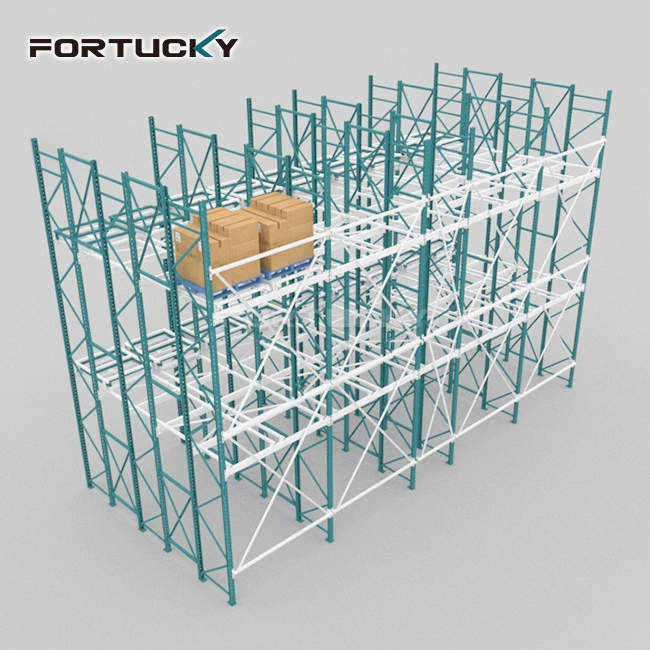
Longspan metal shelving is very different from normal shelving because it has no interior support columns that block the placement of wide or oddly shaped items. These racks are made from high-strength cold-rolled steel and feature Z-profile beams and reinforced side frames to maintain structural integrity across wide spans.
Why Traditional Racking Falls Short?
Standard shelving in many facilities makes it hard for workers to move large packages, as items often have to be broken down by hand into smaller pieces that fit between the uprights. This fix requires a great deal of labor, adds extra handling steps, raises the risk of product damage, and takes up valuable floor space. This bottleneck affects auto sellers who store whole door panels, drug companies that handle large ingredient cases, and electronics makers who store oversized component trays.
Core Design Advantages
The column-free design offers a number of operational advantages. Heavy machinery parts that previously had to be stacked on the floor can now be raised, freeing up ground-level traffic space. Warehouse managers can adjust shelf heights in small increments, allowing them to adapt to yearly changes in goods without completely rebuilding the warehouse. The open layout also makes it easier for forklifts to access items, cutting retrieval times by about 30% compared to standard aisles that are too narrow.
Industry Applications Across Sectors
These systems are widely used in factories that produce fast-moving consumer goods, automotive parts, and cold chain transportation. A battery factory might store large arrays of lithium cells, and a company selling building tools might organize hydraulic cylinders and gearbox assemblies. Agricultural processing centers can handle bulk grain bags, and pharmaceutical businesses can manage temperature-sensitive bulk packaging. Load ratings of 500 kg to 2000 kg per shelf level meet a range of weight needs in these situations.
Key Specifications and Installation Guidelines
Critical Dimensional Considerations
Standard designs have between 2 and 5 storage levels, but they can be customized to fit different ceiling heights and flow needs. Beam lengths usually range from 1800mm to 3000mm, creating storage bays large enough to hold everything from small gadgets to long steel extrusions. Depths between 400 mm and 800 mm prevent front-heavy loads while still allowing forklifts to pass.
Load Capacity Engineering
Weight ratings depend on three factors: the beam gauge thickness, the strength of the upright frame, and the shelf decking material. For example, a system that can hold 1500 kg per level might use 2.0 mm steel beams and stronger welds at the joints. Safety margins typically account for load shifts during truck placement and the possibility of earthquakes in the area. Instead of relying solely on basic load predictions, procurement teams should ensure that capacity calculations include these real-world stress factors.
Installation Best Practices
To make sure that the concrete slabs can handle the total rack weight plus the maximum inventory, the site survey starts with a floor loading analysis. For long-span metal shelving, floors that aren't level by more than 5 millimeters per meter need to be shimmed or leveled before they can be put together. Installation teams can finish a normal 10-bay long-span metal shelving system in two days thanks to the modular bolt-together design, but facilities that are open 24 hours a day, seven days a week may prefer a staged rollout to avoid production interruptions.
As part of regular maintenance, the connections between beams and uprights should be checked every three months for stress cracks near high-use areas. Annual load tests on sample bays ensure ongoing capacity compliance. This is especially important for sites that are changing their inventory profiles.
Comparing Long-Span Metal Shelving with Alternative Storage Solutions
Systematic comparisons with other storage options can help procurement teams find the most cost-effective solutions.
Long-Span Versus Pallet Racking
Pallet racking works very well for high-density storage of uniformly sized palletized loads, whether the racks are set up selectively or as drive-in systems. However, its fixed bay widths make it less efficient when inventory includes items of varying sizes, which adds significant cost. Longspan metal shelving can store both palletized and non-palletized items in the same building, eliminating the need for separate storage areas. A logistics center that handles both standard euro boxes and oversized machinery crates can achieve greater operational flexibility without maintaining two separate infrastructures.
Adjustable Versus Fixed Configurations
Fixed shelves have slightly lower initial costs because they are easier to build, but they are less flexible over the long term. When manufacturers add new products or change the packaging of old ones, their product lines often evolve. To avoid expensive retrofits, manufacturers should use adjustable systems. The upright perforation design allows shelves to be moved in 50 mm increments without tools, meaning warehouse teams can change layouts during scheduled maintenance instead of stopping work for contractors.
Material Selection: Steel Durability Analysis
Cold-rolled steel that has been pickled, phosphated, and electrostatically powder-coated resists rust, which is essential for cool storage or coastal locations exposed to salt air. The finishing process creates a coating strong enough to withstand daily forklift impacts and temperatures ranging from -25°C to 40°C. Alternative materials such as aluminum are lighter, but they are less strong and more expensive for heavy industrial applications.
Procurement Considerations and Choosing the Right Supplier
Supplier choice affects not only the purchase price but also long-term value through support services and customization ability.
Evaluating Total Cost of Ownership
In addition to unit price, procurement research should look at how the goods will be delivered, how they will be installed, and what the guarantee covers, for example, when considering long-span boltless shelving. It may be more expensive to buy from a company that offers 15% lower up-front costs but only offers 12-month warranties and requires third-party installations. Comprehensive solution providers with five-year warranties and rollout services may be a better deal. Integration with current Warehouse Management Systems is another hidden cost that comes up when providers don't offer professional help for connecting WMS and WCS.
Certification and Quality Validation
Reputable manufacturers maintain up-to-date ISO 9001 quality ratings and provide evidence of load testing that meets RMI (Rack Manufacturers Institute) standards. Facilities that must follow OSHA rules should ensure their suppliers comply with the relevant safety regulations for storage equipment. The documentation supporting these certifications should be readily available during the purchasing process, not revealed after the fact.
Customization Capabilities
Standard stock items rarely match a business's specific needs perfectly. Suppliers that have their own engineering teams can change bay depths, add special deck areas for storing small parts, or incorporate safety features such as fall protection nets. Manufacturers that work with Fortune 500 companies typically have research and development teams capable of handling complex customization requests with adequate lead time.
Local Versus International Sourcing
Domestic providers may offer better communication, faster shipping, and easier warranty claims, but they may not be as flexible with customization. International companies that have established logistics networks in the U.S. often provide competitive pricing and a wide product range. The most important factor when evaluating a supplier is their track record with similar-sized deployments and their ability to offer localized technical support, even if their products are manufactured abroad.
 Case Studies and Industry Insights
Real-world implementations show measurable returns that justify investments in advanced storage systems.
Automotive Component Distribution Success
A Midwest car parts distributor serving Mercedes-Benz and BMW shops frequently ran out of space to store whole door assemblies, hoods, and bumper systems. Traditional shelving required stacking boxes vertically, which slowed retrieval times and increased the risk of product damage during overhead crane moves.
By using previously wasted vertical height, the facility increased space density by 45% after installing a long-span metal shelving system with 2000 kg load ratings across 40 bays. Forklift drivers reduced the average item pick time from 4.5 minutes to 2.8 minutes, allowing 18 more orders to be filled per shift. The column-free design also eliminated the safety problems that used to occur when moving cranes through narrow spaces between standard uprights.
Electronics Manufacturing Warehouse Optimization
A contract electronics maker that made parts for high-tech clients needed high-capacity long-span storage shelves that could be easily changed to fit quickly changing bill-of-material configurations. When new product lines came out, they had to partially tear down and rebuild their old set of shelves.
Adjustable long-span systems and modular deck panels could be arranged in different ways to meet the specific size requirements of each production run. The facility recouped its infrastructure investment within 11 months by reducing downtime and contractor fees. By using vertical space more efficiently, 60% more storage positions were added within the same footprint, postponing a planned building expansion for at least three years.
Emerging Technology Integration
New types of smart shelving now incorporate weight sensors and RFID tracking directly into long-span frames. These systems provide real-time inventory visibility, automatically reorder when stock levels drop below certain thresholds, and monitor loads so managers are alerted to excess weight before safety limits are crossed. Digital twin technology enables virtual warehouse design, allowing procurement teams to test different configurations before committing to physical installations.
Sustainability trends also influence material choices. For example, manufacturers are developing powder coatings with fewer volatile organic compounds and designing structures that can be disassembled and recycled at the end of their useful lives. These considerations align with corporate ESG efforts while still meeting the durability standards required for industrial use.
Conclusion
The practical efficiency metrics that procurement professionals and supply chain leaders review every quarter are directly affected by how well warehouse storage infrastructure performs. Longspan metal shelving solves problems that standard systems cannot, such as handling oversized items, maximizing vertical space, and allowing businesses to change their configurations as needs evolve. Column-free designs, load capacities up to 2000 kg, and adjustable height setups are engineering features that deliver real-world returns by increasing storage density and reducing handling times. Successful applications in automotive, electronics, and transportation industries demonstrate measurable improvements in throughput and space utilization that justify capital investments for medium to large businesses seeking warehouse optimization and digital transformation.
FAQ
1. What load capacity should we specify for automotive parts storage?
The weight profiles of automotive parts vary greatly. Full door systems can weigh anywhere from 80 to 150 kg, engine blocks up to 200 kg, and bulk fastener cases up to 500 kg. Specifying a range of 1000 kg to 1500 kg per level provides safety margins for a mixed inventory without over-engineering. Heavier items, such as transmission parts stored separately, may require 2000 kg ratings.
2. How does the installation timeline impact operational continuity?
Modular bolt-together designs allow installation to be staged during weekends or off-shifts. It usually takes three to four days to fully assemble a 20-bay system, including safety checks. Facilities with continuous production schedules can use zone-by-zone deployment to gradually move existing inventory so workflow is not interrupted.
3. Can these systems integrate with existing WMS platforms?
Good providers can supply barcode scanners, RFID readers, and weight sensors that connect to warehouse management systems through standard protocols. The complexity of integration depends on the WMS design, but well-known systems like SAP, Oracle, and Manhattan Associates can handle long-span configurations with their built-in modules.
Partner with Fortucky: Your Longspan Metal Shelving Manufacturer for Advanced Warehouse Solutions
To get the most out of your warehouse infrastructure, you need a partner who has experience in manufacturing, transportation, and industrial technology. Fortucky has done more than 1,000 successful projects for Fortune 500 companies in Asia, Europe, and the Americas. These companies include automakers and electronics makers. Our longspan metal shelving systems can be set up in a variety of ways and can hold up to 2000 kg per level. They were designed by a dedicated research and development team working out of production sites that can connect to 5G networks. We offer complete solutions that include design advice, help with integrating WMS, and regional rollout services. Our services are backed by certifications that meet international quality standards. To talk about your unique storage needs and get personalized advice from an experienced longspan metal shelving provider dedicated to helping you maximize your business efficiency and return on investment (ROI), please contact our team at sales@fortuckyrobot.com.
References
1. Material Handling Industry of America. (2022). Storage Systems and Equipment Standards for Industrial Applications. Charlotte: MHIA Publications.
2. Bartholdi, J.J. & Hackman, S.T. (2021). Warehouse & Distribution Science: Release 0.98. Atlanta: Supply Chain and Logistics Institute.
3. Richards, G. (2022). Warehouse Management: A Complete Guide to Improving Efficiency and Minimizing Costs in the Modern Warehouse (3rd ed.). London: Kogan Page.
4. Rack Manufacturers Institute. (2021). ANSI MH16.1: Specification for the Design, Testing and Utilization of Industrial Steel Storage Racks. Charlotte: RMI.
5. Frazelle, E. (2020). World-Class Warehousing and Material Handling (2nd ed.). New York: McGraw-Hill Education.
6. Mulcahy, D.E. (2023). Materials Handling Handbook: Storage and Warehousing Systems Design. New York: McGraw-Hill Professional.
Learn about our latest products and discounts through SMS or email