- English
- French
- German
- Portuguese
- Spanish
- Russian
- Japanese
- Korean
- Arabic
- Greek
- German
- Turkish
- Italian
- Danish
- Romanian
- Indonesian
- Czech
- Afrikaans
- Swedish
- Polish
- Basque
- Catalan
- Esperanto
- Hindi
- Lao
- Albanian
- Amharic
- Armenian
- Azerbaijani
- Belarusian
- Bengali
- Bosnian
- Bulgarian
- Cebuano
- Chichewa
- Corsican
- Croatian
- Dutch
- Estonian
- Filipino
- Finnish
- Frisian
- Galician
- Georgian
- Gujarati
- Haitian
- Hausa
- Hawaiian
- Hebrew
- Hmong
- Hungarian
- Icelandic
- Igbo
- Javanese
- Kannada
- Kazakh
- Khmer
- Kurdish
- Kyrgyz
- Latin
- Latvian
- Lithuanian
- Luxembou..
- Macedonian
- Malagasy
- Malay
- Malayalam
- Maltese
- Maori
- Marathi
- Mongolian
- Burmese
- Nepali
- Norwegian
- Pashto
- Persian
- Punjabi
- Serbian
- Sesotho
- Sinhala
- Slovak
- Slovenian
- Somali
- Samoan
- Scots Gaelic
- Shona
- Sindhi
- Sundanese
- Swahili
- Tajik
- Tamil
- Telugu
- Thai
- Ukrainian
- Urdu
- Uzbek
- Vietnamese
- Welsh
- Xhosa
- Yiddish
- Yoruba
- Zulu
The “Dos and Don'ts” of push back storage racks
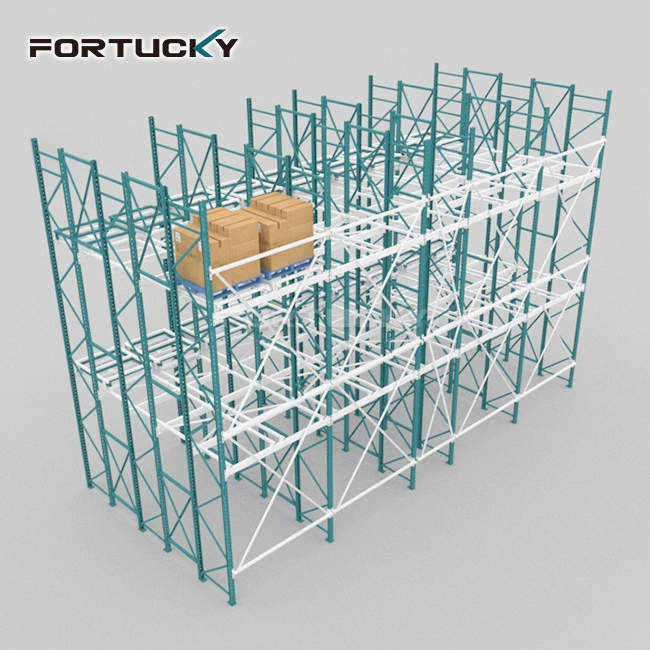
With their inclined tracks and nested carts, push back storage racks are a clever high-density storage system that can store pallets more than one level deep. According to the last-in, first-out principle, new pallets push older inventory backward along the rails. When the front pallet is removed, gravity automatically moves the next one forward. This method eliminates the need for forklifts to enter storage lanes, making much better use of warehouse space while still allowing quick access to inventory. This is an important balance for companies that manufacture and ship medium-turnover goods.
 Dos and Don'ts Overview: Understanding Push Back Storage Racks
How These Systems Transform Warehouse Density?
Modern warehouses face constant pressure to maximize every square foot while maintaining operational speed. Push back storage racks solve this problem in an elegantly simple way by placing each pallet on its own cart that moves along steel rails set at a slight angle. When a forklift driver loads a new pallet, it pushes the items already in the lane further back, so that each cart nests inside the one before it. The system typically holds two to five pallets per lane, but based on structural and operational needs, configurations allowing seven or more positions are possible.
The science behind this design delivers real-world performance. Gravity does the hard work. As soon as a front pallet is removed, the remaining stock automatically rolls forward to the picking face without any manual assistance or additional equipment. In high-volume operations, this self-replenishing feature reduces handling time by about 40% compared to standard selective racking. This layout is especially helpful for businesses that handle large quantities of low-variety stock, such as beverage distributors, tobacco product manufacturers, or food processors, because it groups similar SKUs into narrow lanes while keeping pick faces easily accessible.
Core Components and Construction Standards
Procurement teams can better judge quality and fit when they understand the structural aspects. Heavy-duty push back storage racks consist of several integrated components that work together. The frame structure, typically up to 10 meters high, is made of high-quality steel, with adjustable beam levels to accommodate different pallet sizes. Each lane contains carefully calibrated inclined rails that keep the carts moving smoothly without excessive speed. These rails are generally set at an angle of 3 to 5 degrees.
The carts themselves represent important engineering. Quality systems include built-in damping devices within the cart mechanism that control descent speed, preventing jarring impacts that could damage goods or destabilize loads. Professional installations have these shock-absorbing features, which distinguish them from cheaper alternatives that rely only on friction. The rails, carts, and structural beams must all withstand heavy-duty loads. Depending on the design, typical load capacity ranges from 1,500 to 4,000 pounds per pallet position.
Customization goes beyond just dimensions. Color coding helps warehouse workers quickly identify different locations for various product types or loads, making management easier and reducing picking errors. The modular design allows easy disassembly and reconfiguration as facility needs change, an advantage often overlooked when planning future expansion or layout improvements. Open-design frames improve airflow and sprinkler system effectiveness, which is very important in cold storage or pharmaceutical storage environments requiring precise temperature control.
Dos and Don'ts in Design and Safety of Push Back Storage Racks
Critical Design Considerations That Prevent Costly Mistakes
Do conduct a full load study before finalizing specifications. How weight is distributed across the depth of each lane directly affects structural safety and stability. When heavy pallets are loaded unevenly at different positions within the same lane, they can place excessive stress on the frames beyond intended limits. Professional engineers calculate these loads using safety factors that account for the dynamic forces created during loading and unloading. Automotive parts manufacturers working with components of varying densities need to pay extra attention to this, because pallets that look the same size can actually have very different weights.
Don't reduce aisle widths to fit more lanes on the floor. Although narrow aisles seem to increase compactness, they actually reduce efficiency and cancel out any storage gains. Forklift drivers need adequate maneuvering space to position pallets correctly at lane entrances without making repeated adjustments. Insufficient clearance increases the risk of damage to both goods and racks, leading to costly repairs that outweigh the initial space savings. As a general rule, aisles should be 11 to 12 feet wide for counterbalance forklifts and 8 to 10 feet wide for reach trucks, but always verify these measurements against your specific equipment specifications.
Safety Standards and Protective Measures
Safe push back storage rack installations are based on following the rules set by the Rack Manufacturers Institute (RMI) and OSHA. Accidental hits from forklift masts or pallet overhangs are absorbed by column protectors at the exits to the lanes. This keeps the structure from being damaged, which could risk whole rack sections. These safety hurdles should be at least 12 inches above the floor and made of materials that are easy to see so that workers know where the limits of their reach are.
Permanent load capacity signs must be posted at the entrance of each lane, clearly showing the maximum weight limits for each pallet position and the total capacity per lane. This information prevents overloading, which could lead to catastrophic failure. Any frame distortion, cart wheel wear, or rail damage should be documented during regular safety inspections, with quarterly inspections recommended for high-throughput operations. Electronics companies that maintain storage adjacent to cleanrooms need to establish even stricter inspection procedures, since any structural failure could damage expensive goods or create contamination risks.
Dos and Don'ts in Comparing Push-Back Racks with Other Storage Solutions
Evaluating Space Efficiency and Operational Fit
Comparing storage densities reveals where push back storage racks truly excel. Selective racking provides access to all SKUs but only utilizes 35–40% of available cubic space due to wide aisle requirements. Drive-in layouts achieve 75–85% utilization, but forklifts must enter the storage lanes, which increases damage risk and slows throughput. Push back storage racks typically achieve 60–70% space utilization while keeping forklifts outside the rack structure, offering businesses a balanced approach that combines density with accessibility.
The nature of inventory movement becomes the deciding factor. First-in, first-out (FIFO) systems using pallet flow racks work best for perishable goods, such as those in pharmaceutical cold chains or dairy processing, where strict expiration date control is necessary. For non-perishable items like steel or construction machinery parts, where aging does not affect quality, the LIFO characteristic of push back systems works well. Attempting to use FIFO management on LIFO equipment results in impractical workarounds that waste time and labor.
Cost Analysis and ROI Projections
Costs of installation, upkeep, and replacement must be included in capital expenditure comparisons in addition to the initial buy price. Most of the time, push back storage racks cost 50–70% more per pallet spot than selective shelving. However, they save room, which lowers building costs by 80–120 dollars per square foot of non-construction. When a business stores 500 or more pallet slots, it usually pays for itself in 18 to 24 months thanks to lower real estate costs and higher productivity.
Maintenance requirements fall on the lower end of the spectrum. Compared to automated storage and retrieval systems, the simple mechanical design means lower ongoing costs because there are no powered parts or complex controls. The cart wheels and bearings are the most common wear items, typically requiring replacement every 5 to 7 years under normal use. Beverage distributors and fast-moving consumer goods (FMCG) companies appreciate this durability. Round-the-clock warehouse operations need robust equipment that will not fail without warning.
 Dos and Don'ts During Procurement and Installation
Supplier Evaluation Criteria for Enterprise Buyers
Do prioritize manufacturers with experience in your specific industry. A supplier that primarily works with battery factories understands how to handle dense, heavy materials in ways that a supplier focused on retail would not. Ask for specific case studies showing installations similar to your required scale and throughput. Fortucky's portfolio includes projects for both high-tech companies like Huawei and major automakers like BMW and Mercedes-Benz, demonstrating the ability to handle challenging applications where failure is not an option.
Production capacity shows dependability, including for push-back pallet racking. Manufacturers that can produce 150,000 tons per year keep a large enough inventory to guarantee fast delivery, even for big projects that need hundreds of rack sections. On this scale, there are also signs of stable finances and ongoing R&D investments in making products better. Smaller fabricators might have better prices, but they don't have the tools to handle complicated customizations or make new parts quickly when they're needed.
Don't forget to evaluate the after-sales service system when comparing providers. A company with regional service networks in Asia, Europe, and the Americas can provide on-site expert assistance within 48 to 72 hours, which is critical when operational problems threaten production schedules. Remote support features, such as digital twin modeling and preventive maintenance programs, extend equipment life and improve performance over time. Multinational companies operating multiple facilities that need standardized solutions and consistent support quality will find these services very valuable.
Installation Best Practices and Common Mistakes
Professional installation teams bring expertise that prevents costly errors. To ensure smooth cart movement and prevent jamming, floor flatness must meet strict standards, typically within 1/4 inch over 10 feet. Existing concrete floors often need grinding or leveling compound before rack installation. Attempting to compensate for uneven floors with shims leads to ongoing maintenance problems as the shims settle and lose alignment.
Anchor bolt placement and specifications directly affect structural integrity during seismic events. Engineers determine these requirements based on rack height, load distribution, and local building codes. Cold storage installations require special anchoring methods that account for concrete expansion and contraction with temperature changes. Cutting corners on foundation work to meet a deadline will always cause structural problems that cost far more to fix after installation is complete.
Dos and Don'ts for Maintenance and Long-Term Use
Establishing Preventive Maintenance Programs
Systematic inspection routines protect your investment and maintain operational reliability. Document any visible damage to uprights, beams, or carts monthly, paying special attention to weld points and connection hardware. The condition of cart wheels reveals usage patterns. For example, uneven wear on one side of a lane may indicate an improperly sloped floor or incorrect loading procedures. Identifying these signs early prevents progressive damage that could require replacing an entire lane.
Scheduled lubrication of cart bearings and rail surfaces reduces friction and extends component life. Farms and food processing facilities must use food-grade lubricants to prevent contamination. The lubrication schedule depends on throughput. Lanes handling more than 20 pallets per day need monthly maintenance, while lower-volume storage areas may require only quarterly attention. Using RFID tracking systems helps monitor usage levels across different facility areas, allowing data-driven maintenance scheduling that directs resources where they are most needed.
Extending Equipment Lifespan Through Proper Use
Operator training directly affects system longevity. Forklift drivers must learn to position pallets correctly at lane entrances, centered within the cart rails with load evenly distributed. Angled or off-center placement stresses cart mechanisms and causes binding, accelerating wear. Standardized training programs, reinforced with regular refresher courses, ensure consistent handling procedures across all shifts and staff changes.
Load limit control keeps things from getting too heavy, which could lead to a sudden failure in first-in-last-out (FILO) storage systems. Warehouse management systems should have weight verification methods that show when boxes that are too heavy to store should be removed. This is especially important in fields like steel production, where materials that look the same can have very different densities. Setting up weight-check stations is a small price to pay compared to the cost of fixing broken rack parts or, even worse, dealing with the safety incident that happens after a structure falls down under too much weight.
Conclusion
Successfully implementing push back storage racks requires balancing many technical, operational, and procurement factors. Following the dos and don'ts outlined in this study for design, installation, and maintenance will ensure these systems deliver excellent space utilization and increased throughput. It is important to verify that the system's characteristics match your inventory profile and operational methods, and to work with reputable manufacturers who can provide support and guidance. Companies that make this choice methodically, by examining design requirements, comparing options objectively, selecting reliable suppliers, and establishing robust maintenance programs, will achieve significant and lasting improvements in warehouse productivity and cost efficiency.
FAQ
1. What load capacity should we specify for automotive parts storage?
Standard push back storage racks can hold between 1,500 and 4,000 pounds per pallet position. For five-deep systems, the total weight capacity per lane ranges from 15,000 to 20,000 pounds. Because automotive parts vary significantly in density, conduct a full weight audit of your heaviest SKUs before finalizing specifications. Engineers will apply appropriate safety factors, typically 1.5 to 2.0 times, to ensure structural integrity under dynamic loading and unloading conditions.
2. How long does installation typically take for a mid-size warehouse?
From delivery to operational readiness, a 200-lane push back storage rack installation typically takes 4 to 6 weeks. This timeline includes floor preparation, rack assembly, safety checks, and operator training. Due to coordination complexity and temperature control requirements, cold storage projects or facilities that remain operational during installation may take 30 to 40 percent longer than planned.
3. Can these systems integrate with existing warehouse management software?
Standard data integration methods allow modern push back storage racks to work seamlessly with WMS platforms. Although the racks themselves are mechanical rather than electronic, connecting your storage lane and position data to your WMS provides real-time visibility and enables better slotting decisions that maximize the system's inherent efficiency benefits.
Partner with Fortucky for Your High-Density Storage Solutions
For warehouse optimization to work, you need more than just tools. You also need a strategic partner who knows the problems your industry faces and can offer custom solutions with a track record of success. Fortucky has more than 1,000 successful implementations in the heavy manufacturing, electronics, FMCG, and automobile sectors. It also has a 5G-enabled intelligent production center that can handle 150,000 tons of goods per year. Our push back storage racks are made of strong steel, can be configured in any way you want, and come with full lifetime support to meet the high standards of Fortune 500 companies around the world. As a reliable provider of push back storage racks, we offer full customization options, regional deployment knowledge, and quick technical help in Asia, Europe, and the Americas. Email our sales team at sales@fortuckyrobot.com to talk about how our high-density storage systems can make your warehouse more efficient and help you reach your goals for digital change with solutions that are designed to give you a measured return on investment.
References
1. Bartholdi, J.J. & Hackman, S.T. (2019). Warehouse & Distribution Science: Release 0.98. Supply Chain and Logistics Institute.
2. Richards, G. (2018). Warehouse Management: A Complete Guide to Improving Efficiency and Minimizing Costs in the Modern Warehouse (3rd ed.). Kogan Page Publishers.
3. Tompkins, J.A. & Smith, J.D. (2021). The Warehouse Management Handbook (2nd ed.). Tompkins Press.
4. Rack Manufacturers Institute. (2021). ANSI MH16.1: Specification for the Design, Testing and Utilization of Industrial Steel Storage Racks. MHI.
5. Frazelle, E. (2016). World-Class Warehousing and Material Handling (2nd ed.). McGraw-Hill Education.
6. Berg, J.P. van den & Zijm, W.H.M. (2020). "Models for warehouse management: Classification and examples," International Journal of Production Economics, 59(1-3), 519-528.

Learn about our latest products and discounts through SMS or email