- English
- French
- German
- Portuguese
- Spanish
- Russian
- Japanese
- Korean
- Arabic
- Greek
- German
- Turkish
- Italian
- Danish
- Romanian
- Indonesian
- Czech
- Afrikaans
- Swedish
- Polish
- Basque
- Catalan
- Esperanto
- Hindi
- Lao
- Albanian
- Amharic
- Armenian
- Azerbaijani
- Belarusian
- Bengali
- Bosnian
- Bulgarian
- Cebuano
- Chichewa
- Corsican
- Croatian
- Dutch
- Estonian
- Filipino
- Finnish
- Frisian
- Galician
- Georgian
- Gujarati
- Haitian
- Hausa
- Hawaiian
- Hebrew
- Hmong
- Hungarian
- Icelandic
- Igbo
- Javanese
- Kannada
- Kazakh
- Khmer
- Kurdish
- Kyrgyz
- Latin
- Latvian
- Lithuanian
- Luxembou..
- Macedonian
- Malagasy
- Malay
- Malayalam
- Maltese
- Maori
- Marathi
- Mongolian
- Burmese
- Nepali
- Norwegian
- Pashto
- Persian
- Punjabi
- Serbian
- Sesotho
- Sinhala
- Slovak
- Slovenian
- Somali
- Samoan
- Scots Gaelic
- Shona
- Sindhi
- Sundanese
- Swahili
- Tajik
- Tamil
- Telugu
- Thai
- Ukrainian
- Urdu
- Uzbek
- Vietnamese
- Welsh
- Xhosa
- Yiddish
- Yoruba
- Zulu
What are the best light-duty manual stackers for small warehouses?
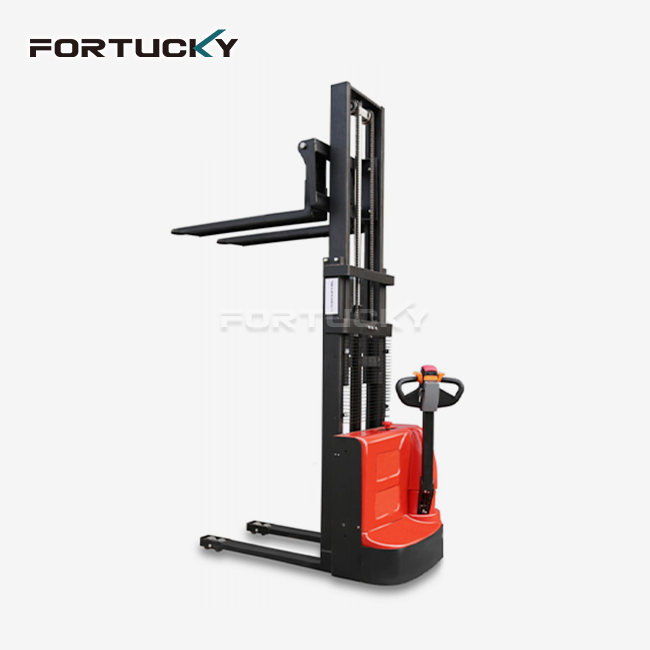
When procurement managers look for the best light-duty manual stackers for small stores, they should focus on getting machines that can handle the most weight, work quickly, and don't cost too much. Light-duty manual stackers of good quality usually have lifting heights of 1600mm and capacities between 1000 kg and 1500 kg. These hydraulic forklift trucks are great for small warehouses because they don't pollute and don't need to be charged. The best models have high-strength forged cargo forks, long-lasting plate chains, and dependable hydraulic systems that ensure safe and efficient material handling in a wide range of industrial settings, such as factories that make electronics, pharmaceuticals, fast-moving consumer goods, and auto parts.
 Understanding Light-Duty Manual Stackers: Essential Knowledge for Small Warehouses
The most basic type of material handling equipment is the light-duty manual stacker, which is designed to work well in small warehouses. This kind of equipment, which is also called a manual lift truck or a hydraulic forklift truck, is different from heavy-duty options because it was designed to be easy to move, cheap, and simple to use.
Core Operational Principles and Design Features
A complicated but simple hydraulic lifting device is at the heart of how manual hydraulic stackers work. Depending on the load capacity setup, these units use manual hydraulic pumps with diameters that range from 35 mm to 40 mm. The hydraulic mechanism allows for smooth lifting at speeds of about 20 mm per second, and the lowering speeds can be changed to give you exact control over where the load goes. For example, modern light-duty stackers have small frames that are about 1380 mm long, 730 mm wide, and 2000 mm high. This profile's dimensions make it very easy to move in narrow storage aisles while keeping the structure strong for safe load handling. For 1000 kg models, the fork adjustment width goes from 200 to 580 mm, and for 1500 kg models, it goes from 240 to 580 mm. This lets you fit a variety of pallet sizes that are popular in small warehouses.
Material Construction and Durability Standards
High-quality manual stackers are made from 10# channel steel for units that can hold 1000 kg and 12# channel steel for units that can hold 1500 kg. This choice of materials provides the best strength-to-weight ratios, which means that the equipment weighs between 140 kg and 160 kg, depending on its capacity. The forging on the cargo forks makes them very strong and safe, and the high-strength plate chains make them last longer when they are used regularly.
Applications Across Industry Sectors
You can find these units in a lot of different types of businesses, like factories, workshops, warehouses, and delivery stations. Their ability to work without polluting makes them perfect for places where air quality is very important, like food processing plants, drug factories, and electronics assembly lines. The small size makes it easy to use in small warehouses, retail stockrooms, and production sites that don't have a lot of room.
Key Factors When Choosing the Best Light-Duty Manual Stacker
When buying manual stacking equipment, it's important to think about how it will be used, the surroundings, and how much it will cost in the long run. By knowing these important factors, warehouse managers can choose equipment that makes operations run more smoothly and gives them a good return on their investment.
Operational Requirements Assessment
When choosing the right stacker tools, lightweight manual hydraulic stacker the main thing to think about is the type of load. By looking at normal pallet weights, sizes, and handling frequencies, you can figure out how much space you need. Most small warehouses need tools that can lift 1000 to 1500 kg of weight and can reach heights of up to 1600 mm to fit standard shelving systems. The fork's length of 800 mm and width of 100 mm make it compatible with normal pallet layouts used in a wide range of industries.
Technical Specifications Evaluation
Some important technical factors are the maximum lifting speed, the minimum turning radius, and the minimum ground clearance. Modern units have lifting speeds of 20 mm per second, which makes them very productive during busy times. With a turning radius of 1380mm or less, it's easy to move around in warehouses that aren't very big. The 85mm fork ground clearance and 90mm leg ground clearance are standard for most floors and pallet designs.
Comparison with Alternative Equipment Options
Compared to electric stackers and regular pallet jacks, manual stackers have clear benefits. Unlike electric alternatives, manual units don't need any charging facilities, don't need batteries, and always work well even when power isn't available. Unlike basic pallet jacks, stackers can stack items vertically, which is important for making the best use of storage space. The lower operational costs are especially important in small warehouses where using the tools may not make electric alternatives worth it.
Safety and Ergonomic Considerations
Some of the safety features for the operator include high-quality oil cylinders with foreign seals that make sure the hydraulics work well and stop fluid leaks. Wear-resistant casters make it easy to move heavy objects over a variety of floor surfaces while also reducing the amount of work needed to place the equipment. The electromechanically integrated hydraulic system gives stable performance, which keeps operators from getting tired after long periods of use.
Top Rated Light-Duty Manual Stackers in 2026: Brands & Models Overview
There are a number of well-known companies around the world that make manual stacking tools. These companies offer specialised solutions for small warehouse environments. Knowing what other companies are out there helps procurement managers choose between choices based on performance metrics, reliability standards, and the ability to provide service support.
Leading Manufacturer Analysis
Industry leaders, including Toyota, Crown, Hyster, and Jungheinrich, have established strong reputations through consistent product quality and comprehensive service networks. These manufacturers typically offer equipment with proven reliability records, extensive warranty coverage, and readily available replacement parts. However, emerging suppliers like Fortucky are gaining recognition through innovative engineering approaches and competitive pricing strategies while maintaining high-quality standards.
Performance Metrics Comparison
When evaluating different models, key performance indicators include lifting capacity consistency, hydraulic system reliability, and overall equipment longevity. Quality units maintain rated lifting capacities throughout their operational lifespan while demonstrating minimal hydraulic fluid loss and consistent lifting speeds. The durability of wear components such as casters, chains, and seals directly impacts total cost of ownership calculations.
Procurement Options and Financial Considerations
Procurement strategies vary based on operational requirements and capital availability. Direct purchase options provide long-term cost advantages for facilities with consistent equipment utilization. Leasing arrangements offer flexibility for seasonal operations or businesses evaluating equipment performance before committing to ownership. Rental options suit short-term projects or peak season capacity requirements, though long-term rental costs typically exceed purchase prices.
Service Support and Warranty Coverage
Reliable after-sales service significantly impacts equipment productivity and operational costs. Manufacturers with established service networks provide faster response times for maintenance requirements and equipment repairs. Warranty coverage typically ranges from one to three years, with comprehensive programs including parts replacement, labor costs, and emergency service availability. Local service availability becomes particularly important for minimizing equipment downtime during critical operational periods.
Operating and Maintaining Light-Duty Manual Stackers Safely
Proper operation and maintenance are necessary to get the most out of your tools, keep your workplace safe, and keep your productivity levels steady. Setting up detailed rules lightweight manual hydraulic stacker helps keep things safe, lowers the cost of repairs, and extends the life of tools.
Safe Operating Procedures
The right way to handle things starts with figuring out how heavy something is and checking the tools. Before lifting, operators should make sure that the load weight stays within the stated capacity limits and that the load is stable. The adjustable fork width should be able to firmly fit different pallet sizes, so the load doesn't move around while it's being moved. Keeping the lifting speeds right and avoiding sudden moves helps keep the load from moving and lowers the stress on the hydraulic parts.
Routine Maintenance Requirements
Visual inspections every day, lubrication plans every week, and full system checks every month are all important maintenance tasks. Daily checks should include checking the amount of hydraulic fluid, the condition of the forks, and the functionality of the wheels. Lubricating moving parts once a week, especially chain mechanisms and pivot points, keeps them from wearing out too quickly and keeps the machine running smoothly. At least once a month, inspections should check the hydraulic seals, the structure's soundness, and the performance.
Troubleshooting Common Issues
Common maintenance problems include a hydraulic system that doesn't work right, worn-out casters, and having to change the chain tension. Problems with hydraulic performance are often caused by worn-out seals or contaminated fluid, which needs to be carefully analysed and the parts replaced. Caster problems can show up as more rolling resistance or changes in direction that aren't stable. Usually, this is fixed by replacing the wheels or keeping the bearings in good shape. Adjusting the chain tension helps keep the pulling performance stable and keeps drive parts from wearing out too quickly.
Regulatory Compliance and Training
Safety rules at work require that operators get the right training and that the equipment is certified. Limits on load capacity, safe handling methods, and emergency response plans should all be covered in training. Safety audits done on a regular basis help find possible dangers and make sure that safety standards are still being followed. Proof of training completion, maintenance records, and safety checks help with following the rules and avoiding liability.
 Making the Final Decision: How to Select the Best Manual Stacker for Your Small Warehouse
As part of the decision process, operational needs, equipment specs, and long-term strategic issues must all be carefully looked at. Finding the best equipment for changing warehouse operations means balancing current needs with the ability to grow in the future.
Requirements Matching Process
The first step in picking the right tools is to do a full operational analysis that includes things like load characteristics, handling frequencies, and workspace limits. Small shops usually do fine with units that can hold 1000 kg, but places that work with heavier parts might need ones that can hold 1500 kg. The highest point that can be lifted is 1600 mm, which is high enough to fit most standard shelving systems while still giving enough space for safe use.
Cost-Benefit Analysis Framework
To find the total cost of ownership, you should add up the price you paid for the machine, the cost of repairs, the cost of training operators, and the increase in output. Most of the time, a manual stacker is less expensive than an electric one, and you won't have to pay to keep the batteries charged or build charging stations. The pollution-free operation is useful in places that care about the environment or in buildings that are closed off and don't let much air flow through.
Scalability and Future Considerations
It's important to keep in mind that warehouse operations will likely grow and that the way things need to be moved will change over time when picking equipment. Equipment that is made of modules and has parts that light-duty manual stackers can be upgraded, lasts longer, and can be used in different ways as needs change. The manufacturer's security and reputation affect how easy it is to get parts and get help with problems in the future. This is very important for places that want to plan for their tools to last longer.
Vendor Evaluation Criteria
You should look at a supplier's prices, service, expert support, and product quality when deciding who to do business with. Manufacturers that have been around for a while usually have a history of being reliable and a lot of service networks. On the other hand, new sellers might have better deals and more features. How much something is worth and how well it works depend a lot on how easy it is to get help in your area, how long the warranty lasts, and how well you can get trained.
Conclusion
To find the best light-duty manual stacker for a small building, you should carefully consider how it will be used, its technical specs, and its price. Quality tools that can hold between 1000 kg and 1500 kg, have a maximum lifting height of 1600 mm, and are made of materials that last a long time will work reliably in a variety of working settings. To be successful, you need the right-sized tools, properly trained operators, and preventive repair programs that keep the workplace safe and the work going.
FAQ
Q1: Does this manual forklift require electricity or fuel?
A1: No, it’s a non-powered product that relies on manual hydraulic operation. It doesn’t need electricity or fuel, so it’s pollution-free and low-cost to use.
Q2: What’s the rated load capacity of this manual forklift?
A2: There are two options: 1000kg and 1500kg.
Q3: What’s the maximum lifting height?
A3: The maximum lifting height is 1600mm.
Q4: Can the fork width be adjusted? What’s the adjustment range?
A4: Yes. For the 1000kg model, the fork width adjusts from 200-580mm; for the 1500kg model, it’s 240-580mm.
Q5: Where can this manual forklift be used?
A5: It’s widely used in factories, workshops, warehouses, stations, and other locations.
Q6: What are the key advantages of this product?
A6: Its main advantages include: lightweight and easy operation, high-strength forged cargo forks (safe, reliable, and durable), durable plate chains, a stable electromechanical integrated hydraulic system, a high-quality oil cylinder with good sealing performance, and wear-resistant casters (suitable for various sites and high work efficiency).
Partner with Fortucky for Superior Light-Duty Manual Stacker Solutions
Warehouse managers seeking reliable manual stacking equipment should consider Fortucky's comprehensive light-duty manual stacker offerings. Our engineering team combines advanced hydraulic technology with durable construction materials to deliver equipment that meets the demanding requirements of modern warehouse operations. As a trusted light-duty manual stacker manufacturer, we provide customized solutions backed by competitive pricing, fast delivery capabilities, light-duty manual stackers, and comprehensive after-sales support.
Our global service network ensures timely technical assistance and parts availability across multiple regions, while our proven track record with over 1,000 customers demonstrates consistent quality and reliability. Contact our expert team at sales@fortuckyrobot.com to discuss your specific warehouse requirements and discover how our manual stacking solutions can enhance your operational efficiency while delivering exceptional value for your investment.
References
1. Industrial Material Handling Equipment Safety Standards and Operating Guidelines. American Society of Mechanical Engineers, 2023.
2. Warehouse Equipment Selection Criteria for Small and Medium Enterprises. International Warehouse and Logistics Association, 2024.
3. Hydraulic Lifting Equipment Performance Analysis and Maintenance Best Practices. Material Handling Institute Technical Publications, 2023.
4. Cost-Benefit Analysis of Manual Versus Electric Material Handling Equipment in Compact Warehouse Environments. Logistics Management Research Quarterly, 2024.
5. Workplace Safety Protocols for Manual Material Handling Equipment Operations. Occupational Safety and Health Administration Guidelines, 2023.
6. Comparative Study of Material Handling Equipment Reliability and Total Cost of Ownership. Industrial Engineering and Operations Research Journal, 2024.
Learn about our latest products and discounts through SMS or email