- English
- French
- German
- Portuguese
- Spanish
- Russian
- Japanese
- Korean
- Arabic
- Greek
- German
- Turkish
- Italian
- Danish
- Romanian
- Indonesian
- Czech
- Afrikaans
- Swedish
- Polish
- Basque
- Catalan
- Esperanto
- Hindi
- Lao
- Albanian
- Amharic
- Armenian
- Azerbaijani
- Belarusian
- Bengali
- Bosnian
- Bulgarian
- Cebuano
- Chichewa
- Corsican
- Croatian
- Dutch
- Estonian
- Filipino
- Finnish
- Frisian
- Galician
- Georgian
- Gujarati
- Haitian
- Hausa
- Hawaiian
- Hebrew
- Hmong
- Hungarian
- Icelandic
- Igbo
- Javanese
- Kannada
- Kazakh
- Khmer
- Kurdish
- Kyrgyz
- Latin
- Latvian
- Lithuanian
- Luxembou..
- Macedonian
- Malagasy
- Malay
- Malayalam
- Maltese
- Maori
- Marathi
- Mongolian
- Burmese
- Nepali
- Norwegian
- Pashto
- Persian
- Punjabi
- Serbian
- Sesotho
- Sinhala
- Slovak
- Slovenian
- Somali
- Samoan
- Scots Gaelic
- Shona
- Sindhi
- Sundanese
- Swahili
- Tajik
- Tamil
- Telugu
- Thai
- Ukrainian
- Urdu
- Uzbek
- Vietnamese
- Welsh
- Xhosa
- Yiddish
- Yoruba
- Zulu
What is the working principle of the Two Way Shuttle?
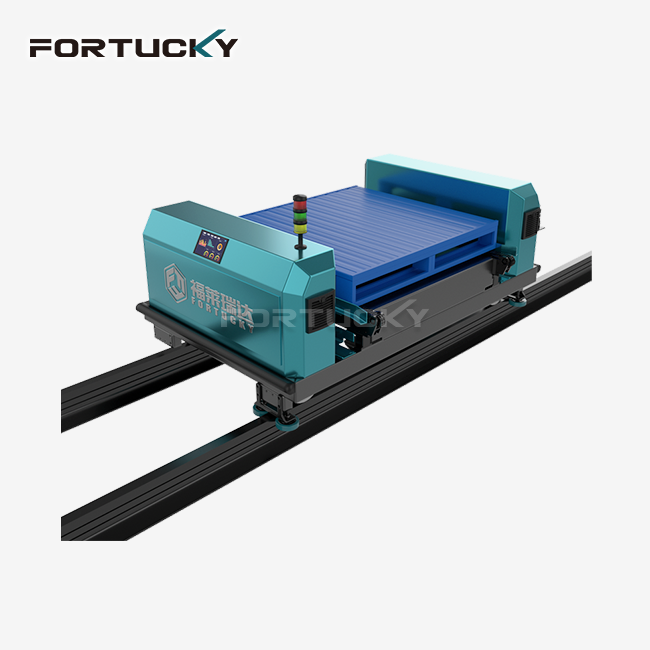
When storage room is your most valuable asset, learning about bidirectional pallet automation goes from being a nice-to-know technical detail to a strategic must. The Two Way Shuttle makes moving pallets forward and backward easy; it is a smart, semi-automated robot that travels on wheels inside storage racks. Unlike forklifts that normally have to go into deep lanes and risk damaging the structure, this method separates the lifting equipment from the racking structure. A forklift drops off the load at the entrance to the lane, and the shuttle moves it to the correct position on its own. It then moves backward to get ready for the next run. This ability to work in both directions greatly raises throughput while lowering operational risk and reliance on labor.
 Understanding the Two Way Shuttle System: Core Working Principle
Modern warehouses need better ways to move goods, and the Two-Way Shuttle delivers just that. This system is made up of four main parts that all work together: the shuttle car, precision guide tracks, vertical lifts, and an intelligent control architecture.
The Shuttle Vehicle: Heart of the Operation
With its telescopic legs or platform components, the shuttle unit resembles a low-profile robotic cart. It receives a loaded pallet from a forklift or conveyor when placed at the entrance to a rack. Movement along horizontal rails built into the rack frame is powered by onboard brushless motors, often imported for high-performance and heavy-duty models. Laser sensors and photoelectric arrays made in Germany provide constant position feedback with an accuracy of ±2–3 mm. This ensures safe pallet placement, even in lanes that are 40 or more pallets deep and extremely dense.
Large lithium iron phosphate batteries inside the shuttle body provide power. Under normal circumstances, these energy sources can run continuously for 8 to 10 hours. Professional-grade units are designed for various conditions. For example, low-temperature versions have fully sealed battery compartments with built-in heating elements, keeping the units operational in -25°C conditions common in cold chain logistics.
Rail Infrastructure and Rack Integration
The shuttle moves along guide rails directly attached to the rack beams. Unlike floor-based AGV systems, this elevated design does not interfere with material flow at ground level and makes optimal use of storage space. Leveling the rails remains critical—industry standards require floors to be at least FM2 flat to prevent shifting that could lead to alignment problems and friction.
The operating mode is determined by how the racks are set up. True first-in, first-out (FIFO) inventory rotation is possible with drive-through configurations that have entry aisles on both ends. Shuttles load from one end and retrieve from the other. Drive-in setups enable LIFO systems, which are excellent for storing high-volume, low-SKU items where density matters more than inventory age.
Control Systems: The Intelligence Layer
There are three levels of operational control. Basic models have handheld remote controls operating on RF bands, allowing users to move the shuttle manually. Mid-level systems connect to Warehouse Control Systems through wireless modules, enabling automatic task assignment based on real-time warehouse needs. Advanced models with integrated stackers and network connectivity can link directly to Warehouse Management Systems using standard industrial protocols. This allows full lights-out automation, where the system handles all storage and retrieval tasks autonomously.
Control logic handles critical safety functions: anti-collision algorithms stop shuttles from moving forward when obstacles are detected; under-voltage protection halts operations before battery drain leaves units stranded deep in racks; and fail-safe mechanisms ensure controlled stops when communication is lost. This multi-layered intelligence transforms a simple wheeled cart into a reliable workhorse.
Advantages and Applications of Two Way Shuttle Systems in Warehousing
The business case for Two Way Shuttle technology rests on measurable operational gains that directly affect the bottom line. These systems solve problems that purchasing managers in logistics-dependent industries face daily.
Maximized Storage Density Without Throughput Sacrifice
Traditional drive-in shelving can hold a lot of inventory, but it lacks selectivity and has long retrieval times. The shuttle solves this problem by maintaining deep-lane storage while greatly speeding up cycle times. With empty travel speeds between 1 and 1.5 m/s and loaded travel speeds between 0.6 and 1 m/s, retrieving a pallet stored 30 positions deep takes less than two minutes, compared to 8 to 10 minutes with a conventional forklift.
This speed advantage grows at high volumes. Depending on lane width and operating mode, a single shuttle can move 15 to 25 pallets per hour, effectively replacing two or three standard forklifts in certain applications. The labor arbitrage is especially attractive in markets facing worker shortages or rising wages.
Adaptability Across Demanding Environments
This technology has proven its worth in environments that challenge conventional equipment. Specialized low-temperature shuttles with sealed components and battery warming systems support cold storage operations at -25°C. One pharmaceutical client reported a 60% reduction in forklift battery changes after implementation. Heavy-duty models capable of handling up to 2000 kg serve steel and automotive parts storage where standard units fall short. Stacker-integrated models work with automatic vertical lifts in multi-level facilities, creating fully autonomous three-dimensional storage grids.
The approach adapts to different operational rhythms. During peak seasons, FMCG wholesalers use high-performance models; during slower periods, they switch back to standard units. Electronics companies connect networked shuttles to MES production scheduling systems for just-in-time parts delivery to assembly lines. Companies like Huawei and Mercedes-Benz have come to rely on shuttle-based solutions for their most demanding logistics tasks because of this flexibility.
Real-World Impact Metrics
Case evidence backs up the business case. A global automotive parts manufacturer reported a 35% reduction in warehouse labor costs within 18 months of system implementation, while daily throughput rose by 28%. A cold chain dairy operator achieved payback in 22 months by reducing forklift usage, repairing less structural damage, and lowering energy consumption. Per pallet move, shuttle systems consume significantly less power than comparable truck fleets. ROI came from combined savings in structural protection and fleet reduction.
Comparison and Decision-Making: Two Way Shuttle vs Other Storage Solutions
Choosing the right technology requires a fresh, objective comparison. Your decision should be based on specific operational factors, not general technology trends.
Shuttle Systems vs. AS/RS Crane Solutions
Automated Storage and Retrieval Systems that use cranes offer excellent speed and automation depth, but they require high upfront investment—often three to four times that of comparable shuttle systems. AS/RS excels in high-velocity environments with many SKUs that demand random access to individual pallets across thousands of locations. Shuttles are the best choice when handling large batches of items quickly and efficiently is more important than fast random access.
Maintenance profiles differ significantly. AS/RS cranes concentrate all technical complexity in a single point of failure. If the crane breaks down, the entire lane stops. In a shuttle design, multiple shuttles can serve the same storage area, and a failed unit affects only the adjacent lane. This redundancy is critical in 24/7 operations where downtime is extremely costly.
Single-Direction Shuttles: The Predecessor Technology
Earlier single-direction carts required manual repositioning or dedicated return systems, slowing operations by 30–40% compared to bidirectional designs. Modern Two-Way Shuttle systems eliminate this waste, making them the best choice for new installations. When retrofitting an existing single-direction network, upgrade costs may be high, so replacement is only advisable during major facility renovations.
Conventional Drive-In Racking: The Low-Tech Alternative
Drive-in shelving without a two-way pallet shuttle remains the lowest-cost high-density option—it may require 70% less capital than shuttle-based systems. But hidden costs accumulate: structural damage from forklift accidents, higher insurance rates, longer cycle times, and increased labor requirements. In facilities moving more than 1,000 pallets per day, the breakeven point typically comes within three to five years. It comes sooner in cold storage, where forklift operating costs are higher.
Throughput requirements, SKU complexity, environmental factors, and capital availability should all inform the selection matrix. Shuttles work best in operations with more than 10,000 pallet positions, a modest number of SKUs, and daily movement exceeding 500 pallets.
 Procurement Guide: How to Source the Right Two Way Shuttle System?
Developing technical specifications is the foundation of effective procurement. Start by defining your operational requirements precisely.
Defining Technical Requirements
Load profiles must account for actual pallet conditions, not just stated weights. If packaging varies, an average load of 1200 kg could spike to 1500 kg. Choosing a shuttle rated at 1500 kg leaves very little safety margin. Heavy-duty models rated for 2000 kg cost 15 to 20 percent more, but they eliminate overloading risks that can void warranties and create safety hazards.
Pallet dimensions and fork entry direction are critical. Standard shuttles handle fork entry spacing between 1000 and 1400 mm, but non-standard pallets require modification. Mixing different pallet types within the same system complicates operations, and software alone cannot fix this. Standardization is key.
Environmental factors drive model selection. Standard units operate effectively in temperatures from 0°C to 45°C. Low-temperature versions with specialized lubricants, sealed electronics, and battery management are required for below-freezing operations. These units cost 25–30% more than standard options, but they are the only reliable choice for cold chain environments.
System Integration Considerations
Aligning the control architecture prevents costly commissioning surprises. Basic remote-controlled units work well in manually operated warehouses but cannot be used in fully automated settings. Networked models that support WMS integration via wireless communication modules allow future expansion to full automation without hardware replacement. The 10-15% higher initial cost provides substantial future flexibility.
Compatibility with existing systems must be carefully assessed. The rack structure must be strong enough to support rail mounting loads and dynamic shuttle forces. The electrical grid needs evaluation to meet battery charging station requirements. Fast-charging systems demand significant power capacity. For wirelessly controlled equipment, building-wide network coverage is essential.
Evaluating Supplier Capabilities
Global suppliers such as SSI Schaefer, Dematic, and Swisslog offer broad product portfolios and deep expertise, but their prices are typically higher and lead times longer. Regional providers may offer faster delivery and more customization, but careful due diligence on component quality and service capabilities is necessary.
When looking at possible partners, go beyond what is written in the specs. Ask for case studies from similar businesses and grow your operations. Ask where the parts come from; foreign brushless motors and German laser tracking systems show a commitment to quality. Find out how dense the service networks are in the area where you do business. A high-density two-way shuttle system that's technically better isn't worth much if it means getting technical help from someone in another country.
Delivery and commissioning timelines typically range from 12 to 20 weeks from order to effective handover, though supply chain volatility can extend this window. Installation complexity scales with system size. For example, a five-shuttle, ten-aisle installation may require three weeks of on-site commissioning, while a two-shuttle system can be operational in just a few days.
Conclusion
Two-Way Shuttle systems deliver intelligent, rail-guided automation that separates dense storage from slow, damage-prone forklift operations. These systems improve throughput, labor efficiency, and space utilization by combining precision sensor technology, robust lithium battery power, and adaptable control architectures. The technology has moved beyond early adopter risk and is now a proven, reliable platform capable of supporting mission-critical operations in harsh industrial environments and wide temperature ranges. For procurement professionals evaluating warehouse automation investments, understanding how shuttles work, their relative advantages, and supplier selection criteria will support decisions that deliver long-term competitive advantage and predictable returns in an increasingly automated logistics landscape.
FAQ
Q1: What maintenance does a shuttle system require?
Routine maintenance focuses primarily on battery health and mechanical components. Wheel bearings, chain or belt drives, and sensor cleaning should be inspected every three months. Battery capacity testing every six months identifies degradation before it impacts operations. Annual rail alignment checks prevent uneven wear. Well-maintained systems typically last 8 to 10 years before major component replacement is needed.
Q2: How much more efficient do you think these new ways will be than the old ones?
Quantified gains depend on the starting point, but most sites report 40–60% reduction in forklift travel time, 25–35% lower labor costs, and 15–25% increased storage capacity through better space utilization. Damage reduction alone often justifies the investment, as it eliminates structural repairs and product loss caused by forklift impacts.
Q3: Can shuttles adapt to our existing warehouse layout?
Shuttle systems can work in a variety of layouts as long as sufficient aisle width and height clearance exist. Aisles need to be at least 3.2 to 3.5 meters wide to accommodate both forklifts and shuttles. Single-level setups can function with ceilings as low as 6 meters, but multi-level systems require significantly more vertical space. For retrofit installations, structural engineering must confirm that rack load capacities meet the new requirements.
Partner with Fortucky for Your Warehouse Automation Transformation
Warehouse automation is more than just buying tools; you need a partner who knows how your business works and how it plans to grow. Fortucky has completed over 1,000 projects for customers in the heavy industry, electronics, FMCG, pharmaceuticals, and the automobile business. There are six different types of our Two Way Shuttle systems: normal, high-performance, low-temperature, heavy-duty, stacker-integrated, and networked. This way, you can be sure that you'll find the right one for your needs, whether you're in an ambient FMCG distribution environment or a -25°C cold chain environment.
We are a top manufacturer of Two Way Shuttles, and we have strong research and development skills as well as a 5G-enabled intelligent production center that speeds up delivery times without lowering quality. When you need professional help, our specialized service networks in Asia, Europe, and the Americas are ready to help. With the ability to fully customize, systems are delivered already set up to fit your exact pallet measurements, connection needs, and business processes.
We want procurement managers and transportation heads to see for themselves how different things are. Email our team at sales@fortuckyrobot.com to set up a building tour or to talk about your unique automation problems. Our engineers are ready to look at your plan and give you accurate ROI estimates based on the data you already have. Find out why Fortune 500 companies trust Fortucky to power their change in how they handle materials.
References
1. Richards, Gwynne. Warehouse Management: A Complete Guide to Improving Efficiency and Minimizing Costs in the Modern Warehouse. 3rd ed. Kogan Page, 2017.
2. Mulcahy, David E. Materials Handling Handbook. McGraw-Hill Professional, 2016.
3. Frazelle, Edward. World-Class Warehousing and Material Handling. 2nd ed. McGraw-Hill Education, 2016.
4. Bartholdi, John J., and Steven T. Hackman. Warehouse & Distribution Science: Release 0.96. Supply Chain and Logistics Institute, 2014.
5. Tompkins, James A., et al. Facilities Planning. 4th ed. John Wiley & Sons, 2010.
6. Rushton, Alan, Phil Croucher, and Peter Baker. The Handbook of Logistics and Distribution Management: Understanding the Supply Chain. 5th ed. Kogan Page, 2014.

Learn about our latest products and discounts through SMS or email