- English
- French
- German
- Portuguese
- Spanish
- Russian
- Japanese
- Korean
- Arabic
- Greek
- German
- Turkish
- Italian
- Danish
- Romanian
- Indonesian
- Czech
- Afrikaans
- Swedish
- Polish
- Basque
- Catalan
- Esperanto
- Hindi
- Lao
- Albanian
- Amharic
- Armenian
- Azerbaijani
- Belarusian
- Bengali
- Bosnian
- Bulgarian
- Cebuano
- Chichewa
- Corsican
- Croatian
- Dutch
- Estonian
- Filipino
- Finnish
- Frisian
- Galician
- Georgian
- Gujarati
- Haitian
- Hausa
- Hawaiian
- Hebrew
- Hmong
- Hungarian
- Icelandic
- Igbo
- Javanese
- Kannada
- Kazakh
- Khmer
- Kurdish
- Kyrgyz
- Latin
- Latvian
- Lithuanian
- Luxembou..
- Macedonian
- Malagasy
- Malay
- Malayalam
- Maltese
- Maori
- Marathi
- Mongolian
- Burmese
- Nepali
- Norwegian
- Pashto
- Persian
- Punjabi
- Serbian
- Sesotho
- Sinhala
- Slovak
- Slovenian
- Somali
- Samoan
- Scots Gaelic
- Shona
- Sindhi
- Sundanese
- Swahili
- Tajik
- Tamil
- Telugu
- Thai
- Ukrainian
- Urdu
- Uzbek
- Vietnamese
- Welsh
- Xhosa
- Yiddish
- Yoruba
- Zulu
What is Standard Selective Pallet Racking?
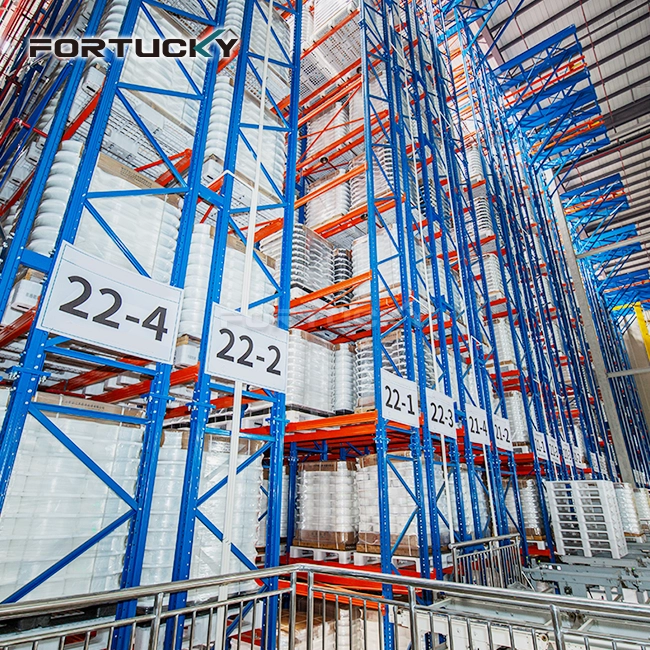
Selective pallet racking is the most common storage technique in contemporary warehouses for automakers and electronics companies. This adaptable technology, also known as beam racking or adjustable pallet racking, powers efficient warehouse operations in manufacturing and logistics. Classic selective pallet racking employs horizontal beams and vertical uprights to organize and secure pallets. Each pallet location is accessible by forklifts or other material handling equipment without moving other pallets. The system supports up to 2,000 kilograms per pallet location and accommodates various pallet sizes. This simple design makes it the most popular industrial shelving solution globally, especially among companies that value operational flexibility and cost-effective storage. For facilities with heavier inventory or high-density storage needs, Heavy Pallet Racking provides the additional load‑bearing capacity and structural integrity required for demanding applications.
 The Problem Standard Selective Pallet Racking Solves
Manufacturing and logistics hubs must maximize storage space and inventory access. Traditional floor stacking wastes vertical space, damages items from unstable stacks, and slows manufacturing lines due to difficult retrieval. I’ve seen automotive parts suppliers’ storage solutions struggle to meet just-in-time production expectations, causing throughput bottlenecks.
The heavy‑load warehouse racking system addresses these issues methodically. Electronics producers with hundreds of component SKUs require rapid access without reorganizing storage. FMCG enterprises need high-density storage with first‑in‑first‑out inventory rotation for product freshness. Pharmaceutical companies need compliance‑ready storage that tracks inventory and allows quality checks.
Modern companies undergoing digital transformation require warehouse solutions that interface with warehouse management systems (WMS) beyond physical storage. Selective racking offers the organizational basis for automated inventory tracking. WMS integration turns each racking position into a digital address, giving battery manufacturing facilities real‑time inventory visibility that manual systems cannot match. This combination of physical economy and digital readiness is why over 1,000 prominent organizations choose structured racking solutions for storage.
Core Features and Functionality That Drive Performance
Standard selective pallet racking architecture is simple yet versatile. The structural steel racks’ upright frames—vertical columns joined by horizontal and diagonal bracing—support the system. Adjustable load beams on these uprights provide storage levels according to your product dimensions.
This setup is ideal for large‑scale operations because of its open design. Every pallet face is viewable from the aisle, unlike enclosed storage solutions. Construction equipment manufacturers’ warehousing crews can collect components in minutes when production plans change. Direct access cuts order selection time by 40–60% compared to block stacking.
The adaptability deserves particular attention. Vertical beam adjustments are made in 50–75 mm increments along upright frames. Food processors can store tiny cartons and large ingredient pallets with varied beam heights. Enterprises with diverse SKU portfolios benefit from the system’s ability to change without reinstallation.
Engineering load capacity guarantees safety under tough conditions. Quality pallet rack beams properly transmit weight over upright frames, reaching 1,800 to 12,000 pounds per level depending on beam specifications and upright gauge. The steel frame stays sturdy in high‑activity areas with constant forklift use. Steel mill and battery manufacturing racks have stronger uprights and thicker beams to bear heavy weights without bending.
Dimensional flexibility brings the system to more sectors. Standard depths range from 900 mm to 1,200 mm, with widths matching 1,000 mm, 1,100 mm, or custom pallet sizes. Conventional warehouses are 12 meters tall, whereas automated high‑bay facilities with stacker cranes reach 30 meters. This scalability lets the same racking platform serve a regional distribution center and a multinational's flagship logistics hub.
Integration with material handling equipment improves functionality. For counterbalance forklifts, aisle widths of 2.7 to 3.6 meters maximize storage density and maneuverability. With reach or turret trucks, narrow aisle designs reduce aisle width to 1.6–2.0 meters and increase storage capacity by 25–40%. This flexibility in equipment compatibility lets companies optimize warehouse architecture based on throughput rather than storage system limits.
Technical Foundation Supporting Industrial-Scale Operations
The metallurgy and engineering of large pallet racking systems assure dependability in demanding situations. Cold-rolled steel has better strength-to-weight ratios than hot-rolled. Work-hardening the steel increases its load-bearing capability while preserving accurate dimensional tolerances for beam-to-upright connections. Heavy-load warehouse racking uses these engineering principles to guarantee safety under repetitive stress.
Many technical factors go into upright frame design. Perforations at regular intervals in vertical columns serve as attachment points and stress distribution elements. Hole patterns enable load forces to flow through the column’s strongest axis when beams connect to uprights. Diagonal and horizontal bracing between front and rear columns stiffens the structure against forklift and seismic stresses.
Each beam design—structural channel or box beam—has its advantages. Structural channel beams offer higher load capacity per unit weight, making them excellent for bulk storage. Box beams reduce deflection under uneven loads, making them ideal for partially full pallets or irregular freight. To prevent beams from falling during loading, safety locks or clips hold them to uprights.
Surface treatment prolongs system life in harsh environments. Powder coating resists corrosion better than paint, preserving structural integrity in cold chain facilities with high humidity. Color coding—blue uprights with orange beams are an industry standard—improves forklift visibility in high‑traffic areas, boosting warehouse safety.
Strategic Advantages for Enterprise Operations
Cost‑effectiveness drives wider adoption. Standard selective racking systems cost 30–50% less per pallet space than automated storage solutions. Teams can install systems using simple tools in days rather than weeks. This speedy deployment is essential for companies growing or relocating under tight deadlines.
Unlike floor stacking, space utilization increases greatly. Traditional warehouses with vertical storage up to 12 meters quadruple storage capacity. With selective racking, an FMCG distribution center that floor‑stacks 500 pallet positions may handle 1,500+ positions without expansion. High‑bay warehouses with 30‑meter designs maximize cubic space utilization, making the mathematical efficiency even more compelling.
When every pallet has a location, inventory management improves. Each beam position gets a unique location code via WMS integration, providing a digital inventory map. The system quickly locates the racking position for a pharmaceutical company’s manufacturing batch, cutting search time from hours to seconds. This accuracy helps meet regulatory standards and reduces mistaken stock write‑offs.
Operational flexibility adapts to business needs. Beverage and agricultural producers don’t need to modify storage systems for seasonal demand. Adjustable beams accommodate changing product mixes within existing infrastructure. Unlike automated systems that require facility upgrades, adding upright frames and beams gradually increases capacity without disrupting operations.
Properly specified and maintained storage solutions outperform alternatives in safety. The structural steel racks prevent pallet collapses common in overstacked floor storage. Load capacity ratings on uprights help warehouse crews avoid overloading. Column protectors and frame guards safeguard equipment and workers against forklift collisions.
Considerations and Planning Requirements
Despite its benefits, standard selective racking has drawbacks that must be considered. Drive‑in racking and push‑back designs offer higher storage density. Due to dedicated access aisles, 40–50% of the floor area is used for material handling rather than storage. Alternative solutions may improve density for companies with small warehouses and uniform product profiles.
Optimization of initial layout planning demands professional expertise. Complex interactions between beam spacing, aisle widths, and upright frame dimensions affect capacity and operating efficiency. Poor layouts might meet storage requirements but cause congestion that reduces performance by 20–30%. I recommend hiring warehouse design experts who understand your industry’s material handling practices and growth expectations.
Equipment compatibility affects system cost. Racking systems account for 30–40% of warehouse infrastructure expenditure. Forklifts, reach trucks, and automated guided vehicles must match aisle widths and lift heights within the racking arrangement. Facilities using counterbalance forklifts cannot simply switch to narrow aisle layouts without changing material handling equipment, which is costly.
Maintenance is minimal but requires constant attention. Regular inspections catch damaged uprights, twisted beams, and loose connections before they become hazards. High‑activity warehouses supporting vehicle assembly or electronics manufacturing should have quarterly inspections. Replacement beams and uprights must meet original specifications to avoid load capacity issues.
In specialized applications, the environment affects system lifespan. Cold chain facilities containing frozen goods or medicines stress connections due to steel contraction and expansion. Corrosive environments promote surface coating breakdown in chemical processing facilities. These circumstances demand galvanized steel construction or specialized coatings, which raise initial expenditure by 15-25%. For these situations, high-capacity pallet storage systems with environmental adaptations provide durability without compromising load‑bearing capability.
 How Standard Selective Racking Compares to Alternatives
Understanding selective racking’s advantages over competitors helps companies invest wisely. Drive‑in racking eliminates most access lanes for 75–85% better storage density. Forklifts place pallets on continuous tracks within rack lanes instead of on beam levels. This setup works well for beverage wholesalers with thousands of identical SKU pallets. The trade‑off? It uses last‑in‑first‑out access, making it unsuitable for perishable commodities or industrial applications that need specific component retrieval.
Push‑back racking offers 60–70% more density than selective racking and supports multiple SKUs. Pallets on inclined carts slide backward as fresh pallets are loaded from the front, forming 2–6 deep storage lanes. This setup appeals to food manufacturers with modest SKU counts and predictable turnover rates. However, the technique costs 40–50% more than selective racking and restricts accessibility to the first pallet in each lane.
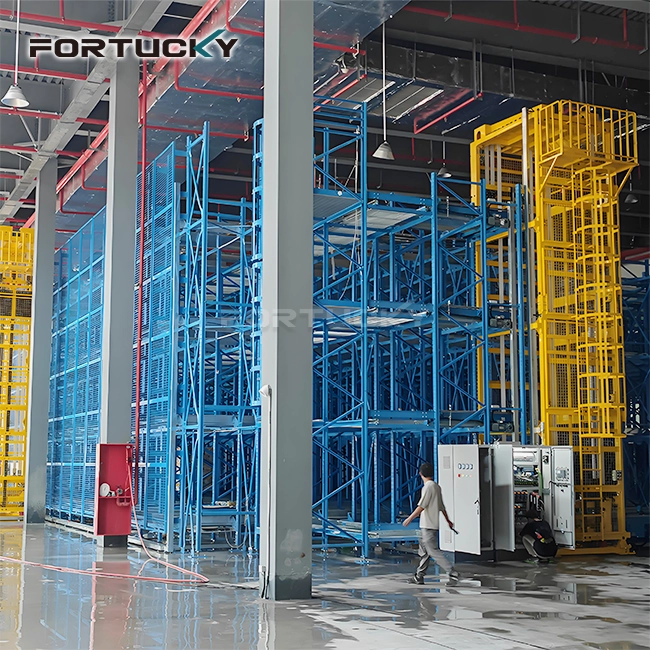
High‑end automated storage and retrieval systems (AS/RS) use computer‑controlled cranes in 45‑meter‑tall high‑bay facilities. Pharmaceutical and electronics assembly companies achieve high storage density and automated material management. This technology is limited to large enterprises with substantial capital and high throughput volumes, as mid‑sized installations require a $3–5 million investment and 12–18 months to implement, whereas selective racking takes 2–3 weeks.
Standard selective pallet racking is cheaper than automated systems, more accessible than high‑density options, and sufficiently large for most industrial uses. Its 100% selectivity—direct access to every pallet—is crucial when production schedules require specific components instantly. Automotive parts vendors, construction equipment manufacturers, and logistics service providers rely on selective racking because of this accessibility.
Who Benefits Most and Typical Applications
Selective pallet racking provides maximum value for medium to large manufacturers. Multi‑line manufacturers with hundreds or thousands of component SKUs need fast material access without inventory reshuffling. Direct access to specific components dozens of times per shift via selective racking minimizes production delays that can cost thousands of dollars per hour in automotive parts manufacturing with just‑in‑time assembly schedules.
Logistics companies handling multi‑client distribution use the system’s flexibility. Third‑party logistics providers supporting FMCG and industrial equipment manufacturers must accommodate different pallet sizes, weights, and turnover rates. Without facility modification, the adjustable beam arrangement meets each client’s needs, boosting operational agility for successful logistics enterprises.
For pallet‑level storage feeding pick modules, high‑volume e‑commerce fulfillment facilities use selective racking. Smaller items go to case or piece picking, while larger items ship directly from pallets. Organized warehouses with structured racking locations integrate with order management systems, reducing picking errors that lower customer satisfaction and increase return costs.
Cold chain workers handling temperature‑sensitive items prioritize selective racking for inventory turnover. Milk processors, pharmaceutical wholesalers, and fresh produce handlers use first‑in‑first‑out to reduce spoilage. Warehouse teams can check manufacturing dates and rotate stock methodically with direct access to every pallet position, preventing losses exceeding $50,000 when older inventory expires before newer stock.
Steel service centers, building material providers, and equipment parts distributors rely on heavy‑duty racks’ high load capacity. Structurally robust solutions are needed to store 1,800‑kg steel coils or 1,200‑kg engine blocks. Specified load ratings and sturdy steel construction provide safety margins in these demanding conditions.
Conclusion and Future Outlook
Standard selective pallet racking remains the industrial storage workhorse because of its accessibility, cost‑effectiveness, and operational flexibility. The system’s ability to handle diverse items and both human and automated material handling keeps it relevant as warehouses adopt new technology. I expect selective racking to evolve alongside warehouse automation. Blending conventional racking with autonomous mobile robots for cargo transfer will combine human and automated activities. IoT sensors embedded in racking structures will monitor load distribution and structural health in real time, preventing failures. Heavy Pallet Racking will underpin next‑generation smart warehouses because of its direct pallet access, flexible designs, and durability.
Frequently Asked Questions
Q1: What weight capacity should I specify for automotive parts storage?
A: Automotive components vary dramatically in weight and dimensions, from small electronics weighing 5-10 kg to engine assemblies exceeding 500 kg. I recommend specifying beam capacities of 1,500-2,000 kg per level to accommodate heavy assemblies while maintaining flexibility for mixed storage. The critical factor involves understanding your heaviest pallet load, including packaging and safety margins. Quality suppliers like Fortucky conduct load analysis based on your specific inventory profile, ensuring beam gauge and upright specifications match your operational reality rather than generic recommendations.
Q2: How do selective pallet racks integrate with warehouse management systems?
A: Integration occurs through location coding systems that assign unique identifiers to each pallet position. The racking layout creates a physical grid—aisle numbers, bay positions, and level designations—that the WMS maps digitally. Barcode labels attached to uprights allow forklift-mounted scanners to confirm putaway and picking locations, ensuring inventory records match physical placement. Advanced implementations incorporate LED picking lights or digital displays mounted on racking uprights, providing visual guidance that reduces picking errors by 85-90%. The key requirement involves designing your racking layout with systematic location codes from the outset rather than retrofitting later.
Q3: What maintenance schedule should high-activity warehouses follow?
A: Facilities operating two or three shifts daily should implement monthly visual inspections focusing on high-traffic areas near receiving docks and shipping lanes. Quarterly professional inspections by certified rack safety specialists identify structural concerns before they escalate. The inspection checklist covers upright verticality (plumbness), beam connection integrity, load capacity compliance, and damage from forklift impacts. Facilities supporting automotive assembly or electronics manufacturing—where storage system failure disrupts production—often implement color-coded inspection tags on uprights, clearly indicating last inspection dates. Replacement of damaged components should occur within 48-72 hours to maintain system safety ratings.
Transform Your Warehouse with Fortucky's High-Capacity Pallet Storage Systems
Selecting the right heavy pallet racking supplier determines whether your storage investment delivers lasting value or becomes an operational constraint. Fortucky brings three decades of warehouse automation expertise to every selective racking implementation, combining proven structural steel racks with integration capabilities that support your digital transformation journey. Our engineering team has designed solutions for automotive giants like BMW and Mercedes-Benz, electronics leaders like Huawei, and FMCG companies, including Mengniu Dairy—enterprises that demand reliability under the most challenging operating conditions. Contact our warehouse solutions specialists at sales@fortuckyrobot.com to discuss how our customized racking systems can optimize your storage efficiency while supporting seamless WMS integration and future automation upgrades. Heavy Pallet Racking is available for high-capacity and demanding load zones.
References
1. Richards, Gwynne. Warehouse Management: A Complete Guide to Improving Efficiency and Minimizing Costs in the Modern Warehouse. London: Kogan Page Publishers, 2017.
2. Tompkins, James A., and Jerry D. Smith. The Warehouse Management Handbook. Raleigh: Tompkins Press, 2019.
3. Bartholdi, John J., and Steven T. Hackman. Warehouse & Distribution Science: Release 0.96. Atlanta: Supply Chain and Logistics Institute, 2014.
4. Mulcahy, David E. Warehouse Distribution and Operations Handbook. New York: McGraw-Hill Education, 1993.
5. Frazelle, Edward H. World-Class Warehousing and Material Handling. New York: McGraw-Hill Professional, 2016.
6. Berg, Jeroen P. van den, and Willem H.M. Zijm. "Models for warehouse management: Classification and examples. "International Journal of Production Economics," Volume 59, Issues 1-3, 1999.
Learn about our latest products and discounts through SMS or email