- English
- French
- German
- Portuguese
- Spanish
- Russian
- Japanese
- Korean
- Arabic
- Greek
- German
- Turkish
- Italian
- Danish
- Romanian
- Indonesian
- Czech
- Afrikaans
- Swedish
- Polish
- Basque
- Catalan
- Esperanto
- Hindi
- Lao
- Albanian
- Amharic
- Armenian
- Azerbaijani
- Belarusian
- Bengali
- Bosnian
- Bulgarian
- Cebuano
- Chichewa
- Corsican
- Croatian
- Dutch
- Estonian
- Filipino
- Finnish
- Frisian
- Galician
- Georgian
- Gujarati
- Haitian
- Hausa
- Hawaiian
- Hebrew
- Hmong
- Hungarian
- Icelandic
- Igbo
- Javanese
- Kannada
- Kazakh
- Khmer
- Kurdish
- Kyrgyz
- Latin
- Latvian
- Lithuanian
- Luxembou..
- Macedonian
- Malagasy
- Malay
- Malayalam
- Maltese
- Maori
- Marathi
- Mongolian
- Burmese
- Nepali
- Norwegian
- Pashto
- Persian
- Punjabi
- Serbian
- Sesotho
- Sinhala
- Slovak
- Slovenian
- Somali
- Samoan
- Scots Gaelic
- Shona
- Sindhi
- Sundanese
- Swahili
- Tajik
- Tamil
- Telugu
- Thai
- Ukrainian
- Urdu
- Uzbek
- Vietnamese
- Welsh
- Xhosa
- Yiddish
- Yoruba
- Zulu
What is the maximum depth of push-back pallet racking?
Push-back storage racks are an effective solution for warehouse managers who need to maximize available space while increasing storage capacity. These systems typically accommodate between 2 and 6 pallet positions per lane, though most commercial installations are configured at 3 to 5 pallets deep. This depth limitation stems from several technical factors, including load distribution within the structure, forklift accessibility, and the structural stability of the nested cart system. Understanding these depth-related considerations enables procurement teams to select configurations that balance storage density with operational efficiency, ensuring that the warehouse investment delivers returns in both throughput and space utilization.
 Understanding Push-Back Pallet Racking Systems
Industrial push-back storage racks represent an advancement over traditional selective racking by introducing a dynamic storage mechanism that improves handling for high-volume operations. The system employs a series of nested carts mounted on slightly inclined steel rails, creating a gravity-assisted storage lane that operates on a last‑in, first‑out (LIFO) inventory principle.
How the Mechanism Works
The operational simplicity of these systems becomes evident during loading. When the first pallet is placed on the front cart by a forklift, the entire unit remains at the lane entrance. As additional pallets are loaded, they push the preceding carts backward along the rail system, compressing the nested carts deeper into the lane. When the front pallet is removed, the slope angle—typically between 3 and 5 degrees—ensures that gravity advances the remaining pallets forward to the picking face without manual or mechanical intervention.
This mechanism has been shown to significantly improve performance across a variety of industries. The descent speed is regulated by damping devices integrated into the cart system, preventing sudden movement that could damage products or create safety hazards. This controlled rolling motion distinguishes push-back configurations from drive‑in alternatives, where forklift operators must maneuver inside the rack structure.
Key Structural Components
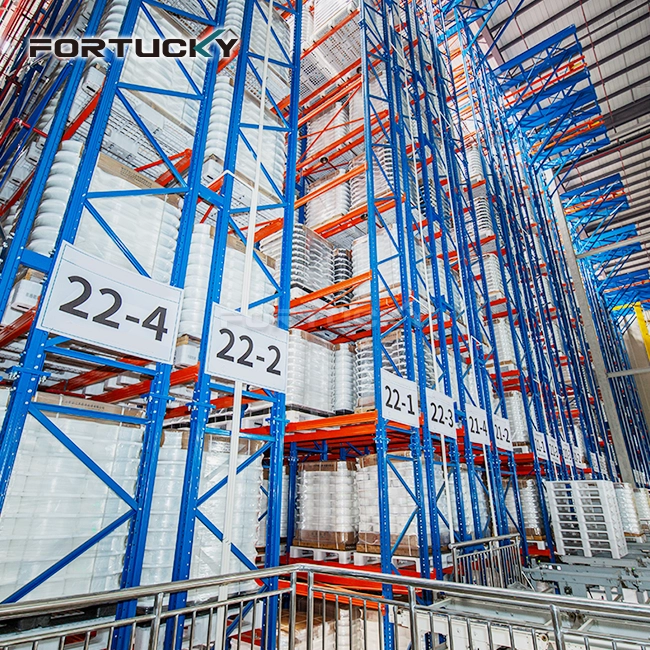
The system design comprises several essential components that work in concert. The vertical framework consists of heavy‑duty steel uprights engineered to handle the cumulative loads imposed by multiple pallets. These uprights are connected by horizontal beams, forming structural bays in which the rail sections are mounted. The rails feature precisely designed surfaces that maintain cart alignment while minimizing friction.
Each cart is equipped with rollers that enable smooth bi‑directional movement, with weight capacities tailored to application requirements. The front cart typically includes additional stop devices to ensure that pallets come to rest precisely at the pick face, leaving adequate clearance for forklift engagement. When these components function together, they create a structurally simple system that offers reliable operation and reduced maintenance needs.
Maximum Depth of Push-Back Pallet Racking: Dimensional and Capacity Analysis
To answer the question of "maximum viable depth," we need to look at a lot of interconnected factors that affect both how well push-back storage racks work and how much they cost. In theory, setups could go beyond six pallet positions, but in practice, most systems can only go to deeper depths.
Engineering Constraints on Depth
As depth increases, structural load paths become more complex. The front uprights and beams must support not only the weight of all stored pallets but also the forces generated during loading and unloading. A five‑pallet‑deep configuration imposes significantly greater stress on front‑end components than a three‑position system, necessitating heavier gauge materials and stronger connections.
Scaling challenges also affect the cart and rail systems. Longer rail runs require additional support points to prevent deflection under load, and the nested cart system must maintain precise alignment over extended travel distances. Manufacturing tolerances that are acceptable for shallow designs may lead to cumulative errors in deeper lanes, potentially causing carts to bind or move unevenly.
Operational Factors Limiting Depth
Beyond structural considerations, operational factors constrain depth choices. Forklift operators need clear visibility of the pick face; as lane depth increases, it becomes harder to assess pallet positioning and condition. This reduced visibility raises the risk of attempting to retrieve damaged or improperly seated pallets, which could damage the racks or cause safety incidents.
Inventory turnover also influences optimal depth. Fast‑moving product lines perform better with shallower configurations that facilitate frequent stock rotation, while slower‑moving items may benefit from deeper storage that maximizes space utilization, even if some pallets remain in place for extended periods. Our experience with clients in automotive parts distribution and fast‑moving consumer goods (FMCG) has shown that matching system depth to SKU turnover rates prevents both underutilization and operational inefficiencies.
The relationship between depth and aisle requirements also deserves careful attention during planning. Unlike selective shelving, which requires multiple access aisles, push‑back systems need only one working aisle. However, that single aisle must be wide enough to accommodate forklift manoeuvring within the deepest lane configuration. In buildings with limited ceiling heights, vertical stacking may offer a more effective way to increase capacity than simply adding depth.
Comparing Push-Back Racks with Other Pallet Racking Types Regarding Depth and Usage
When selecting push‑back storage racks, it is important to understand how different technologies address depth, accessibility, and operational workflow. Push‑back designs occupy a middle ground between fully selective systems and high‑density drive‑in options.
Selective Racking Versus Push-Back Depth
Traditional selective racking stores pallets one position deep and provides direct access to every slot, but it requires a separate aisle for each rack face. This arrangement maximises SKU variety while consuming significant floor space for aisle networks. Push‑back systems sacrifice direct access to interior positions but concentrate storage into fewer aisles, typically achieving 25–35% better space utilisation for suitable inventory types.
The trade‑off becomes more favourable in warehouses handling multiple pallets of the same SKU. Rather than distributing six selective positions across different aisle faces, a six‑pallet lane consolidates that inventory at a single pick face, reducing travel time and improving picking efficiency.
Drive-In Systems and Maximum Depth Comparison
Drive‑in racking can theoretically achieve greater depth than push‑back systems, with some installations reaching eight or more pallet positions. However, this depth advantage comes with substantial operational restrictions: forklifts must enter the lane structure to deposit and retrieve pallets, which slows cycle times and increases the risk of contact damage.
Push-back methods limit the depth but keep all forklift action at the aisle face. This makes things faster and safer. The automatic box advance system gets rid of the need to back up, which wastes time in drive-in operations. For buildings that want to prioritize both speed and density, push-back designs offer a better balance, even though they can't go as deep. First-in-last-out (FILO) storage systems, such as push-back racking, are particularly well-suited for operations with limited SKUs and high-volume inventory, where the speed advantage at the aisle face outweighs the depth limitations of drive-in alternatives.
 Design, Safety, and Maintenance Considerations for Maximizing Depth
Achieving greater storage depth in push‑back racking demands heightened attention to design details, safety protocols, and preventive maintenance. Together, these elements form a strategy for long‑term, reliable operation.
Structural Design Requirements
More complex configurations require engineering analysis that accounts for worst‑case loading scenarios. During partial lane filling, the front uprights may experience uneven loads, introducing rotational stresses not present in shallower designs. Proper engineering incorporates safety factors that address these variable conditions, typically resulting in heavier structural members or reduced per‑position load ratings for deeper installations.
Connection stability is especially critical in extended‑depth installations. Beam‑to‑upright connections must resist both vertical shear and horizontal thrust forces generated during pallet placement and transmitted through the cart system. For applications approaching maximum depth limits, we recommend upgraded connection hardware to maintain structural margins under practical conditions such as occasional impact loading.
Safety Protocols for Deep Lane Operation
Operating procedures must account for the unique risks associated with deeper storage lanes. Load verification becomes even more important when pallets are not fully visible. Maintaining accurate records of load weights and strictly enforcing weight limits prevents overloading conditions that could compromise structural integrity.
The damping system requires regular inspection to ensure proper function. Worn or damaged dampeners allow carts to travel too quickly, generating impact forces that can dislodge pallets or damage rack components. Maintenance schedules should include dampener checks at intervals based on usage intensity, with more frequent inspections for high‑throughput operations.
Maintenance Programs Supporting Maximum Depth
Rail alignment maintenance keeps carts running smoothly over extended distances. In deep lanes, where cumulative misalignment effects are most pronounced, even minor rail deflections or progressive loosening can cause carts to bind. Quarterly alignment checks using precision measuring tools help identify issues before they disrupt operations.
In deeper systems, cart wheel units travel farther over time, accelerating wear on bearings and roller surfaces. Proactive replacement based on usage metrics, rather than waiting for component failure, prevents unexpected downtime. Keeping critical spare parts on hand—such as carts and damping assemblies—enables rapid restoration of full system performance when wear‑related issues arise.
Procurement Insights: Buying Deep Push-Back Racking Systems for Your Warehouse
Selecting a manufacturing partner for push‑back storage racks requires significant investment and careful supplier evaluation. Because deeper configurations are more complex, vendor capabilities and long‑term support processes become especially important.
Evaluating Supplier Capabilities
Precision in manufacturing has a direct effect on how well the system works, especially for larger lane layouts where too much tolerance can cause problems in industrial push-back pallet storage systems. Advanced manufacturing vendors make parts that are consistently the right size, which makes sure that the cart works smoothly and that the load behaves as expected. We've seen setups where poor manufacturing accuracy caused carts to get stuck and pallets to move around randomly, which had to be fixed at a high cost.
Customisation capabilities are valuable when non‑standard requirements arise from space constraints or unique inventory profiles. Suppliers that dedicate engineering resources to custom solutions enable procurement teams to optimise system design for each application, rather than adapting operations to standard products. This collaborative planning is especially important for warehouses handling non‑standard pallet sizes or unusual weight distribution patterns.
Certification and Compliance Verification
Storage rack systems must meet rigorous safety standards established by regulatory bodies and industry groups. In North American markets, RMI standards provide detailed testing and design criteria that reputable suppliers incorporate into their engineering processes. Reviewing supplier documentation to confirm compliance with these standards helps mitigate liability and ensures structural soundness.
Load testing protocols demonstrate system capacity under controlled conditions, supporting design calculations with real‑world performance data. Suppliers that provide test documentation give procurement teams tangible evidence of product capabilities, facilitating confident specification decisions.
Total Cost Analysis Framework
The purchase price is only one component of lifetime product cost. Installation costs depend significantly on system complexity; deeper configurations typically require more labour due to stricter alignment requirements. Obtaining detailed installation estimates during sourcing prevents budget surprises during project execution.
Operational cost impacts span multiple areas. Systems that require more frequent maintenance or suffer higher damage rates incur ongoing expenses that offset initial savings. Conversely, designs that improve picking efficiency reduce labour costs over the system's life. Sophisticated procurement analysis considers these lifetime factors—not just capital expenditure—when selecting a vendor.
Conclusion
Warehouse procurement teams can make informed decisions about push‑back storage racks when they understand the maximum depth limitations of these systems. The typical range of 2 to 6 pallet positions accommodates a wide variety of operational needs, and the optimal depth depends on product characteristics, turnover rates, and building constraints. Successful projects require attention to structural engineering principles, operational safety practices, and maintenance programmes that preserve system integrity over time. Partnering with skilled manufacturers that offer customisation options and responsive support networks ensures that investments in storage infrastructure deliver lasting returns through improved space utilisation and faster warehouse throughput.
Frequently Asked Questions
1. What determines the maximum depth for push-back racking in my facility?
The maximum feasible depth depends on several factors, including floor strength, pallet weight, forklift specifications, and product turnover rates. For most sites, 3 to 5 pallet positions provide the best balance between storage quantity, accessibility, and safety.
2. Can push-back systems accommodate non-standard pallet sizes?
Yes, customisation options allow the system to be adapted to sizes other than the standard 48×40‑inch pallet. Specific pallet shapes can be accommodated by adjusting rail spacing, cart dimensions, and structural bay sizes. However, non‑standard layouts may affect the maximum recommended depth due to load distribution and cart stability over longer travel distances.
3. How does increased depth affect warehouse safety?
Deeper lanes require stricter load verification rules and more frequent maintenance of the damping systems that control pallet movement. When properly implemented—with appropriate structural design, regular inspection schedules, and operator training—safety levels can be maintained comparable to shallower configurations. Nevertheless, the consequences of incorrect loading or deferred maintenance become more serious as depth increases.
Maximize Your Warehouse Efficiency with Fortucky's Advanced Push-Back Storage Solutions
Fortucky makes engineered push-back storage racks that have a structure that has been shown to be reliable and can be customized to meet the needs of challenging industrial uses. Every year, our production infrastructure turns out 150,000 tons of precision storage systems for more than 1,000 customers in the electronics, food processing, automobile, and pharmaceuticals industries. The systems we design can be set up in a variety of ways to support loads up to heavy-duty industrial levels, and they can be as high as 10 meters if the building's design allows for that much vertical room.
Our steel frame design includes damping mechanisms that keep the pallets from moving too much or too little. These mechanisms let you set the depth of the frame anywhere from 2 to 6 places, depending on your specific density and throughput needs. Each system comes fully packaged with strapping, protective film, and crate fixing to make sure it is ready to install when it arrives. Customization includes choosing the right size and shape, matching colors to make the building look nice, and making sure the load capacity is just right for your goods.
Fortucky does more than just send products. It also keeps up localized service networks in Asia, Europe, and the Americas, which lets technical help and maintenance teams work together quickly. Our engineering team uses its many years of research and development experience to solve difficult integration problems. This is true whether you're optimizing storage on your own or working with larger warehouse automation systems. We work directly with facility engineers, supply chain managers, and logistics leaders to turn practical goals into storage infrastructure that improves performance in a way that can be measured.
Get in touch with our technology experts at sales@fortuckyrobot.com to talk about your unique throughput goals, load factors, and depth needs. We give thorough system proposals that include layout optimization, structural details, and cost projections for the whole system's life. These help people make smart choices about what to buy. Our push-back storage racks supplier knowledge will make sure that your investment gets the room utilization and operational efficiency your business needs, whether you're planning new distribution centers or expanding current ones.
References
1. Material Handling Industry of America (2021). "Considerations for Selecting Push-Back Rack Systems in High-Density Warehouse Applications." MHIA Technical Publication Series.
2. Rack Manufacturers Institute (2020). "Specification for the Design, Testing, and Utilization of Industrial Steel Storage Racks." RMI Standard MH16.1-2020.
3. Frazelle, Edward (2016). "World-Class Warehousing and Material Handling, Second Edition." McGraw-Hill Education, Chapter 8: High-Density Storage Systems.
4. Tompkins, James A. et al. (2018). "Facilities Planning, Fourth Edition." John Wiley & Sons, Storage Systems Engineering section.
5. International Warehouse Logistics Association (2019). "Best Practices for Push-Back Racking System Selection and Implementation." IWLA Industry Guidelines.
6. Mulcahy, David E. (2017). "Warehouse and Distribution Science: Release 2.0." Warehouse Science Press, High-Density Storage Technology Analysis.

Learn about our latest products and discounts through SMS or email